The Electric Truck Showdown: Rivian R1T vs Tesla Cybertruck
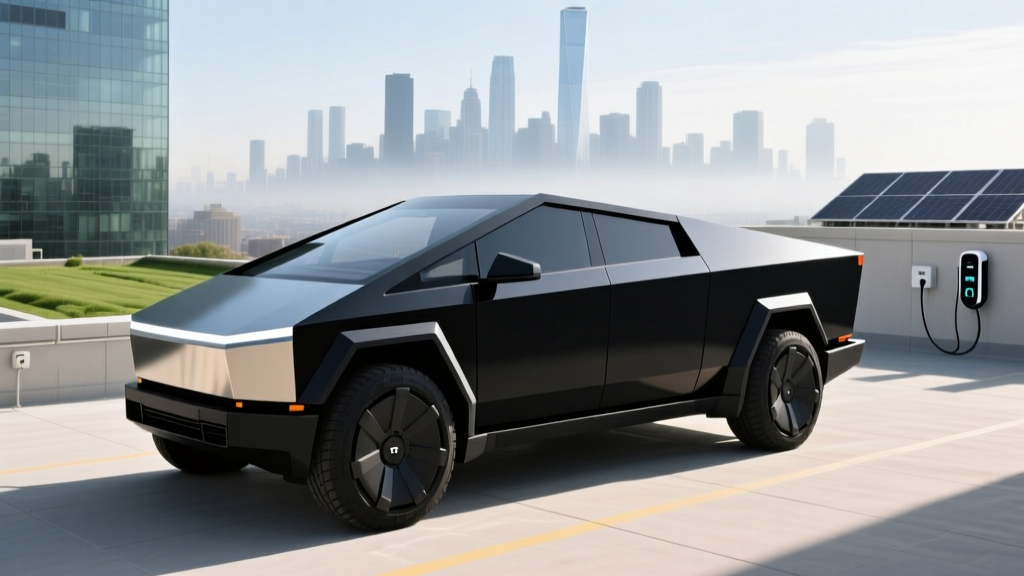
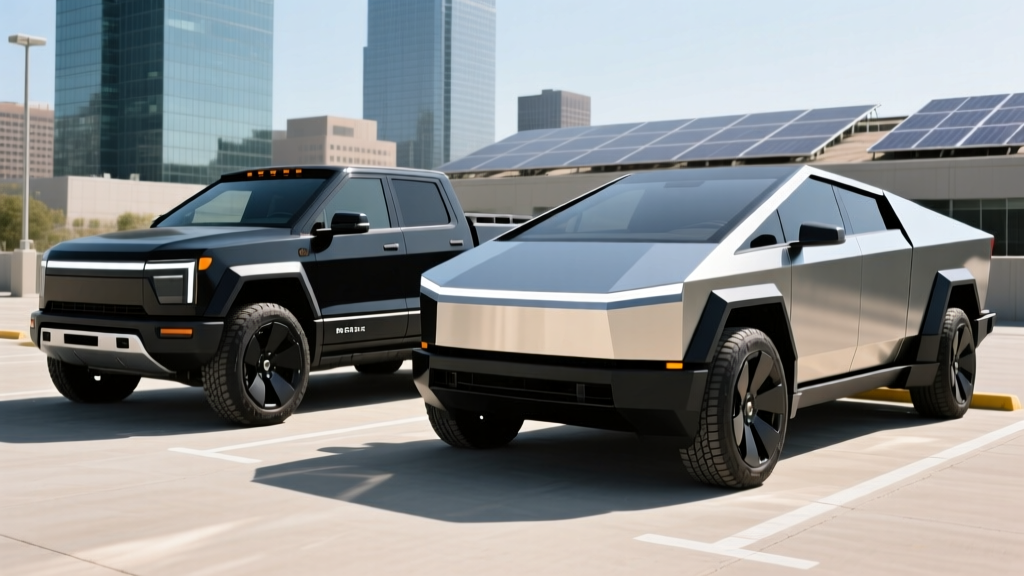
Shoppers searching for a "rivian cybertruck" comparison are really weighing two fundamentally different philosophies of electric pickup design. The Rivian R1T is a body-on-frame adventure truck with a quad-motor option, refined interior, and genuine off-road credibility. The Tesla Cybertruck is a stainless-steel exoskeleton with a steer-by-wire system, 48-volt architecture, and polarizing aesthetics. Both seat five, tow over 10,000 pounds (in specific trims), and cost north of $80,000 before incentives. But the ownership experience diverges sharply the moment you leave the dealer lot.
This review uses 2026 model-year data to break down range, charging, performance, utility, and total cost — so you can pick the truck that fits your actual life, not just your Instagram feed.
Spec Table: Rivian R1T vs Tesla Cybertruck at a Glance
| Spec | 2026 Rivian R1T Dual-Motor | 2026 Tesla Cybertruck AWD |
|---|---|---|
| EPA Range | 352 miles (Large Pack) | 340 miles |
| Battery Capacity | 141 kWh usable (NMC) | ~123 kWh usable (NMC, structural pack) |
| Drivetrain | Dual-Motor AWD (Quad available) | Dual-Motor AWD (Tri-Motor Cyberbeast available) |
| Horsepower | 533 hp (Dual) / 1,025 hp (Quad) | 600 hp (AWD) / 845 hp (Cyberbeast) |
| 0-60 mph | 4.5 sec (Dual) / 2.6 sec (Quad) | 4.1 sec (AWD) / 2.6 sec (Cyberbeast) |
| Max DC Fast Charge | 220 kW peak | ~250 kW peak (V4 Supercharger) |
| 10-80% DCFC Time | ~28 minutes | ~20 minutes |
| Level 2 Home Charge | 19.2 kW (~35 mi/hr) | 11.5 kW (~21 mi/hr) |
| MPGe (Combined) | 73 MPGe | 70 MPGe |
| Max Towing | 11,000 lbs | 11,000 lbs |
| Bed Length | 4.5 ft (54 in) + Gear Tunnel | 6 ft (72 in) |
| Base MSRP | $79,900 (Dual-Motor) | $79,990 (AWD) |
| Battery Warranty | 8 yr / 175,000 mi | 8 yr / 120,000 mi |
Range & Efficiency: EPA Stickers vs Real-World Miles
Efficiency favors the R1T marginally at 73 MPGe combined versus the Cybertruck's 70 MPGe, per fueleconomy.gov. In terms of energy consumption, the R1T uses about 48 kWh/100 miles while the Cybertruck consumes roughly 50 kWh/100 miles. Neither truck is efficient by EV sedan standards — that's the cost of 7,000-pound pickups with all-terrain tires.
For buyers cross-shopping a "rivian cybertruck" decision, range is essentially a tie on paper. The differentiator is what happens when you tow: both trucks see range cut roughly in half when pulling a 5,000-pound trailer, dropping to 150-180 miles between charges. Plan your routes accordingly.
Charging Speed: DC Fast Charge and Home Level 2
| Charging Level | Rivian R1T | Tesla Cybertruck |
|---|---|---|
| Level 1 (120V) | ~3 mi/hr | ~3 mi/hr |
| Level 2 (240V home) | 19.2 kW / ~35 mi/hr | 11.5 kW / ~21 mi/hr |
| DC Fast Charge (peak) | 220 kW | ~250 kW (V4 Supercharger) |
| 10-80% DCFC Time | ~28 min | ~20 min |
| Charge Port | NACS (native, 2025+ models) | NACS (native) |
The Cybertruck charges faster on DC — its ~250 kW peak on Tesla's V4 Superchargers delivers a 10-80% session in roughly 20 minutes, compared to the R1T's 28 minutes at 220 kW. However, the R1T's larger battery means those extra minutes translate to more total miles added. Both trucks now use the NACS connector natively, so Supercharger access is universal.
At home, the R1T has a decisive advantage: its onboard charger supports 19.2 kW on a 80-amp Level 2 circuit, adding about 35 miles of range per hour. The Cybertruck's 11.5 kW onboard charger adds roughly 21 miles per hour. For a 141 kWh pack, the R1T can fully replenish overnight in about 8 hours on a properly provisioned circuit. The Cybertruck needs closer to 11 hours for a full charge. If your daily commute is under 100 miles, both trucks recharge easily overnight on a standard 48-amp home charger.
Note: Home Level 2 installation typically costs $500-$2,000 for equipment plus $800-$3,000 for electrician labor, depending on panel proximity and local permitting. A 200-amp panel upgrade adds $1,500-$3,500. Always consult a licensed electrician for final specs.
Performance & Drivetrain: Quad-Motor vs Tri-Motor
Both trucks offer multi-motor configurations that redefine pickup acceleration. The R1T Quad-Motor produces 1,025 horsepower and hits 0-60 mph in 2.6 seconds — identical to the Cybertruck Cyberbeast's 845 hp and 2.6-second sprint. In the more affordable dual-motor trims, the R1T Dual-Motor (533 hp, 4.5 sec) and Cybertruck AWD (600 hp, 4.1 sec) are both quicker than any gas truck in their class.
Where they diverge is off-road capability. The R1T offers an available air suspension with 14.9 inches of ground clearance in Max mode, a wading depth of 36 inches, and a dedicated Tank Turn feature (Quad-Motor). The Cybertruck relies on adaptive air suspension with up to 16 inches of ground clearance and steer-by-wire for tight maneuvers, but lacks a front trunk and has approach/departure angles limited by its stainless-steel nose.
The R1T's Gear Tunnel — a 11.7 cu ft pass-through storage compartment behind the cab — is a genuine utility innovation that the Cybertruck cannot match. However, the Cybertruck's 6-foot bed (vs. the R1T's 4.5-foot bed) is more practical for hauling plywood, motorcycles, or standard cargo.
Pricing, Trims & Federal Tax Credit Eligibility
| Trim | 2026 Rivian R1T MSRP | 2026 Tesla Cybertruck MSRP |
|---|---|---|
| Base (Dual/AWD) | $79,900 | $79,990 |
| Mid-tier (Adventure/Plaid equiv.) | $89,900 (Tri-Motor) | $99,990 (Cyberbeast) |
| Top Trim (Quad-Motor/Cyberbeast) | $105,000+ | $99,990 |
Federal Tax Credit (§30D): Both trucks face the same hurdle — the IRS §30D clean vehicle credit has an MSRP cap of $80,000 for pickup trucks. The base R1T Dual-Motor at $79,900 and the base Cybertruck AWD at $79,990 both technically fall under the cap, but adding any options or destination charges pushes them over. Higher trims are categorically ineligible for the $7,500 federal credit.
Buyers must also meet income caps ($150,000 single / $300,000 joint AGI) and the vehicle must satisfy critical mineral and battery component sourcing requirements, which shift annually. As of 2026, both Rivian and Tesla have worked to qualify their base configurations, but eligibility is not guaranteed. Check the latest list at IRS.gov before purchasing. The credit can now be transferred to the dealer at point of sale, effectively reducing your purchase price by $7,500 upfront — if the specific VIN qualifies.
- Vehicle MSRP must not exceed $80,000 (pickup truck classification)
- Buyer AGI: ≤$150,000 (single) / ≤$300,000 (married filing jointly)
- Battery critical minerals and components must meet annual sourcing thresholds
- Vehicle must be assembled in North America (both qualify)
- Credit is non-refundable but transferable to dealer at point of sale
- Consult a tax professional — rules change and individual situations vary
Interior, Tech & Driver Assistance
The R1T interior is the clear winner for traditional luxury: genuine wood and leather materials, a 15.6-inch center display, a 12.3-inch driver cluster, and a premium 18-speaker Rivian Elevation audio system with removable Bluetooth speaker. The Cybertruck takes a minimalist approach — an 18.5-inch touchscreen handles nearly all vehicle functions, with no physical instrument cluster and a yoke steering wheel (a round wheel is now optional). Build quality on early Cybertrucks drew widespread criticism; 2026 models have improved panel consistency but still lag behind the R1T's fit and finish.
Driver Assistance: Both trucks offer SAE Level 2 driver-assistance systems — meaning the driver must remain fully engaged at all times. The R1T uses Rivian's Driver+ system with adaptive cruise, lane centering, and automatic lane changes on mapped highways. The Cybertruck offers Tesla's Autopilot standard, with Full Self-Driving (Supervised) available as a $8,000 add-on. Neither system is autonomous — both require hands on or near the wheel and constant visual supervision. Tesla's FSD has more city-street capability but also more reported disengagements and NHTSA scrutiny.
Who Should Buy Which Truck?
Choose the Rivian R1T If:
- You prioritize off-road capability and ground clearance
- You value a premium, traditional interior with physical controls
- The Gear Tunnel and 4.5-foot bed suit your cargo needs
- You want faster Level 2 home charging (19.2 kW)
- Longer battery warranty (8 yr / 175,000 mi) matters to you
Choose the Tesla Cybertruck If:
- You want the longest bed (6 ft) for hauling large items
- Faster DC charging (~20 min 10-80%) is a priority
- You're already invested in the Tesla Supercharger ecosystem
- Steer-by-wire and 48V architecture appeal to you
- You prefer Tesla's software/OTA update cadence
Bottom line: The R1T is the better all-around adventure vehicle with superior interior quality, home charging speed, and battery warranty. The Cybertruck wins on bed utility, DC charge speed, and tech-forward engineering. Neither is a budget purchase — both start near $80,000 and most buyers won't qualify for the full federal tax credit once options are added.
Pros and Cons
Rivian R1T Pros
- 141 kWh battery delivers strong real-world range buffer
- 19.2 kW Level 2 home charging (best in class)
- Gear Tunnel adds 11.7 cu ft secure storage
- Quad-Motor with Tank Turn for serious off-road use
- 8 yr / 175,000 mi battery warranty
Rivian R1T Cons
- 4.5-foot bed limits full-sheet plywood hauling
- 220 kW peak DCFC slower than Cybertruck
- Service center network still expanding
- Options quickly push price above $80K tax credit cap
Tesla Cybertruck Pros
- 6-foot bed fits full-size cargo
- ~250 kW DC fast charging, 10-80% in ~20 min
- 48V architecture reduces wiring weight
- Massive Supercharger network access
- Stainless-steel exoskeleton resists dents
Tesla Cybertruck Cons
- 11.5 kW Level 2 onboard charger is slow for the battery size
- Yoke steering divisive; limited visibility
- Early build-quality issues persist in some 2026 units
- No frunk; limited interior storage
- Real-world range falls notably short on highway
Frequently Asked Questions
What is the real-world range of the Rivian R1T and Cybertruck?
EPA estimates are 352 miles (R1T Large Pack) and 340 miles (Cybertruck AWD). In real-world highway driving at 70 mph, expect 290-310 miles from the R1T and 275-295 miles from the Cybertruck. Cold weather reduces both by 20-30%.
How fast do these trucks charge at home and on the road?
On DC fast chargers, the Cybertruck peaks at ~250 kW (10-80% in ~20 min) vs the R1T at 220 kW (~28 min). At home on Level 2, the R1T charges at 19.2 kW (~35 mi/hr) while the Cybertruck charges at 11.5 kW (~21 mi/hr).
Does either truck qualify for the $7,500 federal EV tax credit?
Only the base trims (under $80,000 MSRP) potentially qualify, and only if the buyer meets income caps ($150K single / $300K joint) and the vehicle meets 2026 battery sourcing requirements. Adding options often pushes the MSRP above the $80,000 cap. Verify at IRS.gov.
Is the Rivian R1T or Cybertruck better for towing?
Both are rated at 11,000 lbs max towing. However, towing cuts range roughly in half for both trucks — plan for 150-180 miles between charges when pulling a 5,000-lb trailer.
Which truck has better off-road capability?
The Rivian R1T Quad-Motor with air suspension (14.9 in ground clearance, 36 in wading, Tank Turn) is the more capable off-roader. The Cybertruck has adaptive air suspension and up to 16 inches of clearance but lacks the R1T's dedicated off-road modes and front trunk approach geometry.