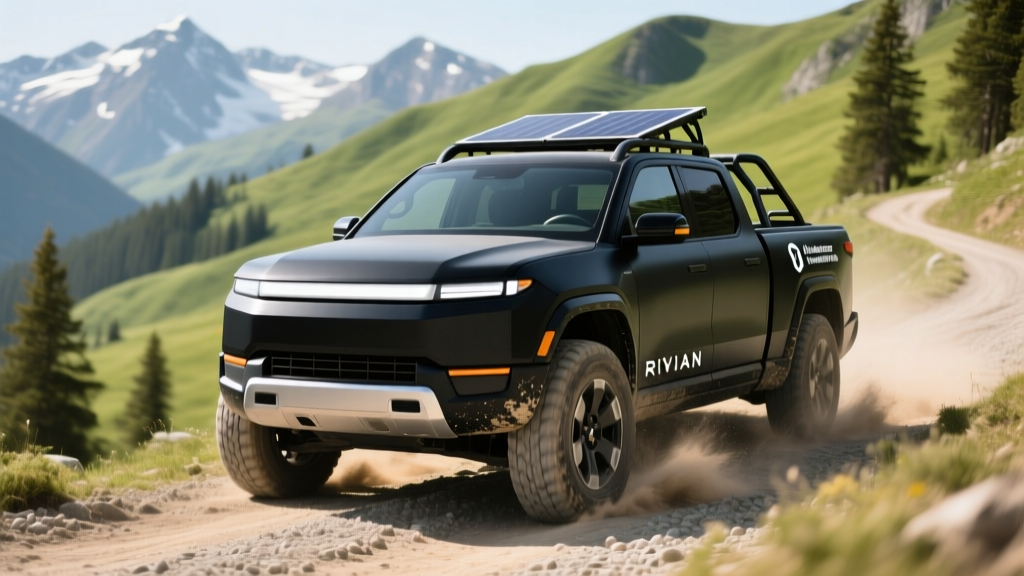
The 2026 Rivian R1T enters its third model year with meaningful powertrain refinements, a dual-motor base model that undercuts its original pricing, and access to one of the most reliable proprietary charging networks in North America. For buyers weighing an electric pickup, the R1T occupies a specific niche: it's smaller than a full-size F-150 Lightning or Silverado EV, but it trades that footprint for genuine off-road capability, a clever gear tunnel, and a vertically integrated charging ecosystem. This review breaks down the real numbers — range, charging speed, Rivian Adventure Network cost, tax credit eligibility, and whether the R1T earns its premium asking price against increasingly capable competitors.
2026 Rivian R1T At a Glance: Specs & Pricing
| Spec | Dual-Motor (Standard) | Dual-Motor (Max) |
|---|---|---|
| EPA Range | ~330 miles | ~410 miles |
| Battery Capacity | ~106 kWh usable (NMC) | ~141 kWh usable (NMC) |
| Drivetrain | AWD (Dual-Motor) | AWD (Dual-Motor) |
| Horsepower | 533 hp | 533 hp |
| 0–60 mph | ~4.5 sec | ~4.5 sec |
| Max DC Fast Charge | ~200 kW peak | ~200 kW peak |
| 10–80% DC Time | ~30 min | ~42 min |
| Level 2 Home Rate | 11.5 kW (~25 mi/hr) | 11.5 kW (~25 mi/hr) |
| MPGe (Combined) | ~73 MPGe | ~65 MPGe |
| Towing Capacity | 11,000 lbs | 11,000 lbs |
| Base MSRP | ~$69,900 | ~$83,900 |
| Battery Warranty | 8 yr / 175,000 mi | 8 yr / 175,000 mi |
Note: Specs reflect the latest published data for the 2025–2026 model year. Rivian adjusts trims and pricing periodically; confirm exact figures on rivian.com before ordering.
Real-World Range: What the EPA Number Doesn't Tell You
Real-World Expectation: ~260–290 miles highway at 70 mph; ~200–240 miles in sub-freezing temperatures with climate control active. Max Pack yields ~320–360 miles highway, ~270–310 miles in cold weather.
Rivian's EPA range figures are competitive for an electric pickup, but the R1T's boxy aerodynamics and ~7,000-pound curb weight work against it at sustained highway speeds. In real-world testing, owners consistently report 2.0–2.4 kWh/mile at 70 mph on flat interstate terrain, which translates to roughly 260–290 miles from the Standard Pack's ~106 kWh usable battery before you need to find a charger.
Cold weather compounds the penalty. Lithium-ion batteries lose efficiency below freezing, and cabin heating in a truck-sized interior demands substantial energy. Expect a 20–30% range reduction in sustained sub-30°F driving. The R1T's heat pump helps mitigate this compared to resistive heating systems, but it doesn't eliminate the physics.
For context, the EPA's fueleconomy.gov listing provides the official combined MPGe, but highway-heavy drivers should mentally discount 15–20% from the combined figure.
Charging Speed & Rivian Adventure Network Cost Breakdown
Charging is where Rivian's vertical integration pays dividends — and where understanding actual costs matters for your budget.
| Charging Level | Power (kW) | Miles Added/Hour | Typical Use Case |
|---|---|---|---|
| Level 1 (120V) | ~1.4 kW | ~3 mi/hr | Emergency/top-off only |
| Level 2 (240V, 48A) | 11.5 kW | ~25 mi/hr | Daily home charging |
| DC Fast (Rivian Adventure Network) | Up to 200 kW peak | ~140 mi in 20 min | Road trips |
| DC Fast (3rd-party CCS/NACS) | Up to 200 kW peak | ~140 mi in 20 min | Non-Rivian networks |
Understanding the Rivian Adventure Network Cost
The Rivian Adventure Network (RAN) is Rivian's proprietary DC fast-charging network, strategically placed along adventure corridors and near national parks, ski areas, and outdoor destinations. As of 2026, the network has expanded to over 50 stations with chargers capable of delivering up to 200 kW (and newer sites rated for up to 300+ kW for future vehicles).
Rivian Adventure Network cost structure:
- Rivian owners: Typically $0.31–$0.39 per kWh depending on station location and time of use. Rivian occasionally offers promotional free charging credits with new vehicle purchases or referrals.
- Non-Rivian EVs: Where RAN chargers are open to other vehicles, pricing is generally $0.36–$0.45 per kWh.
- Idle fees: ~$1.00/minute if your vehicle remains plugged in after reaching its charge limit or after a grace period (typically 10 minutes).
What a full road-trip charge costs: Charging a Standard Pack R1T from 10% to 80% at a RAN station adds roughly 75 kWh. At $0.35/kWh, that's approximately $26.25 per session. For a Max Pack, the same 10–80% session uses roughly 100 kWh, costing around $35.00.
Compare this to home Level 2 charging at the US average residential rate of ~$0.16/kWh: the same Standard Pack 10–80% session costs about $12 at home. The RAN premium reflects the convenience and reliability of a curated, well-maintained network — similar to the Tesla Supercharger pricing model.
Charge Curve Reality
Rivian's peak 200 kW rate is not sustained across the entire session. The charge curve tapers noticeably above 60% State of Charge (SoC), dropping to ~120 kW around 70% and further to ~60 kW by 85%. This is standard behavior for NMC chemistry batteries with active thermal management. Plan your road-trip stops around 10–80% sessions for the best time efficiency; charging from 80–100% can add 20+ minutes for relatively few additional miles.
Performance, Efficiency & Capability
The dual-motor AWD R1T produces 533 horsepower and 610 lb-ft of torque in its standard dual-motor configuration. The 0–60 mph sprint takes approximately 4.5 seconds — quick for a truck that weighs over three tons and can tow 11,000 pounds.
Efficiency is measured at roughly 73 MPGe combined for the Standard Pack and 65 MPGe for the Max Pack, per the EPA. In more tangible terms, expect 2.0–2.5 kWh/mile in mixed driving, which is competitive with the Ford F-150 Lightning (similar weight class) but less efficient than smaller electric SUVs like the Hyundai Ioniq 5 or Tesla Model Y.
The R1T's quad-motor variant (available in higher trims) bumps output to over 1,000 hp with a sub-3.0-second 0–60, but at a significant price premium and slight efficiency penalty.
Towing Impact on Range
If you plan to tow, budget for a 40–50% range reduction. Towing a 5,000-pound trailer at highway speeds can drop real-world range to 150–180 miles on the Standard Pack. This is a physics problem shared by all electric pickups; the R1T is no exception. Rivian's integrated trailer brake controller and tow-assist camera system are well-executed, but range remains the limiting factor for long-distance towing.
Interior, Cargo & Tech Highlights
The R1T's interior is a study in premium-minimal design. The 15.6-inch center touchscreen runs Rivian's proprietary infotainment OS, which handles navigation, climate, vehicle settings, and a built-in camp kitchen controller (for equipped models). Wireless Apple CarPlay and Android Auto are standard.
Cargo dimensions:
- Bed length: 54.0 inches (4.5 ft) with the gate up; extends with the multi-function tailgate
- Bed volume: ~33.9 cu ft
- Gear Tunnel: 11.7 cu ft of lockable, pass-through storage between the cab and bed — a signature R1T feature unavailable on any competitor
- Frunk (front trunk): 11.1 cu ft, drainable, suitable for wet gear or coolers
- Rear seat legroom: ~38.0 inches — adequate for adults on shorter trips, tighter than a full-size crew cab
The gear tunnel is the R1T's party trick. It's large enough for snowboards, fishing rods, camp chairs, or a week's groceries, and it keeps items secure and hidden. No other electric (or gas) pickup offers this feature.
Driver Assistance
Rivian's Driver+ system is a SAE Level 2 driver-assistance suite that includes adaptive cruise control, lane-centering, and automatic lane changes on divided highways. It requires continuous driver supervision — hands on or near the wheel, eyes on the road. It is not an autonomous driving system and does not approach SAE Level 4 capability. In practice, Driver+ is competent for highway cruising but less assertive than GM's Super Cruise or Ford's BlueCruise in hands-free zones.
Pricing, Tax Credits & Ownership Costs
| Trim | Base MSRP | Est. Federal Credit (§30D) | Effective Price |
|---|---|---|---|
| Dual-Motor Standard | ~$69,900 | Up to $7,500* | ~$62,400* |
| Dual-Motor Max Pack | ~$83,900 | Up to $7,500* | ~$76,400* |
| Quad-Motor (if avail.) | ~$99,000+ | Varies* | Varies* |
*Federal tax credit caveats (IRS §30D, 2026 rules):
- MSRP cap: Pickup trucks must have an MSRP at or below $80,000 to qualify. The Standard Pack R1T qualifies; the Max Pack and Quad-Motor may exceed the cap depending on options — confirm before ordering.
- Income limits: Modified AGI must not exceed $300,000 (joint), $225,000 (head of household), or $150,000 (single).
- Battery sourcing: A percentage of critical minerals and battery components must be sourced from the US or FTA partners. Rivian's supply chain compliance evolves yearly; check the latest IRS guidance on qualifying vehicles.
- Point-of-sale transfer: As of 2024+, you can transfer the credit to the dealer at purchase, reducing your out-of-pocket cost immediately rather than waiting for tax filing.
For buyers who exceed the income cap or choose a trim above the MSRP cap, the full credit is unavailable. Always consult a tax professional and verify your specific eligibility before relying on the $7,500 figure.
5-Year Ownership Snapshot
Compared to a gas-powered midsize truck (e.g., Toyota Tacoma or Ford Ranger), the R1T costs more upfront but saves substantially on fuel and maintenance. At 15,000 miles/year and $0.16/kWh home charging, annual electricity costs run roughly $550–$700. A comparable gas truck at 20 MPG and $3.50/gallon costs ~$2,625/year in fuel. That's a ~$2,000 annual fuel savings, though insurance premiums for the R1T tend to run 15–25% higher than mainstream pickups.
Pros, Cons & Who Should Buy the R1T
Pros
- Genuine off-road capability with 14.9" ground clearance and quad-motor torque vectoring
- Gear Tunnel is a unique, practical storage solution
- Rivian Adventure Network is reliable with strong uptime vs. some public CCS stations
- Competitive 330–410 mile EPA range for an electric pickup
- Over-the-air updates continually add features
- 8-year/175,000-mile battery warranty exceeds the industry standard 100k miles
Cons
- Premium pricing — $70k+ before options, even for the base dual-motor
- 54-inch bed is shorter than most midsize gas trucks (Tacoma, Colorado)
- Rear seat space is tighter than full-size crew cabs
- Towing significantly cuts range (40–50% penalty)
- Driver+ is competent but not class-leading in hands-free highway assist
- Service center availability still limited in some regions
Who the R1T Suits Best
Buy it if: You want a premium electric truck for outdoor adventures, need the gear tunnel for sports equipment, value a curated charging network for road trips to national parks and ski areas, and don't regularly tow long distances.
Look elsewhere if: You need a full-size bed for work, frequently tow heavy trailers over long distances, prioritize maximum rear-seat space for family duty, or want a sub-$50k entry price.
R1T vs. Key Competitors: Is It Worth It?
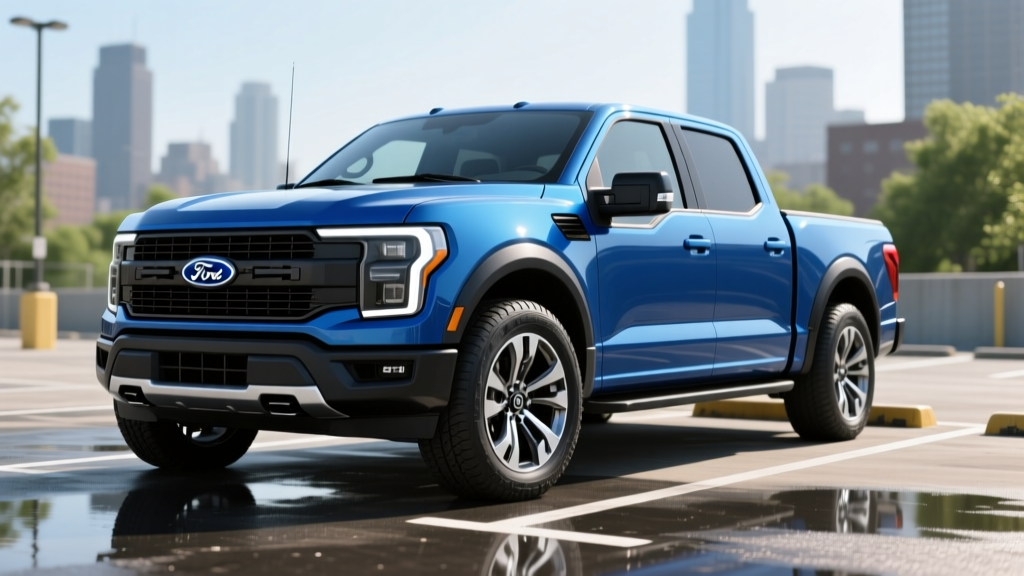
The R1T's closest competitor is the Ford F-150 Lightning, which offers a larger bed, more rear-seat room, and a lower starting price (~$55,000 for the base Pro trim). However, the Lightning is a full-size truck — significantly longer and heavier — and it lacks the R1T's off-road prowess and gear tunnel.
The Chevrolet Silverado EV targets fleet and work-truck buyers with up to 400+ miles of range and a midgate that extends bed length into the cab. It's larger and more utilitarian than the R1T.
The Tesla Cybertruck offers comparable range and performance but with polarizing styling, a stainless-steel exoskeleton that's difficult to repair, and a less proven build-quality track record. Its Supercharger network access is a strong advantage.
Against all three, the R1T wins on adventure-oriented design, build quality, and the integrated Adventure Network. It loses on price, bed length, and rear-seat volume. For the outdoor-lifestyle buyer who charges at home and takes weekend road trips, the R1T's value proposition holds. For fleet buyers or those who need maximum utility, the Lightning or Silverado EV may be more practical.
Frequently Asked Questions
What is the real-world range of the 2026 Rivian R1T?
The EPA rates the Standard Pack at ~330 miles and the Max Pack at ~410 miles. Real-world highway driving at 70 mph typically yields 260–290 miles (Standard) or 320–360 miles (Max). Cold weather reduces these figures by 20–30%.
How fast does the R1T charge at home and on the road?
At home on a Level 2 (240V, 48A) charger, the R1T adds roughly 25 miles of range per hour at 11.5 kW. On DC fast chargers — including the Rivian Adventure Network — it peaks at ~200 kW, reaching 10–80% in approximately 30 minutes (Standard Pack) or 42 minutes (Max Pack).
How much does the Rivian Adventure Network cost per charge?
Rivian owners typically pay $0.31–$0.39 per kWh at RAN stations. A 10–80% session on the Standard Pack costs roughly $25–$30. Non-Rivian EVs may pay $0.36–$0.45/kWh where access is permitted.
Does the 2026 Rivian R1T qualify for the federal EV tax credit?
The Dual-Motor Standard Pack (~$69,900 MSRP) falls under the $80,000 pickup MSRP cap and may qualify for up to $7,500 under IRS §30D, subject to buyer income limits and battery-sourcing requirements. Higher trims may exceed the MSRP cap. Always verify current eligibility on irs.gov.
Is the R1T worth buying over the F-150 Lightning or Cybertruck?
If you prioritize off-road capability, a unique gear tunnel, premium build quality, and a reliable proprietary charging network, the R1T is worth its premium. If you need a larger bed, more rear-seat room, or a lower starting price, the F-150 Lightning is a stronger choice. The Cybertruck appeals to buyers who want maximum range and Tesla's Supercharger network.
What is the R1T's battery warranty?
Rivian covers the R1T's battery pack and drivetrain for 8 years or 175,000 miles, whichever comes first. This exceeds the 8-year/100,000-mile minimum required by federal law and is among the most generous in the EV truck segment.