Quick Verdict: The R1T Is the Adventure EV to Beat—If You Can Charge It
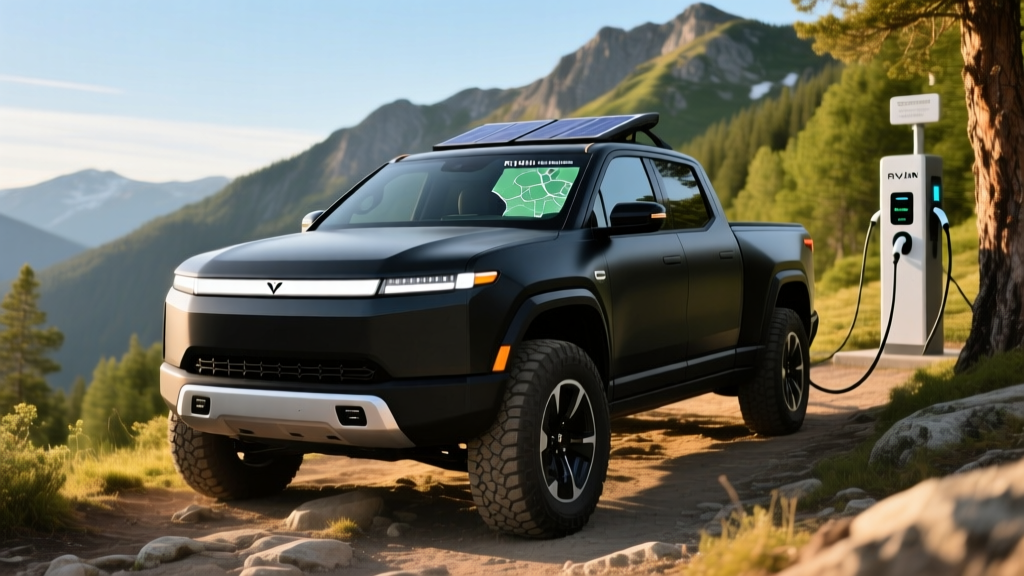
The 2026 Rivian R1T remains the only purpose-built electric pickup that balances genuine off-road capability with daily-driver refinement. With up to 420 miles of EPA-estimated range on the Max Pack, dual- and tri-motor powertrains producing up to 850 horsepower, and a growing proprietary charging network that reaches places Tesla Superchargers and Electrify America don't, the R1T occupies a unique niche. But at $69,900 to start—and climbing well past $90,000 for the tri-motor Ascend—it demands scrutiny on real-world efficiency, charging practicality, and total cost of ownership before you sign.
This review covers the 2026 R1T lineup in detail, including how the Rivian Adventure Network map changes the calculus for off-pavement travel, and whether this truck earns its premium over the Ford F-150 Lightning, Chevrolet Silverado EV, and Tesla Cybertruck.
Range, Battery, and Real-World Efficiency
Rivian offers the 2026 R1T with three battery configurations. All use nickel-manganese-cobalt (NMC) lithium-ion cells supplied by Samsung SDI, prioritizing energy density over the cycle-life advantages of LFP chemistry.
| Spec | Standard Pack | Large Pack | Max Pack |
|---|---|---|---|
| Usable Battery (kWh) | 95 kWh | 128 kWh | 149 kWh |
| Chemistry | NMC | NMC | NMC |
| EPA Est. Range (mi) | 270 | 352 | 420 |
| Efficiency (kWh/100 mi) | 48 | 48 | 49 |
| MPGe (Combined) | 70 | 70 | 69 |
At roughly 48–49 kWh per 100 miles, the R1T is not an efficiency champion. The boxy aerodynamics and 7,000+ lb curb weight work against it. For comparison, the Tesla Cybertruck AWD achieves 52 MPGe (roughly 45 kWh/100 mi), while the lighter F-150 Lightning Extended Range sits at 70 MPGe combined. If electricity costs $0.15/kWh in your area, budget about $0.072 per mile to drive the R1T—competitive with a 22 MPG gas truck at $3.50/gallon, but not dramatically cheaper to fuel.
Charging Speed: DC Fast, Home Level 2, and the Adventure Network
Charging is where the R1T story gets interesting—and where Rivian's proprietary infrastructure plays a growing role.
| Charging Level | Power / Rate | Speed |
|---|---|---|
| Level 1 (120V household) | ~1.4 kW | ~3 miles per hour |
| Level 2 (240V, 48A home charger) | 11.5 kW | ~25 miles per hour |
| DC Fast Charge (CCS/NACS) | Peak 220 kW | 10–80% in ~30 min (Large Pack) |
| Rivian Adventure Network (DC) | Up to 200 kW per stall | 10–80% in ~35 min (Large Pack) |
The R1T's 220 kW peak DC fast-charge rate is respectable but not class-leading. The charge curve tapers noticeably above 80% State of Charge—typical of NMC chemistry—so plan your road-trip stops around 10–80% sessions rather than topping to full. A Large Pack R1T will gain roughly 140 miles of range in 15 minutes at a functioning 220 kW CCS or NACS station.
Rivian now ships the R1T with the NACS (Tesla-style) charge port as standard, granting access to the Supercharger network via native plug. The included CCS adapter covers legacy Electrify America and other CCS stations.
The Rivian Adventure Network Map: Off-Grid Charging That Actually Exists
This is where the R1T differentiates from every other electric truck. The Rivian Adventure Network is a proprietary system of DC fast chargers and Level 2 Waypoints placed at trailheads, national forest boundaries, ski areas, and remote destinations where public charging infrastructure simply doesn't exist. As of early 2026, the Rivian Adventure Network map includes over 50 Adventure Network fast-charger sites and 600+ Waypoint Level 2 locations across the western and northeastern U.S.
The practical impact: you can plan an R1T trip to Moab, Glacier National Park, or the Upper Peninsula of Michigan and find Rivian-specific chargers at or near the destination—locations that Electrify America's map and even Tesla's Supercharger map leave as charging deserts. The Adventure Network chargers are exclusive to Rivian vehicles (R1T, R1S, and Rivian EDV commercial vans), which means shorter queues but also a smaller network footprint than the 6,000+ Supercharger stations available to NACS-equipped vehicles.
For buyers who intend to use the R1T as an adventure vehicle—not just a commuter—this network is a genuine value-add that competitors can't match. For urban buyers who never leave pavement, it's a nice-to-have that the Supercharger network already covers.
Performance and Drivetrain
The 2026 R1T lineup spans four powertrain configurations:
- Dual-Motor AWD: 533 hp, 610 lb-ft torque, 0–60 mph in 4.5 seconds
- Performance Dual-Motor AWD: 665 hp, 829 lb-ft, 0–60 in 3.5 seconds
- Tri-Motor AWD: 850 hp, 1,100+ lb-ft, 0–60 in 2.9 seconds (Ascend trim only)
- Quad-Motor AWD: 1,025 hp, 0–60 in 2.5 seconds (limited availability)
All configurations feature independent four-wheel drive with torque vectoring, a gear tunnel (the R1T's signature cross-bed storage compartment), and an air suspension system that provides up to 14.9 inches of ground clearance in Off-Road mode. The R1T can tow up to 11,000 lbs when properly equipped—though expect range to drop by 40–50% when towing near max capacity at highway speeds.
Interior, Cargo, and Daily Practicality
The R1T seats five with generous rear-seat legroom (38.2 inches) and a flat floor thanks to the skateboard platform. Cargo capacity breaks down as follows:
- Bed length: 4.5 feet (54 inches) with the tailgate up; extends to ~6 feet with the Gear Guard tailgate open
- Bed volume: ~39 cu ft (with bed cover)
- Frunk (front trunk): 11 cu ft, lockable and drainable—fits a large cooler
- Gear Tunnel: 11 cu ft of pass-through storage behind the rear seats, accessible from both bed sides
- Total enclosed cargo: ~61 cu ft across frunk, bed (covered), and gear tunnel
The 15.6-inch center touchscreen runs Rivian's custom OS with integrated trail maps, campsite databases, and Adventure Network navigation. The 12.3-inch digital cluster is clear and configurable. Wireless Apple CarPlay and Android Auto are standard. Build quality in the 2026 model year has improved noticeably over early 2022–2023 production, with tighter panel gaps and more consistent interior materials.
Pricing, Trims, and Federal Tax Credit Eligibility
| Trim / Config | Base MSRP | Est. As-Tested | Federal §30D Credit |
|---|---|---|---|
| R1T Dual-Motor (Standard Pack) | $69,900 | $72,500 | Eligible up to $7,500* |
| R1T Dual-Motor (Large Pack) | $75,900 | $80,000 | Eligible up to $7,500* |
| R1T Performance Dual-Motor (Large) | $79,900 | $85,000 | Eligible up to $7,500* |
| R1T Tri-Motor (Max Pack, Ascend) | $94,900 | $99,500 | Eligible up to $7,500* |
*Federal tax credit eligibility under IRS §30D is subject to multiple requirements for 2026:
- MSRP cap: Trucks/vans/SUVs must have an MSRP at or below $80,000. The Tri-Motor Max Pack Ascend ($94,900) exceeds this cap and does NOT qualify.
- Buyer income cap: Modified AGI must not exceed $300,000 (joint), $225,000 (head of household), or $150,000 (single).
- Battery sourcing: Critical minerals and battery components must meet escalating domestic-content thresholds. Rivian's Samsung SDI cells have faced sourcing scrutiny—confirm current-year eligibility on the IRS qualified vehicles list before purchase.
- Point-of-sale transfer: You can transfer the credit to the dealer for an upfront price reduction, but you must still meet income and sourcing requirements or face repayment at tax time.
The Dual-Motor Standard and Large Pack configurations fall under the $80,000 MSRP cap and are the safest bets for credit eligibility. Always verify on fueleconomy.gov before committing.
Warranty and Long-Term Ownership
Rivian backs the R1T with:
- Basic vehicle warranty: 5 years / 60,000 miles
- Battery and drive unit warranty: 8 years / 175,000 miles, with a capacity retention threshold of 70% during the warranty period
- Roadside assistance: 5 years / 60,000 miles
The 175,000-mile battery warranty is among the most generous in the EV truck segment (Ford covers 8 years / 100,000 miles on the F-150 Lightning). NMC degradation data from early R1T owners suggests roughly 5–7% capacity loss over the first 50,000 miles, with the curve flattening thereafter. Rivian's over-the-air update system has historically improved efficiency and battery management, which bodes well for long-term State of Health.
Pros, Cons, and the Competition
Pros
- Genuine off-road capability with 14.9" ground clearance and tank turns (tri/quad motor)
- Rivian Adventure Network map reaches remote destinations other networks miss
- Up to 420 miles EPA range (Max Pack) — longest of any electric pickup
- Frunk + gear tunnel = best-in-class enclosed storage versatility
- 8-year / 175,000-mile battery warranty
- NACS native + CCS adapter = access to both Superchargers and legacy networks
Cons
- Efficiency is poor (~48 kWh/100 mi) — charging costs add up on road trips
- 220 kW peak DC charge rate trails the 350 kW capability of the Silverado EV
- Tri-Motor Ascend exceeds $80K MSRP cap — no federal tax credit
- 4.5-foot bed is short for traditional pickup work (no 6.5 or 8 ft option)
- Rivian service center network still sparse in many states
- Insurance premiums run 20–30% higher than comparable gas trucks
Versus the F-150 Lightning: The Ford is cheaper, has a longer bed, and benefits from Ford's massive dealer/service network. But it offers less range (max 320 mi EPA), no proprietary charging network, and less off-road sophistication. Choose the Lightning for work and value; choose the R1T for adventure and technology.
Versus the Cybertruck: The Tesla is more efficient and has Supercharger ubiquity, but its polarizing design, stainless-steel panel quality concerns, and lack of a true frunk/gear-tunnel equivalent make the R1T the more practical daily driver for most buyers.
Who the 2026 Rivian R1T Suits Best
Buy the R1T if: You want an electric truck for outdoor recreation—hiking, skiing, camping, overlanding—and value the Rivian Adventure Network map for reaching remote trailheads. You need genuine off-road capability, appreciate the gear tunnel and frunk for adventure gear, and can charge at home with Level 2 to minimize public-charging dependence.
Skip the R1T if: You need a full-size work truck with an 8-foot bed and 13,000-lb towing for daily commercial use. You live in an area with no Rivian service center within 100 miles. You prioritize lowest cost per mile over capability and storage versatility.
Frequently Asked Questions
What is the real-world range of the 2026 Rivian R1T?
The Large Pack Dual-Motor achieves an EPA-estimated 352 miles. In real-world highway driving at 70–75 mph, expect 280–310 miles. In winter conditions below 32°F, plan for 230–260 miles. The Max Pack's 420-mile EPA rating yields roughly 340–370 highway miles in fair weather.
How fast does the R1T charge at home and on the road?
On a 48-amp Level 2 home charger (11.5 kW), the R1T gains about 25 miles of range per hour—a full overnight charge from 10% to 100% takes roughly 12–14 hours on the Large Pack. On DC fast charging, the R1T peaks at 220 kW and charges from 10–80% in approximately 30 minutes on the Large Pack. Charging slows significantly above 80% SoC.
Does the 2026 Rivian R1T qualify for the $7,500 federal EV tax credit?
The Dual-Motor Standard Pack ($69,900) and Dual-Motor Large Pack ($75,900) fall under the $80,000 MSRP cap for trucks and are potentially eligible, assuming your income is within IRS limits ($150K single / $300K joint) and battery sourcing requirements are met. The Tri-Motor Max Pack Ascend at $94,900 exceeds the MSRP cap and does not qualify. Always verify on fueleconomy.gov before purchasing.
What is the Rivian Adventure Network and how do I use the map?
The Rivian Adventure Network is a proprietary system of DC fast chargers (up to 200 kW) and Level 2 Waypoint chargers placed at outdoor recreation destinations—trailheads, national parks, ski resorts, and campgrounds. The Rivian Adventure Network map is accessible via the vehicle's infotainment system and the Rivian mobile app. As of 2026, there are 50+ Adventure Network fast-charger sites and 600+ Waypoint locations, concentrated in the western and northeastern U.S.
Is the R1T worth buying over the F-150 Lightning or Cybertruck?
The R1T is the best choice if off-road capability, adventure-oriented storage (frunk + gear tunnel), and access to remote charging via the Adventure Network are priorities. The F-150 Lightning wins on price, bed length, and service network breadth. The Cybertruck wins on efficiency and Supercharger access. The R1T's premium is justified for outdoor enthusiasts; for fleet or work use, the Lightning is more practical.
How long will the R1T battery last?
Rivian warranties the battery for 8 years or 175,000 miles with a 70% capacity retention threshold. Real-world data from early owners indicates approximately 5–7% degradation over the first 50,000 miles. With NMC chemistry and proper charging habits (avoiding sustained 100% SoC, using preconditioning for DC fast charging), most owners can expect 85%+ capacity retention at 100,000 miles.