Who Actually Makes Rivian? The Company Behind the Electric Trucks
If you've searched "Rivian is made by who," you're not alone. Unlike legacy automakers with century-old nameplates, Rivian Automotive, Inc. is an American electric-vehicle manufacturer founded in 2009 by MIT graduate RJ Scaringe. Headquartered in Irvine, California, Rivian designs, engineers, and manufactures its vehicles in-house at a 3.3-million-square-foot factory in Normal, Illinois — a former Mitsubishi plant retooled entirely for EV production.
Rivian is not a subsidiary of Ford, GM, or any legacy brand. It is an independent, publicly traded company (NASDAQ: RIVN) that went public in November 2021. Amazon holds a significant stake and is also Rivian's largest commercial customer through the EDV (Electric Delivery Van) program. Volkswagen Group invested up to $5.8 billion in Rivian in mid-2024 as part of a joint-venture technology partnership, but VW does not own or control Rivian's consumer vehicle division.
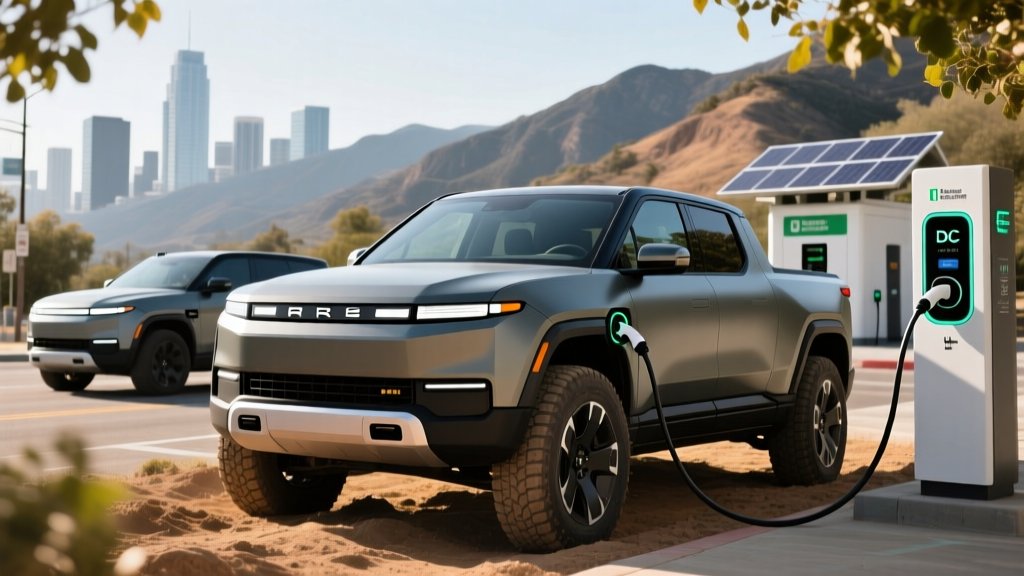
For buyers, the key takeaway: Rivian designs its own battery packs, skateboard platforms, drive units, and software stack. The R1T pickup and R1S SUV share the same underlying architecture but serve different use cases. Here's exactly what you're getting in the 2026 model year.
2026 Rivian R1T and R1S: Core Specifications at a Glance
| Spec | Dual-Motor (Standard Battery) | Dual-Motor (Large Battery) | Tri-Motor (Max Battery) |
|---|---|---|---|
| EPA Range (R1T) | ~270 mi | ~352 mi | ~420 mi (est.) |
| EPA Range (R1S) | ~270 mi | ~340 mi | ~410 mi (est.) |
| Battery Usable Capacity | ~95 kWh (LFP) | ~128 kWh (NMC) | ~149 kWh (NMC) |
| Horsepower | 533 hp | 533 hp | 850 hp |
| 0–60 mph | 4.5 sec | 4.5 sec | ~2.9 sec |
| Drivetrain | AWD (dual-motor) | AWD (dual-motor) | AWD (tri-motor) |
| Max DC Fast Charge | ~200 kW | ~220 kW | ~220 kW |
| 10–80% DCFC Time | ~27 min | ~30 min | ~38 min |
| Level 2 Home Rate | 11.5 kW (~25 mi/hr) | 11.5 kW (~25 mi/hr) | 11.5 kW (~25 mi/hr) |
| Max Towing (R1T) | 11,000 lb | 11,000 lb | 11,000 lb |
| Base MSRP (R1T) | $69,900 | $75,900 | $89,900 |
| Base MSRP (R1S) | $74,900 | $79,900 | $94,900 |
Note: Tri-Motor / Max Battery specs are based on Rivian's latest published data for the second-generation platform. EPA final certification figures may vary slightly. Always confirm at fueleconomy.gov.
Real-World Range: What the EPA Sticker Doesn't Tell You
EPA Estimate: 352 miles
Real-World Highway (75 mph, 70°F): ~290–310 miles
Real-World Highway (30°F or below): ~230–260 miles
Towing a 5,000-lb trailer: ~160–190 miles
Rivian's second-generation drive units are more efficient than the originals, but physics still governs a 7,000-pound, brick-shaped pickup. At highway speeds above 70 mph, aerodynamic drag dominates, and you'll consume roughly 42–48 kWh per 100 miles — that translates to about 290–310 real-world miles from the 128 kWh Large pack before you need a charger.
Cold weather compounds the loss. Without preconditioning, an NMC pack at 20°F can lose 25–35% of its usable range. Rivian's heat pump and battery preconditioning (activated when you navigate to a charger) mitigate this, but plan for roughly 230–260 highway miles in deep winter. If you tow, range drops dramatically — expect roughly half the EPA number with a loaded 5,000-pound trailer.
The Standard Battery's LFP chemistry is worth noting: LFP (lithium iron phosphate) sacrifices some energy density (hence ~270 miles EPA) but offers a longer cycle life, better thermal stability, and can be charged to 100% daily without accelerated degradation. For commuters who charge at home nightly, LFP is the pragmatic choice. The NMC (nickel manganese cobalt) Large and Max packs deliver more range but are best kept between 20–80% for daily use, charging to 100% only before road trips.
Charging Speed: DC Fast Charging and Home Level 2
| Charging Level | Power | Miles Added per Hour | Notes |
|---|---|---|---|
| Level 1 (120V household) | ~1.4 kW | ~3 mi/hr | Emergency/trickle only |
| Level 2 (240V, 48A home) | 11.5 kW | ~25 mi/hr | Full charge overnight (~11–13 hrs for Large pack) |
| DC Fast Charge (CCS/NACS) | Up to 220 kW peak | ~600+ mi/hr at peak | 10–80% in ~30 min (Large pack) |
Rivian's Gen 2 platform uses a 400-volt architecture (not 800V like the Hyundai Ioniq 5 or Porsche Taycan). Peak charge rate tops out around 220 kW on the Large and Max packs, and the charge curve tapers noticeably above 80%. That means a 10–80% session takes roughly 30 minutes on a 250+ kW CCS or NACS station, but 80–100% can add another 25–30 minutes. On road trips, plan your stops around 10–80% sessions and skip topping off unless you need the final miles.
Rivian vehicles now ship with NACS (Tesla Supercharger-compatible) charge ports on the latest production runs, and adapters are available for older CCS-equipped models. Access to Tesla's Supercharger network — over 25,000 stalls in North America — significantly improves road-trip charging logistics. For home charging, a 48-amp Level 2 wall connector on a 60-amp circuit delivers 11.5 kW, replenishing the Standard pack in roughly 8 hours and the Large pack in about 11–13 hours. Budget $800–$2,000 for professional Level 2 installation depending on your electrical panel's capacity (a 200-amp panel is usually sufficient; older 100-amp panels may require a $2,000–$4,000 upgrade).
Performance and Drivetrain: Dual-Motor vs. Tri-Motor
Every Rivian R1T and R1S is all-wheel drive. The Dual-Motor setup uses one motor on each axle for a combined 533 horsepower and 610 lb-ft of torque, delivering a 4.5-second 0–60 mph time — quick for a vehicle weighing over 7,000 pounds.
The Tri-Motor configuration adds a second rear motor, pushing output to 850 horsepower and launching the R1T to 60 mph in approximately 2.9 seconds. Rivian calls this the "Tri-Motor AWD" and it includes a dedicated sport mode with torque vectoring across the rear axle. In practice, the Dual-Motor is more than adequate for highway merging, off-road trails, and towing. The Tri-Motor is a performance statement — thrilling, but it costs $14,000+ more and reduces range slightly due to weight.
Rivian's quad-motor configuration was discontinued after the 2024 model year as part of the Gen 2 platform simplification. If you see a used quad-motor R1T, it's a first-generation model.
Pricing, Trims, and Federal Tax Credit Eligibility
Rivian simplified its trim structure for 2026. The R1T and R1S are available in three primary configurations:
- Dual-Motor Standard Battery: R1T from $69,900 / R1S from $74,900
- Dual-Motor Large Battery: R1T from $75,900 / R1S from $79,900
- Tri-Motor Max Battery: R1T from $89,900 / R1S from $94,900
An Adventure package (off-road tires, reinforced underbody, integrated air compressor) adds approximately $3,500. An Ascend package (premium interior, advanced driver assists) adds roughly $5,000. Destination fees run around $1,800.
- MSRP Cap: Vans, SUVs, and pickup trucks must have an MSRP at or below $80,000 to qualify.
- Income Cap: Adjusted gross income must not exceed $150,000 (single), $225,000 (head of household), or $300,000 (joint filers).
- Battery Sourcing: A percentage of critical minerals and battery components must meet North American sourcing thresholds, which tighten annually. Check current requirements at irs.gov.
- Credit Amount: Up to $7,500 if both critical-mineral and battery-component requirements are met; $3,750 if only one is met.
- Point-of-Sale Transfer: You can transfer the credit to the dealer at purchase to reduce the upfront price, rather than waiting to claim it on your tax return.
Critical caveat: The R1T Dual-Motor Standard ($69,900) and Large ($75,900) fall under the $80,000 truck MSRP cap and may qualify for the full or partial credit depending on your income and the current battery-sourcing rules. The Tri-Motor at $89,900 exceeds the cap and does NOT qualify. The R1S, classified as an SUV, also has an $80,000 MSRP cap. Always verify current eligibility before purchasing — rules change frequently. Consult a tax professional.
Cargo, Passenger Space, and Daily Practicality
The R1T is a midsize crew-cab pickup with a 4.5-foot bed (54 inches). That's shorter than a Toyota Tacoma's 5- or 6-foot bed, but Rivian compensates with the Gear Tunnel — a 17-cubic-foot lockable pass-through compartment between the cab and bed, accessible from both sides. Combined bed + Gear Tunnel + frunk (front trunk, ~11 cu ft), the R1T offers roughly 42 cubic feet of enclosed cargo space.
The R1S is a three-row SUV seating up to seven. Cargo volume behind the third row is approximately 10.6 cu ft, expanding to ~46 cu ft behind the second row and ~92 cu ft with both rear rows folded. Legroom is generous up front (41.3 inches) but the third row is best suited for children or short trips.
Both vehicles feature an 11-inch ground clearance in standard ride height, adjustable via air suspension up to 14.9 inches for off-road use, or lowered to 6.5 inches for easier loading. Wading depth is rated at over 3 feet.
Tech, Driver Assists, and Software
Rivian runs its own vertically integrated software stack — no Android Automotive, no Apple CarPlay, no Android Auto. The 15.6-inch center touchscreen handles navigation, media, climate, and vehicle settings. The interface is clean and responsive, but the absence of phone projection frustrates some buyers who prefer their own maps and playlists. Bluetooth audio streaming and native Spotify/Apple Music integration partially address this.
The driver-assistance suite, branded Rivian Driver+, includes adaptive cruise control, lane-centering, automatic emergency braking, and blind-spot monitoring. This is an SAE Level 2 system — meaning it assists with steering and speed but requires the driver to remain fully engaged and hands on or near the wheel at all times. It is not "self-driving." Hands-free highway driving on mapped routes is available in newer software releases but remains Level 2 with driver monitoring via a cabin camera.
Over-the-air (OTA) updates are frequent and meaningful — Rivian has added features like enhanced regen profiles, new drive modes, and improved route planning post-delivery. The vehicle's electrical architecture supports software-defined upgrades to suspension tuning, thermal management, and charging algorithms.
Warranty Coverage
| Coverage | Term |
|---|---|
| Battery Pack | 8 years / 175,000 miles (retains ≥70% capacity) |
| Drive Units (Powertrain) | 8 years / 175,000 miles |
| Bumper-to-Bumper | 5 years / 60,000 miles |
| Roadside Assistance | 5 years / 60,000 miles |
Rivian's battery warranty guarantees the pack will retain at least 70% of its original usable capacity over 8 years or 175,000 miles, whichever comes first. That 70% threshold is industry-standard (Tesla uses the same). In practice, NMC packs in liquid-cooled systems like Rivian's typically degrade 8–12% over the first 100,000 miles based on early owner data, well within warranty limits. LFP packs in the Standard Battery are expected to degrade even more slowly, though long-term fleet data is still accumulating.
Pros and Cons
- Class-leading off-road capability with air suspension and 14.9" ground clearance
- 11,000-lb towing capacity (R1T) exceeds most midsize gas trucks
- Gear Tunnel provides unique, lockable enclosed storage
- LFP Standard Battery option for daily commuters (100% charge-friendly)
- NACS port + Supercharger access improves road-trip charging
- Frequent, meaningful OTA updates
- 8-yr/175,000-mi battery warranty exceeds most competitors
- No Apple CarPlay or Android Auto — native software only
- Tri-Motor trims exceed $80,000 MSRP cap, disqualifying from federal tax credit
- Real-world highway range drops significantly when towing (expect ~160–190 mi)
- 400V architecture means slower peak DCFC vs. 800V competitors (Hyundai/Kia/Porsche)
- R1S third row is tight for adults
- Service center network still expanding — some rural owners face long tow distances
- Insurance premiums run 15–25% higher than comparable gas trucks
Who Should Buy a Rivian — and Who Shouldn't?
Choose the R1T if: You need a midsize pickup with genuine off-road chops, want EV daily-driver savings, tow occasionally (not daily), and value enclosed Gear Tunnel storage for gear like bikes, skis, or camping equipment.
Choose the R1S if: You need three rows for family hauling, want air-suspension comfort on long road trips, and prefer SUV cargo flexibility over an open bed.
Choose the Standard Battery (LFP) if: Your daily commute is under 100 miles round-trip, you charge at home nightly, and you want maximum battery longevity without range-anxiety about charging to 100%.
Choose the Large Battery (NMC) if: You road-trip frequently, need 300+ real-world miles between stops, and don't mind managing charge limits for daily use.
Look elsewhere if: You need a full-size 6.5-foot bed (Ford F-150 Lightning), you demand Apple CarPlay, your budget is under $60,000, or you regularly tow more than 7,000 pounds over long distances (a diesel Super Duty remains more practical for heavy daily towing).
How Does Rivian Stack Up Against Key Competitors?
The R1T competes most directly with the Ford F-150 Lightning (full-size, larger bed, lower starting price around $55,000, but less off-road capability) and the Chevrolet Silverado EV (larger, longer range options, but also larger and heavier). The R1T is more premium, more off-road focused, and more compact than either — think of it as the electric equivalent of a Jeep Gladiator crossed with a Range Rover Sport.
The R1S competes with the Tesla Model X (faster charging, Autopilot ecosystem, falcon-wing doors, but aging interior design) and the Kia EV9 (much cheaper starting at ~$55,000, three rows, but less range and no air suspension). The R1S is the most off-road-capable electric three-row SUV on the market, full stop.
For buyers cross-shopping on price: the R1T Dual-Motor Standard at $69,900 (potentially ~$62,400 after a $7,500 credit) lands in a unique niche — no other electric pickup combines this level of off-road hardware, premium interior, and compact-truck maneuverability.
Frequently Asked Questions
Is Rivian made by Ford or Amazon?
No. Rivian is an independent, publicly traded company (NASDAQ: RIVN). Amazon is a major investor and commercial customer (through the delivery van program), and Volkswagen has a technology partnership with a significant financial stake, but neither company manufactures or controls Rivian's consumer vehicles. Rivian designs and builds the R1T and R1S itself at its Normal, Illinois factory.
Does the Rivian R1T qualify for the $7,500 federal EV tax credit?
The R1T Dual-Motor Standard Battery ($69,900) and Dual-Motor Large Battery ($75,900) fall under the $80,000 MSRP cap for pickup trucks and may qualify, provided your income is within the §30D limits ($150K single / $300K joint) and the vehicle's battery meets current critical-mineral and component-sourcing thresholds. The Tri-Motor at $89,900 exceeds the MSRP cap and does not qualify. Rules change frequently — verify at irs.gov and consult a tax professional before purchasing.
What is the real-world range of the Rivian R1T?
The EPA rates the R1T Dual-Motor Large Battery at approximately 352 miles. In real-world highway driving at 75 mph in moderate temperatures, expect 290–310 miles. In sub-freezing conditions, expect 230–260 miles. When towing a 5,000-lb trailer, range drops to roughly 160–190 miles. The Standard Battery (LFP) is rated around 270 miles EPA; expect 220–240 real-world highway miles.
How fast does the Rivian charge at home and on the road?
At home on a 240V Level 2 charger (11.5 kW), the R1T adds roughly 25 miles of range per hour — a full charge of the Large pack takes about 11–13 hours overnight. On a DC fast charger, peak rate is approximately 220 kW, with a 10–80% session taking about 30 minutes on the Large pack. The charge curve tapers significantly above 80%, so avoid topping off on road trips unless necessary.
Is Rivian's driver-assist system self-driving?
No. Rivian Driver+ is an SAE Level 2 driver-assistance system. It provides adaptive cruise control and lane-centering but requires the driver to remain fully attentive and ready to take over at any moment. Even hands-free highway modes (where available) use driver monitoring cameras and remain Level 2. True self-driving (Level 4) is currently only available in limited geofenced areas via services like Waymo — not in any consumer vehicle.
Where is the Rivian R1T manufactured?
All Rivian R1T and R1S vehicles are manufactured at Rivian's own production facility in Normal, Illinois. The factory was previously a Mitsubishi assembly plant and was completely retooled by Rivian for electric vehicle production starting in 2021. Rivian controls the entire manufacturing process in-house, including battery pack assembly.