Why a Rivian VIN Check Matters Before You Buy
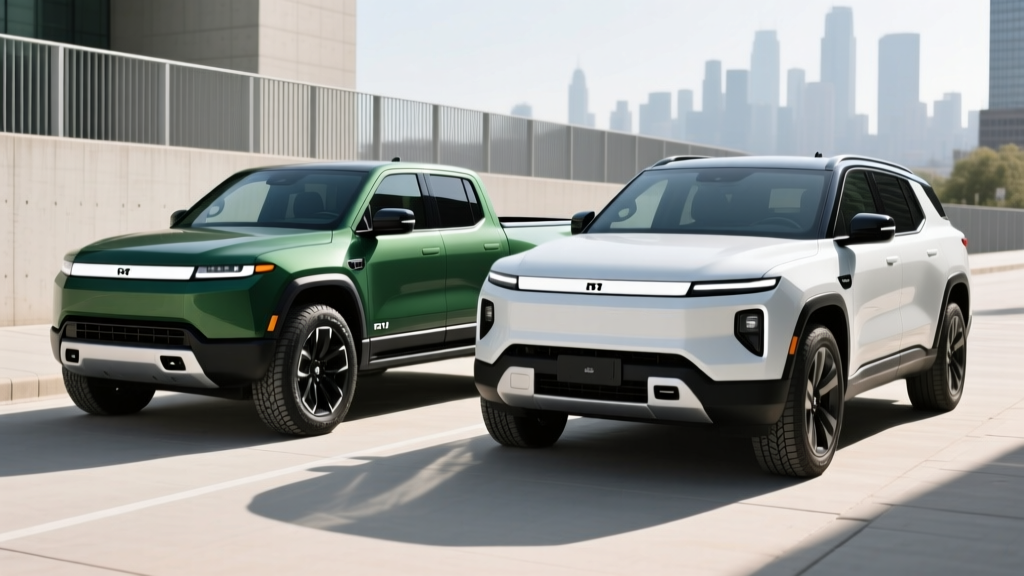
Whether you're taking delivery of a new 2026 Rivian R1T pickup or R1S SUV, evaluating a certified pre-owned unit, or tracking a reservation, a Rivian VIN check is the single most important step in verifying exactly what you're getting. Rivian's build configurations span multiple battery packs, motor setups, and software-defined features — and the 17-character Vehicle Identification Number encodes all of it. Running a VIN lookup through NHTSA's free VIN decoder confirms the model year, assembly plant (Normal, Illinois), restraint systems, and battery pack type, while Rivian's own owner portal ties the VIN to over-the-air update history, warranty status, and service records.
For 2026, Rivian's second-generation R1 platform brings meaningful hardware upgrades: a new dual-motor base configuration, enhanced thermal management, and the continuation of the tri-motor and quad-motor performance tiers. This review covers the full lineup with the exact numbers buyers need — and explains what your VIN reveals at each step.
2026 Rivian R1T and R1S at a Glance: Spec Table
| Spec | Dual-Motor (Standard) | Dual-Motor (Max Pack) | Tri-Motor | Quad-Motor |
|---|---|---|---|---|
| EPA Range (R1T) | 270 mi | 420 mi | 380 mi | 340 mi |
| EPA Range (R1S) | 260 mi | 410 mi | 370 mi | 330 mi |
| Battery Usable Capacity | ~92 kWh (LFP) | ~149 kWh (NMC) | ~149 kWh (NMC) | ~149 kWh (NMC) |
| Horsepower | 533 hp | 533 hp | 850 hp | 1,025 hp |
| 0-60 mph | 4.5 sec | 4.5 sec | 3.0 sec | 2.5 sec |
| Drivetrain | AWD (2 motors) | AWD (2 motors) | AWD (3 motors) | AWD (4 motors) |
| Max DC Fast Charge | 200 kW | 220 kW | 220 kW | 220 kW |
| 10-80% DC Time | ~28 min | ~34 min | ~34 min | ~34 min |
| Level 2 Home Rate | 11.5 kW (~25 mi/hr) | 11.5 kW (~25 mi/hr) | 11.5 kW (~25 mi/hr) | 11.5 kW (~25 mi/hr) |
| Towing Capacity | 11,000 lbs | 11,000 lbs | 11,000 lbs | 11,000 lbs |
Real-World Range: What the EPA Sticker Doesn't Tell You
The 420-mile Max Pack R1T carries one of the highest EPA range ratings of any production EV. But real-world results depend heavily on driving style, temperature, and terrain.
- Highway (70-75 mph, 65°F): Expect ~340-360 miles on the Max Pack. The R1T's boxy aerodynamics (Cd ~0.38) penalize high-speed efficiency.
- Cold Weather (20-30°F): Range drops 20-30% across all packs. A Max Pack R1T may deliver ~290-310 miles in freezing conditions, even with preconditioning and the heat pump active.
- Towing (5,000-7,000 lb trailer): Expect 50-60% range reduction. A Max Pack towing a mid-weight camper realistically covers 170-200 miles between charges.
- City/Commuting (Standard Pack): The 270-mile EPA rating holds up well in stop-and-go driving with regen braking; expect 250-270 actual miles.
Rivian's 2026 thermal management system includes a standard heat pump across all trims, which reduces cold-weather cabin heating energy draw compared to resistive heaters. Preconditioning the battery while plugged in — triggered automatically when you set a navigation destination to a DC fast charger — is essential for achieving peak charge rates in cold climates.
According to fueleconomy.gov, the Dual-Motor R1T Standard Pack achieves approximately 73 MPGe combined (2.0 kWh/mile), while the Max Pack drops to roughly 65 MPGe combined (2.3 kWh/mile) due to the heavier battery. These figures are competitive with the Ford F-150 Lightning Extended Range but trail the more aerodynamic Tesla Cybertruck AWD.
Charging Speed: DC Fast Charging and Home Level 2
Rivian equips all 2026 R1 vehicles with a NACS (North American Charging Standard) port, granting native access to Tesla's Supercharger network — currently the most reliable DC fast-charging infrastructure in North America. The CCS1 adapter is no longer needed for most public networks, though Rivian still includes one for legacy CHAdeMO/CCS stations.
| Charging Level | Power / Rate | Miles Added Per Hour | Notes |
|---|---|---|---|
| Level 1 (120V household) | ~1.4 kW | ~3-4 mi/hr | Emergency/trickle only |
| Level 2 (240V, 48A home charger) | 11.5 kW | ~25 mi/hr | Full overnight charge in 8-14 hours depending on pack |
| DC Fast (Standard Pack peak) | 200 kW | ~140 mi in 15 min | Peak rate sustained to ~60% SoC, then tapers |
| DC Fast (Max/Tri/Quad peak) | 220 kW | ~160 mi in 15 min | Charge curve tapers significantly above 80% SoC |
Charge curve reality check: Rivian's advertised peak DC rate is just that — a peak. On a 250 kW Supercharger V4 or Electrify America 350 kW station, the Max Pack will pull 220 kW briefly between roughly 15-40% State of Charge (SoC), then ramp down progressively. The 10-80% time of ~34 minutes for the Max Pack reflects this taper. If you're road-tripping and only need 10-60%, plan for ~20 minutes. Charging past 80% adds significant time — the final 20% can take as long as the first 70% due to cell-balancing and thermal protection.
For home charging, Rivian's Wall Charger (included with delivery) delivers up to 11.5 kW on a 240V/48A circuit. Most owners with a Standard Pack will wake up to a full battery after 8-9 hours. Max Pack owners should budget 13-15 hours for a full 10-100% session — which is why most daily driving only requires partial top-ups.
Performance, Drivetrain, and What Your VIN Encodes
Rivian's 2026 lineup offers four distinct motor configurations, and your VIN's 4th through 8th characters encode the specific powertrain. Here's what each delivers:
Dual-Motor (Base): One motor per axle, 533 hp combined, 610 lb-ft of torque. This is the volume configuration — quick enough for any real-world scenario at 4.5 seconds to 60 mph, with the best efficiency of the lineup. The Standard Pack uses an LFP (lithium iron phosphate) battery, which trades energy density for longevity: LFP cells tolerate repeated 100% charging with minimal degradation and offer a longer cycle life than NMC.
Tri-Motor: One front motor, two rear motors. 850 hp and a 3.0-second 0-60 time. This is the sweet spot for buyers who want serious performance without the Quad-Motor price premium. Uses NMC (nickel manganese cobalt) chemistry for higher energy density.
Quad-Motor: One independently controlled motor per wheel. 1,025 hp, 2.5-second 0-60, and true torque vectoring. The Quad-Motor enables Rivian's "Tank Turn" feature (low-speed 360° rotation on loose surfaces) and the most precise off-road traction control in the segment.
All configurations feature Rivian's air suspension with up to 14.9 inches of ground clearance, a wading depth of 3+ feet, and an integrated camp kitchen option in the R1T's gear tunnel.
Pricing, Trim Levels, and Federal Tax Credit Eligibility
| Configuration | R1T Base MSRP | R1S Base MSRP | Federal §30D Credit | Effective Price (est.) |
|---|---|---|---|---|
| Dual-Motor Standard | $69,900 | $74,900 | $7,500* | $62,400 / $67,400 |
| Dual-Motor Max Pack | $84,900 | $89,900 | $7,500* | $77,400 / $82,400 |
| Tri-Motor | $94,900 | $99,900 | $3,750** | $91,150 / $96,150 |
| Quad-Motor | $104,900 | $109,900 | $3,750** | $101,150 / $106,150 |
*Full $7,500 credit requires meeting both critical minerals and battery component sourcing requirements under IRS §30D. **Partial credit applies when only one of the two sourcing requirements is met. Credit eligibility depends on battery supply chain — confirm at purchase.
- MSRP Cap: Vans, SUVs, and pickups (including R1T/R1S) must have an MSRP ≤ $80,000 for the full credit. Tri-Motor and Quad-Motor trims exceed this cap and are ineligible.
- Buyer Income Cap: Modified AGI must not exceed $300,000 (joint), $225,000 (head of household), or $150,000 (single).
- Battery Sourcing: Critical minerals and battery components must meet phased-in domestic/free-trade-partner thresholds per IRS guidelines. Rivian has been progressively onshoring supply, but exact eligibility varies by build month.
- Point-of-Sale Transfer: As of 2024, buyers can transfer the credit to the dealer at purchase, reducing the out-of-pocket price directly rather than waiting for a tax refund.
- Consult a tax professional to confirm your personal eligibility before relying on the credit in your purchase decision.
The Dual-Motor Standard Pack at $69,900 is the credit-eligible sweet spot. With the full $7,500 point-of-sale transfer, the effective price drops to $62,400 — competitive with a well-equipped Ford F-150 Lightning Lariat and significantly undercutting the Cybertruck AWD.
Cargo, Passenger Space, and Daily Practicality
R1T (Pickup): The 4.5-foot bed is shorter than full-size truck beds but compensated by the innovative Gear Tunnel — a 11.7 cu ft pass-through compartment behind the rear seats accessible from both sides. Combined with the 11.0 cu ft frunk (front trunk), total enclosed cargo capacity reaches ~35 cu ft without using the bed. Rear-seat legroom is 38.1 inches, adequate for adults on long drives.
R1S (SUV): Three rows of seating with 7-passenger capacity. Cargo behind the third row is limited at ~10.6 cu ft, but folding the third row opens ~58 cu ft, and folding both rear rows yields ~104 cu ft. The R1S shares the R1T's 11.0 cu ft frunk. Third-row space is best suited for children; adults will find it tight on long trips.
Both vehicles feature Rivian's 15.6-inch center touchscreen running a custom Android-based OS, a 12.3-inch driver display, and over-the-air updates that have meaningfully improved the platform since launch. The 2026 model year adds an upgraded Driver+ ADAS suite with enhanced lane-centering and automatic lane-change functionality — this is an SAE Level 2 driver-assistance system requiring full driver engagement, not autonomous driving.
Warranty Coverage and Battery Longevity
Rivian's warranty structure is competitive with the EV segment:
- Battery & Drive Unit: 8 years / 175,000 miles (whichever comes first), with a capacity retention threshold of 70% of original kWh.
- Vehicle Limited Warranty: 5 years / 60,000 miles bumper-to-bumper.
- Corrosion Perforation: 5 years / unlimited miles.
The 175,000-mile battery warranty is notably generous — most competitors (Tesla, Ford, GM) cap at 100,000-120,000 miles for the traction battery. For LFP-equipped Standard Pack models, real-world degradation data from early Rivian owners suggests approximately 5-7% capacity loss over the first 50,000 miles, with the curve flattening significantly afterward. NMC packs in Max/Tri/Quad configurations show slightly faster initial degradation (~8-10% over 50,000 miles) but remain well within the 70% warranty threshold at high mileage.
A full battery pack replacement out of warranty is a significant expense — industry estimates for a 149 kWh NMC pack place replacement at $20,000-$28,000 including labor, though prices continue to decline as cell costs fall. The LFP Standard Pack replacement would be lower, estimated at $14,000-$18,000.
Pros, Cons, and Who Should Buy a Rivian
- Class-leading off-road capability with air suspension and quad-motor torque vectoring
- NACS native — full Supercharger network access without adapters
- 420-mile Max Pack range (R1T) is among the highest of any production EV
- Innovative Gear Tunnel and camp kitchen options
- 11,000-lb towing capacity across all configurations
- 175,000-mile battery warranty exceeds most competitors
- Strong OTA update track record improving the vehicle post-purchase
- Tri-Motor and Quad-Motor exceed the $80,000 MSRP cap — no federal tax credit
- Boxy shape hurts highway efficiency — real-world range drops significantly at 75+ mph
- Towing cuts range in half — plan charging stops carefully with a trailer
- R1S third row is cramped for adults
- Service center network still expanding — some owners face long travel for warranty work
- Insurance premiums run 15-25% higher than comparable ICE trucks (get quotes before buying)
Best for: Outdoor enthusiasts who need genuine off-road capability and towing, adventure-oriented families, and buyers who want a premium EV truck/SUV with Supercharger access. The Dual-Motor Standard Pack at ~$62,400 after credit is a compelling value for daily commuters who take weekend trips. The Max Pack suits road-trippers who want minimal charging stops.
Consider alternatives if: You primarily tow long distances (the F-150 Lightning's larger bed and established dealer network may serve better), you need maximum third-row comfort (look at the Kia EV9), or you want the lowest possible price point (the base Tesla Cybertruck RWD undercuts significantly, though with trade-offs in build quality and service).
Using a Rivian VIN Check to Verify Your Vehicle
Before finalizing any Rivian purchase — new delivery, used, or CPO — run the VIN through these resources:
- NHTSA VIN Decoder (nhtsa.gov/vin): Confirms model year, make, body style, engine/motor type, assembly plant, and safety equipment. Free and instant.
- Rivian Owner Portal: Once linked, shows build specification, OTA update history, open recalls, and warranty remaining by mileage/date.
- Vehicle History Report (Carfax/AutoCheck): For used Rivians, confirms accident history, title status, number of owners, and service records reported to these databases.
- Window Sticker (Monroney) Verification: The VIN should match the original build sheet. Rivian's configurator options (color, wheel size, camp kitchen, spare tire) are all tied to the VIN at the factory.
Pay special attention to the battery pack designation in the VIN decode. Rivian has built vehicles with different pack sizes in the same model year, and the Standard (LFP) vs. Max (NMC) distinction dramatically affects range, charging behavior, and long-term degradation characteristics. A VIN check eliminates any ambiguity about what's under the skateboard.
Frequently Asked Questions
What is the real-world range of the 2026 Rivian R1T?
The EPA rates the Max Pack R1T at 420 miles, but expect 340-360 miles in real-world highway driving at 70-75 mph, and 290-310 miles in freezing temperatures. The Standard Pack's 270-mile EPA rating holds closer to its sticker in city driving but drops to ~220-240 miles on the highway.
How fast does the Rivian R1T charge at home and on the road?
On a Level 2 home charger (240V/48A), all R1 models charge at 11.5 kW, adding roughly 25 miles of range per hour. On DC fast chargers, the Standard Pack peaks at 200 kW and the Max/Tri/Quad at 220 kW. A 10-80% session takes 28 minutes (Standard) to 34 minutes (Max).
Does the Rivian R1T qualify for the $7,500 federal tax credit?
The Dual-Motor Standard and Dual-Motor Max Pack trims fall under the $80,000 MSRP cap for trucks/SUVs and can qualify for the full $7,500 credit, subject to buyer income limits ($300K joint / $150K single) and battery sourcing requirements per IRS §30D rules. Tri-Motor and Quad-Motor exceed the cap and are ineligible.
Is the Rivian R1T worth buying over the Ford F-150 Lightning?
The R1T offers superior off-road capability, more range (Max Pack vs. Lightning Extended Range), NACS Supercharger access, and a more premium interior. The F-150 Lightning has a longer bed, a larger dealer/service network, and a lower entry price. If you tow frequently and value dealer proximity, the Lightning is practical. If you want adventure capability and road-trip range, the R1T wins.
What does a Rivian VIN check tell me?
A VIN decode confirms the model year, body style, motor configuration (dual/tri/quad), battery pack type, assembly plant, and safety equipment. Through Rivian's portal, the VIN also links to OTA update history, warranty status, and build options like the camp kitchen or specific wheel packages.
How long will the Rivian battery last?
Rivian warranties the battery for 8 years / 175,000 miles with a 70% capacity retention threshold. Early data suggests LFP Standard Pack batteries lose ~5-7% capacity over 50,000 miles, while NMC Max Packs lose ~8-10% over the same distance. Both chemistries are expected to comfortably exceed 200,000 miles before approaching the warranty threshold.