Rivian's American-Built Electric Adventure Vehicles: The Full 2026 Breakdown
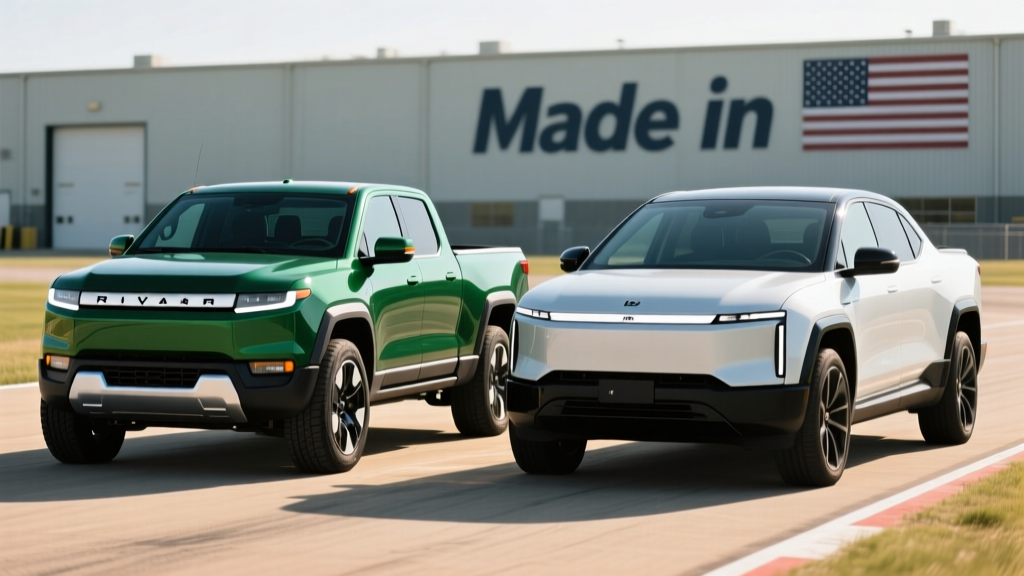
When buyers search for Rivian made in USA, they're asking a specific question: are these electric trucks and SUVs genuinely built on American soil, with American labor and (increasingly) American-sourced batteries? The answer is yes — every Rivian R1T pickup and R1S SUV rolls off the assembly line at the company's manufacturing plant in Normal, Illinois. This isn't badge-engineered import; it's a ground-up American EV operation, from the stamped aluminum body panels to the in-house developed battery packs and drive units.
For 2026, Rivian has refined both the R1T and R1S with updated Gen 2 battery packs, improved software, and the expanded Max battery option that pushes EPA range past 400 miles. But range stickers and marketing copy only tell part of the story. Below, we dissect real-world efficiency, DC fast-charging behavior, ownership costs, and whether the federal EV tax credit actually applies to your purchase.
2026 Rivian R1T and R1S Core Specifications
| Specification | R1T Dual-Motor (Standard) | R1S Dual-Motor (Standard) | R1T Max Pack |
|---|---|---|---|
| EPA Range | 270 mi | 270 mi | 420 mi |
| Battery Usable Capacity | ~95 kWh (NMC) | ~95 kWh (NMC) | ~141 kWh (NMC) |
| Drivetrain | Dual-Motor AWD | Dual-Motor AWD | Dual-Motor AWD |
| Horsepower | 533 hp | 533 hp | 533 hp |
| 0-60 mph | 4.5 sec | 4.6 sec | 4.9 sec |
| Peak DC Fast Charge | ~200 kW | ~200 kW | ~200 kW |
| 10-80% DCFC Time | ~30 min | ~30 min | ~42 min |
| Level 2 Home Charge | 11.5 kW (~25 mi/hr) | 11.5 kW (~25 mi/hr) | 11.5 kW (~25 mi/hr) |
| MPGe (Combined) | 70 MPGe | 69 MPGe | 65 MPGe |
| Efficiency | 48 kWh/100mi | 49 kWh/100mi | 52 kWh/100mi |
| Towing Capacity | 11,000 lbs | 7,700 lbs | 11,000 lbs |
| Starting MSRP | $69,900 | $74,900 | $83,900 (R1T) |
| Battery/Powertrain Warranty | 8 yr / 175,000 mi | 8 yr / 175,000 mi | 8 yr / 175,000 mi |
Real-World Range: What the EPA Sticker Doesn't Tell You
The R1T Dual-Motor carries a 270-mile EPA estimate. In real-world highway driving at 70-75 mph in moderate temperatures (60-75°F), expect approximately 230-250 miles before needing to charge. In cold weather (below 32°F), range can drop to 190-220 miles due to battery heating demands and increased air density. The Max Pack's 420-mile EPA figure translates to roughly 340-370 miles highway and 280-320 miles in freezing conditions.
Rivian's large, boxy silhouette and 6,000+ lb curb weight work against efficiency at highway speeds. Where the R1T shines is mixed city/suburban driving with frequent regenerative braking opportunities — here, hitting or even slightly exceeding the EPA number is realistic. If your typical use case involves mountain passes or sustained 80-mph interstate runs, budget for the lower real-world figures when planning road trips.
The Max Pack's 141 kWh usable battery is among the largest in any consumer EV sold in the US. That capacity provides genuine road-trip flexibility, but the tradeoff is weight and a slightly lower MPGe rating. For buyers who rarely drive more than 200 miles between stops, the Standard pack is lighter and more efficient per mile.
Charging Speed: DC Fast Charge and Home Level 2
Charging speed is where Rivian's NMC chemistry and thermal management system earn their keep — and where some limitations appear. Here's the full picture:
| Charge Level | Power / Rate | R1T Standard (95 kWh) | R1T Max (141 kWh) |
|---|---|---|---|
| Level 1 (120V) | ~1.4 kW | ~3 mi/hr | ~3 mi/hr |
| Level 2 (240V, 48A) | 11.5 kW | ~25 mi/hr | ~25 mi/hr |
| DC Fast Charge (peak) | ~200 kW | 10-80% in ~30 min | 10-80% in ~42 min |
| DC Fast Charge (sustained avg) | ~140-160 kW | ~180 mi in 30 min | ~230 mi in 42 min |
The R1T and R1S peak at approximately 200 kW on DC fast chargers, but like all EVs, that peak is not sustained across the entire charging session. The charge curve tapers progressively above 60% state of charge, with a more aggressive reduction past 80%. This is why manufacturers quote 10-80% times rather than 0-100% — charging from 80-100% can add another 25-35 minutes.
For home charging, Rivian supports up to 11.5 kW on Level 2 (48 amps on a 60-amp circuit). A full overnight charge from 10% to 100% takes roughly 8-9 hours for the Standard pack and 12-13 hours for the Max. Most owners charge nightly to 80-90% and rarely need a full 0-100% cycle unless preparing for a long trip.
Preconditioning matters: The Rivian app and navigation system will precondition the battery when you navigate to a DC fast charger, warming it to optimal temperature for faster charging. In cold weather, arriving at a charger without preconditioning can cut your peak charge rate by 30-50%.
Pricing, Trims, and Federal Tax Credit Eligibility
Rivian's pricing positions the R1T and R1S as premium electric vehicles, but the federal EV tax credit under IRS §30D can meaningfully reduce effective cost — if you meet all requirements.
| Model / Configuration | Base MSRP | As-Tested (Typical) | §30D Credit Eligible? |
|---|---|---|---|
| R1T Dual-Motor Standard | $69,900 | $74,000-$78,000 | Potentially — see rules below |
| R1T Dual-Motor Max | $83,900 | $89,000-$95,000 | No — exceeds $80,000 MSRP cap |
| R1S Dual-Motor Standard | $74,900 | $80,000-$86,000 | Potentially — see rules below |
| R1S Dual-Motor Max | $89,900 | $95,000-$102,000 | No — exceeds $80,000 MSRP cap |
| R1T/R1S Tri-Motor / Quad-Motor | $90,000+ | $99,000+ | No — exceeds $80,000 MSRP cap |
- MSRP Cap: Trucks (R1T) must be ≤$80,000 MSRP; SUVs (R1S) must be ≤$80,000 MSRP. Only the R1T Dual-Motor Standard base configuration qualifies on price.
- Income Cap: Buyer AGI must not exceed $150,000 (single), $225,000 (head of household), or $300,000 (joint).
- Battery Sourcing: Critical minerals and battery components must meet escalating domestic-content thresholds. Rivian has worked to increase US and FTA-partner sourcing, but exact eligibility varies by production batch. Confirm with your dealer at purchase.
- Point-of-Sale Transfer: Eligible buyers can transfer the credit to the dealer for an immediate price reduction rather than claiming it on their tax return.
- Assembly: Must be assembled in North America — Rivian's Normal, Illinois plant satisfies this requirement.
Source: IRS.gov — Credits for New Clean Vehicles. Rules subject to change. Consult a tax professional for your specific situation.
The practical reality: most Rivian buyers — particularly those optioning Max packs or Tri/Quad motors — will not qualify for the full $7,500 federal credit due to the MSRP cap. The base R1T Dual-Motor at $69,900 is the sweet spot for credit eligibility, but adding common options (20-inch wheels, premium interior, tow package) can push the MSRP above $80,000. Check the window sticker carefully before assuming eligibility.
Performance and Capability: More Than a Straight-Line Story
The Dual-Motor R1T produces 533 horsepower and 610 lb-ft of torque, delivering a 0-60 mph time of 4.5 seconds. That's sports-car territory in a 6,800-lb pickup. The Quad-Motor variants (600+ hp per axle, over 1,000 hp total) drop that to roughly 3.0 seconds, but at a significant price and weight premium.
Where the R1T differentiates from competitors like the Ford F-150 Lightning is in off-road capability and suspension sophistication. Rivian's available hydraulic roll control and four-corner air suspension provide up to 14.9 inches of ground clearance in Off-Road mode, with approach/departure angles that rival purpose-built off-road trucks. The gear tunnel — a unique pass-through storage compartment behind the cab — adds 11 cu ft of lockable, weather-sealed cargo space that neither the F-150 Lightning nor Chevrolet Silverado EV offers.
Cargo and Passenger Space:
- R1T bed: 54 inches long (tailgate up), 82 inches with tailgate down
- R1T gear tunnel: 11 cu ft
- R1T frunk (front trunk): 11 cu ft
- R1S cargo (behind 3rd row): 20.6 cu ft
- R1S cargo (all rows folded): 104.6 cu ft
- R1S legroom (front/rear): 41.3 / 38.6 inches
Tech, Driver Assistance, and Notable Drawbacks
Rivian's infotainment runs on a proprietary 15.6-inch center display with a clean, responsive interface. Wireless Apple CarPlay and Android Auto are supported. The 12.3-inch digital instrument cluster and optional head-up display round out the cabin tech. Over-the-air updates have been a strong suit — Rivian has consistently pushed meaningful software improvements since launch, including enhanced route planning, camp mode refinements, and drive-mode customization.
Rivian's Driver+ system (adaptive cruise control + lane centering) is an SAE Level 2 driver-assistance feature. It requires continuous driver supervision — hands on or near the wheel, eyes on the road. It is not autonomous or "self-driving." The system performs competently on highways but does not match the hands-free capability of GM's Super Cruise or Ford's BlueCruise on mapped roads.
Notable drawbacks:
- No Apple CarPlay/Android Auto native integration depth: While supported, the native Rivian navigation is deeply integrated, and some users find the split between phone projection and native apps clunky.
- Service center availability: Rivian's service network has expanded but still lags legacy automakers. In rural areas, mobile service or long-distance towing to a service center may be required.
- Charging speed vs. competitors: At ~200 kW peak, the R1T charges slower than the Hyundai Ioniq 5 (peak 350 kW) or the latest Tesla vehicles on V4 Superchargers. The large battery means longer absolute charging times.
- Insurance costs: Rivian owners report premiums 20-40% higher than comparable gas trucks due to repair costs and aluminum bodywork.
Pros and Cons at a Glance
Pros
- Genuine American manufacturing — Normal, Illinois assembly with growing domestic battery sourcing
- Class-leading off-road capability in an electric pickup
- Unique gear tunnel storage (R1T) unavailable on any competitor
- Strong OTA update track record with meaningful feature additions
- 11,000-lb towing capacity (R1T) with integrated tow software
- Up to 420 miles EPA range with Max Pack
- Generous 8-year/175,000-mile battery warranty
Cons
- MSRP cap excludes most configurations from the $7,500 federal tax credit
- Peak DC fast-charge rate (~200 kW) trails competitors with 800V architectures
- Service network still maturing — rural owners may face long tow distances
- Insurance premiums significantly above segment average
- Driver+ is competent but not class-leading among Level 2 systems
- Real-world highway range drops notably from EPA estimates
Is a US-Made Rivian Worth It vs. the Competition?
The Rivian R1T competes most directly with the Ford F-150 Lightning (assembled in Dearborn, Michigan) and the Chevrolet Silverado EV (Detroit-Hamtramck). The R1S competes with the Tesla Model X and the upcoming electric Explorer from Ford.
Choose the Rivian R1T if: You need genuine off-road capability, value the gear tunnel and frunk for adventure gear, want a premium interior that outclasses the F-150 Lightning's base trims, and plan to use the truck for camping, trail access, or towing boats/trailers. The Normal, Illinois build quality and US assembly are meaningful for buyers prioritizing domestic manufacturing.
Choose the Ford F-150 Lightning if: You want a lower entry price (starting ~$55,000), broader dealer service network, Pro Power Onboard for job-site use, and easier tax credit qualification on mid-range trims. The Lightning sacrifices off-road prowess for mainstream practicality.
Choose the Chevrolet Silverado EV if: You need maximum range (up to 400+ miles on the RST), a larger bed, and GM's Ultium platform. The Silverado EV targets fleet and commercial buyers more aggressively than Rivian's adventure positioning.
Frequently Asked Questions
Where exactly are Rivians manufactured?
Every Rivian R1T and R1S is assembled at the company's manufacturing facility in Normal, Illinois. This former Mitsubishi plant was extensively retooled for EV production. Battery packs are assembled on-site using cells sourced from suppliers including Samsung SDI, with Rivian increasingly pursuing US and FTA-partner mineral sourcing to meet federal tax credit requirements.
What is the real-world range of the Rivian R1T?
The EPA rates the Dual-Motor Standard at 270 miles and the Max Pack at 420 miles. Real-world highway driving at 70-75 mph yields approximately 230-250 miles (Standard) and 340-370 miles (Max). Cold weather below freezing reduces these figures by 15-25%. City driving with regenerative braking can match or slightly exceed EPA estimates.
How fast does the Rivian R1T charge at home and on the road?
At home on Level 2 (240V, 48A), the R1T charges at up to 11.5 kW, adding roughly 25 miles of range per hour. A full overnight charge takes 8-9 hours (Standard) or 12-13 hours (Max). On DC fast chargers, peak rate is approximately 200 kW, with 10-80% taking about 30 minutes (Standard) or 42 minutes (Max). Sustained average rates are typically 140-160 kW.
Does the Rivian R1T qualify for the $7,500 federal EV tax credit?
The base R1T Dual-Motor at $69,900 MSRP potentially qualifies, provided the buyer meets income caps ($150K single / $300K joint), the specific vehicle's battery meets critical-mineral and component sourcing thresholds, and the MSRP stays at or below $80,000 after options. Max Pack, Tri-Motor, and Quad-Motor configurations exceed the $80,000 truck MSRP cap and do not qualify. Always verify with the IRS §30D guidelines and your tax professional.
How does Rivian's warranty compare to other EV makers?
Rivian covers the battery and powertrain for 8 years or 175,000 miles, whichever comes first — with a capacity retention threshold of 70%. This is notably more generous on mileage than Tesla's 8-year/120,000-mile (Model S/X) or 8-year/100,000-mile (Model 3/Y) coverage, and matches or exceeds Ford's 8-year/100,000-mile EV powertrain warranty.
Is the Rivian R1T good for towing?
Yes — the R1T is rated to tow up to 11,000 lbs, competitive with full-size gas pickups. However, towing significantly impacts range. Expect a 40-55% reduction in range when towing a loaded trailer near max capacity. Rivian's integrated trailer brake controller and tow-specific drive modes help manage the experience, but plan charging stops accordingly on long hauls.