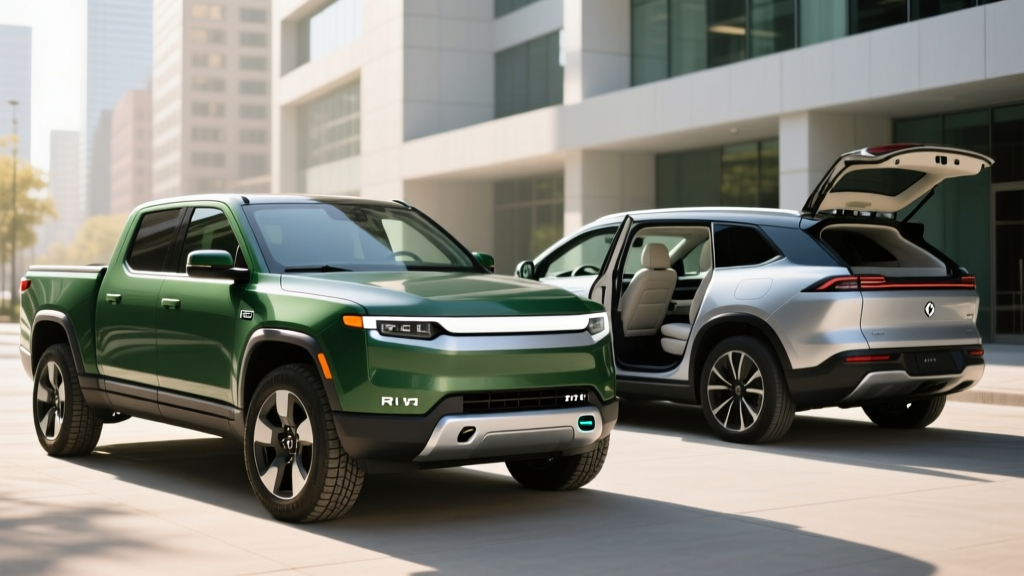
If you're shopping for an electric adventure vehicle, you've probably asked: does Rivian qualify for the federal EV tax credit? The short answer is nuanced. Rivian's R1T pickup and R1S SUV sit near the top of the electric-truck segment, but whether you can actually claim the full §30D credit depends on your income, the trim you choose, and battery-sourcing rules that shift year to year. This guide dissects the 2026 R1T and R1S lineup—range, charging, pricing, and the exact tax-credit math—so you can decide before you configure.
2026 Rivian R1T and R1S: The Quick Verdict
Rivian enters 2026 with its second-generation R1 platform, which introduced a redesigned electrical architecture, new battery chemistries, and a refreshed interior. The R1T remains one of only two mainstream electric pickups (alongside the Ford F-150 Lightning), while the R1S is the sole three-row electric SUV built on a dedicated skateboard platform. Both vehicles share powertrain options, battery packs, and pricing tiers.
The headline for buyers: most Rivian configurations now qualify for the federal tax credit, but the $7,500 maximum is not guaranteed across every trim. MSRP caps, adjusted gross income (AGI) limits, and critical-mineral sourcing requirements all gate eligibility. Here's what you need to know before heading to the configurator.
Does Rivian Qualify for the Federal EV Tax Credit? The §30D Rules
Under IRS §30D, the federal clean-vehicle credit offers up to $7,500 for qualifying new EVs. Eligibility hinges on three tests that buyers frequently misunderstand:
- MSRP Cap: Vans, SUVs, and pickups must have a base MSRP ≤ $80,000. Sedans are capped at $55,000. The R1T (pickup) and R1S (SUV) fall under the $80,000 threshold.
- Buyer Income Cap: Modified AGI must not exceed $300,000 (married filing jointly), $225,000 (head of household), or $150,000 (single). Applies to the tax year of delivery or the prior year—whichever is lower.
- Battery Sourcing: The $7,500 credit splits into two halves—$3,750 for critical-minerals sourcing and $3,750 for battery-component assembly. Vehicles with battery components from a "foreign entity of concern" (FEOC) may lose one or both halves.
- Point-of-Sale Transfer: Since 2024, buyers can transfer the credit to the dealer at purchase, reducing the purchase price upfront rather than waiting for a tax refund.
- Final Assembly: Vehicle must undergo final assembly in North America. All Rivians are built in Normal, Illinois—this requirement is met.
Source: IRS Clean Vehicle Credits. Rules are subject to change; consult a tax professional for your specific situation.
Rivian R1T and R1S Tax-Credit Eligibility by Trim
Rivian's 2026 lineup includes three battery options—Standard, Large, and Max—and two motor configurations: Dual-Motor AWD and Quad-Motor AWD. Here's how credit eligibility maps to real configurations:
| Configuration | Base MSRP | Under $80K Cap? | Est. Credit |
|---|---|---|---|
| R1T Dual-Motor Standard | ~$69,900 | Yes | Up to $7,500* |
| R1T Dual-Motor Large | ~$75,900 | Yes | Up to $7,500* |
| R1T Quad-Motor Large | ~$87,900 | No | $0 (exceeds cap) |
| R1S Dual-Motor Standard | ~$74,900 | Yes | Up to $7,500* |
| R1S Dual-Motor Max | ~$84,900 | No | $0 (exceeds cap) |
*Credit amount depends on battery-sourcing compliance and buyer income. Verify current sourcing status on fueleconomy.gov before purchasing. Prices are approximate base MSRPs and may vary by model year and options.
Range, Battery, and Efficiency: Real-World Numbers
Rivian offers three battery packs for 2026. The second-generation platform moved from exclusively NMC (nickel manganese cobalt) chemistry to offering a Standard pack using LFP (lithium iron phosphate) cells, which trade energy density for longevity and lower cost.
| Spec | Standard Pack | Large Pack | Max Pack |
|---|---|---|---|
| Usable Capacity | ~92 kWh (LFP) | ~109 kWh (NMC) | ~141 kWh (NMC) |
| EPA Range (R1T Dual-Motor) | ~270 mi | ~352 mi | ~420 mi |
| EPA Range (R1S Dual-Motor) | ~260 mi | ~340 mi | ~400 mi |
| Efficiency (R1T Dual-Motor) | ~73 MPGe / 46 kWh/100mi | ~73 MPGe / 46 kWh/100mi | ~70 MPGe / 48 kWh/100mi |
EPA estimates assume a mix of city and highway driving at moderate temperatures. In our experience and consistent third-party testing, expect the following adjustments:
- Highway-only (70-80 mph): Subtract 15-20% from EPA. The R1T Large Pack delivers roughly 280-300 miles on a flat interstate at 75 mph.
- Cold weather (below 32°F): Subtract 20-30%. The LFP Standard pack is more susceptible to cold-weather range loss than NMC, dropping to ~190-210 real-world highway miles in freezing temps.
- Towing: Expect a 40-50% range reduction when towing near the 11,000-lb max capacity. The Max Pack's extra buffer matters most here.
Rivian's heat pump (standard on Gen 2) mitigates some cold-weather cabin-heating losses, but battery chemistry physics remain unchanged.
Charging Speed: DC Fast Charge and Home Level 2
Rivian's second-generation platform upgraded the electrical architecture, improving DC fast-charge performance over the first-generation trucks. Here's the full charging picture:
| Charging Level | Power / Rate | Speed | Notes |
|---|---|---|---|
| Level 1 (120V) | ~1.4 kW | ~3-4 mi/hr | Emergency/trickle only |
| Level 2 (240V, 48A) | 11.5 kW | ~25 mi/hr | Full overnight charge in ~10-14 hrs |
| DC Fast Charge (Large/Max) | Peak 220 kW | 10-80% in ~28 min | Tapers significantly above 80% |
| DC Fast Charge (Standard LFP) | Peak 190 kW | 10-80% in ~25 min | Smaller battery = faster fill |
Understanding Rivian's Charge Curve
Peak kW is a headline number, not a sustained rate. The R1T and R1S with Large and Max packs hit ~220 kW only between roughly 10-30% state of charge (SoC). By 50% SoC, the rate drops to ~150 kW, and above 80%, it tapers to under 60 kW. This is standard for NMC chemistry—battery management protects cell longevity by reducing current as the battery fills.
For road trips, plan stops around the 10-80% window. Pushing to 100% at a DC fast charger adds 25-30 minutes for the last 20% of charge. Rivian's built-in route planner accounts for this and preconditions the battery when a charger is set as your next stop, which shaves 3-5 minutes off the charge session in cold weather.
Rivian uses the NACS (North American Charging Standard) connector on 2026 models, giving native access to Tesla Superchargers. The Rivian Adventure Network—its proprietary charging stations near national parks and adventure corridors—also uses NACS and offers up to 300+ kW capable stalls, though the vehicles themselves accept a maximum of ~220 kW.
Performance and Drivetrain Specs
Rivian offers two drivetrain layouts across the R1T and R1S:
| Spec | Dual-Motor AWD | Quad-Motor AWD |
|---|---|---|
| Horsepower | 533 hp | 1,025 hp |
| Torque | 610 lb-ft | 1,198 lb-ft |
| 0-60 mph (R1T) | 4.5 sec | 2.5 sec |
| 0-60 mph (R1S) | 4.6 sec | 2.6 sec |
| Drivetrain | AWD (1 motor/axle) | AWD (1 motor/wheel) |
| Max Towing | 11,000 lbs | 11,000 lbs |
| Ground Clearance (max) | 14.9 in (air suspension) | 14.9 in (air suspension) |
The Dual-Motor is the volume seller and the configuration that keeps you under the $80,000 MSRP cap for tax-credit eligibility. The Quad-Motor is a performance statement—sub-3-second 0-60 in a body-on-frame truck is absurd in the best way—but it pushes MSRPs well above the credit threshold.
Cargo, Passenger Space, and Interior Dimensions
The R1T is a midsize pickup (roughly Tacoma/Colorado footprint), while the R1S is a three-row SUV sharing the same skateboard platform.
R1T Pickup
- Bed length: 4.5 ft (54 in) — shorter than a Tacoma's 5- or 6-ft bed
- Gear Tunnel: 11.7 cu ft lockable pass-through storage behind the rear seats (a Rivian-exclusive feature)
- Frunk (front trunk): 11.1 cu ft, drainable—useful as a cooler
- Rear-seat legroom: 37.3 in
- Cabin storage behind rear seats: Limited (gear tunnel compensates)
R1S SUV
- Cargo (behind 3rd row): ~10.6 cu ft
- Cargo (behind 2nd row, 3rd folded): ~46.7 cu ft
- Cargo (max, all rear seats folded): ~88.2 cu ft
- Third-row legroom: 30.4 in — tight for adults on long trips, fine for kids
- Second-row legroom: 38.9 in
- Frunk: 11.1 cu ft
Standout Tech, Driver Assists, and Drawbacks
Rivian's vertically integrated software stack is one of its strongest differentiators. The 15.6-inch center display runs a custom OS with native navigation, camp-mode features (maintains cabin climate for overnight sleeping), and over-the-air updates that have meaningfully improved the vehicle since launch.
Tech Highlights
- Rivian Driver+: SAE Level 2 driver-assist system with adaptive cruise, lane centering, and automatic lane changes on divided highways. This is not autonomous driving—the driver must remain engaged with hands on or near the wheel at all times.
- Adventure Network integration: Native routing to Rivian's proprietary charger network, with real-time stall availability.
- Camp Mode & Pet Mode: Climate-maintenance modes that keep the cabin at a set temperature with minimal battery drain.
- Powered tonneau cover (R1T): Electric retractable bed cover, standard on most trims.
- Air suspension: Standard adaptive air suspension with adjustable ride height from 7.9 to 14.9 inches of ground clearance.
Notable Drawbacks
- Short bed (R1T): At 4.5 feet, the R1T bed can't accommodate standard 4×8 sheets of plywood flat. The gear tunnel helps with long, narrow items, but this is a real limitation for contractors.
- Third-row space (R1S): The 30.4-inch legroom is best reserved for children or short trips. Competitors like the Kia EV9 offer more usable third-row space.
- No Apple CarPlay/Android Auto: Rivian uses its own infotainment stack exclusively. If phone projection is a must-have, look elsewhere.
- Service-center density: Rivian's service network is growing but still sparse outside major metros. Mobile service vans cover many areas, but body-shop availability can be limited.
Warranty Coverage
| Coverage | Term |
|---|---|
| Basic Vehicle (bumper-to-bumper) | 5 years / 60,000 miles |
| Battery & Drive Components | 8 years / 175,000 miles |
| Battery Capacity Retention | ≥70% capacity at 8 yr / 175,000 mi |
| Corrosion Perforation | 5 years / unlimited miles |
Rivian's 8-year/175,000-mile battery warranty exceeds the federal minimum of 8 years/100,000 miles and is among the most generous in the segment. The 70% capacity-retention threshold is standard—meaning Rivian will repair or replace the battery if it degrades below 70% of original capacity within the warranty period.
Who Should Buy the Rivian R1T or R1S?
- You need a capable electric pickup (R1T) or three-row SUV (R1S) with genuine off-road chops (14.9 in ground clearance, 11,000-lb towing).
- You value a vertically integrated software experience and OTA improvements.
- You camp, ski, or frequent outdoor destinations where the gear tunnel, air suspension, and Rivian Adventure Network add real value.
- Your budget fits the Dual-Motor Standard or Large pack trims ($69,900-$75,900), keeping you under the $80K MSRP cap for tax-credit eligibility.
- You need a full-size truck bed for work (consider the F-150 Lightning or Silverado EV).
- Adult-friendly third-row seating is essential (the Kia EV9 or Hyundai Ioniq 9 offer more space).
- Apple CarPlay/Android Auto is non-negotiable.
- You want the Quad-Motor performance and don't mind forfeiting the tax credit.
Rivian R1T/R1S vs. Key Competitors
| Attribute | Rivian R1T (Dual-Motor Large) | Ford F-150 Lightning (Ext. Range) | Chevy Silverado EV (4WT) |
|---|---|---|---|
| EPA Range | ~352 mi | ~320 mi | ~370 mi |
| Battery (usable) | ~109 kWh NMC | ~131 kWh NMC | ~200 kWh NMC |
| Max DC Charge | 220 kW | 150 kW | 350 kW |
| 0-60 mph | 4.5 sec | 3.8 sec | 4.5 sec |
| Max Towing | 11,000 lbs | 10,000 lbs | 12,500 lbs |
| Bed Length | 4.5 ft | 5.5 ft | 5.0 / 8.0 ft |
| Base MSRP (qualifying trim) | ~$69,900 | ~$59,990 | ~$72,900 |
| Tax Credit Eligible? | Yes (Dual-Motor trims) | Partial/Yes* | Partial/Yes* |
*Competitor credit eligibility varies by trim and sourcing. Check fueleconomy.gov for current status.
Frequently Asked Questions
Does the Rivian R1T qualify for the $7,500 federal tax credit?
Yes—the R1T Dual-Motor with Standard or Large battery packs qualifies for up to $7,500 under §30D, provided the buyer meets income caps ($150K single / $300K joint) and the vehicle's MSRP stays under the $80,000 pickup/SUV threshold. The Quad-Motor trims exceed the MSRP cap and do not qualify. Battery-sourcing rules also apply and can reduce the credit to $3,750 or $0 depending on current supply-chain compliance.
Does the Rivian R1S qualify for the federal EV tax credit?
Yes, with the same caveats. The R1S Dual-Motor Standard (~$74,900) and Dual-Motor Large (~$79,900) fall under the $80,000 SUV MSRP cap. The Max Pack and Quad-Motor configurations exceed it. Income and sourcing rules apply identically.
Can I get the tax credit as a point-of-sale discount?
Yes. Since January 2024, buyers can transfer the §30D credit to the dealer at the time of purchase, reducing your out-of-pocket cost immediately. You still need to meet all income and sourcing requirements, and you'll report the transfer on your tax return using IRS Form 8936.
What is the real-world range of the Rivian R1T?
The EPA rates the R1T Dual-Motor Large at ~352 miles. In real-world highway driving at 70-80 mph, expect 280-300 miles. In freezing weather, that drops to roughly 240-260 miles. The Standard LFP pack sees more aggressive cold-weather losses—plan for ~190-210 highway miles in sub-freezing temps.
How long does it take to charge a Rivian at home?
On a 240V, 48-amp Level 2 home charger (11.5 kW), the Large Pack takes approximately 10-12 hours from empty to full. Most owners charge overnight and wake up to a full battery every morning. A standard 120V outlet adds only ~3-4 miles per hour and is suitable only for emergency top-ups.
Is Rivian's battery warranty competitive?
Rivian covers the battery and drive components for 8 years or 175,000 miles, whichever comes first, with a 70% capacity-retention guarantee. This exceeds the federal minimum of 8 years/100,000 miles and matches or beats most competitors. Tesla's Model X covers 8 years/150,000 miles; Ford's Lightning covers 8 years/100,000 miles.
Is the Rivian R1T worth buying over the F-150 Lightning?
It depends on your priorities. The R1T offers better range (352 vs 320 mi), more ground clearance (14.9 vs 8.9 in), a unique gear tunnel, and a more premium interior. The F-150 Lightning offers a longer bed, Pro Power Onboard for job-site use, a larger dealer/service network, and a lower starting price. If you need a work truck, the Lightning wins. If you want an adventure-oriented lifestyle pickup, the R1T has no equal.