Rivian in 2026: The Quick Verdict on How Their EVs Actually Work
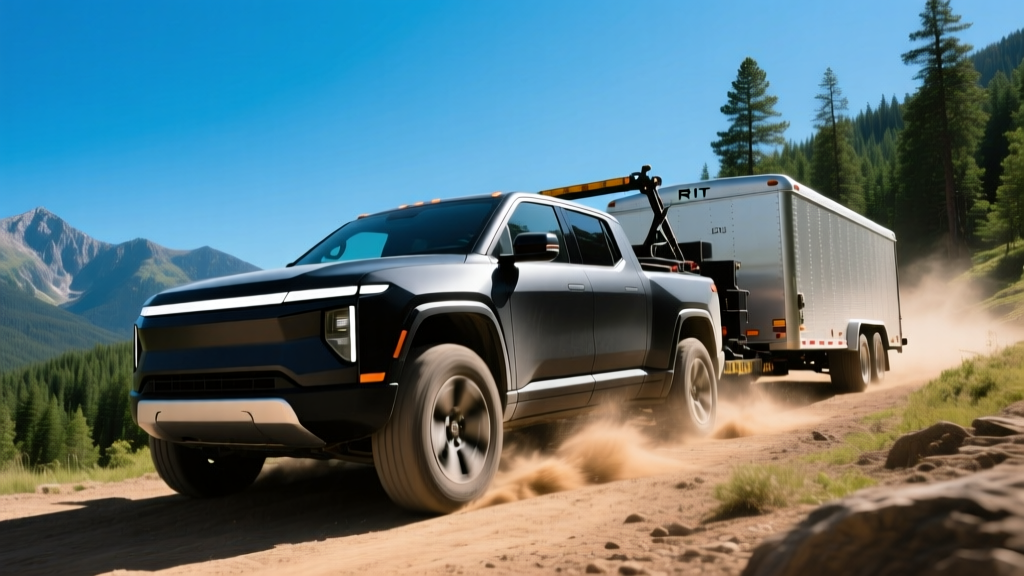
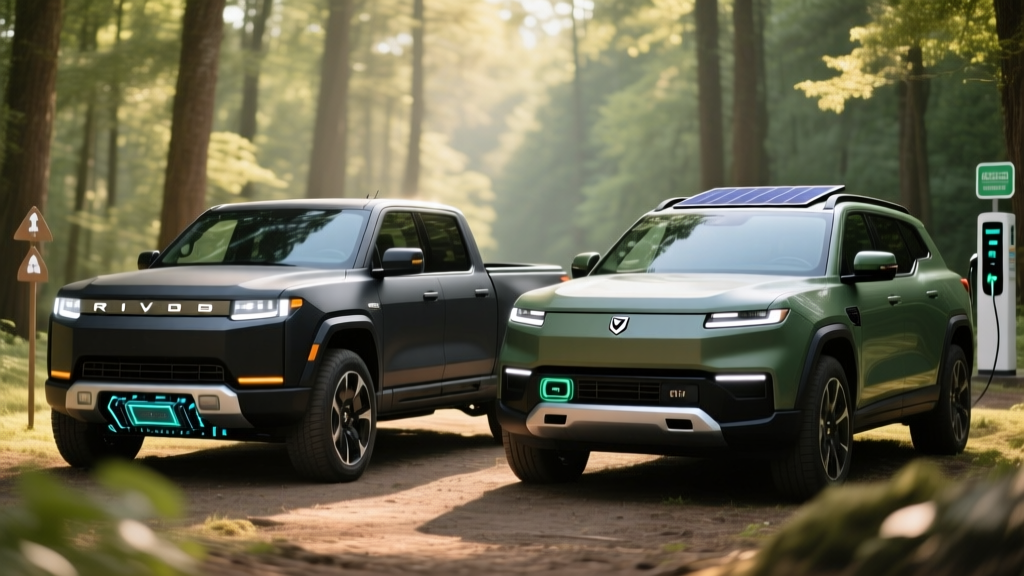
Rivian has evolved from an ambitious startup into a proven manufacturer with two production vehicles — the R1T electric pickup and the R1S three-row SUV — both riding on a shared skateboard platform. If you're researching how Rivian models work, the answer comes down to a few defining engineering choices: a quad-motor or dual-motor drivetrain architecture, large NMC battery packs (with a Standard battery option), a NACS charge port for Tesla Supercharger access, and a software-defined vehicle approach that delivers over-the-air updates long after delivery.
For 2026, Rivian continues to refine the second-generation R1T and R1S (introduced for the 2025 model year), which brought a new electrical architecture, improved thermal management, faster charging, and the addition of a more affordable Standard battery tier. Here's the full breakdown of what powers these trucks, how far they actually go, what they cost, and whether they earn a spot in your driveway.
Rivian R1T & R1S: Core Specifications at a Glance
| Spec | Dual-Motor Standard | Dual-Motor Large | Tri-Motor (Performance) |
|---|---|---|---|
| Drivetrain | AWD (2 motors) | AWD (2 motors) | AWD (3 motors) |
| Battery Usable Capacity | ~92 kWh (LFP) | ~109 kWh (NMC) | ~109 kWh (NMC) |
| Horsepower | 533 hp | 533 hp | 850 hp |
| 0-60 mph | ~4.5 sec | ~4.5 sec | ~2.9 sec |
| EPA Range (R1T est.) | ~270 mi | ~352 mi | ~328 mi |
| Max DC Fast Charge | ~200 kW | ~220 kW | ~220 kW |
| 10-80% DC Time | ~28 min | ~25 min | ~25 min |
| Towing Capacity (R1T) | 11,000 lbs | 11,000 lbs | 11,000 lbs |
Note: R1S SUV figures are within 5-15 miles of R1T equivalents due to similar aerodynamics and weight. All figures based on 2025-2026 EPA data and Rivian's official specifications. Verify at fueleconomy.gov for the latest certified numbers.
Real-World Range: What the EPA Sticker Doesn't Tell You
R1T Dual-Motor Large (EPA: 352 mi): Expect 290-320 mi in mixed driving. Highway-only at 75 mph drops to roughly 260-280 mi. In sub-freezing winter conditions (20°F or below), plan for 220-260 mi — a 25-35% reduction typical of large-battery EVs.
R1T Tri-Motor (EPA: 328 mi): Expect 270-300 mi mixed. Highway driving and aggressive acceleration reduce this further. Cold weather brings similar percentage losses.
R1T Standard Battery (EPA: ~270 mi): Expect 220-250 mi real-world. This pack is best suited for daily commuting and shorter road trips where you can charge at home overnight.
Rivian's second-generation thermal management system includes a heat pump that helps preserve range in cold weather compared to resistive heating, but the laws of physics still apply: cold batteries are less efficient, cabin heating draws energy, and winter air density increases drag. The R1T's boxy pickup shape (drag coefficient ~0.30) also means highway efficiency suffers more than a sleeker sedan at speeds above 70 mph.
For context, the EPA lists the R1T Dual-Motor Large at approximately 73 MPGe combined, translating to roughly 46 kWh per 100 miles. That efficiency figure is on par with other full-size electric trucks but trails smaller crossovers significantly.
Charging Speed: DC Fast, Level 2, and Supercharger Access
Understanding how Rivian models charge requires separating kW (charge power, or how fast energy flows) from kWh (battery capacity, or how much energy the pack stores). Rivian uses the NACS (North American Charging Standard) connector natively on 2025+ models, meaning direct access to Tesla's Supercharger network — currently the most reliable and widespread DC fast-charging infrastructure in the U.S.
| Charging Level | Power (kW) | Speed (miles of range per hour) | Use Case |
|---|---|---|---|
| Level 1 (120V household) | ~1.4 kW | ~3-4 mi/hr | Emergency/trickle only |
| Level 2 (240V home, 48A) | ~11.5 kW | ~25-28 mi/hr | Daily overnight charging |
| Level 2 (240V home, 60A) | ~14.4 kW | ~30-34 mi/hr | Faster home fill (requires 80A circuit) |
| DC Fast (peak) | Up to 220 kW | ~500+ mi/hr (at peak) | Road trips, 10-80% in ~25 min |
Charging curve reality: Rivian's peak 220 kW rate is not sustained across the full session. Like all EVs, the charge rate tapers as the battery fills — you'll see peak speeds between roughly 10-40% State of Charge (SoC), with a significant taper above 80%. A 10-80% session takes approximately 25 minutes at a capable 250+ kW charger (like a V3 or V4 Supercharger), but charging from 80-100% can add another 20+ minutes. Plan road-trip stops around the 10-80% window for maximum efficiency.
Preconditioning matters: Rivian's navigation system will precondition the battery when you route to a charging station, warming it to optimal temperature for faster DC charging. If you arrive at a fast charger without preconditioning (especially in cold weather), your peak charge rate may be significantly reduced — sometimes to half the rated speed.
Performance and Drivetrain: How Rivian's Motors Work
Rivian's skateboard platform houses the battery pack low in the chassis (contributing to a low center of gravity) with electric motors at the axles. The lineup offers three configurations:
- Dual-Motor AWD: One motor per axle, delivering 533 hp and 610 lb-ft of torque. This is the volume configuration and the best value for most buyers.
- Tri-Motor Performance: One front motor and two rear motors producing 850 hp and a staggering 1,100+ lb-ft. The 0-60 mph time of approximately 2.9 seconds makes the R1T one of the quickest pickups ever built, rivaling supercars.
Rivian's torque vectoring system can independently control power to each axle (and in the Tri-Motor, each rear wheel), providing precise traction control off-road and confident handling on pavement. The air suspension offers adjustable ride height — from an "aero" mode for highway efficiency to an "off-road" mode with significant ground clearance for trails. Approach, departure, and breakover angles are competitive with dedicated off-road vehicles, and the R1T's water fording capability reaches approximately 36 inches.
Cargo and passenger space (R1T): The 4.5-foot bed is shorter than a full-size gas pickup, but the Gear Tunnel — a lockable, pass-through storage compartment behind the cab — adds roughly 11 cubic feet of enclosed cargo space. The rear seat offers about 37 inches of legroom, adequate for adults on shorter trips. The R1S three-row SUV provides seating for up to seven and approximately 105 cu ft of total cargo volume with both rear rows folded.
Pricing, Trims, and Federal Tax Credit Eligibility
| Configuration | Base MSRP (R1T) | Base MSRP (R1S) | §30D Credit Eligibility |
|---|---|---|---|
| Dual-Motor Standard | ~$69,900 | ~$74,900 | Eligible (under $80K truck cap)* |
| Dual-Motor Large | ~$79,900 | ~$84,900 | R1T eligible; R1S may exceed SUV cap* |
| Tri-Motor Performance | ~$99,900 | ~$104,900 | Not eligible (exceeds MSRP cap) |
*Under IRS §30D rules, the MSRP cap is $80,000 for trucks/SUVs/vans and $55,000 for sedans. Buyer income caps also apply: $300K joint / $225K head of household / $150K single. Battery component and critical mineral sourcing requirements must also be met. The credit can be transferred to the dealer at point of sale for an immediate price reduction. Always verify current eligibility with a tax professional and the IRS before purchasing.
As-tested pricing: A well-equipped R1T Dual-Motor Large with the Adventure package, premium interior, and 22-inch wheels typically lands between $85,000-$92,000 before any incentives. The Standard battery Dual-Motor is Rivian's most accessible offering and brings the entry point to under $70K — significant for a vehicle with this capability.
Warranty Coverage and Battery Longevity
Rivian provides the following warranty structure for the 2026 R1T and R1S:
- Battery & Drive Unit: 8 years / 175,000 miles (whichever comes first), covering defects and capacity loss below a specified threshold (typically 70% retention)
- Limited Vehicle Warranty: 5 years / 60,000 miles bumper-to-bumper
- Roadside Assistance: 5 years / 60,000 miles
The battery warranty mileage is notably generous — 175,000 miles exceeds many competitors' 100,000-mile coverage. Rivian uses NMC (nickel manganese cobalt) chemistry in the Large and Performance packs, which offers high energy density for maximum range. The Standard pack uses LFP (lithium iron phosphate) chemistry, which trades some energy density for longer cycle life, lower cost, and the ability to routinely charge to 100% without the same degradation concerns as NMC. If you plan to keep the vehicle for 10+ years and 150K+ miles, the LFP Standard pack's longevity characteristics may actually be advantageous despite its shorter range.
Tech, Driver Assistance, and Ownership Experience
Rivian's software-defined approach means the vehicle improves over time through over-the-air (OTA) updates. Key tech features include:
- Infotainment: 15.6-inch center touchscreen running Rivian's custom OS, with native navigation, streaming apps, and detailed energy/charging data. No Apple CarPlay or Android Auto — Rivian uses its own interface (a dealbreaker for some buyers).
- Driver+ Assistance: Adaptive cruise control, lane centering, and highway assist on supported roads. This is a SAE Level 2 system — you must keep your hands on the wheel and eyes on the road at all times. It is not self-driving.
- Off-Road Tech: Dedicated drive modes (All-Purpose, All-Terrain, Snow, Sport), adjustable air suspension, and a built-in air compressor in the bed for tire inflation.
- Unique Features: The Gear Tunnel (R1T), Camp Kitchen accessory, powered tonneau cover, and integrated Bluetooth speaker (the "Rivian Camp Speaker") that docks in the vehicle and can be taken to your campsite.
- No Apple CarPlay or Android Auto — a significant omission at this price point
- Service center network is still expanding; some owners face long wait times for repairs in rural areas
- Efficiency (~46 kWh/100mi) means higher electricity costs per mile vs. smaller EVs
- Short bed (4.5 ft) limits utility vs. full-size gas pickups for large cargo
- Tri-Motor pricing pushes well past $100K, entering luxury territory
Pros and Cons: The Honest Assessment
- Class-leading acceleration, especially Tri-Motor (2.9 sec 0-60)
- Genuine off-road capability with air suspension and torque vectoring
- Native NACS = direct Tesla Supercharger access (no adapter needed)
- Innovative Gear Tunnel and Camp Kitchen expand utility
- 175,000-mile battery warranty exceeds most competitors
- Standard (LFP) battery option lowers entry price and boosts longevity
- No CarPlay/Android Auto
- Real-world highway range drops significantly vs. EPA sticker
- Service center coverage still limited in many regions
- Higher MSRP than some rivals (F-150 Lightning starts lower)
- Tri-Motor and Large battery trims exceed §30D MSRP cap
- Efficiency lags smaller EVs — higher per-mile charging cost
Who Should Buy a Rivian (and Who Shouldn't)
- You want a capable electric pickup or three-row SUV with genuine off-road chops
- You need towing capacity (11,000 lbs) combined with daily-drivable comfort
- You value Supercharger access for road trips without adapter hassle
- You want a tech-forward vehicle with OTA improvements and unique accessories
- You're an outdoor enthusiast who values the Gear Tunnel and Camp Kitchen ecosystem
🚫 Look elsewhere if:
- Your budget is under $65K — consider the F-150 Lightning Pro or Chevrolet Silverado EV Work Truck
- You need a full-size (5.5+ ft) bed for work use
- You rely on CarPlay/Android Auto and won't compromise
- You live far from a Rivian service center and can't tolerate potential repair delays
- Maximum efficiency is your priority — a smaller crossover like the Ioniq 5 or Model Y delivers far better kWh/100mi
Frequently Asked Questions
What is the real-world range of Rivian models?
The EPA rates the R1T Dual-Motor Large at approximately 352 miles, but real-world mixed driving typically yields 290-320 miles. Highway-only driving at 75+ mph drops this to roughly 260-280 miles, and sub-freezing temperatures can reduce range by 25-35%. The Standard battery pack (~270 mi EPA) delivers roughly 220-250 miles in practice.
How fast does a Rivian charge at home and on the road?
At home on a 240V Level 2 charger (48A), you'll add approximately 25-28 miles of range per hour, fully recharging overnight. On DC fast chargers, the R1T peaks at up to 220 kW, achieving a 10-80% charge in roughly 25 minutes at a V3/V4 Supercharger or equivalent station. Remember to precondition the battery via navigation for optimal charge speeds.
How much does a Rivian cost after the federal tax credit?
The R1T Dual-Motor Standard (~$69,900 MSRP) may qualify for up to $7,500 under IRS §30D, potentially bringing the net price to approximately $62,400 — assuming you meet income caps ($300K joint / $150K single), the vehicle meets battery sourcing requirements, and you elect the point-of-sale transfer. Higher trims like the Tri-Motor (~$99,900) exceed the $80,000 truck MSRP cap and do not qualify. Always verify with the IRS clean vehicle credit page and a tax professional.
Is the Rivian R1T worth buying vs. the Ford F-150 Lightning or Chevy Silverado EV?
The R1T excels in performance (quicker 0-60), off-road capability, and tech-forward features, but carries a higher starting price than the F-150 Lightning. The Lightning offers a larger bed, broader service network, and a lower entry price. The Silverado EV provides a mid-size option with competitive range. If premium performance, off-road ability, and the Supercharger network matter most, the Rivian wins. If you need maximum bed utility or the lowest price, look at Ford.
Does the Rivian R1S SUV qualify for the federal EV tax credit?
The R1S Dual-Motor Standard (~$74,900) likely qualifies, as it sits under the $80,000 SUV/truck MSRP cap. However, the R1S Dual-Motor Large (~$84,900) may exceed the cap depending on exact classification and options. Buyer income limits and battery sourcing requirements also apply. Check current eligibility on irs.gov before committing.
Can I charge a Rivian at Tesla Superchargers?
Yes. Rivian's 2025+ models come equipped with the NACS charge port natively, providing direct access to Tesla's Supercharger network without an adapter. This is one of Rivian's strongest advantages for road-trip charging convenience.