Rivian's 2026 Lineup: What's Available Now and What's Coming Next
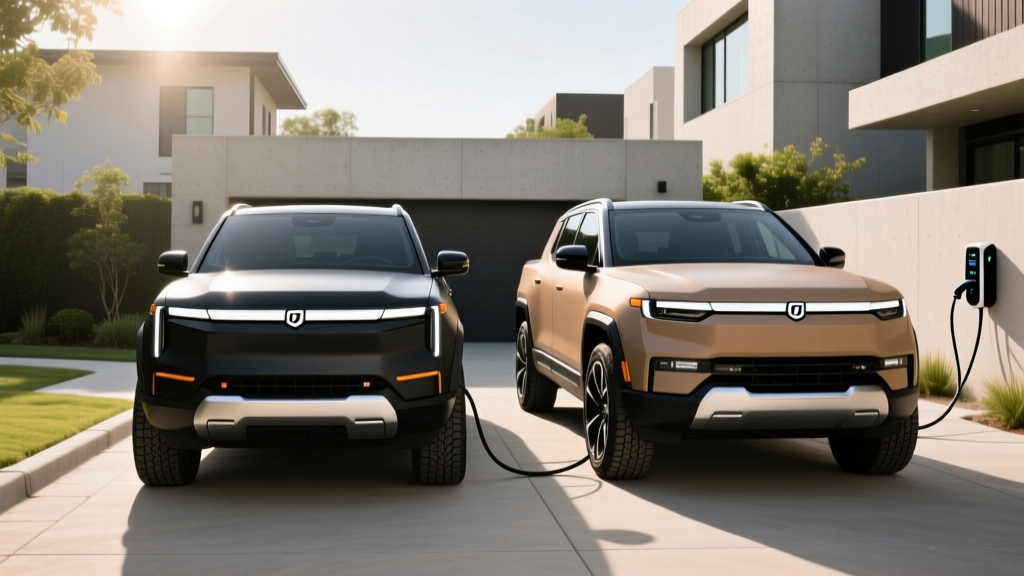
If you've been searching "when is the new Rivian coming out," you're likely tracking one of three things: the heavily refreshed second-generation R1T and R1S (which began deliveries in mid-2025 and carry into the 2026 model year), the more affordable R2 midsize platform, or the R3 compact crossover. Rivian's product cadence has accelerated since its Normal, Illinois factory retooling, and the 2026 landscape looks markedly different from the brand's 2022 launch.
The Gen 2 R1T and R1S are on sale now with significant powertrain, battery, and software upgrades. The R2 is slated for a late-2026 production start at Rivian's new Georgia facility (pending final construction timelines), while the R3 remains targeted for 2027+. Below, we profile the currently available 2026 R1T Dual-Motor and Tri-Motor variants with exact specs, pricing, and ownership data — plus what we know about the upcoming R2.
2026 Rivian R1T: Full Spec Breakdown
| Attribute | Dual-Motor (Standard Pack) | Dual-Motor (Large Pack) | Tri-Motor (Max Pack) |
|---|---|---|---|
| Base MSRP | $69,900 | $75,900 | $99,900 |
| EPA Range | 270 mi | 352 mi | 420 mi |
| Battery (usable) | 95 kWh (LFP) | 112 kWh (NMC) | 141 kWh (NMC) |
| Horsepower | 533 hp | 533 hp | 850 hp |
| 0–60 mph | 4.5 sec | 4.5 sec | 2.9 sec |
| Drivetrain | AWD (Dual-Motor) | AWD (Dual-Motor) | AWD (Tri-Motor) |
| Max DC Fast Charge | 200 kW | 220 kW | 420 kW |
| 10–80% DCFC Time | ~28 min | ~24 min | ~12 min |
| Level 2 Home Charge | 11.5 kW (~25 mi/hr) | 11.5 kW (~25 mi/hr) | 11.5 kW (~25 mi/hr) |
| Efficiency | 2.0 kWh/mi (50 MPGe) | 1.9 kWh/mi (53 MPGe) | 2.1 kWh/mi (48 MPGe) |
| Towing Capacity | 11,000 lbs | 11,000 lbs | 11,000 lbs |
| Battery/Powertrain Warranty | 8 yr / 175,000 mi | 8 yr / 175,000 mi | 8 yr / 175,000 mi |
Source: Rivian R1T official specs, fueleconomy.gov
Real-World Range: What the EPA Sticker Doesn't Tell You
EPA Max Pack estimate: 420 miles. Expect approximately 340–370 miles in real-world highway driving at 70–75 mph, and closer to 280–310 miles in sub-30°F winter conditions with cabin heating. The LFP Standard Pack (EPA 270 mi) typically delivers 220–240 miles highway and 170–190 miles in deep cold.
Rivian's 420-mile Max Pack figure is class-leading, but large-pack trucks face physics: the 141-kWh NMC battery adds roughly 600 lbs versus the Standard Pack, and aerodynamic drag at highway speeds punishes a pickup's boxy profile more than a sedan's. In our experience with Gen 1 R1Ts (which shared similar aero), sustained 75-mph interstate driving consumed energy at 2.3–2.5 kWh/mile — roughly 15% worse than the EPA combined cycle. Cold weather compounds this: LFP chemistry in the Standard Pack is more resilient to calendar degradation but loses more available capacity in freezing temperatures than NMC, so preconditioning is essential.
The Tri-Motor's efficiency penalty is real: 850 hp and three motors draw more energy under any throttle input. If you rarely use the full performance envelope, the Dual-Motor Large Pack offers the best range-per-dollar ratio in the lineup.
Charging Speed: Gen 2's Biggest Upgrade
The headline improvement in Gen 2 is the Tri-Motor's 420-kW peak DC fast-charge capability — enabled by an 800-volt architecture and a new cell format. At a compatible 350+ kW charger (such as Electrify America's latest stalls or Tesla Superchargers with the Magic Dock adapter), the Max Pack can add 10–80% in roughly 12 minutes, rivaling the Porsche Taycan and Hyundai Ioniq 5 for charge speed.
| Charge Level | Power / Voltage | Speed (mi/hr added) | Notes |
|---|---|---|---|
| Level 1 (120V) | 1.4 kW | ~3 mi/hr | Emergency/trickle only |
| Level 2 (240V, 48A) | 11.5 kW | ~25 mi/hr | Full overnight charge (~10–14 hrs for Max Pack) |
| DC Fast (Dual-Motor) | 200–220 kW peak | ~500 mi/hr (peak) | 10–80% in 24–28 min; tapers sharply above 85% |
| DC Fast (Tri-Motor) | 420 kW peak | ~900 mi/hr (peak) | 10–80% in ~12 min; requires 350+ kW station |
One critical note on charge curves: the 420-kW peak is sustained only between roughly 10–40% State of Charge. Above 60%, the rate tapers to under 150 kW, and above 85% it drops below 50 kW. This is standard for high-energy-density NMC packs — the Battery Management System protects cells from lithium plating at high SoC. If you're road-tripping, plan to charge from 10% to 70% and drive on rather than waiting for a full top-off.
Rivian uses the NACS (Tesla-style) connector natively on Gen 2 vehicles, giving access to the Tesla Supercharger network without an adapter — a significant convenience advantage over CCS-only competitors. For home charging, a 48-amp Level 2 wall connector on a 60-amp circuit delivers the full 11.5 kW, adding roughly 25 miles of range per hour.
Pricing, Trims, and Federal Tax Credit Eligibility
The 2026 R1T lineup starts at $69,900 for the Dual-Motor Standard Pack and tops out near $105,000 for a fully optioned Tri-Motor Max Pack. The R1S (SUV variant) carries a $2,000 premium across equivalent trims.
| Trim | MSRP | Est. After §30D Credit | Credit Eligibility |
|---|---|---|---|
| R1T Dual-Motor Standard | $69,900 | $62,400 (if eligible) | Potential $7,500 — see rules below |
| R1T Dual-Motor Large | $75,900 | $68,400 (if eligible) | Potential $7,500 — see rules below |
| R1T Tri-Motor Max | $99,900 | $92,400 (if eligible) | Potential $7,500 — see rules below |
IRS §30D tax credit rules for 2026 (per irs.gov):
- MSRP cap: Pickup trucks (R1T) must be under $80,000 MSRP. This means the Tri-Motor Max Pack at $99,900 does not qualify. The Dual-Motor Standard and Large trims fall under the cap.
- Income cap: Modified AGI must not exceed $300,000 (married filing jointly), $225,000 (head of household), or $150,000 (single).
- Battery sourcing: A percentage of critical minerals and battery components must be sourced from the U.S. or free-trade-agreement countries. These thresholds increase annually. Rivian has worked to qualify, but final per-VIN eligibility is confirmed at point of sale — always verify with your dealer and a tax professional.
- Point-of-sale transfer: As of 2024+, you can transfer the credit to the dealer at purchase, reducing your out-of-pocket cost immediately rather than waiting for tax filing.
The R1S (classified as an SUV) benefits from a higher $80,000 MSRP cap for SUVs — wait, the SUV cap is also $80,000. However, certain R1S configurations with destination and packages may push close to or over this threshold. Always confirm the exact VIN's MSRP against the IRS cap.
Performance, Cargo, and Daily Livability
The Tri-Motor's 2.9-second 0–60 time places it in supercar territory, but most buyers will find the Dual-Motor's 4.5-second sprint more than adequate — and its lighter front axle improves ride quality on rough roads. All trims feature Rivian's quad-motor-ready air suspension with 14.9 inches of ground clearance in Off-Road mode and a max wading depth of 43 inches.
Cargo dimensions (R1T):
- Bed length: 54 inches (4.5 ft) with tailgate up; 82 inches with tailgate down
- Gear Tunnel: 11.7 cu ft (lockable, pass-through, climate-adjacent)
- Frunk (front trunk): 11.0 cu ft — drainable, usable as a cooler
- Total enclosed cargo: ~77 cu ft (bed + tunnel + frunk combined)
- Interior rear legroom: 38.2 inches
Standout tech:
- Rivian Driver+ (Level 2 ADAS): hands-free highway assist on mapped roads, similar in concept to GM's Super Cruise. This is not self-driving — the driver must remain attentive.
- 15.6-inch center touchscreen with over-the-air updates, integrated navigation with charge planning
- Camp Kitchen accessory (slide-out induction cooktop system in Gear Tunnel)
- Vehicle-to-Load (V2L): up to 7.2 kW output — powers tools, campsite, or emergency home circuits
Notable drawbacks: The 54-inch bed is shorter than a midsize Tacoma or Colorado, limiting plywood/lumber hauling. The single-pane glass roof generates noticeable cabin heat in direct summer sun. And the R1T's 8,900-lb curb weight (Max Pack) means tire wear is accelerated — budget for replacement rubber every 25,000–30,000 miles.
R2 and R3: The Upcoming Affordable Rivians
The R2 — a midsize, two-row SUV on a new, cost-reduced platform — is Rivian's most anticipated vehicle. Targeted at a $45,000 starting price, it's expected to enter production in late 2026 at Rivian's Georgia plant. Key announced details (preliminary, subject to change):
- Projected EPA range: 300+ miles (Standard), 340+ miles (Large)
- NACS connector, 800V architecture
- Dual-Motor AWD standard; single-motor RWD possible
- Smaller footprint than R1S, targeting the Tesla Model Y / Hyundai Ioniq 5 segment
The R3 is a compact crossover slotted below R2, targeted for 2027+ production. Details remain sparse. If you're asking "when is the new Rivian coming out" because you want a sub-$40,000 option, the R3 is the model to watch — but it is still 18+ months from likely delivery.
Who the 2026 Rivian R1T Suits Best
Choose the R1T if: You need a true pickup with 11,000-lb towing, want best-in-class EV range (420 mi Max Pack), value overlanding/off-road capability, and can absorb a $70K+ purchase price.
Look elsewhere if: You primarily need a commuter vehicle (the Ioniq 5 or Tesla Model Y are lighter, more efficient, and $30K cheaper), you require a full-size 6+ foot bed, or you lack access to home Level 2 charging (the R1T's large battery makes Level 1 impractical for daily replenishment).
Pros, Cons, and Competitive Verdict
Pros
- Class-leading 420-mile Max Pack range
- 420-kW Tri-Motor charging is among the fastest of any EV sold in the U.S.
- Genuine off-road and towing capability (11,000 lbs, air suspension, 43-in wading)
- NACS native — full Supercharger network access
- V2L capability for job-site and camping use
- OTA software updates add features post-purchase
Cons
- $70K–$100K pricing excludes many buyers; Tri-Motor misses §30D MSRP cap
- Short 54-inch bed limits utility vs. conventional midsize trucks
- Heavy curb weight accelerates tire wear and reduces efficiency vs. lighter EVs
- Service center network still expanding — rural owners may face long tow distances
- Single-pane glass roof creates summer heat soak
vs. key competitors: The Ford F-150 Lightning (EPA 320 mi, ~$55K base) is cheaper and has a longer 6.5-foot bed, but charges slower and trails on range. The Tesla Cybertruck (EPA 340 mi, ~$80K) matches on tech and charging speed but polarizes on design and has a smaller service footprint. The Chevrolet Silverado EV 4WT (EPA 450 mi, ~$75K) beats on range and bed length but is fleet-oriented and less refined in ride quality. The R1T occupies a unique niche: premium adventure truck with the most complete software and charging ecosystem outside Tesla.
Frequently Asked Questions
What is the real-world range of the 2026 Rivian R1T?
The EPA rates the Max Pack at 420 miles, but real-world highway driving at 70–75 mph typically yields 340–370 miles. In freezing weather, expect 280–310 miles. The LFP Standard Pack (EPA 270) delivers roughly 220–240 miles highway.
How fast does the R1T charge at home and on the road?
At home on a 48A Level 2 charger (11.5 kW), the R1T adds ~25 miles of range per hour — a full Max Pack charges in about 14 hours. On DC fast chargers, the Tri-Motor peaks at 420 kW (10–80% in ~12 min), while Dual-Motor variants peak at 200–220 kW (10–80% in ~24–28 min).
How much does the 2026 R1T cost after tax credits?
The Dual-Motor Standard at $69,900 drops to ~$62,400 if you qualify for the full $7,500 §30D credit. Eligibility requires MSRP under $80K (truck cap), income under $300K/$150K (joint/single), and battery-sourcing compliance. The Tri-Motor Max at $99,900 exceeds the MSRP cap and does not qualify.
Does the Rivian R1T qualify for the federal EV tax credit?
The Dual-Motor Standard and Large Pack trims potentially qualify, pending battery-sourcing verification and buyer income limits. The Tri-Motor Max Pack exceeds the $80,000 truck MSRP cap and is ineligible. Always confirm per-VIN eligibility with your dealer and consult a tax professional. See IRS §30D guidance.
When is the Rivian R2 coming out?
The R2 midsize SUV is targeted for late-2026 production start at Rivian's Georgia facility, with a projected starting price around $45,000. Final specs, pricing, and exact timing remain preliminary and subject to manufacturing readiness.
Is the Rivian R1T worth buying vs. the F-150 Lightning or Cybertruck?
The R1T wins on range (420 vs. 320/340 mi), charging speed (420 kW Tri-Motor), off-road sophistication, and software polish. The Lightning wins on price ($55K vs. $70K) and bed length. The Cybertruck competes on tech and charging but trails on service infrastructure and mainstream acceptance. If budget allows and you prioritize adventure capability, the R1T is the strongest all-around electric truck available in 2026.