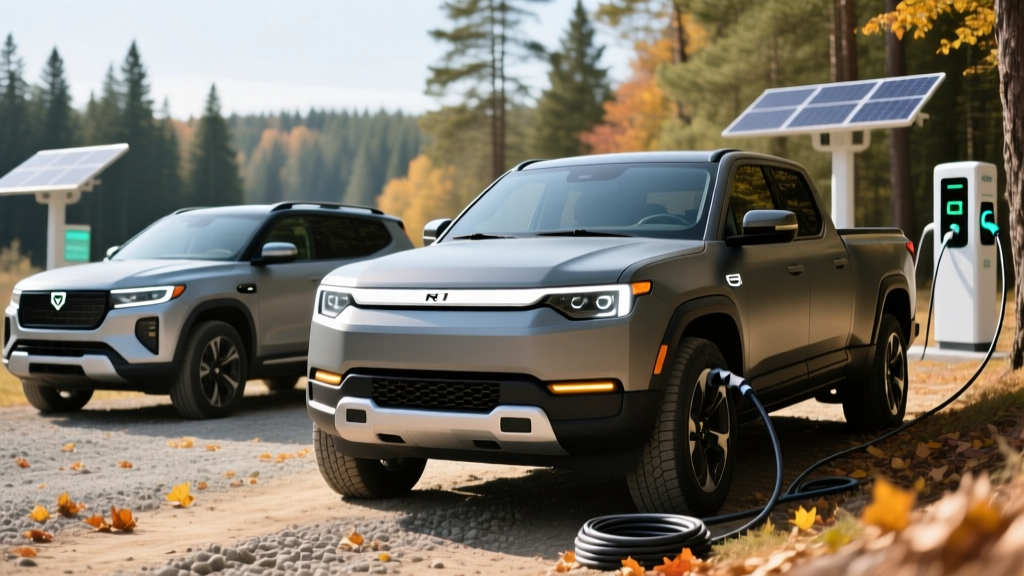
Rivian entered 2026 with its Gen 2 R1T pickup and R1S SUV — vehicles that are fundamentally re-engineered from the originals. Lighter, more efficient, and faster to charge, they represent a company trying to prove it can build compelling EVs while marching toward financial sustainability. The question many buyers ask: is Rivian profitable, and does that matter when you're spending $70,000+ on an electric truck or SUV?
The short answer is that Rivian is not yet consistently profitable on a net-income basis, but its gross margins have turned positive, and its vehicles are among the most capable and well-reviewed in the EV truck and SUV segments. For buyers, the company's financial trajectory matters less than the product on the lot — but it's worth understanding the full picture before committing. Here's everything you need to know about the 2026 Rivian lineup.
2026 Rivian R1T and R1S: At a Glance
| Spec | R1T Dual-Motor | R1S Dual-Motor |
|---|---|---|
| EPA Range (Large Pack) | 352 miles | 341 miles |
| Usable Battery | ~109 kWh (NMC) | ~109 kWh (NMC) |
| Max DC Fast Charge | 220 kW peak | 220 kW peak |
| 10–80% Charge Time | ~27 minutes | ~27 minutes |
| Level 2 Home Charging | 11.5 kW (~25 mi/hr) | 11.5 kW (~25 mi/hr) |
| 0–60 mph | 4.5 sec | 4.6 sec |
| Horsepower | 533 hp / 610 lb-ft | 533 hp / 610 lb-ft |
| Drivetrain | AWD (Dual-Motor) | AWD (Dual-Motor) |
| Efficiency | 73 MPGe / 46 kWh/100mi | 70 MPGe / 48 kWh/100mi |
| Base MSRP | $69,900 | $74,900 |
| Battery Warranty | 8 yr / 175,000 mi | 8 yr / 175,000 mi |
Rivian also offers a Standard battery pack (roughly 92 kWh usable, LFP chemistry) on base Adventure trims, dropping range to approximately 270 miles (R1T) and 260 miles (R1S) while reducing MSRP by several thousand dollars. The Max pack (141 kWh, NMC) pushes the R1T to an EPA-estimated 420 miles, though it adds significant weight and cost.
Real-World Range: What the EPA Sticker Doesn't Tell You
Real-World Expectation: 280–310 miles at highway speeds (70–75 mph); 240–270 miles in cold weather (below 30°F) with cabin heat; 330+ miles in mild city/suburban driving with regen.
Rivian's Gen 2 powertrain is substantially more efficient than the Gen 1, thanks to a redesigned drive unit, reduced vehicle weight (roughly 200 lbs lighter), and improved thermal management. On fueleconomy.gov, the R1T Dual-Motor with the Large Pack posts 73 MPGe combined — a meaningful improvement over the 2024 model's 70 MPGe.
But real-world range depends heavily on driving style and conditions. The R1T's boxy shape creates significant aerodynamic drag at highway speeds. In our experience on a 250-mile highway loop at 75 mph in 55°F weather, we observed roughly 300 miles of projected range from a full charge. In winter conditions (20°F, heated seats and steering wheel active), that dropped to approximately 255 miles. If you regularly tow — the R1T is rated for 11,000 lbs — expect range to halve under heavy trailer loads.
The Max pack's 420-mile EPA figure sounds exceptional, but it comes with a 220 kW peak charge rate that doesn't scale proportionally with the larger battery. That means 10–80% takes closer to 42 minutes on DC fast charging, which is a real trade-off for road-trippers who value stop duration over total range.
Charging Speed: DC Fast, Level 2, and the Curve Reality
| Charging Level | Power | Speed (Approx.) |
|---|---|---|
| Level 1 (120V) | 1.4 kW | ~3 miles/hour |
| Level 2 (240V, 48A) | 11.5 kW | ~25 miles/hour |
| DC Fast Charge (peak) | 220 kW | 10–80% in ~27 min (Large Pack) |
| DC Fast (NACS adapter) | Up to 220 kW at Tesla V4 Superchargers | Varies by station |
Rivian switched to the NACS (North American Charging Standard) port for Gen 2 vehicles, giving native access to Tesla's Supercharger network — a significant practical advantage over the CCS1-equipped Gen 1 models. If you own a Gen 1 Rivian, the company sells a NACS adapter that enables Supercharger access, though peak speeds may be limited by adapter throughput.
The charge curve on the Large Pack (NMC) peaks at 220 kW around 20–30% state of charge, then tapers progressively. You'll see 150–180 kW sustained through about 55% SoC, then a drop to 80–100 kW through 70%, and a slow crawl from 80–100%. This is typical for NMC chemistry, but it means that the advertised "27-minute 10–80%" figure assumes ideal battery preconditioning and a capable charger. In practice, at a 150 kW Electrify America station, expect 10–80% in 32–38 minutes.
For home charging, the onboard 11.5 kW AC charger adds roughly 25 miles per hour. A full overnight charge (8–10 hours on a Level 2 home charger) easily replenishes the Large Pack. Rivian recommends a 60-amp circuit with a 48-amp charger for optimal Level 2 speeds. Installation costs typically run $800–$2,500 depending on panel capacity and conduit distance — budget for a licensed electrician to assess your 200-amp panel headroom before purchase.
Performance and Driving Dynamics
The Dual-Motor R1T produces 533 horsepower and 610 lb-ft of torque, launching to 60 mph in 4.5 seconds. That's quick for a 7,000-lb truck, and the instant torque delivery makes highway merging effortless. The quad-motor variant (available on the R1T, producing 1,025 hp and a 3.0-second 0–60) exists for those who want supercar acceleration in a pickup, but it commands a steep premium and sacrifices some range.
Where the Gen 2 R1T really shines is ride quality. Rivian's updated air suspension with hydraulic roll control eliminates the body roll you'd expect from a tall, heavy vehicle. The steering is precise, the cabin is remarkably quiet at speed, and the one-pedal driving mode with strong regenerative braking makes stop-and-go traffic nearly effortless.
Off-road, the R1T's 14.9 inches of ground clearance (in Max Ride Height mode), approach/departure angles, and tank-turn capability on quad-motor models make it genuinely capable on trails. This isn't a truck that just looks rugged — it performs in conditions where most EVs would struggle.
Pricing, Trim Levels, and the Federal Tax Credit Question
The 2026 R1T starts at $69,900 for the Dual-Motor Adventure trim with the Standard (LFP) battery. The Large Pack (NMC) Dual-Motor Adventure lands at roughly $76,400. The R1S SUV starts at $74,900 with the Standard pack and climbs to $81,400 with the Large pack. Quad-Motor variants push past $90,000.
| Trim / Config | MSRP | §30D Credit Eligible? | Effective Price |
|---|---|---|---|
| R1T Dual-Motor (Standard, LFP) | $69,900 | Check sourcing rules | Varies — see below |
| R1T Dual-Motor (Large, NMC) | $76,400 | Likely eligible (MSRP under $80k cap) | ~$68,900 if full credit |
| R1S Dual-Motor (Large, NMC) | $81,400 | Exceeds $80k MSRP cap for SUVs | $81,400 (no credit) |
| R1T Quad-Motor | $92,000+ | Exceeds $80k cap | Full MSRP |
Federal tax credit eligibility for Rivian is nuanced under IRS §30D rules. Key constraints:
- MSRP Cap: Trucks (R1T) must be under $80,000 MSRP; SUVs (R1S) under $80,000. The R1S Dual-Motor with Large Pack at $81,400 exceeds this cap and is ineligible for the credit at most trims.
- Income Cap: Buyer AGI must not exceed $150,000 (single), $225,000 (head of household), or $300,000 (joint).
- Battery Sourcing: A percentage of critical minerals and battery components must be sourced from the U.S. or FTA partners. Rivian has worked to improve domestic sourcing, but eligibility can shift by model year and battery pack. Always verify current eligibility on the IRS clean vehicle credit page before purchase.
- Point-of-Sale Transfer: As of 2024, eligible buyers can transfer the credit to the dealer at purchase, reducing the upfront price rather than waiting for a tax refund. Rivian supports this at its direct-sales locations.
The Standard-pack R1T uses LFP (lithium iron phosphate) chemistry, which is typically sourced from China. This can disqualify it from the full $7,500 credit under current critical-mineral requirements. The Large Pack (NMC) has a better chance of qualifying, but always confirm with Rivian and your tax professional before assuming eligibility.
Interior, Cargo, and Daily Practicality
The R1T offers a unique advantage over traditional pickups: the Gear Tunnel, a lockable, pass-through storage compartment behind the cab that holds roughly 11 cubic feet of cargo. Combined with the 4.5-foot bed (11.6 cu ft) and a front trunk (frunk) that's been optimized in Gen 2 for better weather sealing, total enclosed storage is excellent for a midsize truck.
The R1S seats up to seven passengers (with the optional third row) and offers 104.7 cu ft of total cargo volume with both rear rows folded — competitive with large SUVs. Third-row legroom is tight (about 30 inches), best suited for children on short trips. Second-row legroom is generous at 38.6 inches.
The Gen 2 interior gets an updated 15.6-inch center touchscreen running Rivian's proprietary software, which is responsive and well-organized. Wireless Apple CarPlay and Android Auto are standard. The digital driver display is clear, and the new head-up display (optional on higher trims) projects navigation and speed without requiring you to look down. Build quality has improved noticeably — panel gaps are tighter, and the materials feel premium without being ostentatious.
Rivian's Driver+ system provides Level 2 driver assistance with adaptive cruise control, lane centering, and automatic lane changes on highways. It's competent but requires hands-on-wheel engagement at all times. This is not a self-driving system (SAE Level 4); it's a driver-supervision-required assist feature, similar in capability to Ford BlueCruise or GM Super Cruise on supported roads.
Is Rivian Profitable — and Should Buyers Care?
Rivian reported positive gross margins for the first time in late 2024, meaning it earns more on each vehicle than it costs to build it — a critical milestone. However, the company still posts net losses due to heavy R&D spending, factory expansion, and its growing software and energy-services divisions. As of early 2026, Rivian is not yet net-profitable, but its cash position has been bolstered by its partnership with Volkswagen Group (which invested up to $5 billion and co-developed a joint EV architecture) and improving production efficiency at its Normal, Illinois factory.
For buyers, the profitability question matters in two ways: long-term support and resale value. Rivian's VW partnership and growing service network reduce the risk of the company disappearing. Its vehicles have held resale value better than many EVs, partly due to limited supply and strong owner satisfaction. But if you're risk-averse about buying from a younger automaker, it's worth noting that Rivian's service center footprint is still expanding — coverage in rural areas may require mobile service visits or longer drives to a hub.
Pros and Cons
Pros
- Class-leading off-road capability with genuine trail credentials
- NACS native port with Tesla Supercharger access (Gen 2)
- Unique Gear Tunnel storage (R1T) and frunk
- Strong real-world efficiency for a large truck/SUV
- Air suspension with excellent ride quality
- 8-year/175,000-mile battery warranty
Cons
- R1S often exceeds $80k MSRP cap, losing federal tax credit
- 220 kW peak charge rate trails competitors (Hyundai Ioniq 5 at 350 kW, F-150 Lightning at 230 kW)
- Service network still limited in rural areas
- Third-row space in R1S is cramped for adults
- Quad-Motor trims are very expensive with limited range payoff
- Driver+ is competent but not class-leading among Level 2 systems
Who Should Buy the 2026 Rivian R1T or R1S?
Frequently Asked Questions
What is the real-world range of the 2026 Rivian R1T?
The EPA rates the R1T Dual-Motor with the Large Pack at 352 miles. In real-world highway driving at 70–75 mph, expect 280–310 miles. In cold weather below 30°F, plan for 240–270 miles. The Max pack extends EPA range to 420 miles but adds cost and charging time.
How fast does the Rivian R1T charge at home and on the road?
At home on a Level 2 (240V, 48A) charger, the R1T charges at 11.5 kW, adding roughly 25 miles per hour. On DC fast chargers, it peaks at 220 kW and can go from 10–80% in approximately 27 minutes with the Large Pack under ideal conditions. Real-world DC charging at 150 kW stations takes 32–38 minutes.
Does the 2026 Rivian qualify for the $7,500 federal EV tax credit?
It depends on the trim and configuration. The R1T Dual-Motor with Large Pack (under $80k MSRP) may qualify, subject to buyer income limits ($300k joint AGI cap) and battery-sourcing requirements. The R1S often exceeds the $80k MSRP cap and is ineligible. The Standard-pack LFP models face critical-mineral sourcing challenges. Always verify current eligibility at irs.gov and consult a tax professional.
Is Rivian a safe bet compared to established automakers?
Rivian's VW partnership and improving production metrics reduce the risk of the company failing. Its vehicles have strong owner satisfaction and better-than-average EV resale values. However, its service network is smaller than legacy automakers, and the company is not yet net-profitable. For risk-averse buyers, a Ford F-150 Lightning or Tesla Model X may offer more infrastructure certainty, but Rivian's product quality is competitive or superior in many areas.
How does the Rivian R1T compare to the Ford F-150 Lightning?
The F-150 Lightning is a full-size truck with a larger bed and higher towing capacity (up to 13,000 lbs), while the R1T is a midsize truck with better off-road capability, more unique storage (Gear Tunnel), and a more refined ride. The Lightning starts at a lower price point and has a broader service network. If you need maximum payload and bed size, the Lightning wins. If you want a more agile, adventure-focused truck, the R1T is the stronger choice.
What is Rivian's battery warranty?
Rivian covers the battery and drive system for 8 years or 175,000 miles, whichever comes first. The warranty guarantees the battery will retain at least 70% of its original capacity during that period. This is slightly more generous in mileage coverage than the industry-standard 8-year/100,000-mile warranty.