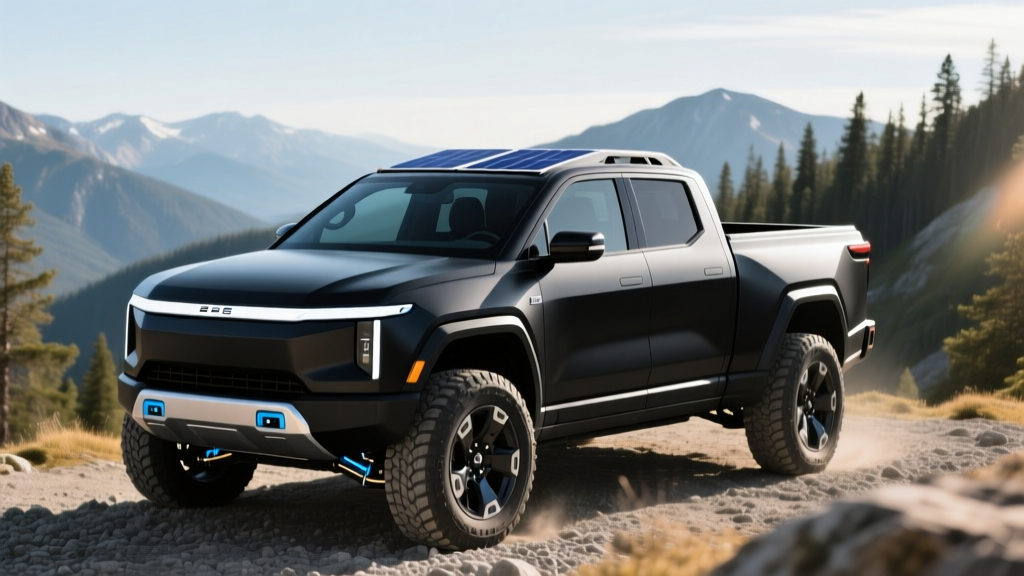
In late 2025, a cascade of regulatory filings and supply-chain documents pointed to a significantly updated Rivian R1T for the 2026 model year — headlined by a Quad Motor variant with a next-generation battery pack. While Rivian has not officially unveiled the 2026 R1T Quad Motor as of early 2026, the leaked specifications paint a detailed picture of what could be the most capable electric pickup on the market. Here's a data-driven breakdown of what the documents suggest, what's confirmed, and what buyers should expect in the real world.
What the Rivian R1T Quad Motor 2026 Leak Reveals
The leaked information stems from NHTSA VIN decoder updates, battery supplier manifests tied to Samsung SDI's new 46mm-diameter cylindrical cells, and California Air Resources Board (CARB) certification filings. These sources collectively describe a 2026 R1T Quad Motor equipped with a substantially larger battery pack, faster DC charging architecture, and revised power output figures. Rivian's current-generation R1T Quad Motor (2024–2025) uses a 149 kWh Max Pack with NMC chemistry and produces 1,025 horsepower. The 2026 leak suggests Rivian will retain the quad-motor layout but pair it with a redesigned pack using higher-energy-density cells, potentially pushing usable capacity above 155 kWh.
| Specification | 2024–2025 R1T Quad (Confirmed) | 2026 R1T Quad (Leaked/Preliminary) |
|---|---|---|
| Battery (usable) | 149 kWh (NMC) | ~155–160 kWh (next-gen NMC) |
| EPA Range (est.) | 328 mi (Max Pack) | ~350–370 mi (projected) |
| Horsepower | 1,025 hp | ~1,025–1,100 hp (est.) |
| 0–60 mph | 3.0 sec | ~2.8–3.0 sec (est.) |
| Peak DC Charge Rate | 220 kW | ~350–410 kW (800V arch.) |
| 10–80% DC Charge | ~36 min | ~18–22 min (projected) |
| Drivetrain | Quad Motor AWD | Quad Motor AWD |
| Base MSRP | $99,900 | ~$99,900–$104,900 (est.) |
Important caveat: These 2026 figures are preliminary and based on leaked regulatory and supply-chain documents. Rivian has not confirmed final specifications, pricing, or a release date. Treat all 2026 numbers as estimates until the manufacturer publishes official data.
Projected Range and Real-World Efficiency
The current R1T Quad Motor Max Pack carries an EPA-estimated 328 miles of range. The 2026 leak points to a larger, more energy-dense pack that could yield an EPA estimate in the 350–370 mile range — a meaningful improvement for a vehicle with the R1T's aerodynamic profile and weight (approximately 7,100 lbs curb weight).
Real-World Range Expectations
EPA Estimate (projected): ~350–370 miles
Highway driving (75 mph, flat terrain): Expect ~280–310 miles. The R1T's boxy shape and 6,000+ lb mass penalize highway efficiency — real-world tests on the current Max Pack show ~2.0–2.2 kWh/mi at sustained highway speeds.
Cold weather (below 32°F): Plan for 20–30% range reduction. A 350-mile EPA pack could deliver ~245–280 miles in freezing conditions without preconditioning. Rivian's heat pump (standard on Gen 2 models) mitigates cabin heating losses but does not eliminate cold-induced battery resistance.
Towing: With the R1T's 11,000-lb max tow rating, expect range to drop to roughly 150–180 miles when towing a 7,000-lb trailer at highway speeds.
Efficiency for the current Quad Motor Max Pack sits around 70 MPGe combined (approximately 48 kWh/100 mi). The 2026 model's improved cell chemistry and potential weight optimization may push this to 72–75 MPGe, but the laws of physics limit how efficient a 7,000-lb pickup can be.
Charging: The 800V Architecture Leap
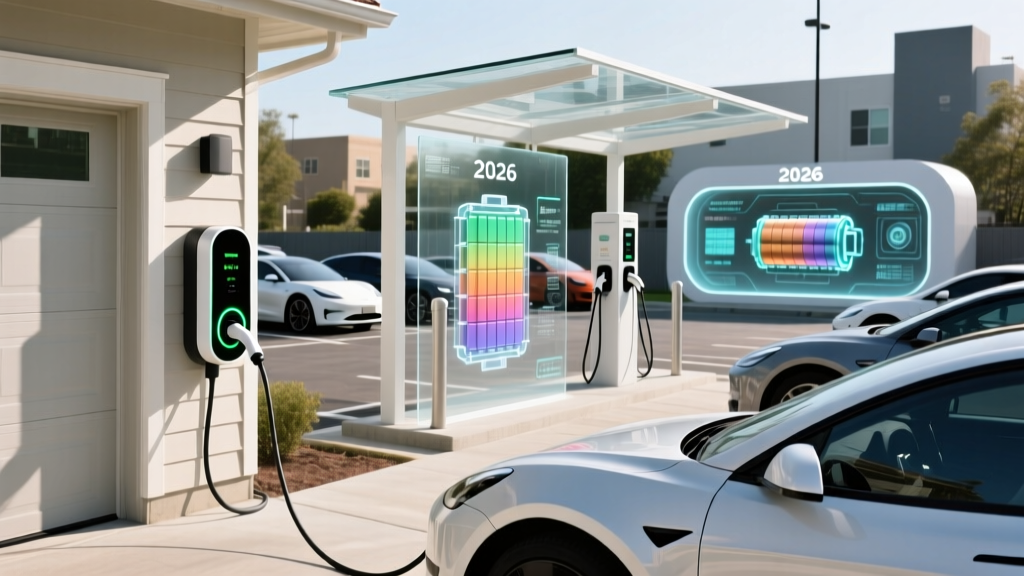
The most consequential detail in the 2026 leak is the reference to an 800-volt electrical architecture. Rivian's current R1T operates on a 400V system, capping DC fast-charge rates at 220 kW. An 800V platform — similar to those used by Hyundai/Kia (E-GMP), Porsche (Taycan), and Lucid — would allow the R1T to accept significantly higher charge rates, potentially peaking at 350–410 kW at compatible CCS/NACS stations.
| Charging Level | Current R1T Quad (400V) | 2026 R1T Quad (800V, Est.) |
|---|---|---|
| Level 1 (120V, 12A) | ~1.4 kW / ~3 mi/hr | ~1.4 kW / ~3 mi/hr |
| Level 2 (240V, 48A) | 11.5 kW / ~25 mi/hr | ~11.5–19.2 kW / ~25–42 mi/hr |
| DC Fast Charge (peak) | 220 kW | ~350–410 kW |
| DC 10–80% Time | ~36 min | ~18–22 min (projected) |
Understanding kW vs. kWh: kW (kilowatts) measures the rate of energy delivery — like water pressure in a hose. kWh (kilowatt-hours) measures total energy stored in the battery — like the size of the tank. A 410 kW peak charge rate means the battery can accept energy very quickly, but that rate only holds for a portion of the session. As the battery fills past 80%, the charge rate tapers significantly to protect cell longevity. Expect the 80–100% top-off to add another 15–25 minutes even on the upgraded architecture.
For home Level 2 charging, the current R1T accepts up to 11.5 kW (48 amps on a 60-amp circuit). The 2026 leak hints at a potential upgrade to 19.2 kW (80 amps on a 100-amp circuit), which would cut overnight charge times substantially. A full home charge of a ~155 kWh pack at 11.5 kW takes roughly 13–14 hours; at 19.2 kW, that drops to ~8 hours. Installation of a 100-amp dedicated circuit typically costs $1,200–$2,800 including panel assessment, wiring, and permitting — consult a licensed electrician for your specific setup.
Performance and Drivetrain
Rivian's Quad Motor setup places one motor at each wheel, enabling true torque vectoring — independently sending power to each corner for traction and handling benefits no conventional locker or limited-slip differential can match. The current Quad Motor produces 1,025 hp and 1,198 lb-ft of torque, launching the R1T to 60 mph in 3.0 seconds. The 2026 leak suggests Rivian may bump output slightly (potentially to ~1,100 hp) while shaving a tenth or two off the 0–60 time through improved inverter mapping and the higher-discharge capability of the new cells.
Off-road, the Quad Motor's individual wheel control provides exceptional rock-crawling precision and sand/soft-terrain traction. Rivian's Gear Tunnel — the signature pass-through storage behind the cab — is expected to carry over, offering 11.7 cu ft of lockable, weather-sealed space. The 4.5-foot bed provides 26.4 cu ft of volume, and the front trunk (frunk) adds 11.1 cu ft with a drain plug for use as a cooler.
Towing capacity should remain at the current 11,000 lbs (when properly equipped), with payload around 1,760 lbs. The integrated trailer brake controller and Rivian's trailer-assist camera system are expected to carry forward.
Pricing, Trims, and Federal Tax Credit Eligibility
The current R1T Quad Motor Max Pack starts at $99,900 before destination. The 2026 leak does not indicate a major price restructuring, but the addition of 800V hardware and next-gen cells could push the starting MSRP to approximately $99,900–$104,900 depending on how Rivian absorbs component costs.
| Configuration | Est. MSRP | After Potential §30D Credit |
|---|---|---|
| Quad Motor (Standard Pack, ~128 kWh) | ~$89,900 | ~$82,400* |
| Quad Motor (Large Pack, ~141 kWh) | ~$94,900 | ~$87,400* |
| Quad Motor (Max Pack, ~155+ kWh) | ~$99,900–$104,900 | ~$92,400–$97,400* |
*Tax credit amounts are estimates based on current IRS §30D rules. Eligibility depends on buyer income, battery sourcing, and MSRP caps. See details below.
Federal EV Tax Credit (§30D) — Key Rules for 2026
The IRS §30D Clean Vehicle Credit offers up to $7,500 for qualifying new EVs, but several conditions apply specifically to a vehicle in the R1T's price class:
- MSRP Cap: Pickup trucks must have an MSRP at or below $80,000 to qualify. This is a critical issue — the R1T Quad Motor Max Pack at ~$99,900+ exceeds this cap. Only a lower-trim Quad Motor with the Standard Pack might fall under the threshold, and even that is uncertain at projected pricing.
- Buyer Income Limits: Modified adjusted gross income (MAGI) must not exceed $300,000 (joint filers), $225,000 (head of household), or $150,000 (single filers).
- Battery Sourcing Requirements: A portion of the credit ($3,750) depends on critical minerals sourcing from the U.S. or free-trade-agreement partners; the other $3,750 depends on battery components manufactured or assembled in North America. These thresholds tighten annually.
- Point-of-Sale Transfer: As of 2024, buyers can transfer the credit to the dealer at purchase, reducing the out-of-pocket cost immediately rather than waiting for a tax refund.
Bottom line: Most R1T Quad Motor configurations will likely exceed the $80,000 MSRP cap and not qualify for the federal credit. Consult a tax professional and check the latest fueleconomy.gov listings before assuming eligibility.
Tech, Interior, and Driver Assistance
Rivian's Gen 2 platform (introduced for 2025) brought a redesigned interior with a 15.6-inch center touchscreen, a 12.3-inch driver display, and a simplified center console with physical climate knobs. The 2026 model is expected to retain this layout while potentially upgrading the driver-assistance suite.
Rivian Driver+ (Level 2 ADAS): This system combines adaptive cruise control, lane-centering, and automatic lane changes on divided highways. It is a Level 2 driver-assist system per SAE classification — the driver must remain attentive, keep hands on or near the wheel, and is fully responsible for vehicle operation at all times. It is not self-driving. Rivian has signaled plans for a hands-free highway driving feature (similar to GM's Super Cruise or Ford's BlueCruise), but as of early 2026, no official launch date has been confirmed for a true hands-free mode on the R1T.
Driver Assistance Limitation Notice
Rivian Driver+ is an SAE Level 2 system. It requires continuous driver supervision. It does not navigate construction zones, unmapped roads, or adverse weather autonomously. The driver is legally and practically responsible for all vehicle control. Do not treat this system as a substitute for attentive driving.
Notable tech features:
- Rivian Waypoints — community-sourced off-road trail navigation with elevation, difficulty, and surface data
- Camp Kitchen option — slide-out induction cooktop and sink system that integrates with the Gear Tunnel
- Vehicle-to-Load (V2L) — power external devices (up to 2,400W from bed outlets) for camping or job-site use
- OTA updates — continuous software improvements delivered over-the-air
- Phone-as-a-key with BLE and UWB support
Notable drawbacks:
- No Apple CarPlay or Android Auto — Rivian uses its own native infotainment system exclusively
- Rear-seat legroom (38.2 inches) is adequate but trails the Ford F-150 Lightning (42.3 inches) and Chevrolet Silverado EV
- No hands-free highway driving mode confirmed yet
- Premium pricing places most trims outside federal tax credit eligibility
Warranty and Long-Term Ownership
Rivian's current warranty structure is expected to carry into the 2026 model year:
- Battery & Powertrain: 8 years / 175,000 miles (whichever comes first), with a capacity retention threshold of 70% during the warranty period
- Limited Vehicle Warranty: 5 years / 60,000 miles
- Corrosion Perforation: 5 years / unlimited miles
- Roadside Assistance: 5 years / 60,000 miles
The 175,000-mile battery warranty is among the most generous in the EV truck segment. For context, Ford covers the F-150 Lightning battery for 8 years / 100,000 miles. Rivian's higher mileage threshold reflects confidence in the NMC cell longevity and thermal management system.
Long-term battery degradation data on the R1T is still maturing — the oldest R1T on the road dates to late 2021. Early owner reports and Rivian's own telemetry suggest less than 5% capacity loss in the first 50,000 miles for most packs, but data on the Max Pack (which runs higher cell-level stress due to energy density) is more limited. The 800V architecture in the 2026 model, if confirmed, may improve cell longevity by reducing current-related heat during charging.
How It Compares: R1T Quad Motor vs. Key Rivals
Pros — 2026 R1T Quad Motor (Projected)
- Best-in-class off-road capability with true torque vectoring
- Projected 350+ mile EPA range exceeds most EV truck competitors
- 800V architecture could deliver 10–80% in ~18–22 min (class-leading)
- 175,000-mile battery warranty
- Gear Tunnel and Camp Kitchen ecosystem are unique lifestyle differentiators
- V2L capability for off-grid and job-site power
- Strong OTA update track record for feature additions
Cons — 2026 R1T Quad Motor (Projected)
- Likely exceeds $80K MSRP cap — ineligible for $7,500 federal tax credit
- Rear-seat space trails F-150 Lightning and Silverado EV
- No Apple CarPlay / Android Auto
- No confirmed hands-free highway driving mode
- Service center network still expanding — wait times can be long in some regions
- Premium pricing (~$100K+) limits accessibility
Against the Ford F-150 Lightning (starting ~$55,000, EPA range up to 320 mi with Extended Range pack), the R1T Quad Motor is significantly more expensive but offers superior off-road performance, more range (projected), and faster charging (if the 800V upgrade materializes). The Lightning wins on value, interior space, and tax credit eligibility.
Against the Chevrolet Silverado EV (4WT or RST, up to 440 mi EPA with Max Range pack), the Silverado EV leads on maximum range and bed size, but the R1T's quad-motor traction, adventure-oriented features, and build quality perception remain differentiators for buyers who prioritize off-road and lifestyle use.
The Tesla Cybertruck (Cyberbeast: 845 hp, ~$99,990) competes most directly on price and performance, but its polarizing design, stainless-steel body repair challenges, and limited service infrastructure make the R1T a more conventional — and arguably more practical — choice for most buyers.
Who Should Buy the 2026 R1T Quad Motor?
Decision Framework
Choose the R1T Quad Motor if: You need serious off-road capability in an electric truck, value unique adventure features (Gear Tunnel, Camp Kitchen, Waypoints), want projected 350+ mile range with fast 800V charging, and your budget comfortably accommodates a $100K+ vehicle without relying on the federal tax credit.
Look elsewhere if: Budget is a primary concern (the F-150 Lightning offers strong value at $55K–$75K), you need maximum rear-seat space (Silverado EV or Lightning), you want hands-free highway driving now (GM Super Cruise on the Silverado EV), or you rely on Apple CarPlay for daily navigation.
The 2026 R1T Quad Motor, if the leaked specifications hold, represents a meaningful generational leap — particularly in charging speed and range. But until Rivian confirms specs, pricing, and availability, buyers should treat this as a promising preview rather than a purchase commitment. We'll update this analysis as official information becomes available.
Frequently Asked Questions
What is the real-world range of the 2026 Rivian R1T Quad Motor?
Based on leaked data, the EPA estimate could land around 350–370 miles. In real-world highway driving at 75 mph, expect roughly 280–310 miles. In cold weather (below freezing), plan for 245–280 miles. When towing a 7,000-lb trailer, range drops to approximately 150–180 miles. These figures are projections based on the leaked battery capacity and current-gen efficiency data.
How fast does the 2026 R1T Quad Motor charge?
If the 800V architecture is confirmed, DC fast charging could peak at 350–410 kW, enabling a 10–80% charge in approximately 18–22 minutes at a compatible station. At home on Level 2 (240V), charging at 11.5 kW adds roughly 25 miles per hour; a potential 19.2 kW upgrade would add ~42 miles per hour. A full home charge of the ~155 kWh pack would take 8–14 hours depending on the circuit.
Does the 2026 R1T Quad Motor qualify for the $7,500 federal EV tax credit?
Most likely not. The IRS §30D credit requires pickup trucks to have an MSRP at or below $80,000. The R1T Quad Motor in any Max Pack configuration is projected to cost $99,900–$104,900+, well above the cap. Even a Standard Pack Quad Motor may exceed the threshold depending on final pricing. Additionally, buyers must meet income caps ($300K joint / $150K single) and battery sourcing requirements. Always verify current eligibility on irs.gov and consult a tax professional.
Is the 2026 R1T Quad Motor worth buying over the Ford F-150 Lightning or Chevy Silverado EV?
It depends on your priorities. The R1T Quad Motor offers unmatched off-road capability, a unique adventure ecosystem (Gear Tunnel, Camp Kitchen), and projected best-in-class charging speed. The F-150 Lightning wins on value (starting ~$55K), tax credit eligibility, and rear-seat space. The Silverado EV leads on maximum EPA range (up to 440 mi) and bed utility. If budget is secondary to capability and you're an outdoor enthusiast, the R1T is compelling. If value and daily practicality lead your decision, the Lightning is the stronger choice.
When will the 2026 R1T Quad Motor be available?
Rivian has not announced an official release date for the 2026 model year R1T. Based on prior model-year cadences, production could begin in mid-to-late 2025 or early 2026, with deliveries following within weeks. However, until Rivian confirms specs and opens order banks for the 2026 configuration, all timelines are speculative.
What battery chemistry does the R1T Quad Motor use?
The current and leaked 2026 R1T Quad Motor Max Pack uses NMC (nickel manganese cobalt) chemistry, which offers higher energy density than LFP (lithium iron phosphate) — important for maximizing range in a heavy pickup. The trade-off is that NMC cells are more sensitive to sustained 100% state-of-charge storage; Rivian recommends daily charging to 80–90% and reserving 100% for long trips. LFP packs (used in the R1T Standard Pack) tolerate daily 100% charges better but offer less range per kilogram.