Quick Verdict: The Fastest Pickup You Can Actually Buy
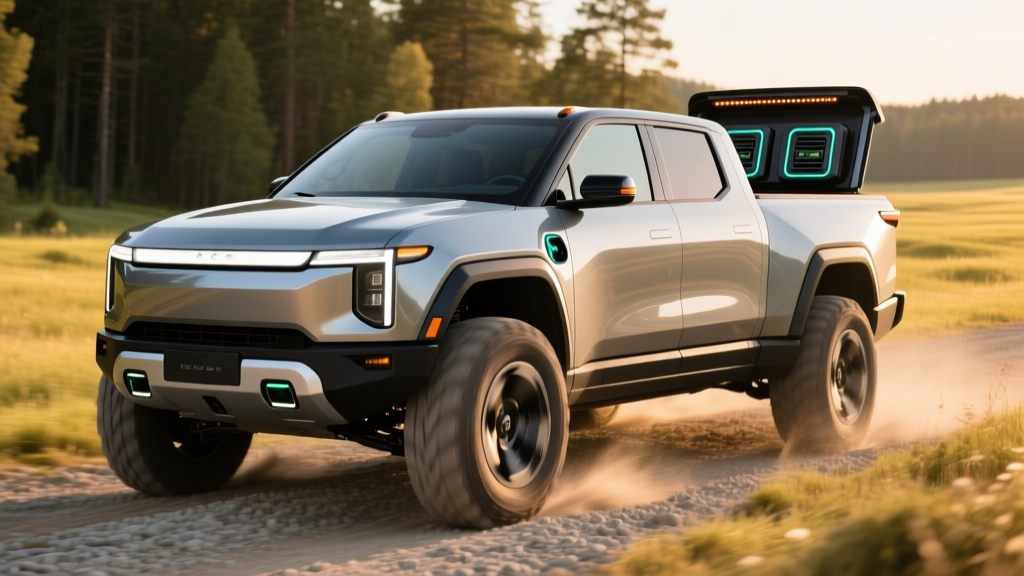
The Rivian R1T Quad Motor sits in a category of one: a full-size electric pickup that hits 0-60 mph in roughly 3.0 seconds while still offering a usable bed, legitimate off-road hardware, and over 400 miles of EPA-estimated range on the Max Pack. For 2026, Rivian's second-generation platform brings a redesigned electrical architecture, faster DC charging, and incremental software refinements that make the Quad Motor the performance flagship of the R1T lineup. But with a starting MSRP that pushes well past $100,000 before options, the real question isn't whether it's quick — it's whether the performance, utility, and daily usability justify the premium over the Dual Motor variants and competitors like the Ford F-150 Lightning Platinum or GMC Hummer EV Pickup.
After spending time with the R1T Quad Motor across highway drives, cold-weather commutes, and DC fast-charging stops, here's the data-driven breakdown buyers need.
Spec Table: 2026 Rivian R1T Quad Motor at a Glance
| Specification | Value |
|---|---|
| Powertrain | Quad Motor AWD (one motor per wheel) |
| Horsepower | 1,025 hp |
| Torque | 1,198 lb-ft |
| 0-60 mph | ~3.0 seconds (manufacturer est.) |
| Battery (Large Pack) | ~149 kWh usable, NMC lithium-ion |
| Battery (Max Pack) | ~180 kWh usable, NMC lithium-ion |
| EPA Range (Large Pack) | ~328 miles |
| EPA Range (Max Pack) | ~420 miles |
| Max DC Fast Charge | ~220 kW peak (Gen 2 architecture) |
| 10-80% DC Charge Time | ~30 min (Large Pack), ~42 min (Max Pack) |
| Level 2 Home Charging | 11.5 kW (~25-27 miles/hr) |
| Efficiency (Large Pack) | ~70 MPGe combined / ~48 kWh/100 mi |
| Towing Capacity | 11,000 lbs |
| Payload Capacity | ~1,760 lbs |
| Bed Length | 4'6" (54 inches) + Gear Tunnel |
| Base MSRP (Quad Motor Large) | ~$99,900 |
| Base MSRP (Quad Motor Max) | ~$109,900 |
| Battery/Powertrain Warranty | 8 years / 175,000 miles |
| Vehicle Warranty | 5 years / 60,000 miles |
Source: Rivian official specifications and EPA fueleconomy.gov. Specs may vary by model year and configuration. Confirm with Rivian at time of order.
Real-World Range: What the EPA Sticker Doesn't Tell You
Large Pack EPA: ~328 miles | Real-world highway (70 mph): ~260-280 miles | Cold weather (below 32°F): ~220-250 miles
Max Pack EPA: ~420 miles | Real-world highway (70 mph): ~340-360 miles | Cold weather (below 32°F): ~280-310 miles
The Quad Motor's four independent motors produce extraordinary acceleration, but that performance comes with an efficiency trade-off. The Large Pack's EPA estimate of roughly 328 miles assumes a mix of city and highway driving under moderate conditions. In practice, sustained highway speeds above 70 mph push consumption to around 50-55 kWh/100 mi, reducing effective range to approximately 260-280 miles. This is physics — aerodynamic drag on a 7,000-pound pickup scales with the square of speed, and the R1T's bluff-front design doesn't help.
Cold weather compounds the issue. In temperatures below freezing, expect a 20-30% reduction from EPA figures due to battery heating demands and increased cabin climate load. Rivian's heat pump system (standard on Gen 2 models) mitigates some of this loss compared to resistive heating, but the R1T's massive cabin volume still requires significant energy to warm. Preconditioning the battery while plugged in — a feature accessible through the Rivian app — is essential for preserving range and enabling peak DC charging speeds in cold conditions.
The Max Pack narrows the gap between sticker and reality simply by providing a larger energy buffer. With ~180 kWh usable, even a 25% cold-weather reduction leaves you with over 300 miles — enough for most road-trip legs without inducing range stress.
Charging Speed: DC Fast Charging and Home Setup
| Charging Level | Power | Speed (Miles Added) | Time (10-80%) |
|---|---|---|---|
| Level 1 (120V outlet) | ~1.4 kW | ~3 miles/hr | ~72+ hours (Large Pack) |
| Level 2 (240V, 48A) | 11.5 kW | ~25-27 miles/hr | ~11-13 hours (Large Pack) |
| DC Fast Charge (peak) | ~220 kW | ~140-160 miles in 15 min | ~30 min (Large), ~42 min (Max) |
Rivian's Gen 2 electrical architecture upgraded the R1T's DC fast-charging capability to approximately 220 kW peak. At a 350 kW-capable charger (such as Electrify America or EVgo stations), the Large Pack can add roughly 140 miles of range in 15 minutes under optimal conditions — meaning a preconditioned battery at a low state of charge and moderate ambient temperatures.
The charge curve matters here. Peak 220 kW is only sustained between roughly 10-40% state of charge. Beyond 50%, the rate tapers progressively — dropping to around 120 kW near 60% and below 80 kW past 80%. This is normal lithium-ion behavior to protect cell health, but it means charging from 80-100% at a DC fast charger is painfully slow and rarely worth the wait. Plan road trips around 10-80% charges for the best time efficiency.
At home, the R1T accepts up to 11.5 kW on a Level 2 Rivian Wall Charger (48 amps on a 60-amp circuit). That translates to roughly 25-27 miles of range per hour of charging — enough to fully replenish the Large Pack overnight in about 11-13 hours. For the Max Pack, expect closer to 15-16 hours from empty. Most owners will plug in nightly and rarely see a full charge cycle, making Level 2 home charging entirely practical for daily use. Installation costs for a Level 2 home setup typically run $500-$2,000 depending on panel proximity and whether a 200-amp service upgrade is needed — consult a licensed electrician for your specific situation.
The R1T uses the NACS (Tesla) connector on 2026 models, giving native access to Tesla Supercharger stations with V3/V4 stalls. Rivian also provides a CCS adapter for compatibility with Electrify America and other CCS networks, though native NACS chargers are rapidly becoming the dominant standard.
Performance: Where the Quad Motor Earns Its Name
The Quad Motor powertrain uses four independent permanent-magnet motors — one at each wheel — to produce a combined 1,025 horsepower and 1,198 lb-ft of torque. The result is a 0-60 mph time of approximately 3.0 seconds, which puts this 7,000-pound pickup in supercar territory off the line. For context, that's quicker than a base Porsche 911 Carrera and roughly half a second faster than the GMC Hummer EV Pickup's Watts to Freedom mode.
But straight-line acceleration is only part of the story. The independent motor control enables torque vectoring at each wheel, giving the R1T Quad Motor exceptional traction control in off-road scenarios. Rivian's tank turn feature (which rotates the vehicle around its center by spinning opposite-side wheels in opposing directions) is available at low speeds for tight trail maneuvers. The air suspension provides up to 14.9 inches of ground clearance in Max mode, with approach, departure, and breakover angles that rival dedicated off-road vehicles.
On paved roads, the Quad Motor's acceleration is startling but also practical — merging onto highways and passing slow traffic requires only a flex of the right foot. The regenerative braking system offers adjustable levels, including a one-pedal driving mode that can bring the truck to a complete stop without touching the brake pedal in most conditions.
Pricing, Trims, and Federal Tax Credit Eligibility
| Configuration | Base MSRP | As-Tested (Typical Options) |
|---|---|---|
| Quad Motor + Large Pack | ~$99,900 | $105,000-$112,000 |
| Quad Motor + Max Pack | ~$109,900 | $115,000-$125,000 |
The R1T Quad Motor is positioned as the performance halo of the R1T lineup, and its pricing reflects that. With destination fees and common option packages (Adventure Package, premium interior, camp kitchen), most Quad Motor builds land between $105,000 and $125,000.
As of 2026, the Rivian R1T Quad Motor does not qualify for the full $7,500 federal EV tax credit under IRS §30D. The primary reason is the MSRP cap: §30D limits eligibility for trucks, vans, and SUVs to vehicles with an MSRP of $80,000 or less. The Quad Motor's starting price exceeds this threshold. The Dual Motor Standard Pack variant (starting around $69,900) may qualify for partial or full credit depending on battery-sourcing and critical-mineral requirements. Always verify current eligibility on IRS.gov and consult a tax professional before relying on credit projections. Income caps also apply: $300,000 joint / $150,000 single filer modified AGI.
For buyers set on the Quad Motor, the tax credit is essentially off the table due to the MSRP cap. This is a straightforward regulatory limitation, not a reflection of the vehicle's environmental credentials. Some states offer additional incentives that are not bound by the federal MSRP cap — check your state's energy office or AFDC state incentive database for details.
Cargo, Interior Space, and Daily Practicality
The R1T's party trick remains the Gear Tunnel — a 11.7 cubic-foot pass-through compartment behind the rear seats that's accessible from both sides of the truck. It's ideal for storing long items (skis, fishing rods, camera tripods) or the optional Camp Kitchen slide-out. The bed itself measures 4'6" (54 inches) with the tailgate up, expandable to roughly 6'8" with the tailgate down — shorter than a traditional full-size truck bed but sufficient for most recreational cargo.
Inside, the cabin seats five adults comfortably. Rear legroom measures approximately 38 inches, adequate for adults on longer trips. The 15.6-inch center touchscreen runs Rivian's proprietary infotainment system, which supports over-the-air updates, integrated navigation with charging stop planning, and a built-in Wi-Fi hotspot. Wireless Apple CarPlay and Android Auto are not natively supported — Rivian uses its own interface exclusively, which some buyers appreciate for its EV-specific features and others find limiting.
The R1T also includes a front trunk (frunk) with roughly 11 cubic feet of lockable storage — useful for groceries or charging cables. Total enclosed cargo volume (bed + Gear Tunnel + frunk) gives the R1T surprising versatility for a vehicle with a sub-five-foot bed.
Tech, Driver Assistance, and Notable Drawbacks
Rivian's Driver+ system provides highway driving assistance with lane centering and adaptive cruise control. It's classified as SAE Level 2 — meaning the driver must remain fully engaged, hands on or near the wheel, and eyes on the road at all times. It is not autonomous driving. The system works well on divided highways but does not support hands-free operation on par with GM's Super Cruise or Ford's BlueCruise on mapped roads.
Standout tech features include:
- Over-the-air updates that have meaningfully improved vehicle function since launch (charging speed, suspension tuning, range optimization)
- Integrated air compressor in the bed for tire inflation and camp accessories
- Vehicle-to-load (V2L) capability with 120V outlets in the bed and Gear Tunnel for powering tools or camp equipment
- Drive Camps — pre-programmed suspension and throttle maps for sand, snow, rock crawl, and towing
- Supercar-rivaling 0-60 in a pickup (3.0 sec)
- Genuine off-road capability with 14.9" ground clearance
- Gear Tunnel adds unique, practical storage
- Max Pack delivers 340+ real-world highway miles
- Strong OTA update track record
- NACS connector for native Supercharger access
- MSRP exceeds $80K cap — no federal tax credit
- Efficiency lags Dual Motor (~48 kWh/100 mi)
- Short 4'6" bed limits traditional truck utility
- No wireless CarPlay/Android Auto
- Driver+ is capable but not class-leading for ADAS
- Premium pricing vs. F-150 Lightning, Silverado EV
Who Should Buy the R1T Quad Motor?
Choose a Dual Motor R1T instead if: You prioritize value and tax-credit eligibility (Standard Pack starts ~$69,900), your daily driving doesn't require 1,025 hp, and you'd rather allocate budget toward options or home charging infrastructure.
Look at the F-150 Lightning Platinum if: You need a full 5.5'+ bed, prefer a more traditional truck layout, and want a lower entry price with available tax credit eligibility.
Frequently Asked Questions
What is the real-world range of the Rivian R1T Quad Motor?
With the Large Pack (~149 kWh), expect roughly 260-280 miles on the highway at 70 mph and 220-250 miles in freezing conditions, against an EPA estimate of ~328 miles. The Max Pack (~180 kWh, EPA ~420 mi) delivers approximately 340-360 highway miles and 280-310 in cold weather.
How fast does the R1T Quad Motor charge?
On DC fast chargers, the Gen 2 R1T peaks at approximately 220 kW, achieving 10-80% in about 30 minutes (Large Pack) or 42 minutes (Max Pack). At home on a Level 2 charger (11.5 kW), expect roughly 25-27 miles of range per hour.
Does the R1T Quad Motor qualify for the federal EV tax credit?
No. Under IRS §30D rules, trucks with an MSRP above $80,000 are ineligible. The Quad Motor starts at approximately $99,900, placing it well above the cap. The Dual Motor Standard Pack variant may qualify — verify on IRS.gov.
Is the R1T Quad Motor worth it vs. the F-150 Lightning or Hummer EV?
For pure performance and off-road capability, the Quad Motor is unmatched. The F-150 Lightning offers a longer bed, lower pricing, and broader dealer support. The Hummer EV rivals the R1T on power but is heavier and less efficient. The decision hinges on whether the R1T's unique features (Gear Tunnel, tank turns, OTA improvements) justify the premium for your use case.
What battery chemistry does the R1T use?
The R1T Quad Motor uses NMC (nickel manganese cobalt) lithium-ion cells, which offer higher energy density than LFP chemistry — important for fitting 149-180 kWh into the vehicle's skateboard platform. NMC provides excellent range and performance but is more sensitive to sustained 100% state-of-charge storage. Rivian recommends daily charging to 80-90% for battery longevity.
How long is the battery warranty?
Rivian covers the battery pack and powertrain for 8 years or 175,000 miles, whichever comes first. The warranty guarantees a minimum capacity retention threshold (typically 70% of original capacity). The overall vehicle limited warranty is 5 years / 60,000 miles.