Rivian R1T Dimensions: Length, Width, Height, and Weight at a Glance
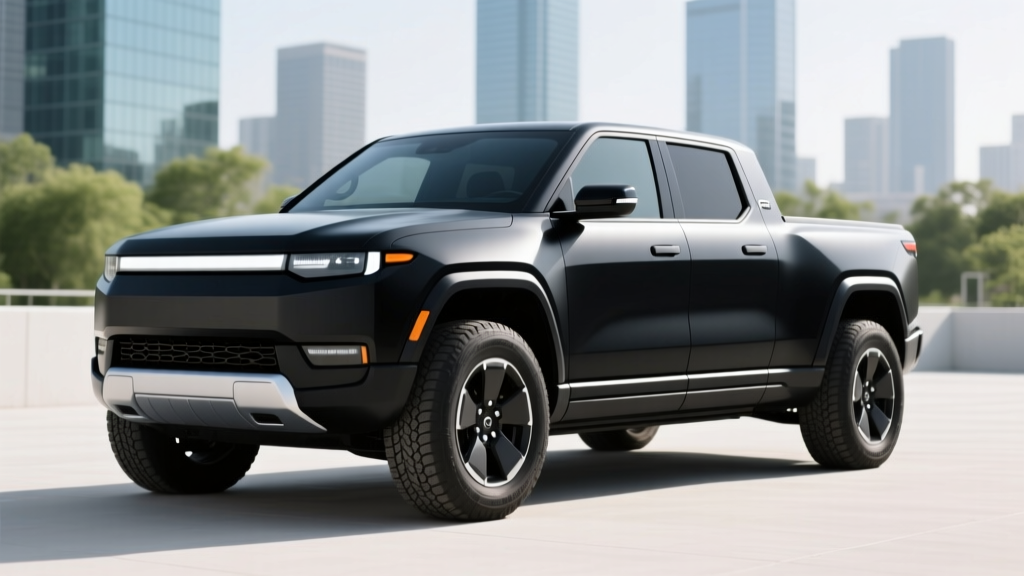
If you've been searching for Rivian R1T length and overall dimensions — whether to confirm it fits your garage, your parking spot, or your towing setup — here are the exact numbers for the current-generation R1T (the updated dual-motor and tri-motor lineup sold through 2025–2026). These figures apply to the standard R1T body; Rivian has not released a long-wheelbase variant.
| Dimension | Measurement |
|---|---|
| Overall Length | 217.1 inches (5,514 mm) |
| Overall Width (mirrors out) | 81.8 inches (2,078 mm) |
| Overall Width (mirrors folded) | 74.8 inches (1,900 mm) |
| Overall Height (Normal Ride) | 73.0 inches (1,854 mm) |
| Wheelbase | 135.8 inches (3,449 mm) |
| Ground Clearance (Normal / Max Off-Road) | 10.4 in / 14.4 in (264 mm / 366 mm) |
| Bed Length (floor) | 54.0 inches (4.5 ft) |
| Bed Width (between wheel wells) | 50.0 inches |
| Cargo Volume — Gear Tunnel | 11.0 cu ft |
| Front Trunk (Frunk) | 11.0 cu ft |
| Front Legroom | 41.3 inches |
| Rear Legroom | 41.1 inches |
| Curb Weight (Dual-Motor, approx.) | ~7,150 lbs |
| GVWR | ~9,100 lbs |
At 217.1 inches long, the R1T slots between midsize and full-size pickups. For comparison, a Toyota Tacoma is around 213 inches, while a Ford F-150 SuperCrew (5.5-ft bed) stretches to roughly 232 inches. The R1T's 54-inch bed is shorter than a traditional 5.5-ft short bed, but the Gear Tunnel (a lockable pass-through compartment behind the rear seats) and 11-cu-ft frunk make up meaningful cargo volume elsewhere.
Garage fit note: A standard US residential garage is typically 20 feet (240 inches) deep. The R1T at 217.1 inches leaves roughly 23 inches of clearance — enough to close the door, but tight if you have a wall-mounted storage rack or EV charger protruding from the back wall. Measure before you commit.
Range, Battery, and Efficiency: What the EPA Says vs. the Real World
EPA Range (Dual-Motor Large Pack): 352 miles
EPA Range (Dual-Motor Max Pack): 420 miles
Real-world expectation: Plan for ~220–240 mi (Standard), ~290–310 mi (Large), and ~340–370 mi (Max) during sustained 75-mph highway driving. In freezing temperatures (below 25°F), expect an additional 15–25% reduction due to cabin heating demand and battery chemistry limitations.
The R1T uses NMC (nickel manganese cobalt) lithium-ion cells across its current battery lineup. Rivian offers three pack sizes for the dual-motor R1T:
- Standard Pack: ~95 kWh usable capacity
- Large Pack: ~128 kWh usable capacity
- Max Pack: ~149 kWh usable capacity
Efficiency on the dual-motor Standard Pack rates at approximately 73 MPGe combined, or about 46 kWh/100 miles, per EPA fueleconomy.gov data. That's typical for a 7,000+ lb electric truck — heavier packs and tri-motor variants consume more energy per mile, reducing MPGe slightly.
Why real-world range falls short of the sticker: The EPA test cycle includes low-speed city driving and regenerative braking that favors heavy EVs. Sustained highway speeds above 70 mph increase aerodynamic drag exponentially, and the R1T's boxy truck profile doesn't help. Cold weather compounds the loss because the battery must be heated (using energy) and cabin heat draws from the pack unless equipped with a heat pump (the updated R1T includes one).
Charging Speed: DC Fast Charging and Home Level 2
Charging speed is where R1T ownership either clicks or frustrates, depending on your routine. Here's the breakdown by charging level:
| Charging Level | Power / Rate | Speed (Approx.) |
|---|---|---|
| Level 1 (120V household outlet) | 1.4 kW | ~3–4 miles per hour |
| Level 2 (240V home / public, 48A) | 11.5 kW | ~25–28 miles per hour |
| DC Fast Charge (peak) | 200 kW (Standard/Large) 190 kW (Max) | 10–80% in ~30 min (Large) 10–80% in ~36 min (Max) |
Charging curve reality check: The R1T's peak 200 kW rate applies only between roughly 10–30% state of charge. Above 50%, the rate tapers to ~120 kW, and above 80% it drops below 50 kW to protect cell longevity. If you're road-tripping, plan your DC fast stops around the 15–75% window for the fastest throughput. Charging from 80–100% on DC fast charge is painfully slow and unnecessary for battery health.
For home charging, Rivian sells the Rivian Wall Charger (48A, NEMA 14-50 or hardwired) which delivers up to 11.5 kW. On a Large Pack, that's a full 0–100% charge in about 11–12 hours — fine for overnight top-ups. A licensed electrician will typically charge $800–$2,500 for a 240V/60A circuit installation depending on panel proximity and whether a panel upgrade (to 200A service) is needed.
Performance, Drivetrain, and Towing
The dual-motor R1T puts out 533 horsepower and 610 lb-ft of torque in its standard dual-motor configuration, launching from 0–60 mph in approximately 4.5 seconds. That's legitimately quick for a truck weighing over 7,000 pounds. The tri-motor variant (available on Adventure and Ascend trims) bumps output to 850 hp with a sub-3.0-second 0–60 time, though it carries a significant price premium and lower range.
All R1T variants come with all-wheel drive as standard. Rivian's torque-vectoring system can independently control power to each wheel, which translates to genuine off-road capability — the R1T has completed the Rubicon Trail, and its adjustable air suspension offers up to 14.4 inches of ground clearance in Max Off-Road mode.
Towing capacity: The R1T is rated to tow up to 11,000 lbs when properly equipped. However, towing at or near max capacity will slash range by 40–60%. If you plan to tow a 7,000-lb camper, expect real-world range to drop from 350 miles to roughly 150–180 miles on the Max Pack. This is physics, not a Rivian-specific limitation — all electric trucks face the same trade-off.
Pricing, Trim Levels, and Federal Tax Credit Eligibility
The R1T is positioned as a premium electric truck, and pricing reflects that. Here's the current MSRP structure for the 2025–2026 model year:
| Trim / Configuration | Base MSRP | Est. Federal Credit (§30D) | Effective Price |
|---|---|---|---|
| Dual-Motor Standard (Adventure) | $69,900 | Up to $7,500* | ~$62,400 |
| Dual-Motor Large (Adventure) | $75,900 | Up to $7,500* | ~$68,400 |
| Dual-Motor Max (Adventure) | $85,900 | Up to $7,500* | ~$78,400 |
| Tri-Motor Large (Ascend) | $99,900 | Up to $7,500* | ~$92,400 |
*Federal tax credit caveats (IRS §30D, current rules):
- MSRP cap: Trucks/vans/SUVs must have an MSRP at or below $80,000. R1T Dual-Motor trims qualify; the Tri-Motor Ascend exceeds the cap and does NOT qualify.
- Buyer income limits: Modified AGI must not exceed $150,000 (single), $225,000 (head of household), or $300,000 (joint filers).
- Battery sourcing: The credit is split into two halves ($3,750 + $3,750) based on critical-mineral and battery-component sourcing requirements. Rivian has progressively improved sourcing compliance, but the exact credit amount varies by model year and production batch. Verify current eligibility on IRS.gov or through the dealer's point-of-sale transfer system.
- Point-of-sale transfer: As of 2024+, you can transfer the credit to the dealer at purchase, reducing your out-of-pocket cost immediately rather than waiting for tax filing.
Consult a tax professional before relying on credit eligibility — rules change, and your individual tax situation determines whether you can absorb a non-refundable credit.
Technology, Driver Assistance, and Notable Drawbacks
The R1T runs Rivian's proprietary software stack on a 15.6-inch center touchscreen with a 12.3-inch driver cluster. The infotainment system is responsive, supports over-the-air updates, and includes built-in navigation with route planning that integrates charging stops — a critical feature for road-trip confidence. Wireless Apple CarPlay and Android Auto are supported.
Driver assistance: Rivian's Driver+ system offers adaptive cruise control with lane centering on divided highways. This is a SAE Level 2 driver-assist system — it does not make the R1T self-driving. You must keep your hands on the wheel and eyes on the road at all times. The system works well in practice but is less aggressive in lane positioning than GM's Super Cruise or Ford's BlueCruise on compatible roads.
Standout features:
- Gear Tunnel: A lockable, weather-sealed pass-through behind the rear seats — ideal for skis, camping gear, or groceries you don't want in the bed.
- Camp Kitchen (optional): A slide-out kitchen module that integrates with the Gear Tunnel, available as an accessory.
- Air suspension: Adjustable ride height with automatic load leveling — useful for towing and off-road clearance.
- Powered tonneau cover: Available on Adventure and Ascend trims, with integrated bed lighting.
Notable drawbacks:
- The 54-inch bed is short by pickup standards. Standard 4×8 sheets of plywood will not fit flat on the floor (they fit at an angle or with the tailgate down, but it's not ideal).
- No Apple CarPlay integration with the native navigation — you must choose one or the other on-screen, which frustrates some owners.
- Service center availability remains limited outside major metro areas. Rivian has been expanding its service network, but rural owners may face long tow distances for warranty repairs.
- Insurance premiums tend to run 15–30% higher than comparable gas trucks, reflecting repair costs and parts availability for a low-volume manufacturer.
How the R1T Compares: Key Competitors
The R1T doesn't have a direct rival at its exact size and price point, but buyers cross-shop it with several electric and conventional trucks:
- Ford F-150 Lightning: Longer bed (66 in), lower starting price (~$55,000), more established dealer network. Slower 0–60, less off-road capability, and range tops out at ~320 miles (Extended Range). Better for work-truck buyers who need a full-size bed.
- Chevrolet Silverado EV: Available in multiple configurations with up to 400+ miles of range. More conventional truck feel. Priced competitively but less refined interior.
- Tesla Cybertruck: Polarizing design, stainless-steel exoskeleton, up to ~340 miles of range. Faster in tri-motor form. Less proven for off-road use and limited service infrastructure.
- Toyota Tacoma (gas/hybrid): Far cheaper, proven reliability, extensive dealer network. But 20–25 MPG combined vs. the R1T's zero tailpipe emissions and lower per-mile fuel cost.
The R1T wins on off-road capability, build quality, and adventure-oriented design. It loses on bed length, service network breadth, and starting price versus the F-150 Lightning.
Who Should Buy the Rivian R1T?
- You want a genuinely capable off-road electric truck with air suspension and real trail credentials.
- You value the Gear Tunnel and adventure-focused features (Camp Kitchen, integrated lighting).
- Your typical driving is under 250 miles per day, with road trips manageable by DC fast-charging stops.
- You have home Level 2 charging and don't rely solely on public infrastructure.
- You need a full-size truck bed for work (hauling lumber, equipment — consider the F-150 Lightning).
- You live far from a Rivian service center and can't tolerate potential downtime for repairs.
- Your budget is under $65,000 and you need maximum value per dollar.
- You tow heavy loads frequently and need 300+ miles of range while towing (no EV truck delivers this today).
Warranty and Long-Term Ownership
Rivian provides a 5-year / 60,000-mile limited vehicle warranty and an 8-year / 175,000-mile battery and drive unit warranty. The battery warranty guarantees that the pack will retain at least 70% of its original capacity over the coverage period — a competitive threshold that matches or exceeds most EV manufacturers.
Long-term battery degradation data on the R1T is still emerging (the oldest customer vehicles date to late 2021). Early reports from high-mileage owners suggest 5–8% degradation over the first 50,000 miles, which is consistent with well-managed NMC packs. Rivian's thermal management system actively heats and cools the battery, which is critical for longevity in extreme climates.
Battery replacement cost: Out-of-warranty battery replacement for the R1T has not been widely quoted, but based on industry benchmarks for 130+ kWh NMC packs, expect $18,000–$28,000 if ever needed. Most owners will never face this — the pack is designed to outlast the vehicle's economic life.
Frequently Asked Questions
What is the exact length of the Rivian R1T?
The Rivian R1T measures 217.1 inches (5,514 mm) from bumper to bumper. This is comparable to a midsize crew-cab pickup and fits in most standard residential garages with room to spare — but measure your specific garage depth before purchasing.
Does the Rivian R1T qualify for the $7,500 federal EV tax credit?
Dual-Motor R1T trims with an MSRP at or below $80,000 can qualify for up to $7,500 under IRS §30D, subject to buyer income limits ($150K single / $300K joint), battery-sourcing compliance, and point-of-sale transfer availability. The Tri-Motor Ascend exceeds the $80,000 MSRP cap and does not qualify. Always verify current rules on IRS.gov.
How fast does the R1T charge at home and on the road?
On a home Level 2 charger (240V, 48A), the R1T charges at up to 11.5 kW, adding roughly 25–28 miles of range per hour. On a DC fast charger, it peaks at 200 kW (Standard/Large packs), achieving a 10–80% charge in approximately 30 minutes. Charging slows significantly above 80% to protect battery health.
What is the real-world highway range of the R1T?
Expect roughly 10–15% less than the EPA sticker during sustained 75-mph highway driving. For the Large Pack (EPA 352 mi), that means ~290–310 real-world miles. In freezing weather, subtract another 15–25%. The Max Pack (EPA 420 mi) delivers ~340–370 miles on the highway in moderate temperatures.
Is the R1T worth buying over the Ford F-150 Lightning?
If off-road capability, adventure features, and premium build quality matter most, the R1T is the stronger truck. If you need a longer bed, lower starting price, and a broader dealer/service network, the F-150 Lightning is more practical. Both are excellent — the right choice depends on your use case.
Can the R1T bed fit standard 4×8 plywood sheets?
Not flat. The R1T's 54-inch bed floor is shorter than the 96-inch length of a full plywood sheet. You can fit sheets with the tailgate down (they'll extend past the bed) or at an angle, but it's not a clean fit. If you regularly haul sheet goods, the F-150 Lightning's 66-inch bed is more practical.