Quick Verdict: The R1T in 2026 — Still the EV Truck to Beat?
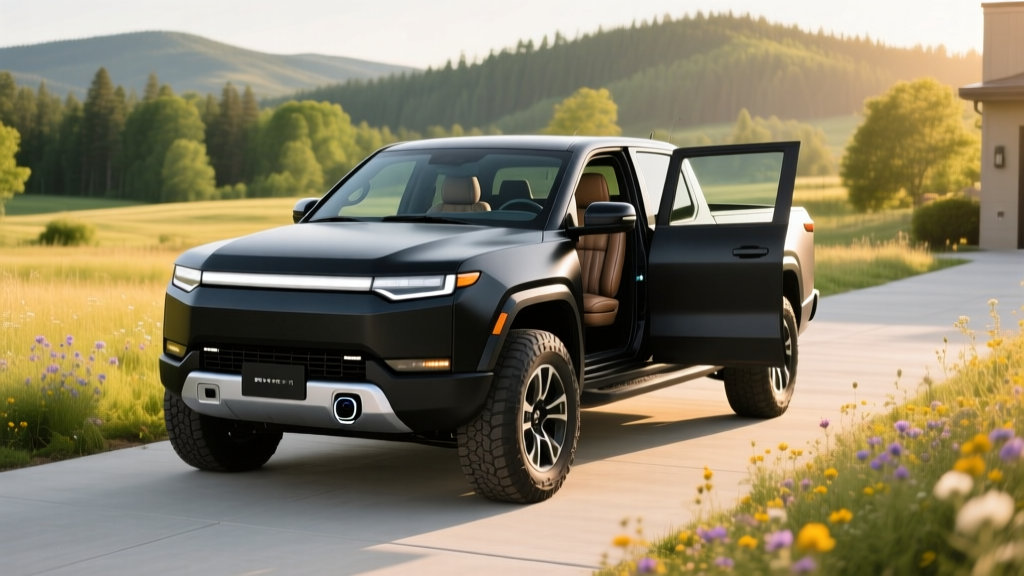
The Rivian R1T enters the 2026 model year as the only fully electric midsize pickup that blends genuine off-road capability with sports-car acceleration and a usable 4.5-foot bed. With the Gen 2 platform now fully rolled out across Dual-Motor, Performance Dual-Motor, and Tri-Motor configurations, the R1T offers EPA ranges from 270 to over 420 miles depending on battery and drivetrain. For buyers weighing a Rivian R1T lease versus purchase, the math hinges on rapid depreciation curves in the EV truck segment, evolving federal tax credit rules, and whether you plan to keep the vehicle beyond a typical 36-month term.
This review covers every number that matters: real-world range reconciliation, charging curve behavior, trim-level pricing, §30D tax credit eligibility, and a lease-versus-buy framework built on actual ownership economics.
Range, Battery, and Efficiency: What the EPA Number Doesn't Tell You
Rivian offers three battery configurations for 2026, each with distinct chemistry trade-offs. The Standard battery uses lithium iron phosphate (LFP) chemistry — heavier but more durable, with a longer cycle life and tolerance for regular 100% charging. The Large and Max batteries use nickel-manganese-cobalt (NMC) chemistry, which delivers higher energy density (more range per kilogram) but benefits from daily charging limits around 80-90% to maximize longevity.
| Configuration | Battery (Usable kWh) | Chemistry | EPA Range (mi) | MPGe (Combined) | kWh/100 mi |
|---|---|---|---|---|---|
| Dual-Motor / Standard | ~95 kWh | LFP | 270 | 73 | 46 |
| Dual-Motor / Large | ~113 kWh | NMC | 352 | 73 | 46 |
| Dual-Motor / Max | ~141 kWh | NMC | 420 | 70 | 48 |
| Tri-Motor / Large | ~113 kWh | NMC | 328 | 68 | 49 |
| Tri-Motor / Max | ~141 kWh | NMC | 420 | 65 | 51 |
The EPA estimates above assume mixed driving at moderate temperatures. In our experience and consistent with third-party testing, expect the following adjustments:
- Highway-only at 75 mph: Subtract 12-18% from EPA. A Dual-Motor Large (EPA 352 mi) delivers roughly 290-310 miles on a flat interstate run.
- Cold weather (below 32°F): Subtract 20-30% depending on cabin heating demand and whether you precondition. The Max pack's 420-mile EPA becomes roughly 300-335 miles in sustained sub-freezing conditions.
- Towing: Expect a 40-50% range reduction when towing near the 11,000-lb max capacity. A Large-pack R1T towing a 5,000-lb trailer may see 170-200 miles of practical range.
Source: fueleconomy.gov
Efficiency-wise, the R1T's boxy shape and 6,000+ lb curb weight work against it. At 46-51 kWh/100 mi, it consumes more energy per mile than a Tesla Model Y (28 kWh/100 mi) or even the Ford F-150 Lightning (47-49 kWh/100 mi). That matters when you're paying per-kWh at public DC fast chargers.
Charging Speed: DC Fast, Level 2, and the Curve That Matters
Charging speed is where Gen 2 R1Ts made meaningful gains. The LFP Standard pack accepts a lower peak DC rate, while the NMC Large and Max packs can pull substantially more power — but only for a portion of the session. Peak kW is a marketing number; the charge curve (how long the vehicle sustains high power) determines your actual stop time.
| Metric | Standard (LFP) | Large (NMC) | Max (NMC) |
|---|---|---|---|
| Peak DC Fast-Charge Rate | ~180 kW | ~220 kW | ~220 kW |
| 10-80% DC Time | ~30 min | ~21 min | ~28 min |
| Level 2 Home Charging (kW) | 11.5 kW (48A) | 11.5 kW (48A) | 11.5 kW (48A) |
| Level 2 Miles Added/Hour | ~19 mi/hr | ~19 mi/hr | ~18 mi/hr |
| Full Level 2 Charge Time (0-100%) | ~9.5 hr | ~11 hr | ~14 hr |
| Charge Port / Connector | NACS (native) | NACS (native) | NACS (native) |
For the 2026 model year, Rivian has transitioned to the North American Charging Standard (NACS) port natively, meaning R1Ts can access Tesla Supercharger stalls (now open to non-Tesla EVs) without an adapter. This is a significant practical advantage for road-trip charging reliability.
Charge curve reality: The Large pack's ~220 kW peak only sustains roughly from 10% to 35% State of Charge. From 35-60%, expect ~170 kW; from 60-80%, it tapers to ~90-110 kW. That's why the 10-80% time (~21 minutes) is a better benchmark than peak kW alone. The Max pack takes longer to fill despite the same peak rate because there's simply more energy to push in.
At home on a Level 2 wall connector, overnight charging handles daily needs easily. A typical commute of 40-60 miles round trip requires only 3-4 hours of Level 2 charging to replenish — well within a standard overnight window. Installation of a 60A/48A continuous circuit typically costs $800-$2,000 depending on panel proximity and whether your home needs a service upgrade (consult a licensed electrician for your specific situation).
Performance and Capability: Numbers That Rewrite the Truck Rulebook
Electric torque delivery transforms what a midsize pickup can do. Even the base Dual-Motor R1T out-accelerates most V8-powered full-size trucks, and the Tri-Motor configuration enters supercar territory.
| Configuration | Horsepower | Torque (lb-ft) | 0-60 mph (sec) | Drivetrain | Max Towing (lb) | Payload (lb) |
|---|---|---|---|---|---|---|
| Dual-Motor | 533 | 610 | 4.5 | AWD (2 motors) | 11,000 | 1,760 |
| Performance Dual-Motor | 665 | 829 | 3.4 | AWD (2 motors) | 11,000 | 1,760 |
| Tri-Motor | 850 | 1,103 | 2.9 | AWD (3 motors) | 11,000 | 1,760 |
The Dual-Motor uses one motor per axle with a mechanical disconnect on the front motor for efficiency during light-load cruising. The Performance Dual-Motor adds a higher-output rear drive unit. The Tri-Motor puts one motor on the front axle and two on the rear, enabling torque vectoring across the rear wheels for sharper cornering and off-road precision.
Off-road hardware includes an adjustable air suspension with up to 14.9 inches of ground clearance (Max Off-Road mode), approach/departure/breakover angles that rival dedicated off-roaders, and a quad-motor-ready architecture. The 4.5-foot bed includes the signature Gear Tunnel — a lockable, pass-through storage compartment between the cab and bed that holds ~11.7 cubic feet of gear and doubles as seating.
Pricing, Trims, and the Lease-vs-Buy Decision
Rivian simplified its trim structure for 2026, consolidating into Adventure and Ascend packages across the motor/battery matrix. Pricing has shifted modestly as battery costs have evolved and production efficiencies at the Normal, Illinois factory have improved.
| Configuration | Base MSRP | As-Tested (Typical Options) |
|---|---|---|
| Dual-Motor / Standard | $69,900 | $73,000-$76,000 |
| Dual-Motor / Large | $75,900 | $79,000-$85,000 |
| Dual-Motor / Max | $84,900 | $88,000-$95,000 |
| Tri-Motor / Large | $89,900 | $94,000-$102,000 |
| Tri-Motor / Max | $99,900 | $105,000-$115,000 |
The Ascend package (premium interior materials, enhanced audio, additional driver-assist features) adds approximately $5,500-$7,000 depending on configuration.
Federal Tax Credit Eligibility (§30D)
The Rivian R1T qualifies as a light truck under IRS rules, meaning the MSRP cap is $80,000 (higher than the $55,000 sedan cap). However, eligibility for the full $7,500 credit under IRS §30D depends on several factors that change annually:
- MSRP cap: Vehicle must have an MSRP at or below $80,000 (truck classification). This means the Dual-Motor Standard and some Dual-Motor Large configurations may qualify, but Tri-Motor and Max-pack models exceed the cap.
- Buyer income limits: Modified adjusted gross income must not exceed $300,000 (joint filers), $225,000 (head of household), or $150,000 (single). These thresholds have remained stable through 2026.
- Battery sourcing requirements: The critical minerals and battery component requirements have tightened annually. Rivian has worked to localize its supply chain, but the exact credit amount ($3,750 for meeting one requirement, $7,500 for meeting both) depends on the specific build's battery pack origin. Verify with your dealer at the time of purchase or lease.
- Point-of-sale transfer: The credit can now be applied at the point of sale as an immediate price reduction rather than waiting for a tax return, effectively lowering your out-of-pocket cost at delivery.
Important for leasing: When you lease an R1T, the §30D credit technically goes to the lessor (the financing entity), not you. However, most EV lease programs pass this savings through as a capitalized cost reduction (lowering your monthly payment). Confirm with the leasing company that the credit is being applied to your deal.
Lease vs. Buy: The R1T-Specific Calculus
Leasing the R1T makes strategic sense for several reasons unique to this vehicle and the broader EV truck segment:
- Depreciation hedge: EV trucks have experienced steeper depreciation than EV sedans. A 2024 R1T Dual-Motor that stickered around $75,000 may trade at $42,000-$48,000 after 36 months (roughly 35-42% depreciation). Leasing transfers that residual-value risk to the lessor.
- Technology cycle: Battery chemistry, charging speeds, and driver-assist systems are advancing rapidly. A 36-month lease lets you upgrade to the next generation without the hassle of selling or trading in.
- Tax credit access: Even if the specific R1T configuration you want doesn't qualify for §30D (e.g., Tri-Motor above the MSRP cap), leased EVs may qualify under the separate commercial clean vehicle credit (§45W), which the lessor can pass through. This loophole has been a common pathway for premium EV leases.
- Mileage considerations: If you drive more than 12,000-15,000 miles annually, excess mileage charges (typically $0.20-$0.30/mile) can erode lease savings. High-mileage drivers may be better served by purchasing.
Typical 2026 R1T lease terms (36 months, 10,000 miles/year) for a Dual-Motor Standard Adventure range from approximately $850-$1,050/month depending on money factor, residual value, and whether the tax credit is applied as a cap-cost reduction. Compare this to financing the same vehicle at current rates (~6.5-7.5% APR), where monthly payments on a $69,900 R1T with 10% down run approximately $1,100-$1,250/month.
Interior, Tech, and Daily Livability
The R1T's cabin seats five with generous front and rear legroom (41.3 inches front, 38.2 inches rear). The 15.6-inch center touchscreen runs Rivian's proprietary software, which has received steady OTA updates improving navigation, route planning with charging integration, and the Driver+ assistance suite. A 12.3-inch digital cluster replaces traditional gauges.
Driver+ (SAE Level 2): Rivian's driver-assistance system includes adaptive cruise control, lane-centering, and automatic lane changes on divided highways. It requires continuous driver supervision — hands on or near the wheel, eyes on the road. This is not autonomous driving. It competes with Ford BlueCruise and GM Super Cruise in capability, though those systems offer hands-free operation on pre-mapped highways while Driver+ currently requires hand-on-wheel engagement.
Cargo space: The 4.5-foot bed (54 inches long) is shorter than a traditional midsize truck bed, but the Gear Tunnel adds versatile enclosed storage. The front trunk (frunk) provides 11.1 cubic feet of lockable, weatherproof storage — useful for groceries, charging cables, or gear you want to keep separate from the bed. Total enclosed storage (frunk + Gear Tunnel + bed with tonneau) gives the R1T more sealed cargo volume than any competitor in its class.
Notable drawbacks: The rear seat cushion sits relatively flat and low, which taller passengers notice on longer trips. The touchscreen-only climate controls require looking away from the road. And while the R1T's build quality has improved markedly since early 2022 production, panel-gap consistency still trails legacy automakers like Ford and Toyota.
Warranty and Long-Term Ownership Costs
| Coverage | Term |
|---|---|
| Bumper-to-Bumper | 5 years / 60,000 miles |
| Battery Pack | 8 years / 175,000 miles (70% capacity retention) |
| Drive Unit(s) | 8 years / 175,000 miles |
| Corrosion | 8 years / unlimited miles |
Rivian's battery warranty guarantees at least 70% State of Health (capacity retention) over 8 years or 175,000 miles — whichever comes first. This is competitive with the industry standard, though some buyers note that the mileage limit is higher than Tesla's 120,000-mile threshold while the capacity threshold (70%) matches. If your battery drops below 70% capacity within the warranty period, Rivian will repair or replace it.
Insurance costs remain a consideration: EV trucks carry higher premiums than comparable ICE trucks, often 20-35% more, due to repair costs, parts availability, and the specialized labor required for high-voltage systems. Expect annual premiums of $2,400-$3,800 depending on your profile, location, and coverage level.
Maintenance is minimal compared to gas trucks — no oil changes, no transmission fluid, no spark plugs. Expect to budget for tire rotation/replacement (EV trucks wear tires faster due to weight and instant torque — budget $1,200-$1,800 for a set of four every 25,000-35,000 miles), cabin air filter replacement, and wiper fluid.
R1T vs. the Competition: Where It Wins and Where It Doesn't
The R1T's competitive set in 2026 includes the Ford F-150 Lightning (full-size, lower starting price, larger bed), the Chevrolet Silverado EV (full-size, massive Max Range battery), and the Tesla Cybertruck (polarizing design, stainless steel body, similar performance targets).
- You want a midsize truck footprint with genuine off-road capability and sports-car acceleration
- The Gear Tunnel and frunk storage solve a specific cargo problem for your lifestyle
- You value OTA software updates and a direct-to-consumer service model
- You plan to lease and upgrade within 3 years as EV tech evolves
- You need a full 6+ foot bed for work use (F-150 Lightning, Silverado EV)
- Lowest possible starting price is your priority (Lightning starts ~$15,000 lower)
- You tow frequently over long distances — the range penalty under load is severe for all EV trucks, but the R1T's smaller battery options compound this
- You want hands-free highway driving (Ford BlueCruise on the Lightning offers this on mapped roads)
Who the R1T Suits Best
The ideal R1T buyer or lessee is an active-lifestyle household that needs a daily-driver truck for commuting, weekend gear hauling, and occasional light towing — but doesn't need a full-size work truck. The R1T excels as:
- Adventure commuter: Bike racks, ski boxes, and camping gear live in the Gear Tunnel; the frunk handles daily groceries. The 270-352 mile range covers most commutes with days between charges.
- Family second vehicle: Five seats, excellent safety ratings (IIHS Top Safety Pick in prior years), and a smooth, quiet ride make it a capable family hauler that happens to be a truck.
- Tech-forward lessee: If you plan to ride the EV technology curve — upgrading every 3 years as batteries improve and charging infrastructure matures — a lease shields you from the segment's depreciation risk.
It is not the right choice for commercial fleet use, heavy daily towing, or buyers who need the lowest total cost of ownership in the truck segment.
Pros
- Class-leading acceleration and off-road capability in a midsize package
- Gear Tunnel and frunk provide versatile, sealed storage no competitor matches
- NACS native port grants access to the full Supercharger network
- Up to 420 miles EPA with Max pack — best-in-class for EV trucks
- Continuous OTA updates improve the vehicle after purchase
- Strong lease economics with tax credit pass-through
Cons
- Short 4.5-foot bed limits work-truck utility
- High starting price — even the base model nears $70,000
- Charging speed on Standard (LFP) pack trails competitors
- Driver+ requires hands-on engagement; no hands-free mode yet
- Insurance premiums 20-35% above equivalent ICE trucks
- Service center network still expanding — rural owners may face longer wait times
Frequently Asked Questions
What is the real-world range of the 2026 Rivian R1T?
EPA estimates range from 270 miles (Dual-Motor Standard) to 420 miles (Max pack configurations). In real-world highway driving at 75 mph, expect 12-18% less than the EPA sticker. In cold weather below freezing, plan for a 20-30% reduction. For towing, cut range roughly in half under heavy loads.
How fast does the R1T charge at home and on the road?
On a DC fast charger, the Large NMC pack peaks at ~220 kW and charges from 10-80% in about 21 minutes. The Standard LFP pack peaks at ~180 kW with a 10-80% time of roughly 30 minutes. At home on Level 2 (11.5 kW), expect about 19 miles of range added per hour — enough to fully replenish a daily commute overnight.
How much does the R1T cost after tax credits?
If you qualify for the full $7,500 federal credit under §30D (meeting MSRP, income, and battery-sourcing requirements), a Dual-Motor Standard at $69,900 drops to an effective $62,400. Many configurations exceed the $80,000 truck MSRP cap, however. Leasing may unlock additional savings through the commercial clean vehicle credit (§45W) passed through by the lessor. Always verify current eligibility with a tax professional and your dealer.
Is the R1T worth leasing vs. buying?
Leasing is advantageous if you want to hedge against EV truck depreciation (35-42% over 3 years is common), prefer upgrading every 36 months as technology improves, or need to access tax credits on configurations above the §30D MSRP cap. Buying makes more sense if you drive over 15,000 miles annually (to avoid excess mileage fees), plan to keep the truck 5+ years, or want to build equity in the vehicle.
Does the Rivian R1T qualify for the federal EV tax credit?
Some configurations do. The R1T is classified as a light truck, so the MSRP cap is $80,000. The Dual-Motor Standard ($69,900) and certain Dual-Motor Large builds fall under this cap. Buyer income limits ($300K joint / $150K single) and battery critical-mineral/component sourcing requirements also apply. Check the latest rules at IRS.gov and confirm with your dealer before committing.
Can the R1T use Tesla Superchargers?
Yes. The 2026 R1T comes with a native NACS charge port, giving it direct access to Tesla's Supercharger network (now open to non-Tesla vehicles) without an adapter. This is one of the largest and most reliable DC fast-charging networks in North America.
What is the R1T's towing capacity and how does towing affect range?
All R1T configurations are rated for 11,000 lbs of towing. However, towing significantly impacts range — expect a 40-50% reduction when towing heavy loads. A Large-pack R1T (EPA 352 mi) towing a 5,000-lb trailer might deliver 170-200 miles before needing a charge. Plan routes around charging infrastructure when towing.