The Quick Answer: What Is Jeff Bezos' Electric Truck?
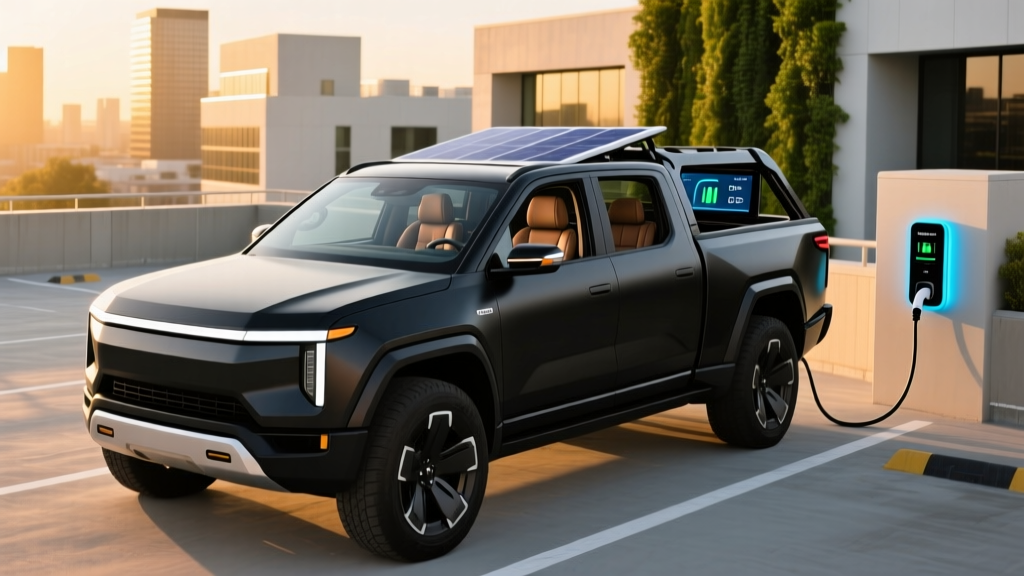
Jeff Bezos' electric truck is the Rivian R1T. Through Amazon, Bezos invested $700 million in Rivian in 2019, and Amazon ordered 100,000 electric delivery vans. The R1T is Rivian's consumer pickup, not the Amazon van, but both share Rivian's skateboard platform. The 2026 R1T starts at $69,900 (Dual-Motor Standard), delivers up to 420 miles EPA (Max Pack), and can tow 11,000 lbs.
2026 Rivian R1T: Full Spec Sheet
Rivian refreshed the R1T for the 2025 model year with Gen 2 powertrain updates, and the 2026 lineup carries forward those improvements. Here's what you're actually buying:
| Spec | Dual-Motor Standard | Dual-Motor Large | Tri-Motor Max |
|---|---|---|---|
| Base MSRP | $69,900 | $75,900 | $99,900 |
| Battery (usable kWh) | 95 kWh (LFP) | 128 kWh (NMC) | 149 kWh (NMC) |
| EPA Range | 270 mi | 352 mi | 420 mi |
| Real-World Range (highway/cold) | ~220-240 mi | ~280-310 mi | ~340-370 mi |
| Horsepower | 533 hp | 533 hp | 850 hp |
| 0-60 mph | 4.5 sec | 4.5 sec | 2.9 sec |
| Max DC Fast Charge | 200 kW | 220 kW | 220 kW |
| 10-80% DC Time | ~28 min | ~30 min | ~38 min |
| Level 2 Rate (kW) | 11.5 kW | 11.5 kW | 11.5 kW |
| Towing Capacity | 11,000 lbs | 11,000 lbs | 11,000 lbs |
| Battery Warranty | 8 yr / 175,000 mi | 8 yr / 175,000 mi | 8 yr / 175,000 mi |
Real-world range reality: EPA estimates assume mixed driving at moderate temperatures. Expect 15-20% range loss on sustained highway driving at 75 mph, and 20-30% loss in sub-freezing conditions without preconditioning. The Tri-Motor Max's 420-mile EPA figure translates to roughly 340-370 real-world miles in typical conditions — still exceptional for a pickup.
R1T vs Gas Pickup: 5-Year Cost Breakdown
The R1T competes against mid-size and half-ton gas trucks. Let's compare the Dual-Motor Standard ($69,900) against a well-equipped 2026 Ford F-150 XLT 4WD ($52,000 MSRP) over 5 years and 75,000 miles:
| Cost Category | Rivian R1T Dual-Motor | Ford F-150 XLT Gas |
|---|---|---|
| Purchase Price | $69,900 | $52,000 |
| §30D Federal Tax Credit | -$0 (MSRP cap $80K, but sourcing rules may limit) | $0 |
| Fuel/Energy (75K mi) | $4,875 (home charging @ $0.13/kWh) | $10,500 (gas @ $3.50/gal, 20 MPG) |
| Maintenance (5 yr) | $1,200 | $3,500 |
| Insurance (5 yr avg) | $12,500 | $8,500 |
| Depreciation (est. 5 yr) | $31,500 | $23,400 |
| 5-Year Total Cost | $57,475 | $51,100 |
| Cost Per Mile | $0.77 | $0.68 |
Key takeaways: The R1T saves roughly $5,625 in fuel and maintenance over 5 years, but higher purchase price, insurance premiums, and steeper depreciation narrow the gap. The economics improve significantly if you qualify for state rebates (California's CVRP offers up to $2,000; check your state), have access to cheap home charging, or drive more than 15,000 miles/year.
Tax credit reality for 2026: The R1T's base MSRP of $69,900 falls under the §30D truck cap of $80,000. However, eligibility depends on battery critical-mineral sourcing and buyer income limits ($300K joint / $150K single). Rivian has worked to localize supply chains, but the full $7,500 credit is not guaranteed. Verify current eligibility at fueleconomy.gov before purchasing, and consult a tax professional.
Real-World Ownership: What First-Time EV Buyers Must Know
The R1T is a compelling truck, but EV ownership requires planning. Here's what actually matters:
Home Charging Is Non-Negotiable (For Most Owners)
Over 80% of EV charging happens at home. The R1T accepts 11.5 kW on Level 2, which adds roughly 30-35 miles per hour of charging. A full charge from 10% to 100% takes about 10-12 hours on a 48-amp Level 2 wall connector.
Installation costs: Expect $1,200-$2,500 for a professional Level 2 install (240V, 50-amp circuit) if your electrical panel has capacity. If you need a panel upgrade (common in older homes), add $1,500-$3,000. Without home charging, you'll rely on public DC fast charging, which costs 2-3x more per kWh and requires time investment.
DC Fast Charging: Peak vs Sustained
The R1T peaks at 200-220 kW on DC fast chargers, but that peak doesn't last the entire session. Here's a realistic charge curve:
- 10-40% SoC: Sustains near peak (200-220 kW)
- 40-60% SoC: Tapers to ~150 kW
- 60-80% SoC: Tapers to ~100 kW
- 80%+ SoC: Drops to <50 kW (don't fast-charge past 80% unless necessary)
A 10-80% session takes 28-38 minutes depending on pack size. Plan road trips around 30-minute charging stops every 200-250 miles.
Cold Weather Range Loss
Lithium-ion batteries lose efficiency in cold temperatures. Expect 20-30% range reduction in sustained sub-32°F driving. The R1T has a heat pump for cabin heating (more efficient than resistive), but battery chemistry still suffers. If you live in Minnesota or Maine, the 420-mile Max Pack provides a necessary buffer; the 270-mile Standard pack becomes a 190-210 mile truck in January.
Decision Framework: Is the R1T Right for You?
Buy the Rivian R1T if:
- You need a pickup for light-to-medium towing (up to 11,000 lbs) and want instant torque
- You have home charging access (garage or driveway with 240V outlet)
- You drive 12,000-20,000 miles/year (fuel savings offset higher purchase price)
- You value tech features (over-the-air updates, gear tunnel storage, Camp Kitchen)
- You want a truck that doubles as a daily driver with car-like ride quality
Stick with a gas or hybrid pickup if:
- You tow >11,000 lbs regularly (check F-250/2500-class diesels)
- You lack home charging and live in a charging desert
- You drive <8,000 miles/year (fuel savings won't justify the premium)
- You need maximum bed length (R1T bed is 4.5 ft; F-150 offers 6.5-8 ft)
- You want the lowest upfront cost and proven long-term reliability data
Common Misconceptions About the R1T
| Myth | Fact |
|---|---|
| "It's an Amazon delivery van." | The R1T is Rivian's consumer truck. Amazon uses the separate EDV (Electric Delivery Van), which is not sold to consumers. |
| "EVs can't tow." | The R1T tows 11,000 lbs (more than most half-tons). However, towing cuts range by 40-50% — plan charging stops accordingly. |
| "The battery will need replacement in 5 years." | Rivian warranties the battery for 8 years / 175,000 miles with a 70% capacity retention threshold. Real-world data shows modern NMC packs retain 85-90% capacity at 100K miles. |
| "Charging takes too long." | Home charging happens overnight while you sleep. Road-trip DC fast charging adds 200 miles in ~30 minutes — enough time for a meal break. |
| "It's not a 'real' truck." | The R1T has a quad-motor option (Tri-Motor in 2026), 11,000-lb towing, 14.9 inches of ground clearance, and water fording to 3+ feet. It's more capable off-road than most gas trucks. |
The Bottom Line
Jeff Bezos' $700M bet on Rivian produced a genuinely capable electric pickup. The 2026 R1T offers 270-420 miles of range, 11,000-lb towing, and sub-3-second 0-60 times (Tri-Motor). It's not the cheapest truck, and ownership requires home charging infrastructure, but for buyers who drive enough miles to capture fuel savings and value instant torque, the R1T makes financial and practical sense.
Before buying, verify §30D tax credit eligibility at IRS.gov, get a quote for Level 2 home charging installation, and test-drive both the Dual-Motor and Tri-Motor variants. The R1T isn't for everyone, but for the right buyer, it's the best electric pickup on the market in 2026.
FAQ
How much does it cost to charge a Rivian R1T at home?
Charging the 128 kWh Large Pack from 10% to 100% at home (115 kWh) costs roughly $15 at the national average of $0.13/kWh. That's 352 miles of range for $15, or $0.043 per mile — compared to $0.175/mile for a 20 MPG gas truck at $3.50/gallon.
Can the R1T really tow 11,000 lbs?
Yes, but towing at max capacity cuts range by 40-50%. A 352-mile EPA truck becomes a 175-210 mile truck when towing heavy. Plan charging stops every 150 miles, and use DC fast chargers (not Level 2) on road trips.
Is the Rivian R1T eligible for the $7,500 federal tax credit?
It may be. The R1T's MSRP is under the $80,000 truck cap, but eligibility depends on battery sourcing (critical minerals and component rules) and your income (≤$300K joint / $150K single). Check fueleconomy.gov for the current credit status, as sourcing rules change frequently.
How long does the R1T battery last?
Rivian warranties the battery for 8 years / 175,000 miles, guaranteeing at least 70% capacity retention. Real-world data from similar NMC packs suggests 85-90% capacity at 100,000 miles. Battery replacement (if needed post-warranty) costs $15,000-$25,000, but most owners will never need it.
What's the difference between the R1T and Amazon's electric van?
The R1T is Rivian's consumer pickup (starts at $69,900). Amazon's EDV (Electric Delivery Van) is a purpose-built commercial vehicle not available to consumers. Both use Rivian's skateboard platform, but the EDV has a larger cargo area and is optimized for stop-and-go delivery routes.