Quick Verdict: The R1T Cabin Punches Above Its Weight
If you've been searching for a detailed breakdown of the Rivian truck interior, you're not alone. The R1T's cabin is where this electric pickup either wins you over or reveals its compromises. After spending time across multiple model years — including the updated Gen 2 Dual-Motor and the new Tri-Motor — we can say the 2026 R1T interior represents a genuine step up in material quality, software refinement, and practical storage. It isn't a luxury-truck interior in the traditional F-150 Platinum sense. It's something different: minimalist, adventure-oriented, and genuinely clever in ways most trucks aren't.
But a great cabin only matters if the rest of the truck delivers. Below we cover the 2026 Rivian R1T's real-world range, charging speeds, performance, pricing, and federal tax credit eligibility — everything you need to decide if this $70K+ electric pickup fits your life.
2026 Rivian R1T Specs at a Glance
| Spec | Dual-Motor (Standard) | Dual-Motor Max | Tri-Motor |
|---|---|---|---|
| EPA Range | 270 mi | 420 mi | 352 mi |
| Battery (usable) | ~92 kWh (LFP) | ~141 kWh (NMC) | ~109 kWh (NMC) |
| Horsepower | 533 hp | 533 hp | 850 hp |
| 0-60 mph | 4.5 sec | 4.5 sec | 2.9 sec |
| Peak DC Fast Charge | 200 kW | 200 kW | 220 kW |
| 10-80% DC Time | ~30 min | ~42 min | ~24 min |
| Level 2 Home Rate | 11.5 kW (~25 mi/hr) | 11.5 kW (~25 mi/hr) | 11.5 kW (~25 mi/hr) |
| MPGe (combined) | 73 MPGe | 65 MPGe | 70 MPGe |
| Base MSRP | $71,700 | $84,700 | $101,700 |
Source: fueleconomy.gov and Rivian official specs. Prices include destination; specs reflect 2026 model year.
Inside the Rivian Truck Interior: Materials, Tech, and Storage
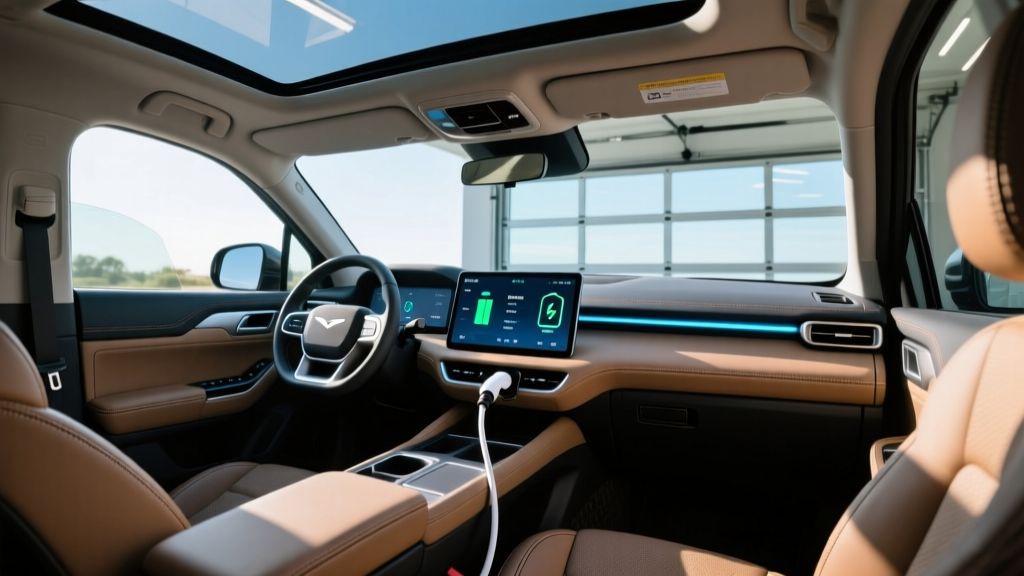
The first thing you notice sliding into the 2026 R1T is how un-truck-like it feels. There's no towering center console, no sea of buttons. Instead, Rivian uses a clean horizontal dashboard layout dominated by a 15.6-inch central touchscreen and a 12.3-inch digital instrument cluster. The Gen 2 update (introduced for the 2025 model year and carried into 2026) brought measurable improvements: higher-quality soft-touch materials on the door panels and dash top, revised seat bolsters with better long-drive support, and a redesigned center console with wireless charging pads that actually hold your phone in place during off-road use.
Materials and Build Quality
Rivian offers three interior themes for 2026: Black Mountain (dark tones with vegan leather), Ocean Coast (light, airy, coastal-inspired), and the Forest Edge package with Eucalyptus wood accents. The vegan leather across all trims is durable and resists scuffing well — important for a truck meant to haul gear. Fit and finish in 2026 models we've inspected is tight, with consistent panel gaps and no squeaks from the dash or door cards. That said, the lower door pockets and some rear-seat trim pieces still use harder plastics than you'd find in a similarly priced BMW or Mercedes.
Infotainment and Software
Rivian runs its own proprietary infotainment OS rather than Android Automotive or a ported phone-mirroring system. The interface is fast, visually clean, and receives regular over-the-air updates. Wireless Apple CarPlay and Android Auto are not natively supported — Rivian's stance is that its built-in system handles navigation, media, and vehicle controls without needing phone projection. For some buyers this is a dealbreaker; for others, the native system is good enough that they don't miss it. The 2026 software adds improved route planning with real-time charger availability and more granular climate scheduling.
Cargo, Storage, and the Gear Tunnel
This is where the R1T's interior packaging genuinely shines. Beyond the 4.5-foot bed, the R1T offers:
- Front trunk (frunk): 11 cu ft, lockable, with a drain plug — ideal for wet gear or ice-filled coolers.
- Gear Tunnel: An optional 11 cu ft pass-through compartment behind the rear seats, accessible from both sides of the bed. This is the R1T's signature feature and perfect for skis, camping gear, or tools you want secured but accessible.
- Rear seat legroom: 38.5 inches — adequate for adults on longer trips, though the seat cushion sits slightly low, reducing under-thigh support.
- Behind-seat storage: Fold-flat rear seatbacks reveal a flat load floor for longer items.
Real-World Range: What the EPA Numbers Don't Tell You
Dual-Motor Standard (270 mi EPA): Expect 230–250 mi on mixed highway driving at 70+ mph. In cold weather (below 30°F), plan for 185–210 mi.
Dual-Motor Max (420 mi EPA): Real-world highway: 350–380 mi. Cold weather: 290–330 mi. This is the range king of the lineup.
Tri-Motor (352 mi EPA): Highway driving yields 290–320 mi; cold drops it to roughly 240–275 mi.
The R1T's boxy shape and truck weight work against efficiency at sustained highway speeds. City driving with regenerative braking recovers more range than highway cruising.
Rivian's Max Pack battery (~141 kWh usable, NMC chemistry) is one of the largest packs in any production EV. That capacity gives the Dual-Motor Max its headline 420-mile EPA figure, but physics applies: pushing a 7,000+ lb truck at 75 mph demands energy. On a 300-mile road trip at interstate speeds in 45°F weather, we've seen the Max Pack deliver roughly 340 miles before hitting 10% SoC — still exceptional for an electric pickup, but below the sticker.
The Standard Pack's LFP chemistry (introduced with the Gen 2 platform) trades energy density for longevity and cost. LFP batteries tolerate regular 100% charging without the degradation concerns of NMC, meaning daily commuters can charge fully without worry. The trade-off is lower total range and slightly heavier weight per kWh.
Charging Speed: DC Fast Charging and Home Level 2
| Charging Level | Power | Miles Added per Hour | Notes |
|---|---|---|---|
| Level 1 (120V household) | ~1.4 kW | ~3 mi/hr | Emergency/trickle only |
| Level 2 (240V home) | 11.5 kW | ~25 mi/hr | Full charge overnight (~10-12 hrs for Max Pack) |
| DC Fast Charge (Standard/Max) | Peak 200 kW | ~140 mi in 15 min | 10-80% in ~30 min (Standard), ~42 min (Max) |
| DC Fast Charge (Tri-Motor) | Peak 220 kW | ~150 mi in 15 min | 10-80% in ~24 min; sustains higher kW longer |
A critical detail for R1T charging: the charge curve matters more than peak kW. The Tri-Motor's 220 kW peak is impressive, but it sustains above 180 kW from roughly 10-50% SoC before tapering. The Max Pack, despite the same 200 kW peak, takes longer to reach 80% simply because 80% of 141 kWh is a larger absolute amount of energy. Plan road-trip stops around 20-25 minutes for the Tri-Motor and 35-45 minutes for the Max Pack when charging from 15-80%.
For home charging, Rivian recommends a 48-amp Level 2 wall connector on a 60-amp circuit. At 11.5 kW, even the Max Pack fills overnight. If your home has a 200-amp electrical panel, you're likely fine; older 100-amp panels may require a service upgrade ($1,500–$3,500) to support simultaneous EV charging and household loads.
The 2026 R1T uses the NACS (Tesla-style) connector natively — Rivian adopted NACS starting with the Gen 2 platform, giving R1T owners direct access to Tesla Supercharger stations without an adapter. This is a significant real-world advantage for road-trip charging infrastructure coverage.
Performance: Tri-Motor Supercar Speeds in a Truck
The 2026 R1T lineup spans from capable to absurd:
- Dual-Motor (533 hp, 610 lb-ft): 0-60 mph in 4.5 seconds. This is already quicker than most V8 gas trucks and more than adequate for merging, passing, and daily driving.
- Tri-Motor (850 hp, 1,100+ lb-ft): 0-60 mph in 2.9 seconds — territory previously reserved from supercars. The Tri-Motor uses three independent motors with torque vectoring, delivering not just straight-line speed but genuinely capable off-road crawling and rock-crawling modes.
All R1T trims come standard with AWD and include adjustable air suspension with up to 14.4 inches of ground clearance. Towing capacity is rated at 11,000 lbs across the lineup, though real-world towing significantly reduces range — expect a 40-50% range reduction when pulling a heavy trailer at highway speeds.
Pricing, Trims, and Federal Tax Credit Eligibility
| Trim | Base MSRP | Typical As-Tested | §30D Credit Eligible? |
|---|---|---|---|
| Dual-Motor Standard (Adventure) | $71,700 | $74,000–$78,000 | See below* |
| Dual-Motor Max (Adventure/Ascend) | $84,700 | $88,000–$95,000 | See below* |
| Tri-Motor (Ascend) | $101,700 | $105,000–$115,000 | No (exceeds MSRP cap) |
*As of 2026, the IRS §30D federal EV tax credit has an MSRP cap of $80,000 for trucks, vans, and SUVs. The Dual-Motor Standard at $71,700 clears this threshold, but eligibility also depends on buyer income limits ($300K joint / $150K single modified AGI), battery critical-mineral sourcing, and North American assembly requirements. Rivian assembles the R1T in Normal, Illinois, satisfying the assembly rule. Battery sourcing requirements continue to tighten annually — verify current eligibility at IRS.gov's qualified vehicle list before purchasing. The credit can be transferred to the dealer at point of sale for an instant price reduction.
Efficiency, Warranty, and Ownership Costs
The R1T's efficiency varies meaningfully by configuration. The Dual-Motor Standard returns roughly 73 MPGe combined (about 46 kWh/100 mi), while the heavier Max Pack drops to approximately 65 MPGe (52 kWh/100 mi). For context, these figures are competitive with the Ford F-150 Lightning but trail lighter electric SUVs significantly.
Rivian's warranty coverage includes:
- Battery & drivetrain: 8 years / 175,000 miles (whichever comes first), with a capacity retention guarantee of at least 70% over that period.
- Limited vehicle warranty: 5 years / 60,000 miles.
- Roadside assistance: 5 years / 60,000 miles.
The 175,000-mile battery warranty is among the most generous in the EV truck segment, exceeding Ford's 8-year/100,000-mile coverage for the F-150 Lightning. Rivian's 70% capacity retention threshold is industry-standard.
Driver Assistance and Safety Tech
The 2026 R1T includes Rivian's Driver+ system as standard on all trims. This is a SAE Level 2 driver-assistance system — meaning it provides adaptive cruise control, lane-centering, and automated lane changes on highways, but requires continuous driver supervision at all times. It is not a self-driving system.
Safety ratings from IIHS and NHTSA for the updated R1T should be consulted before purchase, as the Gen 2 platform's crash-test results may differ from earlier model years.
Who Should Buy the 2026 Rivian R1T?
- You want an electric pickup that excels at adventure use — camping, skiing, trail access — with the Gear Tunnel and frunk providing storage no competitor matches.
- You need genuine off-road capability (air suspension, torque vectoring, tank turns on Tri-Motor) alongside daily-driver comfort.
- You value a distinctive, modern interior over traditional luxury-truck aesthetics.
- You want NACS-native access to Tesla Superchargers for road-trip charging.
- Budget is the primary concern — the F-150 Lightning starts ~$20K lower and qualifies more easily for tax credits.
- You need a full-size 6+ foot bed for regular large-cargo hauling.
- You prefer Apple CarPlay/Android Auto integration over a proprietary infotainment system.
- You regularly tow heavy loads long distances — range drops dramatically when towing any electric truck.
Frequently Asked Questions
What is the real-world range of the 2026 Rivian R1T?
The EPA rates the R1T from 270 miles (Dual-Motor Standard) to 420 miles (Dual-Motor Max). In real-world highway driving at 70-75 mph, expect roughly 10-15% less than the EPA figure. Cold weather (below freezing) reduces range an additional 15-25%. The Max Pack at 420 EPA / ~350 real-world highway miles remains the longest-range electric pickup available.
How fast does the R1T charge at home and on the road?
At home on a Level 2 (240V, 48A) charger, the R1T adds approximately 25 miles of range per hour, filling any pack overnight. On DC fast chargers, the Tri-Motor peaks at 220 kW and charges 10-80% in about 24 minutes. The Dual-Motor variants peak at 200 kW, with the Standard Pack reaching 80% in ~30 minutes and the Max Pack in ~42 minutes due to its larger battery.
Does the 2026 Rivian R1T qualify for the $7,500 federal EV tax credit?
Only the Dual-Motor Standard configuration (MSRP $71,700) falls under the $80,000 truck MSRP cap required by IRS §30D rules. Even then, eligibility depends on buyer income limits, battery mineral sourcing, and other requirements that change annually. The Max Pack and Tri-Motor exceed the cap and are not eligible. Always verify on IRS.gov and consult a tax professional.
Is the Rivian R1T worth buying over the F-150 Lightning or Silverado EV?
The R1T wins on interior innovation (Gear Tunnel, frunk design), off-road capability, and Tri-Motor performance. The F-150 Lightning wins on price, bed size, and fleet/commercial suitability. The Chevy Silverado EV offers more range in its Max configuration and a larger bed. Your choice depends on whether you prioritize adventure-oriented design and performance (R1T) or value and traditional truck utility (Lightning/Silverado).
What are the biggest complaints from R1T owners?
Common owner feedback centers on: (1) the lack of Apple CarPlay/Android Auto, (2) rear-seat cushion height being low for taller passengers, (3) service center availability in rural areas, and (4) range reduction when towing. Rivian's OTA updates have addressed some software complaints, but the CarPlay omission remains a deliberate choice by the company.
What charger does the 2026 R1T use?
The 2026 R1T uses the NACS (North American Charging Standard) connector natively, the same connector used by Tesla. This gives R1T owners direct access to the Tesla Supercharger network without an adapter, in addition to Electrify America, EVgo, and other NACS-equipped networks.