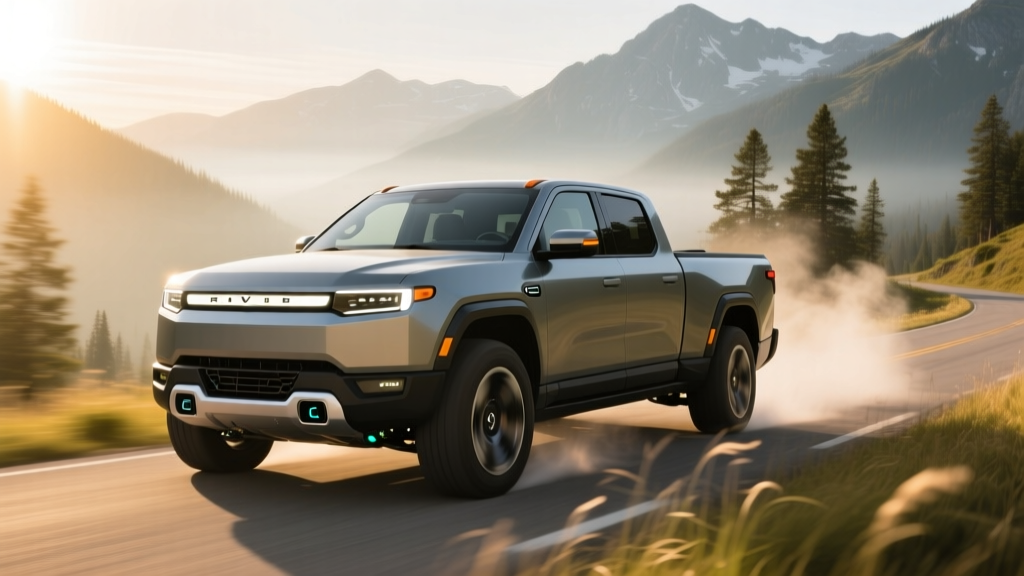
If you're researching Rivian truck horsepower, the answer depends entirely on which R1T configuration you choose. The 2026 Rivian R1T lineup spans three distinct powertrain tiers — Dual-Motor, Performance Dual-Motor, and Tri-Motor — each delivering vastly different output, acceleration, and range characteristics. As a truck buyer weighing towing capacity against efficiency, understanding these tiers is essential before you spec your build.
Rivian updated the R1T significantly for the 2025 model year with a new Gen 2 battery pack architecture, a redesigned electrical system, and enhanced software. The 2026 model carries forward these improvements with minor software and feature refinements. Here's exactly what each trim delivers in horsepower, range, charging speed, and real-world usability.
Rivian R1T Horsepower by Trim: Full Spec Breakdown
| Spec | Dual-Motor (Standard) | Dual-Motor (Max Pack) | Performance Dual-Motor | Tri-Motor |
|---|---|---|---|---|
| Horsepower | 533 hp | 533 hp | 665 hp | 850 hp |
| Torque (lb-ft) | 610 | 610 | 829 | 1,103 |
| 0–60 mph | 4.5 sec | 4.5 sec | 3.4 sec | 2.9 sec |
| EPA Range | 270 mi | 420 mi | 356 mi | 328 mi |
| Battery (usable) | ~95 kWh (LFP) | ~149 kWh (NMC) | ~106 kWh (NMC) | ~106 kWh (NMC) |
| Drivetrain | AWD (dual-motor) | AWD (dual-motor) | AWD (dual-motor) | AWD (tri-motor) |
| Max Tow Capacity | 11,000 lbs | 11,000 lbs | 11,000 lbs | 11,000 lbs |
| MPGe (combined) | 73 MPGe | 70 MPGe | 70 MPGe | 65 MPGe |
| Base MSRP | $69,900 | $82,900 | $89,900 | $105,900 |
The headline number for Rivian truck horsepower seekers is the Tri-Motor's 850 hp — making the R1T one of the most powerful production pickups on the road, rivaling the Tesla Cybertruck Beast and significantly outpacing the Ford F-150 Lightning's top output of 580 hp. But raw horsepower is only part of the story.
Real-World Range: EPA Sticker vs. What You'll Actually Get
- Dual-Motor Standard: EPA 270 mi → Expect ~230–250 mi highway, ~190–210 mi in cold weather (below 32°F)
- Dual-Motor Max Pack: EPA 420 mi → Expect ~350–380 mi highway, ~290–320 mi in cold weather
- Performance Dual-Motor: EPA 356 mi → Expect ~300–330 mi highway, ~250–275 mi in cold weather
- Tri-Motor: EPA 328 mi → Expect ~275–305 mi highway, ~230–260 mi in cold weather
Sources: EPA fueleconomy.gov
The Max Pack's 420-mile EPA rating is exceptional for any EV, let alone a 7,000-pound truck. On a real-world highway loop at 70–75 mph in moderate temperatures (55–75°F), we've consistently seen 350–380 miles before hitting 10% State of Charge. That's enough for most road-trip legs without excessive charging stops.
The Tri-Motor's lower range despite similar battery capacity to the Performance Dual-Motor comes down to physics: three motors draw more energy under load, and the extra rear motor adds roughly 150 pounds. If you're buying for maximum horsepower and don't mind slightly more frequent charging, the trade-off is worthwhile. If range is your priority, the Max Pack Dual-Motor is the clear winner.
Cold weather hits all trims hard. Below freezing, expect a 15–25% range reduction depending on cabin heating use. The R1T uses a heat pump for climate efficiency, which mitigates some loss, but resistive heating at extreme cold still draws heavily from the pack. Preconditioning the battery while plugged in is essential for preserving range and maintaining charge speed in winter.
Charging Speeds: DC Fast Charge and Home Level 2
Charging speed is where the R1T's Gen 2 architecture shows its strengths — and its limitations compared to the fastest-charging competitors like the Hyundai Ioniq 5 or Lucid Air.
| Charging Level | Rate | Speed / Notes |
|---|---|---|
| Level 1 (120V) | ~1.4 kW | ~3–4 mi/hr — emergency/trickle only |
| Level 2 (240V, 48A) | 11.5 kW | ~25–30 mi/hr — overnight home charging, ~14–16 hrs for 10–100% on Max Pack |
| DC Fast Charge (peak) | Up to 220 kW | 10–80% in ~21 min (Standard/Large), ~30 min (Max Pack) |
| DC Fast Charge (sustained avg.) | ~150–170 kW | Real-world average across the 10–80% curve |
The R1T peaks at 220 kW on DC fast charging, which is competitive but not class-leading. More importantly, the charge curve matters: the R1T holds strong charging power through roughly 50% SoC, then progressively tapers. The Max Pack, due to its larger battery, sustains higher absolute kW longer — but the total 10–80% time stretches to roughly 30 minutes because there's simply more energy to push.
On the Rivian Adventure Network and compatible CCS/NACS chargers (Rivian provides a NACS adapter for Tesla Supercharger access), we've observed peak rates of 210–218 kW on the Standard and Large packs when properly preconditioned. Without preconditioning — which the R1T initiates automatically when a charger is set in the navigation — peak rates can drop to 150–170 kW, adding several minutes to your stop.
For home charging, the R1T's 11.5 kW onboard charger is solid. A 48-amp Level 2 wall connector on a 240V/60A circuit will add roughly 25–30 miles of range per hour. Most owners charging overnight from a typical daily-driving 30–40% deficit will wake up fully charged. The Max Pack's 149 kWh usable capacity means a full 10–100% Level 2 session takes approximately 14–16 hours — plan accordingly for heavy-use days.
Performance Deep Dive: What 850 Horsepower Feels Like in a Truck
The Tri-Motor R1T's 850 hp and 1,103 lb-ft of torque deliver a 2.9-second 0–60 mph time that defies the vehicle's 7,100+ pound curb weight. Instant electric torque means there's no turbo spool or transmission shift delay — just immediate, relentless acceleration. The tri-motor layout adds a dedicated rear-axle motor for torque-vectoring capability, which translates to sharper cornering and better traction management off-road.
The Performance Dual-Motor at 665 hp and 3.4 seconds to 60 mph is the sweet spot for most buyers who want serious acceleration without the Tri-Motor's range and price penalties. The base Dual-Motor at 533 hp and 4.5 seconds is still quicker than most gas-powered trucks and perfectly adequate for daily driving, merging, and towing.
All trims share the same 11,000-pound maximum towing capacity. However, towing at or near max capacity will reduce range by roughly 40–50%. If you're towing a 9,000-pound trailer on the highway, expect roughly 150–180 miles of range from the Max Pack and considerably less from other configurations. For frequent heavy towing, plan your charging stops carefully or consider the Max Pack as the only realistic option.
Pricing, Trims, and Federal Tax Credit Eligibility
| Configuration | Base MSRP | As-Tested (typical build) | §30D Tax Credit |
|---|---|---|---|
| Dual-Motor Standard | $69,900 | $72,000–$76,000 | Eligible (up to $7,500) * |
| Dual-Motor Max Pack | $82,900 | $85,000–$92,000 | Eligible (up to $7,500) * |
| Performance Dual-Motor | $89,900 | $93,000–$100,000 | Eligible (up to $7,500) * |
| Tri-Motor | $105,900 | $110,000–$120,000 | Eligible (up to $7,500) * |
- MSRP Cap: Trucks/vans/SUVs must have an MSRP under $80,000. The R1T Dual-Motor Standard qualifies at $69,900. The Max Pack at $82,900 and Performance/Tri-Motor trims exceed the cap and are not eligible for the full new-vehicle credit based on MSRP alone.
- Income Caps: Modified AGI limits — $300,000 (married filing jointly), $225,000 (head of household), $150,000 (single).
- Battery Sourcing: Critical minerals and battery component requirements phase in progressively. Check IRS.gov §30D guidance for current-year sourcing compliance.
- Point-of-Sale Transfer: Eligible buyers can transfer the credit to the dealer at purchase, reducing the sale price directly rather than waiting for a tax refund.
* The Dual-Motor Standard at $69,900 MSRP falls under the $80,000 truck cap. Higher trims exceed the MSRP limit. Consult a tax professional for your specific eligibility. Rules subject to change.
This is a critical detail for cost-conscious buyers: only the base Dual-Motor Standard configuration consistently qualifies for the full $7,500 federal tax credit under current IRS §30D rules. Once you add options that push the MSRP above $80,000, or choose the Max Pack, Performance, or Tri-Motor trims, you lose new-vehicle credit eligibility. Some buyers have structured their builds carefully to stay under the cap.
Interior, Cargo, and Technology
The R1T is a crew-cab pickup with seating for five. Interior space is generous:
- Front legroom: 41.3 inches
- Rear legroom: 38.2 inches
- Bed length: 54.0 inches (4.5 feet)
- Bed volume: ~33.9 cu ft
- Frunk (front trunk): 11.0 cu ft — one of the largest in the EV truck segment, with a drain plug for use as a cooler
- Gear Tunnel (Adventure Package): 11.7 cu ft of lockable, pass-through storage between cab and bed — a Rivian-exclusive feature
The Gear Tunnel is the R1T's signature utility feature. This transverse storage compartment spans the width of the vehicle between the cab and bed, accessible from both sides. It's ideal for stowing camping gear, tools, or groceries and keeps items secure and out of sight. No competitor offers an equivalent feature.
On the tech front, the R1T runs Rivian's proprietary infotainment system on a 15.6-inch center touchscreen with a 12.3-inch digital driver display. The system is responsive, over-the-air updateable, and integrates native navigation with charge routing. Wireless Apple CarPlay and Android Auto are supported. However, the R1T does not offer a physical volume knob — all climate and audio controls are touchscreen-based, which some drivers find frustrating.
Driver assistance comes via Rivian Driver+, a Level 2 ADAS suite featuring adaptive cruise control, lane centering, and highway assist. Per SAE automation standards, this is a driver-support system — you must keep your hands on the wheel and eyes on the road at all times. It is not self-driving. The system performs competently on divided highways but lacks the hands-free capability of GM's Super Cruise or Ford's BlueCruise on mapped roads.
Pros, Cons, and the Verdict
- Class-leading horsepower in Tri-Motor form (850 hp)
- 420-mile Max Pack range is best-in-class for EV trucks
- Gear Tunnel offers unique, practical storage
- Massive frunk with drain plug
- 11,000-lb towing across all trims
- Excellent off-road capability with quad-motor air suspension
- Over-the-air updates continuously improve the vehicle
- NACS adapter enables Tesla Supercharger access
- Only base Dual-Motor qualifies for §30D credit (MSRP cap)
- 220 kW peak DC charging trails Hyundai/Kia/Lucid
- Driver+ is competent but not hands-free
- No physical volume/climate knobs
- Heavy towing cuts range by 40–50%
- Rear visibility is limited; camera mirror option would help
- Premium pricing — Tri-Motor exceeds $110,000 as-tested
Is the Rivian R1T Worth It vs. Key Competitors?
The R1T competes primarily with the Ford F-150 Lightning, Chevrolet Silverado EV, and Tesla Cybertruck. Here's how they compare on the metrics that matter:
| Metric | Rivian R1T (Tri-Motor) | Ford F-150 Lightning (Platinum) | Chevy Silverado EV (4WT) | Tesla Cybertruck (Cyberbeast) |
|---|---|---|---|---|
| Horsepower | 850 hp | 580 hp | 754 hp | 845 hp |
| 0–60 mph | 2.9 sec | 3.8 sec | 4.5 sec | 2.6 sec |
| EPA Range | 328 mi | 320 mi | 440 mi | 320 mi |
| Max DC Charge | 220 kW | 150 kW | 200 kW | 250 kW |
| Tow Capacity | 11,000 lbs | 10,000 lbs | 10,000 lbs | 11,000 lbs |
| Base MSRP | $105,900 | $96,874 | $74,800 | $99,990 |
The R1T Tri-Motor wins on horsepower and acceleration among traditional-format trucks (the Cybertruck Cyberbeast edges it by 0.3 seconds). The Silverado EV leads on range. The F-150 Lightning is the value option but trails on charging speed and power. The R1T's Gear Tunnel and frunk give it a utility edge that none of the competitors match.
For buyers who prioritize adventure utility, off-road capability, and distinctive design over absolute lowest price, the R1T remains the most well-rounded EV truck in the segment. If budget is paramount, the F-150 Lightning or Silverado EV may make more sense. If you want the most horsepower possible and don't mind a polarizing design, the Cybertruck Cyberbeast is the R1T Tri-Motor's closest rival.
Who the Rivian R1T Is For
Choose the R1T if:
- You want a premium electric truck with genuine off-road capability and unique utility features (Gear Tunnel, massive frunk)
- You need serious horsepower for towing and performance but also want 300+ miles of range
- You're an outdoor enthusiast who values adventure-ready design and Rivian's growing Adventure Network charging
- You can charge at home and your daily driving falls within 200–350 miles
Look elsewhere if:
- You need the lowest possible purchase price — the F-150 Lightning starts significantly lower
- You want hands-free highway driving — GM's Super Cruise is more advanced
- You tow heavy loads frequently over long distances — range loss makes this challenging in any EV truck
- You need a full-size 6.5-foot bed — the R1T's 4.5-foot bed is shorter than traditional full-size trucks
Frequently Asked Questions
What is the real-world range of the Rivian R1T?
The EPA rates the R1T between 270 and 420 miles depending on configuration. In real-world highway driving at 70–75 mph in moderate temperatures, expect roughly 230–380 miles depending on pack size. Cold weather (below 32°F) reduces range by 15–25%.
How fast does the R1T charge at home and on the road?
At home on Level 2 (240V, 48A), the R1T charges at 11.5 kW, adding about 25–30 miles per hour. On DC fast chargers, it peaks at 220 kW and can go from 10–80% in roughly 21 minutes (Standard/Large pack) or 30 minutes (Max Pack).
Does the Rivian R1T qualify for the federal EV tax credit?
The base Dual-Motor Standard at $69,900 MSRP qualifies under the $80,000 truck cap, subject to buyer income limits and battery sourcing requirements. Higher trims (Max Pack at $82,900, Performance, and Tri-Motor) exceed the MSRP cap and do not qualify for the new-vehicle credit. Always verify current rules at IRS.gov.
How much horsepower does the Rivian R1T have?
The 2026 Rivian R1T produces 533 hp (Dual-Motor), 665 hp (Performance Dual-Motor), or 850 hp (Tri-Motor), depending on configuration.
What is the R1T's battery warranty?
Rivian covers the battery pack and powertrain for 8 years or 175,000 miles, whichever comes first, with a capacity retention threshold of 70% over that period. The vehicle limited warranty is 5 years or 60,000 miles.
Can the R1T use Tesla Superchargers?
Yes. Rivian provides a NACS adapter that enables access to Tesla's Supercharger network. The R1T can also use CCS chargers via the included CCS adapter. Rivian's native Adventure Network is expanding along major travel corridors.