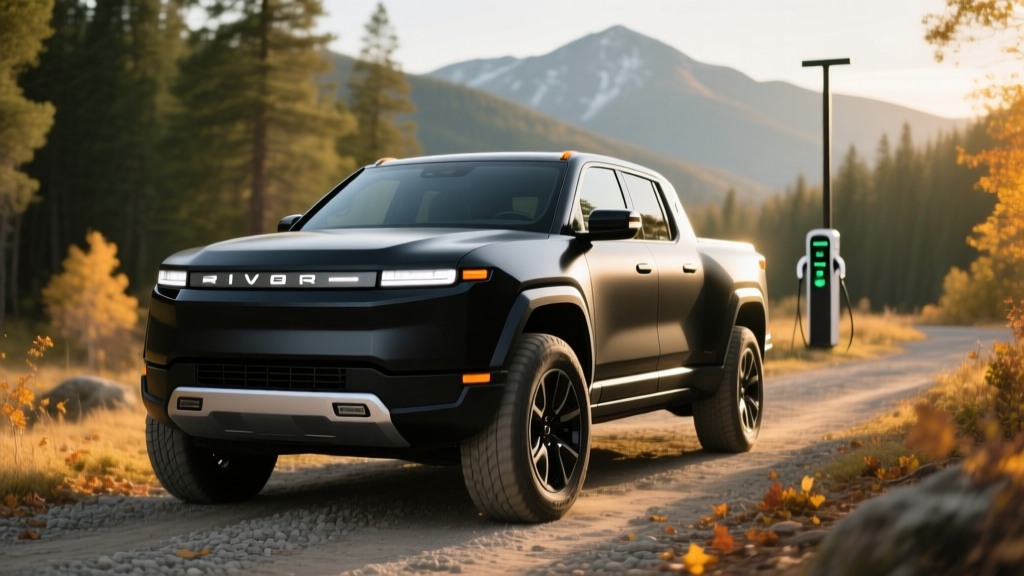
The Rivian R1T Dual Motor occupies a rare position in the 2026 EV truck market: it's the only electric pickup that pairs genuine off-road capability with sports-car acceleration and a usable, thoughtfully designed bed. With the Gen 2 platform now in its second full model year, the Dual Motor variant remains the volume seller—offering 665 horsepower, up to 420 miles of EPA-estimated range (with the Max Pack), and a starting price that undercuts the Tri and Quad Motor trims by a wide margin. But spec sheets only tell part of the story. This review breaks down what the R1T Dual Motor actually delivers in range, charging speed, daily usability, and total cost of ownership.
2026 Rivian R1T Dual Motor: Core Specifications
| Specification | Standard Pack | Large Pack | Max Pack |
|---|---|---|---|
| EPA Range | ~270 mi | ~352 mi | ~420 mi |
| Battery Capacity (usable) | ~92 kWh | ~115 kWh | ~141 kWh |
| Battery Chemistry | NMC (Samsung 2170) | NMC (Samsung 2170) | NMC (Samsung 4680) |
| Horsepower | 665 hp | 665 hp | 665 hp |
| Torque | 829 lb-ft | 829 lb-ft | 829 lb-ft |
| 0–60 mph | 4.5 sec | 4.5 sec | 4.6 sec |
| Max DC Fast Charge | 200 kW | 200 kW | 220 kW |
| 10–80% DC Charge Time | ~27 min | ~30 min | ~35 min |
| Level 2 Home Charge Rate | 11.5 kW | 11.5 kW | 11.5 kW |
| Towing Capacity | 11,000 lbs | 11,000 lbs | 11,000 lbs |
| Base MSRP (Adventure) | $69,900 | $75,900 | $83,900 |
Range and Efficiency: EPA Sticker vs. Reality
The EPA estimates vary significantly depending on which battery pack you choose. The Standard Pack's ~270 miles is adequate for commuting but limiting for road trips. The Large Pack at ~352 miles hits a sweet spot for most buyers, while the Max Pack's ~420 miles puts the R1T among the longest-range EVs on the market—truck or otherwise.
EPA estimates assume a mix of city and moderate-speed driving. In real-world highway testing at 70–75 mph, expect to lose roughly 15–20% from the EPA figure. That puts the Large Pack at approximately 280–300 highway miles and the Max Pack at 340–360 highway miles. Cold weather (below freezing) compounds this: plan for an additional 15–25% reduction when temperatures drop below 30°F, especially on shorter trips where the battery doesn't fully warm up. The R1T's heat pump helps mitigate cabin energy draw, but the large frontal area and 6,800+ lb curb weight work against efficiency at speed. On the positive side, city and suburban driving often meets or slightly exceeds EPA numbers thanks to regenerative braking recapturing energy.
Efficiency lands around 70 MPGe combined (EPA) for the Large Pack, which translates to roughly 48 kWh per 100 miles. That's thirstier than a Tesla Cybertruck AWD (~76 MPGe) and significantly less efficient than lighter SUVs like the Hyundai Ioniq 5 (114 MPGe). The physics of a 6,800-pound, boxy pickup are unavoidable. For context, this means a full Large Pack charge (~115 kWh usable) costs roughly $14–$18 on a national-average residential rate of $0.16/kWh, and about $40–$55 at a DC fast charger priced at $0.35–$0.48/kWh.
Charging Speed: DC Fast Charging and Home Level 2
Rivian's Gen 2 platform uses a 400-volt architecture (not 800V like the Hyundai Ioniq 5 or Porsche Taycan), which limits peak charge rates compared to some competitors. The Dual Motor Standard and Large Packs peak at 200 kW, while the Max Pack (with its 4680 cells) reaches 220 kW.
| Charging Method | Power / Rate | Miles Added per Hour | Notes |
|---|---|---|---|
| Level 1 (120V household) | ~1.4 kW | ~3–4 mi/hr | Emergency/trickle only |
| Level 2 (240V, Rivian Wall Charger) | 11.5 kW | ~25–28 mi/hr | Full charge overnight (~10–14 hrs for Large Pack) |
| Level 2 (240V, 48A generic) | 11.5 kW | ~25–28 mi/hr | Requires NACS connector (2026 standard) |
| DC Fast Charge (Standard/Large) | Peak 200 kW | ~500+ mi/hr at peak | 10–80% in ~27–30 min; tapers above 80% |
| DC Fast Charge (Max Pack) | Peak 220 kW | ~540+ mi/hr at peak | 10–80% in ~35 min; higher capacity extends session |
Charging curve reality: Peak rates of 200–220 kW are only sustained between roughly 10–30% state of charge. The curve tapers progressively—dropping to ~120 kW around 50% SoC and ~60 kW above 80%. This is typical for NMC chemistry at 400V, but it means the advertised 10–80% time is the useful metric, not peak kW. For road trips, plan charging stops around 10–80% rather than topping off to 100%, which is painfully slow and unnecessary for battery longevity.
At home, the Rivian Wall Charger (or any quality 48-amp Level 2 unit) delivers 11.5 kW on a 60-amp circuit. A Large Pack owner starting at 20% SoC will reach 80% in roughly 7 hours—easily overnight. Rivian switched to the NACS connector as standard for the 2026 model year, meaning direct access to Tesla Supercharger V3 and V4 stalls (350 kW capable, though the R1T will only draw up to its onboard limit) without an adapter. For Electrify America or other CCS networks, a NACS-to-CCS adapter is needed—Rivian includes one with new vehicles.
Performance and Drivetrain
The Dual Motor powertrain uses one permanent-magnet synchronous motor per axle, delivering all-wheel drive with torque vectoring capability. The combined output of 665 horsepower and 829 lb-ft of torque propels the R1T to 60 mph in 4.5 seconds (4.6 for the heavier Max Pack). That's quicker than a Ford F-150 Lightning Extended Range (4.0 sec for the Platinum trim with 580 hp) and comparable to a BMW X5 M in a straight line.
Rivian's drive modes—All-Purpose, Sport, Conserve, Snow, Off-Road, and Towing—adjust throttle mapping, suspension height (with available air suspension), and torque distribution. The available hydraulic roll control system (replacing traditional anti-roll bars) is a genuine differentiator for off-road use, allowing impressive wheel articulation on uneven terrain without compromising on-road body control.
Braking feel remains one of the R1T's few dynamic criticisms. The blended regen-to-friction brake transition can feel inconsistent, particularly in stop-and-go traffic. Rivian has improved this through OTA updates, but it still doesn't match the seamless one-pedal driving experience of a Tesla or Hyundai E-GMP vehicle. Expect to use the friction brakes more than in competing EVs.
Interior, Cargo, and Practical Utility
The R1T's cabin seats five with generous front and rear legroom (41.3 inches front, 38.2 inches rear). Material quality is solid—vegan leather and real wood or aluminum trim are standard—but some owners report that certain hard plastics in the lower dash and door pockets don't quite match the premium price. The 15.6-inch center touchscreen runs Rivian's proprietary OS, which is responsive and well-organized, with native integration for navigation, media, and vehicle settings. Apple CarPlay and Android Auto are not supported—Rivian's position is that their native system is superior, but this remains a pain point for buyers who prefer phone projection.
Cargo and the Gear Tunnel:
- Bed length: 4.5 feet (54 inches) with the tailgate up; extends to ~6.5 feet with the available tailgate extension
- Bed payload: ~1,760 lbs
- Gear Tunnel: 11.7 cu ft of lockable, pass-through storage between the cab and bed—unique to the R1T and ideal for skis, camping gear, or groceries
- Frunk (front trunk): 11.0 cu ft, drainable, with a 120V outlet
- Total enclosed cargo: ~67.2 cu ft (bed + tunnel + frunk combined)
The Gear Tunnel is the R1T's party trick. No other electric truck offers this kind of secure, weather-sealed mid-vehicle storage. Combined with the available Camp Kitchen (a slide-out kitchen unit that fits the tunnel), it makes the R1T the most adventure-oriented EV truck on the market.
Pricing, Trims, and Federal Tax Credit Eligibility
The 2026 R1T Dual Motor is available in two trims: Adventure (well-equipped base) and Ascend (premium, with additional luxury and tech features).
| Configuration | Adventure Trim | Ascend Trim |
|---|---|---|
| Standard Pack (~270 mi) | $69,900 | $75,400 |
| Large Pack (~352 mi) | $75,900 | $81,400 |
| Max Pack (~420 mi) | $83,900 | $89,400 |
The R1T Dual Motor qualifies for the $7,500 federal EV tax credit when purchased new, subject to the following IRS requirements (always verify at irs.gov, as rules evolve):
- MSRP cap: Trucks must be under $80,000. The Standard and Large Pack Adventure trims qualify. The Max Pack ($83,900+) exceeds the cap and does not qualify.
- Buyer income cap: AGI must not exceed $300,000 (married filing jointly), $225,000 (head of household), or $150,000 (single).
- Battery sourcing: Critical minerals and battery components must meet escalating percentage thresholds from qualifying trade partners. Rivian's Samsung SDI cells currently meet requirements, but verify at point of sale.
- Point-of-sale transfer: You can transfer the credit to the dealer at purchase, reducing your out-of-pocket cost by $7,500 immediately—no need to wait for tax filing.
Effective price example: R1T Dual Motor Large Pack Adventure at $75,900 minus $7,500 credit = $68,400 (before state incentives, destination, or options).
Options that push price upward include the air suspension (~$2,500), the Camp Kitchen (~$5,000+), and premium paint colors. A fully optioned Large Pack Ascend can approach $90,000, well beyond the tax credit threshold.
Warranty and Ownership Costs
Rivian provides the following warranty coverage for the 2026 R1T:
- Battery & Drive Units: 8 years / 175,000 miles (whichever comes first), with a guaranteed minimum of 70% capacity retention
- Bumper-to-Bumper: 5 years / 60,000 miles
- Roadside Assistance: 5 years / 60,000 miles
The 175,000-mile battery warranty is notably generous—most competitors (Ford, GM, Tesla) offer 8 years / 100,000 miles. The 70% retention threshold is industry-standard, though some manufacturers use 65% or 70%. Real-world degradation data from early Gen 2 R1T owners suggests roughly 3–5% loss in the first 30,000 miles, stabilizing afterward—consistent with well-managed NMC packs.
Insurance costs are a real factor: the R1T Dual Motor typically runs $2,400–$3,200 annually depending on location, driving record, and coverage level. That's 30–50% higher than a comparably priced gas truck, reflecting the R1T's repair costs, performance, and MSRP. Get quotes before purchasing.
Tech, Driver Assistance, and Software
The R1T comes equipped with Rivian's Driver+ suite, which includes adaptive cruise control, lane centering, automatic emergency braking, blind-spot monitoring, and rear cross-traffic alert. This is a SAE Level 2 driver-assistance system—the driver must remain fully engaged, with hands on the wheel and eyes on the road at all times. It is not autonomous driving.
Rivian Driver+ does not support hands-free driving on highways (unlike GM's Super Cruise or Ford's BlueCruise on mapped roads). Lane centering can be hesitant on faded markings, and the system disengages in construction zones or sharp curves. Always maintain active supervision. Over-the-air updates continue to refine behavior, but the system is not a substitute for an attentive driver.
Software is a Rivian strength. OTA updates regularly add features, improve efficiency algorithms, and refine the UI. The built-in trip planner factors in elevation, temperature, and charging station availability—among the best in the industry. The Rivian app provides remote preconditioning, charge monitoring, location tracking, and Gear Guard (a security camera system that monitors your bed and campsite).
Pros and Cons at a Glance
Pros
- Class-leading off-road capability with hydraulic roll control
- Gear Tunnel: unique, secure mid-vehicle storage
- Up to 420 miles EPA (Max Pack) — longest-range EV truck
- 665 hp / 4.5-sec 0–60 with composed on-road handling
- NACS connector standard (2026): direct Supercharger access
- 175,000-mile battery warranty exceeds most competitors
- OTA updates continuously improve the vehicle post-purchase
Cons
- No Apple CarPlay or Android Auto
- Max Pack exceeds $80K MSRP cap — no federal tax credit
- Blended brake feel remains inconsistent
- 400V architecture limits DC fast-charge peak vs. 800V rivals
- Insurance premiums significantly above gas truck averages
- Driver+ is capable but not hands-free (no Level 2+ highway mode)
- Service center network still expanding in rural areas
Who Should Buy the Rivian R1T Dual Motor?
Choose the R1T Dual Motor if: You want an electric truck that excels at weekend adventures—camping, trail driving, gear-heavy road trips—and you value the Gear Tunnel and off-road hardware. The Large Pack Adventure at ~$68,400 (after the $7,500 credit) is the best value in the lineup, offering 352 miles of range, 11,000-lb towing, and genuine four-season usability.
Look elsewhere if: You need a dedicated work truck with an 8-foot bed (the R1T's 4.5-foot bed limits commercial utility), you prioritize hands-free highway driving (GM's Silverado EV with Super Cruise is better suited), or you need the lowest possible cost per mile (a smaller, lighter EV SUV will be far more efficient). If you don't need a truck bed, the Rivian R1S (the SUV sibling) offers similar capability with more rear-seat comfort and enclosed cargo space.
Frequently Asked Questions
What is the real-world range of the Rivian R1T Dual Motor?
Expect roughly 280–300 highway miles from the Large Pack and 340–360 from the Max Pack at 70–75 mph in moderate temperatures. City driving often meets or slightly exceeds EPA estimates. In sub-freezing weather, reduce these figures by an additional 15–25%. The Standard Pack's ~270-mile EPA rating translates to roughly 220–240 highway miles in practice.
How fast does the R1T Dual Motor charge at home and on the road?
At home on a 240V Level 2 charger (48A), the R1T adds about 25–28 miles of range per hour, fully charging a Large Pack overnight in roughly 10–12 hours. On DC fast chargers, the Standard and Large Packs peak at 200 kW (10–80% in ~27–30 minutes), while the Max Pack peaks at 220 kW (10–80% in ~35 minutes). The 2026 NACS connector provides direct access to Tesla Superchargers.
Does the R1T Dual Motor qualify for the $7,500 federal tax credit?
Yes, the Standard and Large Pack Adventure trims (under $80,000 MSRP) qualify for the full $7,500 credit under IRS §30D, assuming the buyer meets income caps ($300K joint / $150K single) and battery sourcing requirements are met at time of purchase. The Max Pack exceeds the $80,000 MSRP cap for trucks and does not qualify. The credit can be transferred at point of sale. Always verify current eligibility at irs.gov.
Is the Rivian R1T Dual Motor worth it vs. the Ford F-150 Lightning or Chevy Silverado EV?
It depends on your priorities. The R1T excels in off-road capability, adventure-oriented design (Gear Tunnel, Camp Kitchen), and driving dynamics. The F-150 Lightning offers a larger bed, more conventional truck utility, and a lower entry price but less range and less sophisticated software. The Silverado EV provides a longer bed and available Super Cruise (hands-free highway driving) but lacks the R1T's off-road chops. For buyers who use their truck primarily for lifestyle and recreation rather than commercial work, the R1T is the strongest choice in the segment.
What's the biggest complaint from R1T owners?
The most common owner criticisms are the lack of Apple CarPlay/Android Auto, inconsistent brake pedal feel, and the growing-but-still-limited Rivian service center network in less populated areas. Software updates have addressed some concerns, but the CarPlay omission is a firm Rivian policy. Insurance costs also surprise many buyers—budget $200–$270/month depending on your profile.