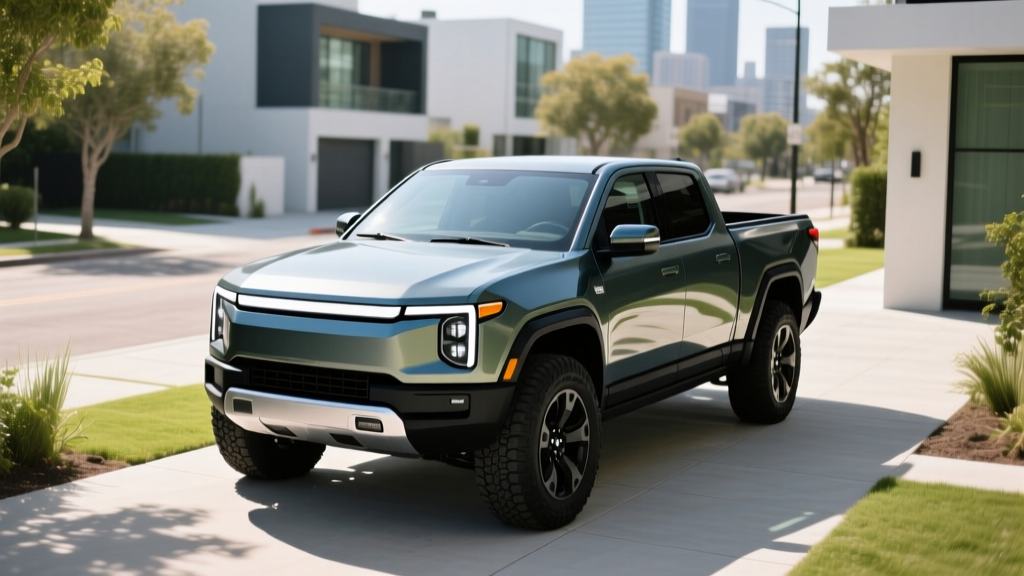
2026 Rivian R1T: The Electric Truck That Actually Ships
If you've been tracking your Rivian R1T delivered status in the app, congratulations — you're now part of a growing cohort of electric-truck owners who skipped the vaporware and got a vehicle that actually performs. The 2026 R1T continues to evolve from its 2022 launch, with refined software, expanded battery options, and a growing service network. But ownership reality often differs from spec-sheet promises.
This guide breaks down what new and prospective R1T owners need to know: real-world range versus EPA estimates, actual charging speeds (not just peak kW), federal tax credit eligibility under current IRS §30D rules, and the practical trade-offs of living with an 8,000-pound electric pickup.
Range Reality Check: EPA Sticker vs. Real-World Miles
Real-World Expectation: 320–360 miles highway; 280–320 miles in cold weather (below 40°F); 380+ miles mixed city driving
The 2026 R1T offers three battery configurations. The Standard Pack (92 kWh usable, LFP chemistry) delivers an EPA-estimated 270 miles. The Large Pack (128 kWh usable, NMC) pushes that to 350 miles. The Max Pack (149 kWh usable, NMC) achieves the headline 420-mile figure.
But EPA testing favors city driving with frequent regenerative braking opportunities. On a 70-mph highway run, expect 15–20% range loss compared to the sticker. Cold weather compounds this — battery heating and cabin climate draw can reduce range by 25–35% in sub-freezing conditions. If you're planning a 300-mile winter road trip, you'll want to plan at least one charging stop.
Battery Chemistry and Long-Term Degradation
| Battery Option | Usable Capacity | Chemistry | EPA Range | Expected Degradation (8 yr) |
|---|---|---|---|---|
| Standard Pack | 92 kWh | LFP (Lithium Iron Phosphate) | 270 mi | 8–12% |
| Large Pack | 128 kWh | NMC (Nickel Manganese Cobalt) | 350 mi | 10–15% |
| Max Pack | 149 kWh | NMC | 420 mi | 10–15% |
The Standard Pack's LFP chemistry trades energy density for longevity and thermal stability. LFP cells can be charged to 100% daily without accelerated degradation — a significant advantage for commuters who want full range every morning. NMC packs (Large and Max) offer higher energy density but benefit from staying between 20–80% state of charge for daily use, reserving 100% charges for road trips.
Rivian's battery warranty covers 8 years or 175,000 miles, whichever comes first, with a capacity retention threshold of 70%. That's among the more generous thresholds in the industry — some competitors drop to 65% or even 60%.
Charging Speeds: DC Fast, Level 2, and the Curve Reality
| Charging Method | Peak Power | 10–80% Time | Miles Added per Hour |
|---|---|---|---|
| DC Fast Charge (Max Pack) | 220 kW | ~30 minutes | N/A (DC session) |
| DC Fast Charge (Large Pack) | 200 kW | ~32 minutes | N/A (DC session) |
| DC Fast Charge (Standard Pack) | 175 kW | ~28 minutes | N/A (DC session) |
| Level 2 Home (48A, 11.5 kW) | 11.5 kW | N/A | ~25–30 mi/hr |
| Level 2 Home (32A, 7.7 kW) | 7.7 kW | N/A | ~17–20 mi/hr |
Rivian quotes peak DC fast-charge rates, but real-world charging follows a curve. The Max Pack peaks at 220 kW only between roughly 10–30% state of charge. From 50–80%, that rate tapers to 80–120 kW. The 30-minute 10–80% time assumes optimal battery preconditioning (which the R1T initiates automatically when you navigate to a charger) and a 350 kW-capable station.
At home, most R1T owners install a 48-amp Level 2 charger on a 60-amp circuit. This delivers 11.5 kW, adding roughly 25–30 miles of range per hour — enough to fully replenish a Standard Pack overnight. If your electrical panel can't support a 60-amp circuit, a 32-amp setup (7.7 kW) still works but extends charge time by 40%.
Performance and Efficiency: Power Meets Practicality
The 2026 R1T Dual-Motor configuration produces 533 horsepower and 610 lb-ft of torque, hitting 0–60 mph in 4.5 seconds. The Performance Dual-Motor bumps that to 665 hp and a 3.5-second 0–60 time. All configurations use all-wheel drive with independent torque vectoring.
Efficiency varies significantly by pack size and driving style:
- Standard Pack: 73 MPGe combined (2.1 kWh/mile)
- Large Pack: 70 MPGe combined (2.2 kWh/mile)
- Max Pack: 68 MPGe combined (2.3 kWh/mile)
These figures reflect the R1T's 7,000–8,000-pound curb weight. Heavier packs mean more range but lower efficiency. Towing a 5,000-pound trailer cuts range by 40–50% regardless of pack size — plan accordingly.
Pricing, Trims, and Federal Tax Credit Eligibility
| Configuration | Base MSRP | As-Tested (Typical Options) | Federal Tax Credit | Effective Price |
|---|---|---|---|---|
| Dual-Motor Standard Pack | $69,900 | $72,500 | $3,750–$7,500* | $62,400–$68,750 |
| Dual-Motor Large Pack | $75,900 | $79,000 | $3,750–$7,500* | $68,400–$75,250 |
| Dual-Motor Max Pack | $83,900 | $88,000 | $3,750–$7,500* | $76,400–$84,250 |
| Performance Dual-Motor Large | $84,900 | $89,500 | $3,750–$7,500* | $77,400–$85,750 |
*Federal tax credit eligibility under IRS §30D depends on multiple factors:
- MSRP Cap: Trucks must be under $80,000 MSRP. Most R1T configurations qualify, but Max Pack with premium options may exceed the cap.
- Buyer Income Limits: Modified AGI cannot exceed $150,000 (single), $225,000 (head of household), or $300,000 (joint).
- Battery Sourcing: The $7,500 credit splits into $3,750 for critical minerals and $3,750 for battery components. Sourcing requirements tighten annually. As of 2026, many R1T configurations qualify for the full $7,500, but verify current-year rules.
- Point-of-Sale Transfer: You can transfer the credit to the dealer at purchase, reducing your upfront cost rather than waiting for tax filing.
Consult a tax professional for your specific situation. State incentives vary and stack on top of federal credits — check your local DMV or energy office.
Cargo, Passenger Space, and the Gear Tunnel Advantage
The R1T's 4.5-foot bed is shorter than full-size trucks, but the lockable gear tunnel (a 17-cubic-foot pass-through behind the rear seats) compensates for many use cases. Combined with the 11-cubic-foot frunk, you get 28+ cubic feet of secure, weatherproof storage.
| Dimension | Measurement |
|---|---|
| Bed Length | 54 inches (4.5 ft) |
| Bed Width (between wheel wells) | 50 inches |
| Gear Tunnel Volume | 17 cu ft |
| Frunk Volume | 11 cu ft |
| Rear Legroom | 38.2 inches |
| Towing Capacity | 11,000 lbs (properly equipped) |
The gear tunnel is the R1T's killer feature for outdoor enthusiasts. Skis, snowboards, camping gear, or tools slide in from either side, protected from weather and theft. It's not a replacement for a 6-foot bed if you regularly haul plywood or pallets, but for weekend adventures, it's more practical than a traditional bed.
Technology, Driver Assists, and Software Quirks
The R1T runs Rivian's proprietary software stack with a 15.6-inch center touchscreen and 12.3-inch driver display. Over-the-air updates add features regularly — recent additions include improved route planning with charging stops and enhanced camp mode for off-grid power.
Driver+ (Rivian's Level 2 ADAS): Includes adaptive cruise control, lane centering, and automatic emergency braking. It's competent highway assist but requires hands-on-wheel supervision. This is not autonomous driving — you remain responsible for vehicle control at all times.
Notable drawbacks:
- Infotainment can lag during complex navigation tasks
- Phone-as-key occasionally requires app restart
- Service center availability remains limited in rural areas
- No Apple CarPlay or Android Auto (Rivian's native system only)
Who Should Buy the 2026 Rivian R1T?
Pros
- Genuine off-road capability with 14.9 inches ground clearance
- Innovative gear tunnel storage
- Strong real-world range (especially Max Pack)
- 11,000-lb towing capacity
- Regular OTA updates improve ownership experience
Cons
- $70k+ starting price (before credits)
- Service network still expanding
- Efficiency drops significantly when towing
- No phone projection (CarPlay/Android Auto)
- Cold-weather range loss requires trip planning
Buy the R1T if: You need a capable truck for outdoor recreation, value secure storage over bed length, and have home charging access. The gear tunnel and off-road chops make it ideal for skiers, climbers, and overlanders.
Consider alternatives if: You need a full-size bed for work, live far from Rivian service centers, or prioritize efficiency over capability. The Ford F-150 Lightning offers more bed length at lower cost, while the Tesla Cybertruck (when available) may offer better efficiency.
Frequently Asked Questions
Does the Rivian R1T qualify for the federal EV tax credit?
Most R1T configurations qualify for $3,750–$7,500 under IRS §30D, depending on battery sourcing, buyer income, and MSRP. The Max Pack with premium options may exceed the $80,000 truck MSRP cap. Verify current-year eligibility on the IRS website and consult a tax professional.
How long does it take to charge the R1T at home?
With a 48-amp Level 2 charger (11.5 kW), expect 8–10 hours for a Standard Pack, 11–13 hours for Large Pack, and 13–15 hours for Max Pack from near-empty. Most owners charge 20–80% overnight, which takes 5–8 hours depending on pack size.
Can I tow a trailer with the R1T?
Yes — the R1T is rated for 11,000 pounds when properly equipped. However, towing reduces range by 40–50%. A 420-mile Max Pack drops to ~210–250 miles when towing a 5,000-pound trailer. Plan charging stops accordingly.
How does the R1T perform in snow and off-road?
Excellent. The quad-motor variant offers independent wheel torque control, and the air suspension provides up to 14.9 inches of ground clearance. Real owners report confident performance in deep snow, sand, and rock crawling. The tank-turn feature (spinning in place) is useful for tight trail reversals.
What's the warranty coverage?
Rivian covers the battery for 8 years/175,000 miles with a 70% capacity retention guarantee. The powertrain warranty is 8 years/100,000 miles. Bumper-to-bumper coverage is 5 years/60,000 miles — shorter than some competitors.
Is the R1T worth it versus the F-150 Lightning or Cybertruck?
The R1T excels at adventure use cases with its gear tunnel, off-road capability, and premium fit-and-finish. The F-150 Lightning offers more bed length and lower pricing. The Cybertruck (when available) may offer better efficiency. Test-drive all three if possible — the R1T's unique features either solve your problems or they don't.
Getting your Rivian R1T delivered is just the start. Install a Level 2 home charger immediately, learn the charge curve for road trips, and leverage the gear tunnel for secure storage. The R1T isn't perfect, but for outdoor-focused truck buyers, it's the most capable electric option shipping today.