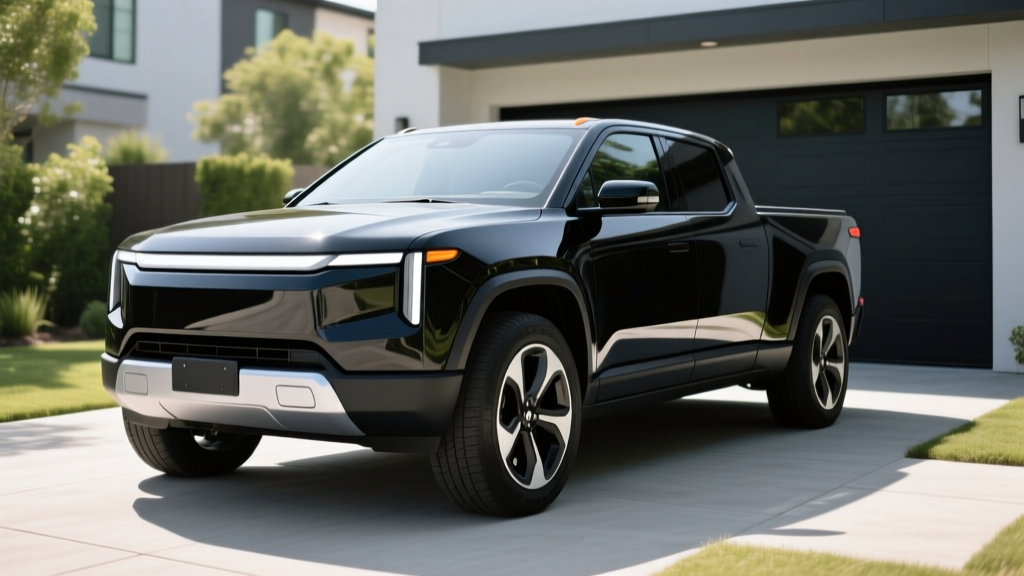
The Rivian R1T is one of the heaviest vehicles in its class — electric or otherwise. But understanding how much does a Rivian truck weigh requires more than a single number. The answer shifts dramatically depending on which battery pack you choose, and that weight directly affects range, efficiency, charging behavior, and tire wear over the life of the truck. Let's break down every pound, kilowatt-hour, and dollar.
Rivian R1T Curb Weight by Battery Pack
Rivian currently offers the R1T with two battery configurations for the 2026 model year: the Standard battery (lithium iron phosphate, or LFP) and the Max battery (nickel manganese cobalt, or NMC). The chemistry difference isn't just about energy density — it's the primary driver of the weight gap between trims.
| Configuration | Battery Chemistry | Usable Capacity | Curb Weight | GVWR |
|---|---|---|---|---|
| Dual-Motor Standard | LFP | 92.5 kWh | ~6,886 lbs | 8,532 lbs |
| Dual-Motor Max Pack | NMC | 128.9 kWh | ~7,148 lbs | 8,532 lbs |
| Tri-Motor Max Pack | NMC | 128.9 kWh | ~7,270 lbs | 8,996 lbs |
For context, a fully loaded Ford F-150 with the 3.5L EcoBoost V6 weighs roughly 5,000–5,500 lbs. The R1T is 1,400–1,800 lbs heavier than a comparably equipped gas F-150 — and even outweighs the Ford F-150 Lightning Extended Range (~6,800 lbs) in Max Pack form. This mass has real consequences for efficiency, which we'll cover below.
The ~260 lb difference between the Standard and Max packs comes primarily from the larger NMC module count. LFP cells are inherently heavier per kWh of capacity (lower energy density), but Rivian compensates by using a smaller total pack. The Tri-Motor adds roughly 120 lbs over the Dual-Motor Max due to the third drive unit on the rear axle.
Real-World Range: EPA vs. What You'll Actually See
Real-World Highway (70 mph, mild weather): ~330–360 miles
Real-World Highway (30°F, cabin heat): ~270–300 miles
Standard Pack EPA: 270 miles | Real highway: ~215–240 miles
Rivian's 420-mile EPA rating for the Dual-Motor Max Pack is the highest of any production electric pickup. But EPA testing cycles include substantial city/regenerative braking segments that flatter heavy EVs. On a sustained 70-mph highway run in 65–75°F weather, expect roughly 80–85% of the sticker number. Once temperatures drop below 40°F and cabin heating activates, range loss of 25–35% is normal for any EV without a dedicated heat pump circuit optimized for extreme cold. The R1T does use a heat pump, but its large cabin volume and poor aerodynamic profile (Cd ~0.38, typical for pickups) still drive significant consumption at speed.
The Standard Pack's 270-mile EPA figure is more realistic for daily driving and commuting. If your typical trip is under 150 miles round-trip with home charging, the Standard pack's lower weight and lower cost make it the pragmatic choice.
Charging Speed: DC Fast Charging and Home Level 2
Charging a 7,000+ lb truck with a 128.9 kWh battery requires patience — or a very capable fast charger. Here's what the R1T actually delivers at the plug:
| Charging Level | Max Rate | Speed / Time | Connector |
|---|---|---|---|
| Level 1 (120V) | 1.4 kW | ~3–4 mi/hr | NACS (native) |
| Level 2 (240V, 48A) | 11.5 kW | ~25 mi/hr | Max Pack 0–100% in ~12 hr | NACS (native) |
| DC Fast Charge (Max Pack) | Peak 220 kW | 10–80% in ~42 min | NACS (native) |
| DC Fast Charge (Standard) | Peak 200 kW | 10–80% in ~30 min | NACS (native) |
The R1T switched to the Tesla NACS connector natively starting with 2025 model-year production. This gives you direct access to the Tesla Supercharger network (now open to Rivian via adapter or native port depending on build date) without relying on the dwindling CCS infrastructure.
A critical note on the DC fast-charge curve: the R1T Max Pack peaks near 220 kW only between roughly 15–35% State of Charge. By 60% SoC, the rate tapers to ~130 kW, and above 80% it drops below 60 kW. This is normal for NMC chemistry at this capacity, but it means the "10–80% in 42 minutes" figure assumes you're starting at a low SoC at a charger capable of sustained 350 kW delivery (e.g., a V3 Supercharger or Electrify America 350 kW stall). At a 150 kW station, expect 10–80% in closer to 55 minutes for the Max Pack.
For home charging, a 48-amp Level 2 wall connector on a 60-amp circuit is the practical minimum for the Max Pack. Overnight (10 hours) adds roughly 250 miles — enough to refill from 20% to near-full. Consult a licensed electrician to verify your panel can support a continuous 48A load; a 200-amp service panel is generally required.
Performance and Efficiency Numbers
Despite its mass, the R1T delivers sports-car acceleration from its quad- or tri-motor configurations, and the dual-motor is no slouch either:
- Dual-Motor (Standard & Max): 533 hp, 610 lb-ft torque, 0–60 mph in ~4.5 seconds, AWD
- Tri-Motor (Max only): 850 hp, 1,103 lb-ft torque, 0–60 mph in ~2.9 seconds, AWD
Efficiency is where weight tells its story. The EPA rates the R1T Dual-Motor Max Pack at 73 MPGe combined, which translates to roughly 46 kWh per 100 miles. That's significantly thirstier than a Tesla Model Y (~28 kWh/100mi) or even the Ford F-150 Lightning (~43 kWh/100mi). At the national average electricity rate of ~$0.17/kWh (EIA, 2025), filling the Max Pack from empty costs approximately $21.90 — still far less than the $65–80 you'd spend on gas for equivalent F-150 range, but not negligible.
The Standard Pack's lighter LFP battery improves efficiency marginally to ~76 MPGe combined. Real-world towing drops efficiency dramatically — expect 55–65 kWh/100mi when pulling a 5,000-lb trailer, cutting effective range to 180–220 miles on the Max Pack.
Pricing, Trims, and Federal Tax Credit Eligibility
| Trim | Base MSRP | §30D Credit Eligible? | Effective Price (est.) |
|---|---|---|---|
| Dual-Motor Standard (Adventure) | $69,900 | Potentially — see rules below | ~$62,400 if eligible |
| Dual-Motor Max Pack (Adventure) | $83,900 | Potentially | ~$76,400 if eligible |
| Tri-Motor Max Pack (Ascend) | $99,900 | Potentially | ~$92,400 if eligible |
The IRS §30D clean vehicle credit offers up to $7,500 for qualifying new EVs, but eligibility hinges on three factors that change frequently:
- MSRP cap: Pickup trucks must have an MSRP at or below $80,000. The Dual-Motor Standard qualifies; the Dual-Motor Max Pack at $83,900 does NOT unless optioned below the cap (unlikely with destination charges).
- Buyer income cap: Modified AGI must not exceed $150,000 (single), $225,000 (head of household), or $300,000 (joint).
- Battery sourcing: Critical minerals and battery components must meet phased-in domestic/free-trade sourcing percentages that increase annually. Rivian's supply chain has shifted substantially; check the fueleconomy.gov credit lookup tool for the specific VIN's eligibility at time of purchase.
As of early 2026, the Dual-Motor Standard R1T typically qualifies for the full $7,500 when purchased by an eligible buyer, and it can be transferred at the point of sale to reduce the purchase price directly. The Max Pack trims generally exceed the $80,000 MSRP cap and are ineligible regardless of income. Always verify with a tax professional before assuming credit eligibility.
Cargo, Passenger Space, and the Gear Tunnel Advantage
The R1T's defining packaging feature is the Gear Tunnel — a 1.7-meter pass-through storage compartment behind the cab that's accessible from both sides of the bed. This is exclusive to the R1T among production electric pickups and is a direct result of Rivian's skateboard architecture pushing mechanicals below the floor.
- Bed length: 4.5 ft (54 in) — shorter than most midsize gas trucks
- Bed volume: 26.7 cu ft (to top of bed rails)
- Gear Tunnel: 11.0 cu ft, lockable, 120V outlet available
- Frunk (front trunk): 11.0 cu ft, drainable, can serve as a cooler
- Rear-seat legroom: 38.2 inches — adequate for adults on longer trips
- Total enclosed cargo: ~48.7 cu ft (bed + tunnel + frunk combined)
The short 4.5-foot bed is the R1T's biggest practical limitation for traditional truck buyers. If you regularly haul 4×8 sheets of plywood (you can't, not with the tailgate up) or need a 6-foot bed for job-site materials, the R1T won't work. For camping gear, bikes, and lifestyle cargo, the Gear Tunnel and frunk more than compensate.
Warranty, Reliability, and Ownership Costs
Rivian's warranty structure is competitive for the EV truck segment:
- Battery & Drive Unit: 8 years / 175,000 miles (whichever comes first), covering defects and capacity loss below 70% of original capacity
- Vehicle (bumper-to-bumper): 5 years / 60,000 miles
- Corrosion: 5 years / unlimited miles
The 175,000-mile battery warranty exceeds the industry-standard 100,000 miles and is one of the longest in the segment. LFP chemistry in the Standard Pack is expected to degrade more slowly than NMC — typical LFP packs show 5–8% degradation over 100,000 miles vs. 8–12% for NMC, though Rivian-specific long-term data is still maturing.
Insurance is a cost factor worth flagging. The R1T's high repair costs (aluminum body, integrated battery structure, sensor-heavy bumpers) push annual premiums to $2,800–$3,600 for a typical driver, according to industry averages. That's 30–50% higher than an equivalently priced gas truck.
Who the Rivian R1T Is Actually For
Choose the R1T if: You want a genuinely capable off-road electric truck with best-in-class range (Max Pack), unique storage solutions (Gear Tunnel, frunk), and you don't need a full-size bed. Ideal for outdoor enthusiasts, adventure travelers, and tech-forward buyers who tow moderately (up to 11,000 lbs rated) and have reliable home charging.
Look elsewhere if: You need a work truck with a 6+ foot bed, you tow heavy trailers daily (range collapses), you want the lowest possible cost of entry, or you lack consistent home charging access. The F-150 Lightning is more practical for fleet and job-site use; the Chevrolet Silverado EV offers a longer bed option.
Pros, Cons, and the Bottom Line
Pros
- 420-mile EPA range (Max Pack) — longest of any electric truck
- Gear Tunnel and frunk offer unmatched enclosed cargo versatility
- Tri-Motor delivers supercar acceleration (2.9s 0–60) in a pickup
- 11,000-lb towing capacity with integrated tow features
- Native NACS connector — full Supercharger network access
- 175,000-mile battery warranty exceeds most competitors
- Genuine off-road capability (up to 14.9 in ground clearance, quad-motor tank turns)
Cons
- Curb weight over 7,100 lbs hurts efficiency (46 kWh/100mi)
- 4.5-ft bed is too short for traditional truck work
- Max Pack trims exceed $80K MSRP cap — no federal tax credit
- DC fast charging peaks at 220 kW — slower than Hyundai/Kia 800V platforms
- Insurance premiums 30–50% above gas truck equivalents
- Real-world highway range ~330 mi (Max) — well below 420-mi sticker
- Service center network still limited in rural areas
Frequently Asked Questions
How much does a Rivian R1T truck weigh?
The 2026 Rivian R1T weighs between approximately 6,886 lbs (Dual-Motor Standard LFP pack) and 7,270 lbs (Tri-Motor Max NMC pack). That makes it one of the heaviest consumer pickups on the road, roughly 1,500 lbs heavier than a gas F-150 crew cab.
What is the real-world range of the Rivian R1T?
The EPA rates the Dual-Motor Max Pack at 420 miles, but expect ~330–360 miles on a highway trip in mild weather and ~270–300 miles in freezing temperatures. The Standard Pack's 270-mile EPA rating yields ~215–240 real-world highway miles.
Does the Rivian R1T qualify for the federal EV tax credit?
The Dual-Motor Standard ($69,900 MSRP) generally qualifies for the $7,500 §30D credit if the buyer meets income caps and the battery meets sourcing requirements. Max Pack trims ($83,900+) exceed the $80,000 MSRP cap for trucks and are ineligible. Always verify on fueleconomy.gov for the specific VIN.
How fast does the R1T charge at home and on the road?
On a 48-amp Level 2 home charger, the R1T gains about 25 miles of range per hour. On a DC fast charger, the Max Pack peaks at 220 kW and charges from 10–80% in roughly 42 minutes. The Standard Pack charges 10–80% in about 30 minutes thanks to its smaller battery.
Is the Rivian R1T worth buying over the Ford F-150 Lightning?
The R1T wins on range (420 vs. 320 miles Max), off-road capability, and storage innovation. The F-150 Lightning wins on bed length (5.5–6.5 ft), pricing (starts ~$55,000), service network breadth, and fleet practicality. If lifestyle and adventure define your truck use, the R1T is the stronger pick. If work and value lead, the Lightning is the better tool.
Why is the Rivian R1T so heavy?
Three factors: the large battery pack (92.5–128.9 kWh of cells adds 1,200–1,600 lbs alone), the dual/tri-motor all-wheel-drive system, and the reinforced aluminum body structure needed to handle 11,000-lb towing and off-road loads. This mass is the tradeoff for the R1T's range, power, and capability.