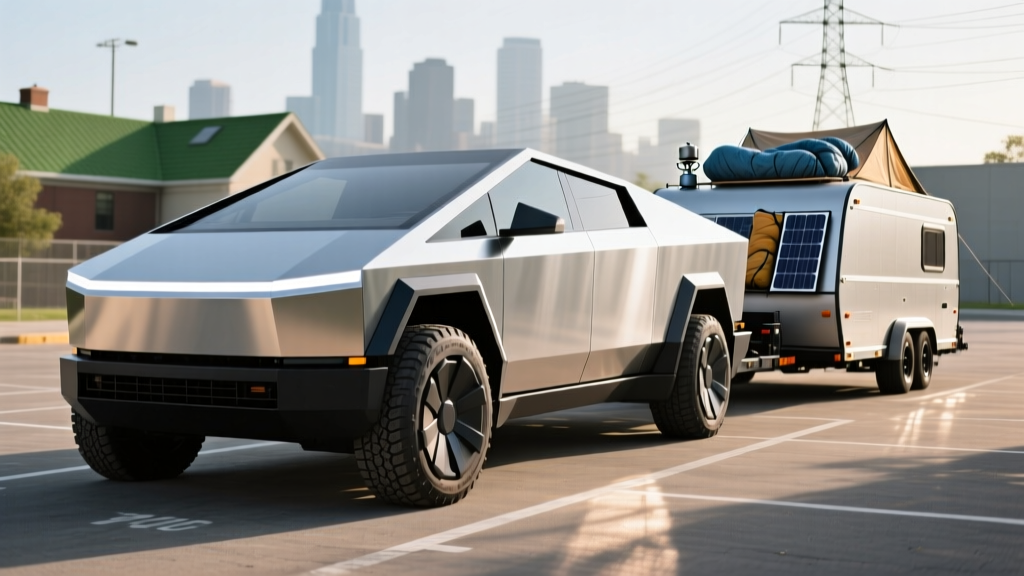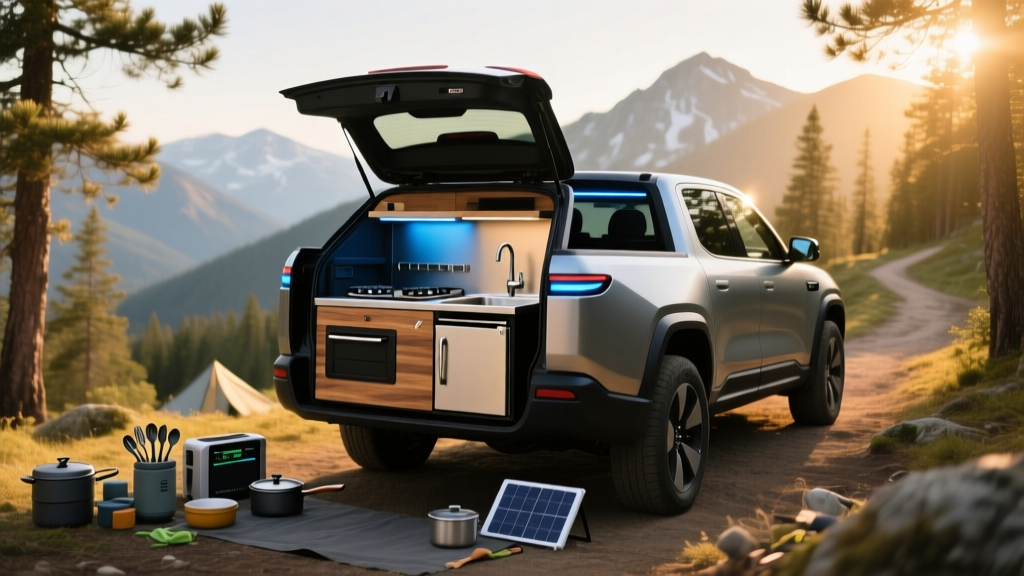
The Rivian Camp Kitchen has been one of the most talked-about accessories in the electric truck world since the R1T launched. But at a price that pushes well into luxury territory, does this integrated tailgate cooking system actually deliver on the overlanding dream — or is it an expensive gimmick? We spent two weeks with the 2026 Rivian R1T equipped with the Camp Kitchen to find out, while also putting the truck itself through its paces on range, charging, and daily drivability.
The 2026 Rivian R1T: The Truck Behind the Kitchen
Before diving into the Camp Kitchen specifically, it's worth grounding the R1T's current specs. For 2026, Rivian offers the R1T in Dual-Motor, Performance Dual-Motor, and Tri-Motor configurations, with Standard (92 kWh usable), Large (109 kWh usable), and Max (141 kWh usable) battery packs. The Large Pack with NMC (nickel manganese cobalt) chemistry remains the volume seller and the most common pairing with the Camp Kitchen bundle.
| Spec | Value |
|---|---|
| EPA Range | 342 miles (Dual-Motor Large) |
| Battery (usable) | 109 kWh, NMC chemistry |
| Drivetrain | Dual-Motor AWD |
| Horsepower | 533 hp |
| Torque | 610 lb-ft |
| 0-60 mph | 4.5 seconds |
| Max DC Fast Charge | 200 kW (peak) |
| 10-80% DC Charge | ~33 minutes |
| Level 2 Home Charging | 11.5 kW (~25 mi/hr) |
| MPGe (combined) | 73 MPGe |
| Efficiency | 46 kWh/100 mi |
| Towing Capacity | 11,000 lbs |
| Cargo Bed Length | 54 inches (4.5 ft) |
| Gear Tunnel Volume | 11.7 cu ft |
| Base MSRP (Dual-Motor Large) | $79,900 |
| Battery/Powertrain Warranty | 8 years / 175,000 miles |
What Exactly Is the Rivian Camp Kitchen?
The Camp Kitchen is a modular, slide-out cooking system that integrates directly into the R1T's Gear Tunnel — the pass-through storage compartment behind the cab that's unique to Rivian's skateboard platform. It consists of two main components:
- The Induction Cooktop Module: A dual-burner induction stove that slides out from the passenger-side Gear Tunnel opening. It draws power directly from the R1T's high-voltage battery through the truck's built-in power system (Rivian calls this the "Power Pack" accessory infrastructure).
- The Kitchen Galley Unit: A slide-out from the driver side featuring a stainless steel prep surface, integrated sink with a 5-gallon fresh water tank and electric pump, utensil storage, and shelving for cookware.
The system is designed to work with Rivian's proprietary Camp Kitchen cookware set (sold separately, a collaboration with Snow Peak), though any standard induction-compatible cookware works on the burners. The induction cooktop offers adjustable power levels, and because it's drawing from a 109 kWh battery, you're effectively cooking with a massive portable power station.
Power Draw and Range Impact
Here's where EV ownership meets campsite reality: the induction cooktop draws approximately 1.8-2.0 kW at full power. A 20-minute cooking session at medium-high heat consumes roughly 0.6-0.8 kWh. To put that in perspective, even a full weekend of cooking — say, 6 meals averaging 0.7 kWh each — totals about 4.2 kWh, or less than 4% of the Large Pack's usable capacity. The range impact of actually cooking is negligible. The range impact of hauling the 150-lb system, as noted above, is more significant.
Charging Speed: Home Base and Road Trips
The R1T's charging performance is critical context for Camp Kitchen owners, who are likely using the truck for multi-day overlanding trips where charging logistics matter.
| Charging Level | Power | Speed | Notes |
|---|---|---|---|
| Level 1 (120V) | 1.4 kW | ~3 mi/hr | Emergency/trickle only |
| Level 2 (240V, 48A) | 11.5 kW | ~25 mi/hr | Full charge in ~10 hours |
| DC Fast Charge | 200 kW (peak) | 10-80% in ~33 min | Tapers significantly above 80% |
| NACS / Supercharger | Up to 150 kW* | 10-80% in ~40 min | *Via adapter; native NACS on 2025+ models |
The charge curve is something Camp Kitchen users should understand: the R1T holds close to peak charging rate up to roughly 60% SoC, then begins a gradual taper. Above 80%, charging slows dramatically to protect the NMC cells. On a road trip with a loaded bed and the Camp Kitchen, plan your DC fast-charge stops around the 10-80% window for the best time efficiency. Charging from 80-100% at a DC station can take as long as the 10-80% portion.
At home on a properly installed Level 2 charger (a 60-amp circuit with a 48-amp charger is ideal), the R1T Large Pack gains about 25 miles of range per hour, meaning a full overnight session easily replenishes a day's worth of driving and cooking. Home installation costs for a Level 2 setup typically run $800-$2,500 depending on your electrical panel's capacity and the run length from panel to garage or driveway. If your panel needs an upgrade to 200 amps, add $1,500-$3,000.
Pricing, Trims, and the Federal Tax Credit Question
The Camp Kitchen is not a standalone vehicle purchase — it's an accessory package. Here's how the pricing breaks down for a typical Camp Kitchen-equipped R1T build in 2026:
| Item | Price |
|---|---|
| R1T Dual-Motor Large (base MSRP) | $79,900 |
| Camp Kitchen Package | $5,500 |
| Snow Peak Cookware Set | $650 |
| Destination Fee | $1,800 |
| Typical As-Tested Price | $87,850+ |
Federal EV Tax Credit Eligibility (§30D)
Here's where buyers need to be precise. Under current IRS rules for the §30D Clean Vehicle Credit:
- MSRP Cap for Trucks/Pickups: The vehicle's MSRP must not exceed $80,000. The R1T Dual-Motor Large at $79,900 base just clears this threshold — but adding the Camp Kitchen and other accessories can push the as-built MSRP over the cap. Rivian's configurator and your dealer should confirm whether the accessory-adjusted MSRP remains compliant.
- Buyer Income Limits: Modified AGI must not exceed $300,000 (joint filers), $225,000 (head of household), or $150,000 (single). These thresholds have remained consistent through 2026.
- Battery Sourcing Requirements: The credit is split into two $3,750 halves — one for critical minerals sourcing and one for battery component manufacturing. Rivian has worked to qualify for both halves on domestically-built R1T models, but sourcing requirements tighten annually. Always verify current-year eligibility on the IRS qualified vehicles list before purchasing.
- Point-of-Sale Transfer: Eligible buyers can transfer the credit to the dealer at purchase, effectively reducing the out-of-pocket price by up to $7,500 at the time of sale rather than waiting for a tax refund.
- Vehicle MSRP (with required accessories) ≤ $80,000 — verify with dealer
- Buyer MAGI within IRS income caps
- Vehicle assembled in North America (R1T is built in Normal, Illinois ✓)
- Battery critical minerals and components meet current-year sourcing thresholds
- Buyer has sufficient tax liability to use the credit (or uses point-of-sale transfer)
Important: The Camp Kitchen itself, as an accessory, does not independently qualify for any tax credit. The credit applies to the vehicle. Consult a tax professional for your specific situation.
Who Is the Camp Kitchen Actually For?
After two weeks of use, the Camp Kitchen's ideal user profile is clear:
Best suited for: Weekend overlanders and car-campers who value integrated, clean design and don't want to manage separate portable stoves, water jugs, and folding tables. The induction cooktop's power consistency (no propane canisters to run out of, no wind-fighting) is a genuine advantage. The integrated sink with pressurized water is a luxury that's hard to replicate with aftermarket solutions.
Less ideal for: Hardcore backcountry overlanders who need to minimize weight and maximize bed space for gear. The Camp Kitchen consumes the entire Gear Tunnel and adds substantial weight. It's also less practical for those who primarily camp at sites with established fire rings and picnic kitchens.
Not for: Anyone buying the R1T primarily as a daily driver or commuter who plans to use the Camp Kitchen "someday." The $5,500+ investment only makes sense with regular use.
Pros, Cons, and the Verdict
Pros
- Seamless integration with R1T's electrical system — no separate batteries or generators
- Induction cooking is fast, wind-proof, and flameless (safer in dry fire-risk areas)
- Integrated sink with electric pump is genuinely useful for cleanup
- Premium build quality — stainless steel, solid slide mechanisms
- Doesn't sacrifice bed space (uses Gear Tunnel)
Cons
- $5,500 for the package plus $650 for proprietary cookware is steep
- Adds ~150 lbs, measurably reducing range (10-15% in our testing)
- Occupies both Gear Tunnel openings, limiting other tunnel storage
- 5-gallon water tank requires frequent refilling on longer trips
- Induction cooktop requires compatible cookware — no aluminum or copper pots
How It Stacks Up Against Alternatives
The Camp Kitchen doesn't exist in a vacuum. Here's how it compares to common alternatives:
vs. Portable Propane Setup (e.g., Coleman dual-burner + water jug): Total cost under $200. Far cheaper, but requires propane canisters, is vulnerable to wind, lacks integrated water, and takes up bed space. The Camp Kitchen wins on convenience and integration; propane wins on cost and portability.
vs. Aftermarket Truck Kitchen Systems (e.g., Tailgater, Truckslide): These typically run $2,000-$4,000 and offer similar slide-out functionality but require separate power solutions (portable power stations or propane). The Rivian system's direct connection to a 109 kWh battery is an unmatched advantage in the EV truck segment.
vs. F-150 Lightning with Pro Power Onboard: Ford's Pro Power Onboard offers up to 9.6 kW of exportable power, which can run any standard 120V appliance including electric skillets and coffee makers. However, it lacks the integrated slide-out kitchen architecture — you're still managing separate appliances.
Frequently Asked Questions
What is the real-world range of the R1T with the Camp Kitchen installed?
With the Dual-Motor Large Pack, expect 280-295 miles of real-world highway range with the Camp Kitchen installed and a loaded bed, compared to the EPA-rated 342 miles. Cold weather (below freezing) drops this to approximately 240-260 miles. The weight and aerodynamic impact of the loaded kitchen system account for a 10-15% reduction from the sticker range.
How fast does the R1T charge at home and on the road?
On a Level 2 home charger (11.5 kW), the R1T Large Pack gains roughly 25 miles of range per hour, with a full charge taking about 10 hours. At a DC fast charger, it peaks at 200 kW and charges from 10-80% in approximately 33 minutes, though the charge curve tapers significantly above 80%. On the Tesla Supercharger network via NACS (native on 2025+ models), expect up to 150 kW and 10-80% in roughly 40 minutes.
How much does the R1T with Camp Kitchen cost after tax credits?
A typical build — R1T Dual-Motor Large ($79,900) plus Camp Kitchen ($5,500) and destination ($1,800) — comes to roughly $87,200. If the vehicle MSRP (as configured) stays at or below the $80,000 truck cap and you meet income and sourcing requirements, the maximum §30D credit is $7,500, bringing the effective price to approximately $79,700. However, verify your specific build's MSRP compliance with your dealer, as accessories can push the figure over the cap.
Does the Rivian R1T qualify for the federal EV tax credit?
The base R1T Dual-Motor Large at $79,900 MSRP is positioned to qualify for the §30D credit, provided the buyer meets income limits ($300,000 joint / $150,000 single) and the battery sourcing requirements are met for the current model year. The credit can be up to $7,500 and is available as a point-of-sale transfer. Always confirm eligibility on the IRS qualified vehicles list before finalizing a purchase.
Is the Rivian Camp Kitchen worth buying versus key competitors?
If you're already committed to the R1T platform and regularly car-camp or overland, the Camp Kitchen's integration with the truck's battery system offers something no aftermarket solution can match — essentially unlimited cooking power without separate fuel or batteries. At $5,500, it's a premium over portable setups, but the convenience, build quality, and safety of induction cooking justify the cost for frequent users. For occasional campers, a $200 portable stove is the pragmatic choice.
What are the biggest pros and cons of the Camp Kitchen?
The biggest advantage is seamless power integration: cooking directly from a 109 kWh battery means no propane management, no generator noise, and no fire bans to worry about. The biggest drawback is cost and weight: $5,500+ is a significant accessory investment, and the 150-lb weight penalty measurably reduces the truck's range by 10-15% on highway drives.
Sources: EPA Fuel Economy, IRS §30D Clean Vehicle Credit, Rivian official specifications.