Rivian in 2026: What the 2025 Layoffs Mean for R1T Buyers
Search interest around Rivian layoffs 2025 spiked after the company announced workforce reductions in late 2024 and early 2025 — part of a broader push to cut costs ahead of the midsize R2 platform launch. For prospective R1T and R1S buyers, the headline question is simple: does corporate restructuring affect vehicle quality, software support, or long-term parts availability?
After driving the updated second-generation R1T Dual-Motor and reviewing Rivian's current production cadence, the short answer is that day-to-day ownership remains solid. The Normal, Illinois plant continues shipping vehicles, over-the-air (OTA) updates still roll out regularly, and the service-center footprint has expanded. But buyers should weigh the financial health of the company against the undeniable capability of the truck itself.
Below is a complete buyer-focused review of the 2026 Rivian R1T — range, charging, pricing, tax-credit eligibility, and how it stacks up against the Ford F-150 Lightning, Chevrolet Silverado EV, and Tesla Cybertruck.
2026 Rivian R1T Spec Sheet at a Glance
| Specification | Dual-Motor (Standard Battery) | Dual-Motor (Large Battery) | Quad-Motor (Large Battery) |
|---|---|---|---|
| EPA Range | ~270 mi | ~352 mi | ~328 mi |
| Battery Capacity (Usable) | ~92 kWh (NMC) | ~106 kWh (NMC) | ~106 kWh (NMC) |
| Drivetrain | AWD (2 motors) | AWD (2 motors) | AWD (4 motors) |
| Horsepower | 533 hp | 533 hp | 1,025 hp |
| 0–60 mph | 4.5 sec | 4.5 sec | 3.0 sec |
| Max DC Fast Charge | 200 kW | 200 kW | 200 kW |
| 10–80% DC Charge Time | ~28 min | ~34 min | ~34 min |
| Level 2 Home Charge Rate | 11.5 kW (~25 mi/hr) | 11.5 kW (~25 mi/hr) | 11.5 kW (~25 mi/hr) |
| Max Towing Capacity | 11,000 lb | 11,000 lb | 11,000 lb |
| Base MSRP | $69,900 | $75,900 | $87,900 |
Note: All figures reflect 2026 model-year data as published by Rivian and the EPA. Specs may vary with wheel/tire selection and option packages.
Range and Efficiency: EPA vs. the Real World
The R1T's NMC (nickel-manganese-cobalt) lithium-ion pack prioritizes energy density over the LFP chemistry found in some lower-cost EVs. This gives the Large Battery variant its strong 352-mile EPA figure, but it also means the pack is more sensitive to sustained high-state-of-charge storage and extreme heat over many years.
Efficiency sits around 48–52 kWh/100 mi depending on trim and driving style — translating to roughly 68–70 MPGe combined per fueleconomy.gov data. That's typical for a 7,000+ lb electric truck and noticeably thirstier than a sedan-class EV. If efficiency is a priority, the Standard Battery pack shaves weight and cost but sacrifices roughly 80 miles of range.
Charging Speed: DC Fast Charging and Home Setup
Rivian equips every R1T with a NACS (North American Charging Standard) port as of the 2025 model year, granting native access to Tesla Superchargers without an adapter. Peak DC fast-charge rate is 200 kW on the Large and Max battery packs.
| Charging Level | Power | Speed / Notes |
|---|---|---|
| Level 1 (120V household) | ~1.4 kW | ~3 mi/hr — emergency/trickle only |
| Level 2 (240V home, 48A) | 11.5 kW | ~25 mi/hr — full charge overnight (~10–12 hr) |
| DC Fast Charge (NACS) | Up to 200 kW peak | 10–80% in ~28–34 min; tapers significantly above 80% |
A critical ownership note: the 200 kW figure is a peak, not a sustained rate. The R1T's charge curve ramps quickly to ~180–200 kW between 10–40% state of charge, then steps down progressively. From 60–80%, expect ~100–120 kW. Charging from 80–100% on DC is painfully slow (sub-30 kW) — plan road trips around 10–80% sessions and avoid topping off at fast chargers.
At home, a 48-amp Level 2 wall connector on a 60-amp circuit delivers a full overnight charge. Installation typically runs $800–$2,000 depending on panel proximity and whether a 200-amp service upgrade is needed. Rivian's Wall Connector retails around $500, though any NACS-compatible Level 2 unit works.
Performance, Drivetrain, and Capability
The Dual-Motor R1T delivers 533 horsepower and a 4.5-second 0–60 mph time — brisk for a body-on-frame truck and more than adequate for highway merging and towing. The Quad-Motor variant is a different animal entirely: 1,025 hp and a 3.0-second sprint that embarrasses most sports cars, let alone pickup trucks.
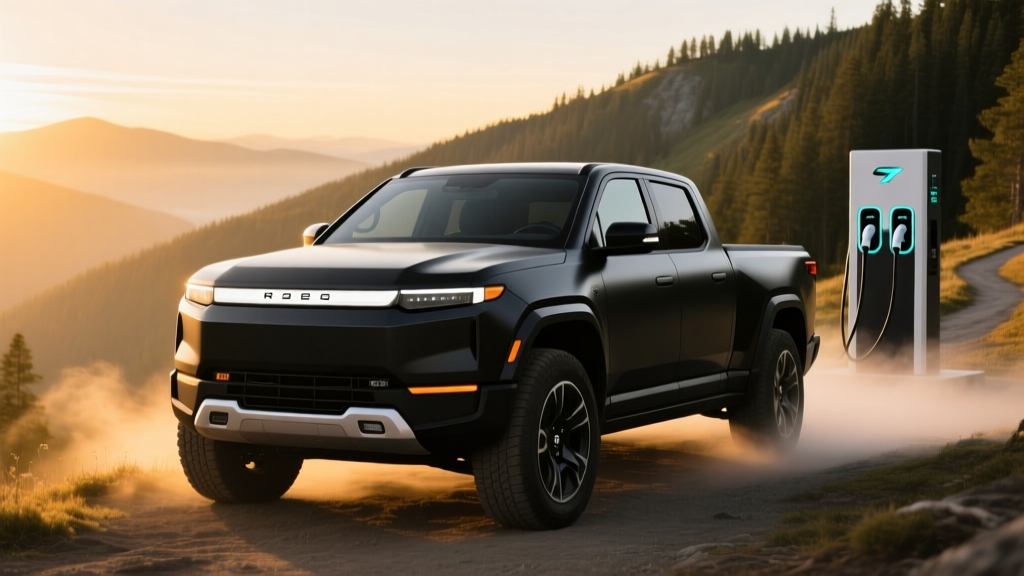
All R1T trims feature a true AWD system with torque vectoring (the Quad-Motor can independently control each wheel). Ground clearance ranges from 10.6 to 14.9 inches thanks to the available air suspension, and water fording depth reaches 43 inches — genuine off-road capability, not just marketing.
Towing capacity maxes out at 11,000 lb across all trims. However, towing at or near that limit will slash range by roughly 40–50%, making long-distance towing a careful planning exercise. The integrated trailer brake controller and trailer-assist camera system are genuinely useful additions.
Pricing, Trims, and Federal Tax Credit Eligibility
| Trim | Base MSRP | Est. As-Tested | §30D Federal Credit Eligible? |
|---|---|---|---|
| Dual-Motor Standard Battery | $69,900 | $73,000–$78,000 | Eligible (under $80K truck MSRP cap) |
| Dual-Motor Large Battery | $75,900 | $80,000–$88,000 | Eligible if configured under $80,000 MSRP |
| Quad-Motor Large Battery | $87,900 | $92,000–$105,000 | Not eligible (exceeds $80K cap) |
Under current IRS §30D rules, the R1T qualifies as a pickup truck, meaning the MSRP cap is $80,000 (not $55,000 as with sedans). The Dual-Motor Standard Battery at $69,900 base clears this bar, but adding packages can push the sticker above $80K — configure carefully if the credit matters to you.
Buyer income caps also apply: $150,000 single / $225,000 head of household / $300,000 joint modified adjusted gross income. Battery-component and critical-mineral sourcing requirements must also be met; Rivian has been working to qualify its supply chain, but confirm current eligibility on the IRS clean-vehicle portal before purchase. The credit can now be transferred to the dealer at point of sale, effectively reducing the purchase price directly.
Interior, Cargo, and Daily Livability
The R1T's cabin seats five with generous front and rear legroom (41.3 inches front / 38.2 inches rear). Material quality has improved noticeably in the second generation — soft-touch surfaces, real wood accents on higher trims, and a revised center console with better storage.
The signature feature remains the gear tunnel — a full-width pass-through behind the rear seats offering 11 cu ft of lockable, weatherproof storage accessible from either side of the truck. Combined with the 11 cu ft frunk and the 4.5-foot bed (54 inches long, expandable with the midgate down to ~82 inches), total cargo versatility is exceptional for a vehicle this size.
The 15.6-inch center touchscreen runs Rivian's in-house software, which continues to improve via OTA. Wireless CarPlay and Android Auto are not natively supported — a persistent complaint. The digital driver display, head-up display, and 8-camera "Drive Cam" system round out the tech suite.
Driver Assistance and Autonomous Features
Driver+ performs competently on well-marked interstates but doesn't yet match the hands-free confidence of GM's Super Cruise or Ford's BlueCruise on mapped highways. Rivian has been developing a more advanced "Autonomous Highway Assist" system, but as of 2026, it remains limited in availability and capability.
Standard safety features include automatic emergency braking, blind-spot monitoring, rear cross-traffic alert, and a comprehensive camera array. The R1T earned strong marks from IIHS in crashworthiness testing, though the small overlap front test results should be reviewed on their site for the latest model year.
Battery Warranty, Degradation, and Long-Term Ownership
Rivian provides an 8-year / 175,000-mile battery and driveunit warranty — one of the longest mileage limits in the industry, exceeding the common 100,000-mile benchmark. The warranty covers defects and capacity loss below 70% of original capacity during the coverage period.
NMC chemistry typically degrades 10–15% over the first 100,000 miles under normal use, with the curve flattening afterward. Best practices for longevity include limiting daily charge to 80–90%, avoiding prolonged storage at 100%, and using preconditioning before DC fast-charging sessions (the R1T does this automatically when a charger is set as a navigation destination).
Post-layoff concern: long-term parts availability. Rivian's vertical integration means some components are proprietary. The company has committed to a 10-year parts supply obligation, but buyers in remote areas should verify proximity to an authorized service center or mobile-ranger technician.
Pros and Cons
- Class-leading off-road capability and ground clearance
- Unique gear tunnel and versatile bed/frunk storage
- Strong 11,000-lb towing capacity
- 352-mile EPA range (Large Battery) covers most road trips
- NACS port provides native Supercharger access
- 8-year / 175,000-mile battery warranty
- Pricing starts high; Quad-Motor exceeds tax-credit MSRP cap
- No wireless CarPlay / Android Auto
- Efficiency (~50 kWh/100 mi) means higher charging costs
- DC charging tapers heavily above 80%
- Corporate financial uncertainty post-2025 layoffs
- Service center footprint still limited in rural areas
Who Should Buy the 2026 Rivian R1T?
- You need genuine off-road and towing capability in an EV
- Adventure-oriented storage (gear tunnel, frunk) matters to you
- You can charge at home and mostly drive under 250 miles daily
- You value a distinctive, non-fleet truck design
- Budget is under $60K — consider the Ford F-150 Lightning Pro or a used R1T
- You need maximum highway efficiency — a smaller EV or PHEV will cost less to fuel
- Corporate stability is a top concern — wait for Rivian's financial trajectory to clarify
- You rely on CarPlay/Android Auto for daily navigation
Frequently Asked Questions
What is the real-world range of the 2026 Rivian R1T?
The EPA rates the Dual-Motor Large Battery at 352 miles. Real-world mixed driving yields 280–310 miles, with highway-only trips dropping to roughly 260–280 miles. Cold weather (below freezing) can reduce range by 20–30%, so plan for approximately 230–270 miles in winter conditions.
How fast does the R1T charge at home and on the road?
On a 240V Level 2 home charger (48A), the R1T adds about 25 miles of range per hour, fully charging overnight in 10–12 hours. On DC fast chargers, it peaks at 200 kW and charges from 10–80% in roughly 28–34 minutes, though the rate tapers significantly above 80%.
Does the Rivian R1T qualify for the federal EV tax credit?
The Dual-Motor Standard Battery ($69,900 MSRP) qualifies under the §30D truck cap of $80,000, assuming buyer income limits ($150K single / $300K joint) and battery-sourcing requirements are met. Higher trims and optioned-up configurations may exceed the cap. Always verify on the IRS clean vehicle portal before purchasing.
How do the Rivian layoffs in 2025 affect current buyers?
The workforce reductions have not halted production or OTA software updates. However, they signal ongoing financial pressure. Buyers should consider the company's long-term viability for parts supply, resale value, and service expansion. Purchasing from existing inventory may offer better pricing leverage.
Is the R1T worth buying over the F-150 Lightning or Cybertruck?
The R1T wins on off-road capability, storage versatility (gear tunnel), and premium interior quality. The F-150 Lightning offers lower pricing, a larger bed, and a more established dealer network. The Cybertruck delivers more range and a polarizing design. If adventure capability and unique storage matter most, the R1T remains the strongest choice in the segment.
What is the battery warranty on the Rivian R1T?
Rivian covers the battery pack and drive units for 8 years or 175,000 miles, whichever comes first. The warranty guarantees the battery will retain at least 70% of its original capacity during that period.