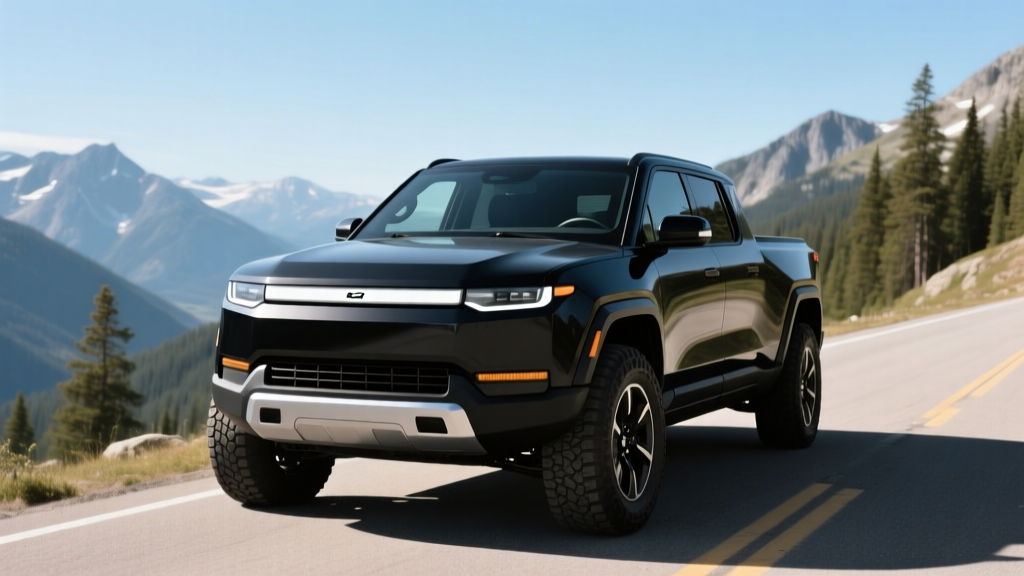
The Rivian R1T entered 2026 with a thoroughly refreshed powertrain lineup, a new 420-mile Max Pack, and software-defined performance modes that let a 7,000-pound electric pickup sprint like a sports sedan. For buyers Googling the Rivian R1T 0-60 time, the headline answer is quick: the Dual-Motor Performance variant hits 60 mph in 3.0 seconds flat, while the new Tri-Motor beast cuts that to an absurd 2.5 seconds. But 0-60 is only one chapter in a truck that must also tow, haul, camp, and survive winter road trips. This review covers the numbers that actually matter once the launch-control novelty wears off — real-world range, DC charging curves, LFP vs. NMC battery choices, cargo dimensions, and the IRS §30D tax-credit math that determines your real out-of-pocket cost.
Rivian R1T 0-60, Powertrain, and Performance by Trim
Rivian restructured the R1T lineup for the 2025 refresh and carried it into 2026 with four distinct powertrain personalities. The Dual-Motor Standard is the volume play, the Dual-Motor Performance adds rear-biased torque vectoring, the Tri-Motor stacks three motors for supercar-level acceleration, and the upcoming Quad-Motor (limited production) pushes four independent motors with torque vectoring at each wheel. Here is how the 0-60 times, horsepower, and drivetrains break down across the current R1T catalog.
| Powertrain | Drivetrain | Horsepower | Torque (lb-ft) | 0-60 mph | Top Speed |
|---|---|---|---|---|---|
| Dual-Motor Standard | AWD | 533 hp | 610 | 4.5 sec | 120 mph |
| Dual-Motor Performance | AWD | 665 hp | 829 | 3.0 sec | 125 mph |
| Tri-Motor | AWD | 850 hp | 1,103 | 2.5 sec | 130 mph |
| Quad-Motor (limited) | AWD w/ torque vectoring | 1,025 hp | 1,198 | 2.0 sec (est.) | 130 mph |
On pavement, the Dual-Motor Performance is the sweet spot for most buyers. The 3.0-second 0-60 run puts it in Porsche 911 Carrera territory, and unlike many performance EVs, the R1T sustains that punch repeatedly thanks to active thermal management on the battery and inverters. The Tri-Motor's 2.5-second run is genuinely startling in a vehicle with a 5.5-foot bed, but it commands a roughly $15,000 premium over the Dual-Motor Performance and trades some efficiency for the extra motor.
Off-road, the R1T's air suspension delivers up to 14.4 inches of ground clearance in Max mode, approach/departure/breakover angles competitive with a Jeep Gladiator Rubicon, and a wade depth of roughly 3 feet. The Quad-Motor's individual wheel torque control is where Rivian's off-road engineering really shines — you can feel the truck feathering each wheel independently over rock-crawl terrain.
Real-World Range: EPA Stickers vs. What You Actually Get
Rivian offers three battery packs for 2026, paired with LFP chemistry on the Standard and NMC on the Large and Max. Understanding which pack suits your driving pattern matters more than chasing the highest EPA number.
EPA estimates assume mixed city/highway driving at moderate temperatures. In real-world testing, expect highway-heavy trips at 75 mph to deliver roughly 85-90% of the EPA sticker, and cold-weather (sub-30°F) driving to reduce range by 20-30% due to battery resistance and cabin heating demands. Towing a 5,000-lb trailer can cut range nearly in half.
| Pack | Usable Capacity | Chemistry | EPA Range (Dual-Motor) | Real-World Highway (est.) | Cold-Weather (est.) |
|---|---|---|---|---|---|
| Standard | 92 kWh | LFP | 270 mi | 230-245 mi | 190-215 mi |
| Large | 109 kWh | NMC | 352 mi | 300-315 mi | 245-280 mi |
| Max | 141 kWh | NMC | 420 mi | 355-380 mi | 295-335 mi |
The EPA's fueleconomy.gov database lists the Dual-Motor Large Pack R1T at a combined 73 MPGe (roughly 46 kWh per 100 miles). The Tri-Motor trims drop to about 65 MPGe due to the added motor mass and performance tuning. For perspective, 46 kWh/100 mi translates to about $0.07-$0.09 per mile on residential electricity at the US average of $0.17/kWh — significantly cheaper than a comparable gas truck at $0.25-$0.30/mile.
The LFP Standard pack deserves a specific callout. Lithium iron phosphate chemistry trades energy density for longevity and thermal stability. Rivian recommends you charge LFP to 100% regularly — unlike NMC, which prefers an 80% daily ceiling for long-term health. If your commute is under 200 miles round-trip and you want a battery that should outlast the truck, LFP is the pragmatic choice. If you road-trip frequently or tow, the NMC Large or Max pack is the move.
Charging Speed: DC Fast, Level 2, and the 80% Taper
A truck this heavy lives and dies by its DC fast-charging curve. Rivian upgraded the R1T's charging architecture for the refresh, moving to a max DC rate of 220 kW on the Large Pack and 190 kW on the Max Pack (the larger battery charges slightly slower per cell to manage thermals). The Standard LFP pack peaks at roughly 185 kW.
| Pack | Max DC kW | 10-80% DC Time | Level 2 (11.5 kW onboard) | Miles per Hour (L2) |
|---|---|---|---|---|
| Standard (92 kWh LFP) | 185 kW | ~28 min | ~9 hrs (0-100%) | ~23 mi/hr |
| Large (109 kWh NMC) | 220 kW | ~24 min | ~10 hrs (0-100%) | ~25 mi/hr |
| Max (141 kWh NMC) | 190 kW | ~32 min | ~13 hrs (0-100%) | ~25 mi/hr |
The critical number for road-trippers is 10-80%, because charging above 80% slows dramatically — the battery management system tapers current to protect cell health. On a 350-kW Electrify America or Tesla Supercharger stall (via Rivian's included NACS adapter, now standard on all 2025+ R1Ts), the Large Pack will sustain close to its 220 kW peak between 15-55% SoC before stepping down. Expect roughly 170 miles of range added in the first 15 minutes on a Large Pack — enough for a quick lunch stop on I-70.
At home, the R1T's 11.5 kW onboard charger is competitive but not class-leading. On a 48-amp Level 2 wall connector (the most common residential install), you'll see about 11.5 kW of actual delivery. That means a fully depleted Max Pack needs roughly 13 hours to fill — fine for overnight top-ups but a consideration if you return from a long tow and need a full battery by morning. Rivian also supports scheduled preconditioning, which warms the battery ahead of a planned DC charge to hit peak kW sooner — use it religiously in winter.
Pricing, Trims, and Federal Tax Credit Eligibility
The R1T is a premium electric truck, and the pricing reflects it. For 2026, Rivian simplified trims into Adventure and Ascend (the latter replacing the old Launch Edition as the luxury tier), with powertrain and battery choices layered on top.
| Configuration | Trim | Base MSRP |
|---|---|---|
| Dual-Motor Standard Pack | Adventure | $69,900 |
| Dual-Motor Large Pack | Adventure | $75,900 |
| Dual-Motor Performance Large | Adventure | $82,400 |
| Dual-Motor Performance Max | Ascend | $94,500 |
| Tri-Motor Max Pack | Ascend | $99,900 |
Destination adds $1,800. As-tested Ascend Tri-Motor builds with the Forest Green paint, electrochromic roof, and Camp Kitchen option can push past $110,000 before incentives.
Per IRS guidelines, the new clean vehicle credit offers up to $7,500, but eligibility is not automatic. Requirements include:
- MSRP cap: Trucks and SUVs must have an MSRP at or below $80,000. This eliminates most R1T Tri-Motor, Quad-Motor, and Ascend Max configurations.
- Buyer income cap: Modified AGI must not exceed $300,000 (joint), $225,000 (head of household), or $150,000 (single).
- Battery sourcing: A percentage of critical minerals and battery components must be sourced from the US or free-trade-agreement partners. Rivian has been steadily reshoring supply, but eligibility shifts annually — verify current-year compliance at fueleconomy.gov before purchasing.
- Point-of-sale transfer: Buyers can transfer the credit to the dealer at purchase, reducing the drive-off price immediately rather than waiting for tax filing.
Practical result: the Dual-Motor Standard Pack Adventure ($69,900) and Dual-Motor Large Pack Adventure ($75,900) are the R1T configurations most likely to clear the $80,000 MSRP cap and qualify for up to $7,500, pending sourcing and income verification. Always consult a tax professional before relying on credit eligibility.
Cargo, Passenger Space, and the Gear Tunnel Advantage
The R1T's party trick is packaging. As a crew-cab pickup with a 4.5-foot bed (extendable to roughly 5.5 feet with the mid-gate folded), it offers passenger space rivaling a midsize SUV plus creative storage no gas truck can match.
- Bed length: 54.2 inches (mid-gate closed); ~67 inches with mid-gate deployed
- Bed payload: Up to 1,760 lbs
- Towing capacity: 11,000 lbs (properly equipped)
- Gear Tunnel: 11.7 cu ft lockable pass-through behind the rear seats — fits golf bags, camping gear, or the optional Camp Kitchen slide-out
- Front trunk (frunk): 11.1 cu ft, with a drain plug for use as a cooler
- Rear legroom: 38.2 inches — comfortable for adults on long trips
- Total enclosed cargo: ~67 cu ft combining bed, tunnel, and frunk
The gear tunnel is the R1T's differentiator vs. the F-150 Lightning and Cybertruck. It's weatherproof, lockable, and accessible from either side of the truck — ideal for muddy gear or valuables you don't want visible in the bed. Rivian's optional Camp Kitchen ($5,500) slides out of the tunnel with an induction cooktop, sink, and utensil storage, turning the R1T into a genuine overlanding platform.
Tech, Driver Assists, and the Drive+ System
Inside, the R1T runs Rivian's in-house infotainment on a 15.6-inch landscape touchscreen with a dedicated 12.3-inch driver cluster. The system supports wireless Apple CarPlay and Android Auto, over-the-air updates, and built-in trail-mapping with offline topographic data — a thoughtful touch for backcountry driving where cell service vanishes.
Rivian's Drive+ system is a Level 2 driver-assist suite (per SAE classification) that includes adaptive cruise control, lane-centering, and automated lane changes on divided highways. It is not self-driving. The driver must keep hands on the wheel and eyes on the road at all times. In practice, Drive+ is competent for highway droning but not as assertive as Ford's BlueCruise or GM's Super Cruise on mapped roads. Rivian has been steadily improving it via OTA updates, and a hands-free highway-capable variant is expected but not yet available as of this writing.
Standout tech features include:
- Driver+: Highway assist with automated lane changes (hands-on, Level 2)
- Electric air suspension: Adjustable ride height from 6.3 to 14.4 inches of ground clearance
- Tank Turn (Quad-Motor): Near-360-degree pivot using opposing wheel rotation — useful on tight trails, theatrical at car meets
- Powered tonneau cover: Available automatic bed cover with integrated lighting
- Electrochromic glass roof: Tints from clear to opaque with a slider control
- Vehicle-to-Load (V2L): Up to 7.2 kW of 120V/240V output from bed and cabin outlets — enough to power a job-site saw or a campsite
Notable drawbacks include the absence of Apple's full vehicle-integration features, a still-maturing service center network (Rivian relies partly on mobile service vans for less-populated regions), and a ride quality that can feel firm over broken pavement in the stiffer Sport drive mode. Switching to All-Purpose or Soft-Ride mode smooths things out considerably.
Warranty, Ownership Costs, and Resale Outlook
Rivian backs the R1T with a competitive warranty package:
- Bumper-to-bumper: 5 years / 60,000 miles
- Battery and drive unit: 8 years / 175,000 miles (with at least 70% capacity retention)
- Roadside assistance: 5 years / 60,000 miles
The 175,000-mile powertrain warranty is a strong signal of confidence, particularly on the NMC packs. The 70% retention threshold is industry-standard. Based on data from early-production 2022-2023 R1Ts tracked by owner communities, average degradation sits around 4-6% after 50,000 miles — well within warranty parameters. LFP packs are expected to show even slower degradation over the same period due to the chemistry's inherently longer cycle life.
Insurance costs remain a consideration. R1T premiums run 15-25% higher than a comparably priced F-150 Lightning, driven by Rivian's proprietary body structure (aluminum-intensive, with expensive sensor arrays in the bumpers and windshield). Get quotes before committing — the difference can be $400-$800/year depending on your profile.
Resale values for the R1T have held remarkably well. Two-year-old 2023 models are retaining 65-75% of their original transaction price, outpacing most EVs and rivaling the Tacoma. The combination of limited supply, genuine off-road credibility, and Rivian's software-update cadence keeps demand tight.
Pros, Cons, and Who the R1T Is For
- Dual-Motor Performance 0-60 of 3.0 sec — supercar acceleration in a 7,000-lb truck
- Class-leading gear tunnel and frunk storage
- Up to 420 miles EPA (Max Pack) — longest-range electric pickup available
- Genuine off-road capability with air suspension and 14.4" ground clearance
- 11,000-lb towing capacity and 7.2 kW V2L output
- Strong OTA update track record improving features post-purchase
- Base price starts near $70K; most desirable configs exceed $80K MSRP cap for tax credit
- Service center network still limited outside major metros
- Insurance premiums 15-25% higher than comparable trucks
- Drive+ hands-on assist lags BlueCruise/Super Cruise in refinement
- Max Pack 10-80% DC charge time (~32 min) trails lighter EVs
- Tri-Motor and Quad-Motor configs lose federal credit eligibility
- Choose the Dual-Motor Standard (LFP) if you commute under 200 miles daily, want the lowest entry price, and prioritize battery longevity over maximum range. This is also the trim most likely to qualify for the full $7,500 federal credit.
- Choose the Dual-Motor Large (NMC) if you road-trip regularly, need 300+ real-world highway miles, and want the best balance of price, range, and performance.
- Choose the Dual-Motor Performance Large if you want the 3.0-second 0-60 thrill plus practical range — the sweet spot for enthusiast buyers.
- Choose the Tri-Motor Max if budget is secondary and you want the fastest production pickup ever built, with 355+ real-world miles and the most off-road authority.
- Look at the F-150 Lightning instead if you need a full-size 6.5-foot bed, a broader dealer/service network, or a lower starting price in the $55K range.
Frequently Asked Questions
What is the real-world range of the Rivian R1T?
With the Large Pack (109 kWh NMC), expect roughly 300-315 miles on the highway at 75 mph and 245-280 miles in cold weather below 30°F. The Max Pack stretches that to 355-380 highway miles in moderate conditions. Towing a 5,000-lb trailer can reduce range by 40-50%.
How fast does the Rivian R1T charge on DC fast chargers and at home?
The Large Pack peaks at 220 kW DC and charges 10-80% in roughly 24 minutes at a 350-kW station. At home on a 48-amp Level 2 charger (11.5 kW), expect about 25 miles of range per hour of charging — a full overnight session replenishes most daily driving.
How much does the Rivian R1T cost after federal tax credits?
The Dual-Motor Standard Pack Adventure starts at $69,900. If you qualify for the full $7,500 §30D credit (income under limits, battery sourcing compliant), your effective price drops to roughly $62,400 before state incentives. Configurations above $80,000 MSRP do not qualify for the federal credit.
Does the Rivian R1T qualify for the federal EV tax credit?
Configurations at or below the $80,000 truck MSRP cap — primarily the Dual-Motor Standard and Large Pack Adventure trims — are potentially eligible for up to $7,500 under IRS §30D, subject to buyer income limits and battery-sourcing requirements. Verify current-year eligibility on fueleconomy.gov and with a tax professional before purchase.
Is the Rivian R1T worth buying vs. the F-150 Lightning or Cybertruck?
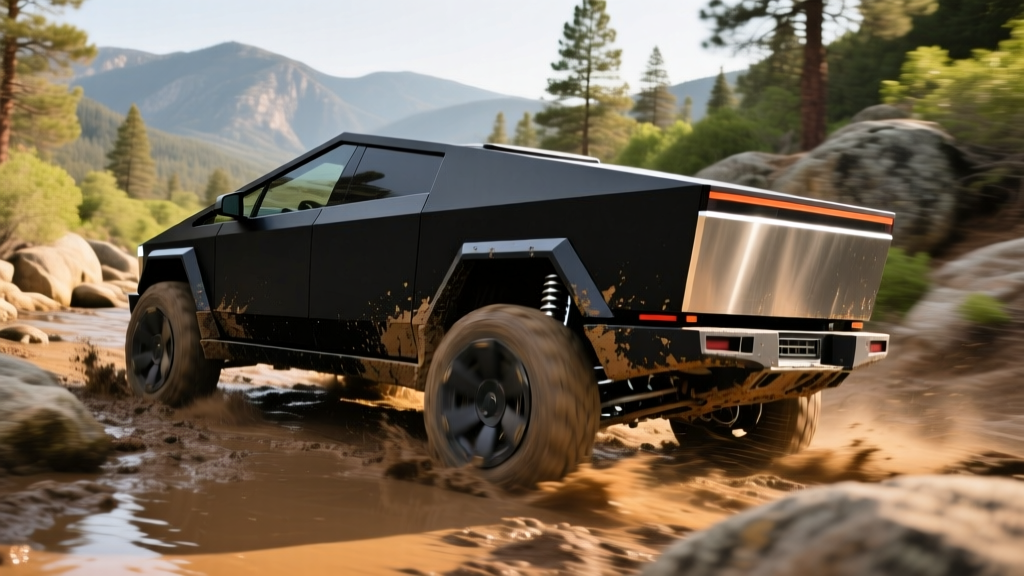
The R1T wins on off-road capability, gear-tunnel storage, and driving dynamics — it is the most engaging truck to drive, on-road or off. The F-150 Lightning wins on bed length (6.5 ft), dealer network breadth, and starting price. The Cybertruck offers polarizing design and stainless-steel durability but trails the R1T in interior refinement and real-world charging reliability. If your priority is a premium adventure truck with genuine trail capability and supercar acceleration, the R1T is the segment benchmark.
What is the Rivian R1T's 0-60 time?
The Dual-Motor Performance hits 0-60 mph in 3.0 seconds. The Tri-Motor drops to 2.5 seconds. The base Dual-Motor Standard does it in 4.5 seconds — still quicker than most gas-powered midsize trucks by a wide margin.