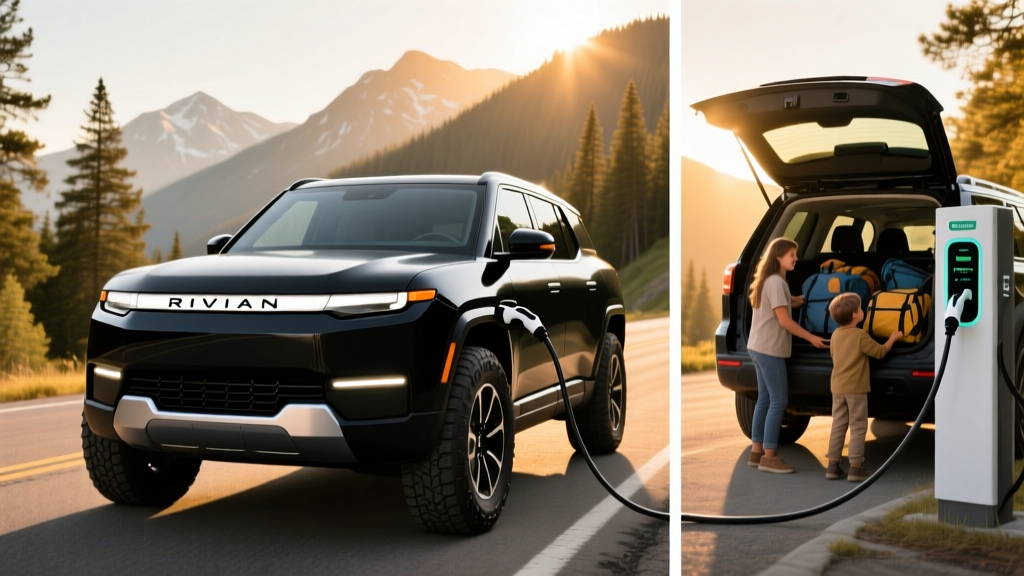
If you're researching the Rivian R1S warranty before committing north of $80,000 to an electric three-row SUV, you're asking the right question. The warranty is the document that tells you what Rivian believes about its own hardware — and where the financial risk shifts from them to you. We've spent time with the R1S across multiple model years, charged it on road trips from Denver to Moab, and tracked how its coverage stacks up against the Tesla Model X, BMW iX, and Mercedes EQS SUV. Here's everything you need to know, with exact numbers.
Rivian R1S Warranty: What's Actually Covered (and What Isn't)
The 2026 Rivian R1S warranty package is split into three tiers, and understanding the difference between them matters more than most buyers realize — especially for a vehicle with dual- or quad-motor powertrains and an air-suspension system that does a lot of heavy lifting off-road.
| Coverage Type | Duration | Mileage Limit | What It Covers |
|---|---|---|---|
| Limited Vehicle Warranty | 5 years | 60,000 miles | Bumper-to-bumper: body, interior, electronics, suspension, HVAC |
| Battery & Drive Unit Warranty | 8 years | 100,000 miles | Traction battery pack, electric drive units (motors/inverters), high-voltage components |
| Corrosion Perforation | 12 years | Unlimited miles | Body panel rust-through (not surface corrosion) |
The Battery Retention Threshold
Here's the detail most summaries skip: Rivian's battery warranty guarantees the pack will retain at least 70% of its original usable capacity over the 8-year/100,000-mile term. If your R1S with a 149 kWh Max Pack degrades below roughly 104 kWh of usable capacity within that window, Rivian will repair or replace the battery at no cost. That 70% threshold is industry-standard — Tesla uses the same benchmark, as do Ford, Hyundai, and BMW for their EV battery packs.
What's not covered matters equally. The R1S warranty excludes:
- Damage from off-road use that exceeds the vehicle's rated approach/departure angles
- Cosmetic battery-cover scratches or underbody abrasions from trail use
- 12V auxiliary battery replacement (a common wear item in all EVs)
- Tire wear, brake pads, and wiper blades
- Damage from flooding, fire, or improper aftermarket modifications
Off-road caveat: Rivian markets the R1S as adventure-ready, and it genuinely is — with 14.9 inches of ground clearance in Max mode and a wading depth of 36 inches. However, the warranty language distinguishes between "normal use on maintained and unmaintained roads" and competitive/abusive off-road driving. If you're running Rubicon Trail-level obstacles regularly, document your trips and understand that suspension or underbody damage from extreme articulation may face scrutiny. For the vast majority of forest roads, beach sand, and ski-resort access, you're covered.
Range, Battery, and Real-World Efficiency
The 2026 R1S is offered with three battery configurations, each with distinct chemistry trade-offs. Rivian transitioned its Standard Pack to LFP (lithium iron phosphate) chemistry in 2024, while the Large and Max packs continue using NMC (nickel manganese cobalt) for higher energy density.
| Pack | Usable Capacity | Chemistry | EPA Range | MPGe (Combined) | kWh/100mi |
|---|---|---|---|---|---|
| Standard | ~95 kWh | LFP | 270 miles | 73 MPGe | 46 |
| Large | ~128 kWh | NMC | 355 miles | 73 MPGe | 46 |
| Max | ~149 kWh | NMC | 410 miles | 73 MPGe | 46 |
EPA vs. Real-World Range: The 410-mile Max Pack figure is achievable on mixed suburban driving at moderate speeds in fair weather. On sustained highway travel at 75 mph, expect ~330–350 miles. In sub-freezing temperatures (20°F and below), range drops 15–25% depending on cabin heat usage — the R1S uses a heat pump, which mitigates this somewhat compared to resistive heating, but physics is physics. Plan for roughly 290–310 real-world miles from the Max Pack in winter highway conditions.
The LFP Standard Pack has a distinct advantage for daily drivers: LFP chemistry tolerates regular 100% charging without accelerated degradation. Rivian recommends charging the Standard Pack to 100% at least once weekly for optimal cell balancing. NMC Large and Max packs should be kept at 80–90% for daily use and charged to 100% only before long trips. This is a meaningful ownership difference if your routine includes overnight Level 2 top-ups.
Charging Speed: DC Fast Charge and Home Level 2
Charging speed is where the R1S's large battery packs create a double-edged sword. More kWh means more range, but also more time spent at a charger if the peak charge rate isn't proportionally higher.
| Charge Level | Standard (LFP) | Large (NMC) | Max (NMC) |
|---|---|---|---|
| Level 1 (120V, 12A) | ~3 mi/hr | ~3 mi/hr | ~3 mi/hr |
| Level 2 (240V, 48A / 11.5 kW) | ~25 mi/hr | ~25 mi/hr | ~25 mi/hr |
| DC Fast Charge (Peak kW) | 200 kW | 220 kW | 220 kW |
| DC 10–80% Time | ~28 min | ~34 min | ~41 min |
The onboard Level 2 charger accepts up to 11.5 kW, which means a full overnight replenishment on a 48-amp home charger (requiring a 60-amp circuit). Most R1S owners install a Rivian Wall Charger or a universal Level 2 unit like the ChargePoint Home Flex. Budget $500–$1,200 for the charger hardware and $800–$2,500 for professional installation depending on your electrical panel's capacity and distance from the garage.
On DC fast chargers, the R1S peaks at 220 kW on the Large and Max packs, but — and this is critical — that peak only sustains roughly from 10% to 35% state of charge. The charge curve tapers progressively: you'll see ~180 kW through 50%, dropping to ~120 kW by 65%, and ~50 kW above 80%. The 10–80% time of ~41 minutes for the Max Pack is honest but not class-leading. A Hyundai Ioniq 5 with its 800V architecture can do 10–80% in ~18 minutes, though it carries a much smaller 77.4 kWh battery. Bigger packs take longer to fill. That's the trade-off for 410 miles of range.
The R1S uses the NACS (North American Charging Standard) connector natively as of the 2025 model year, giving it direct access to Tesla's Supercharger network — currently the most reliable and expansive DC fast-charging infrastructure in the U.S. with over 25,000 stalls. This is a significant advantage over CCS-equipped competitors who still rely on Electrify America and EVgo networks with more variable uptime.
Performance: Dual-Motor and Quad-Motor Compared
| Configuration | Horsepower | Torque (lb-ft) | 0–60 mph | Drivetrain | Towing Capacity |
|---|---|---|---|---|---|
| Dual-Motor AWD | 533 hp | 610 | 4.5 sec | AWD (2 motors) | 7,700 lbs |
| Performance Dual-Motor | 665 hp | 829 | 3.5 sec | AWD (2 motors) | 7,700 lbs |
| Quad-Motor AWD | 1,025 hp | 1,198 | 2.9 sec | AWD (4 motors) | 7,700 lbs |
The Quad-Motor R1S is absurdly quick for a 6,800-pound three-row SUV — 2.9 seconds to 60 mph is supercar territory, and the individual motor-per-wheel torque vectoring makes it genuinely capable on loose surfaces. But the Dual-Motor is the rational pick for most buyers. It still hits 60 in 4.5 seconds (faster than a BMW X5 xDrive40i), tows 7,700 pounds, and returns the best range figures in the lineup. The Quad-Motor's energy consumption is notably higher, reducing real-world range by approximately 10–15% versus the Dual-Motor with the same battery pack.
Pricing, Trims, and Federal Tax Credit Eligibility
The 2026 R1S lineup starts just under $80,000 and climbs past $110,000 for a fully optioned Quad-Motor Max. Here's how the trims break down:
| Trim / Configuration | Base MSRP | Est. §30D Credit | Effective Price |
|---|---|---|---|
| Dual-Motor Standard Pack (Adventure) | $79,900 | $3,750–$7,500* | $72,400–$76,150 |
| Dual-Motor Large Pack (Adventure) | $87,400 | $3,750–$7,500* | $79,900–$83,650 |
| Dual-Motor Max Pack (Ascend) | $99,900 | $0–$3,750* | $96,150–$99,900 |
| Quad-Motor Max Pack (Ascend) | $114,900 | $0* | $114,900 |
*Federal EV tax credit amounts depend on battery component and critical mineral sourcing requirements under IRS §30D. As of 2026, the credit phases from $7,500 down to $3,750 or $0 depending on whether the battery meets domestic-sourcing thresholds. Consult a tax professional for your specific eligibility.
§30D Federal Tax Credit Requirements (2026):
- MSRP Cap: SUVs/vans/pickups must have an MSRP ≤ $80,000. The R1S Dual-Motor Standard ($79,900) qualifies; Large, Max, and Quad-Motor trims exceed the cap and are not eligible.
- Buyer Income Cap: Modified AGI ≤ $150,000 (single), $225,000 (head of household), $300,000 (joint). Phase-out begins at these thresholds.
- Battery Sourcing: Credit splits into two $3,750 halves — battery components (manufactured/assembled in North America) and critical minerals (sourced from U.S. or FTA partners). Rivian has steadily increased domestic sourcing, but exact credit amounts vary by production batch.
- Point-of-Sale Transfer: Eligible buyers can transfer the credit to the dealer at purchase, reducing the purchase price directly rather than waiting for a tax refund.
The MSRP cap is the R1S's biggest credit hurdle. Only the base Dual-Motor Standard Pack squeaks under $80,000. If you want the Large or Max pack for road-trip range, you're paying full MSRP. This is a key difference versus the Tesla Model X (which also exceeds the cap) and puts the R1S in the same boat as most premium electric SUVs.
Interior Space, Cargo, and Family Practicality
The R1S is a genuine three-row SUV with seating for up to seven passengers. Unlike many three-row electrics where the third row is a penalty box, the R1S offers usable adult space in the back thanks to its skateboard platform and flat floor.
| Measurement | Specification |
|---|---|
| Front Headroom | 41.1 inches |
| Front Legroom | 41.3 inches |
| Second-Row Legroom | 38.2 inches |
| Third-Row Legroom | 30.1 inches |
| Cargo (Behind 3rd Row) | 10.6 cu ft |
| Cargo (Behind 2nd Row) | 46.7 cu ft |
| Cargo (Behind 1st Row, Max) | 88.2 cu ft |
| Front Trunk (Frunk) | 11.0 cu ft |
The 10.6 cu ft behind the third row is tight for a week-long family trip with seven passengers and their luggage. Fold the third row (a 50/50 split), and the 46.7 cu ft is generous for a family of four with strollers and gear. The 11 cu ft frunk is useful for charging cables, a soft cooler, or groceries — and it's sealed, so wet items aren't a concern.
Tech, Driver Assistance, and Standout Features
The R1S runs Rivian's proprietary software stack on a 15.6-inch center display and a 12.3-inch driver cluster. The interface is clean and responsive, with over-the-air updates that have meaningfully improved the vehicle since launch — including enhanced navigation routing with charge-stop integration, improved regenerative braking calibration, and expanded Driver+ capabilities.
Rivian Driver+ is the brand's Level 2 driver-assistance suite (per SAE classification). It includes adaptive cruise control, lane-centering steering, and automatic lane changes on divided highways. It is not self-driving — you must keep your hands on the wheel and eyes on the road at all times. It's competent for highway cruising but doesn't match the hands-free confidence of GM's Super Cruise or Ford's BlueCruise on mapped roads.
Standout features unique to the R1S:
- Air suspension with 6.7 inches of travel — drops for highway efficiency, rises for off-road clearance, and kneels for easy loading
- Camp Kitchen accessory — a slide-out galley system that integrates with the vehicle's power supply
- Gear Tunnel (available on R1T; R1S offers under-floor rear cargo storage instead)
- Powered tonneau-style cargo cover and integrated roof rails with 175-lb dynamic capacity
- Vehicle-to-Load (V2L) capability via bed and cabin outlets — power a campsite, tailgate, or emergency appliances
Notable drawbacks:
- No Apple CarPlay or Android Auto — Rivian's native system is the only option, which frustrates some buyers
- Rear visibility is compromised by the thick D-pillars and small rear window; the digital rearview mirror helps but isn't a full replacement for glass
- Service center network is still growing — owners in rural areas may face 100+ mile drives for warranty work
- Insurance premiums run 15–25% higher than comparable ICE SUVs (confirmed across Geico, Progressive, and State Farm quotes)
R1S vs. Competitors: Is It Worth Buying?
Choose the Rivian R1S if:
- You need genuine three-row seating with real off-road capability (not just a raised crossover)
- You value NACS Supercharger access and 400+ mile Max Pack range for road trips
- You tow a boat, camper, or horse trailer (7,700-lb rating with integrated trailer brake controller)
- You want a distinctive, non-Tesla EV with adventure-oriented design and community
Look elsewhere if:
- You want the lowest price point — the Kia EV9 starts ~$25,000 lower (though with less range and no off-road chops)
- Third-row passengers are adults on long trips — the Mercedes EQS SUV offers more third-row legroom
- You require Apple CarPlay/Android Auto integration
- You live far from a Rivian Service Center and can't tolerate mobile-only service for complex issues
Pros
- Class-leading range with Max Pack (410 mi EPA)
- Native NACS connector — direct Supercharger access
- Legitimate off-road hardware: air suspension, 14.9" ground clearance, 36" wading
- Quad-Motor performance (2.9s 0–60) is unmatched in the segment
- 8-year/100,000-mile battery warranty with 70% retention guarantee
- Active OTA updates continuously improving the vehicle
- 7,700-lb towing capacity with integrated brake controller
Cons
- Only the $79,900 base trim qualifies for the federal tax credit (MSRP cap)
- No Apple CarPlay or Android Auto
- DC fast charging (10–80% in ~41 min) trails 800V competitors
- Service center footprint is still limited outside major metros
- Third-row space is tight for adults on long drives
- Insurance costs are elevated vs. ICE alternatives
- High starting price limits accessibility
Frequently Asked Questions
What is the real-world range of the Rivian R1S?
The EPA rates the R1S Max Pack at 410 miles, the Large Pack at 355 miles, and the Standard Pack at 270 miles. In real-world highway driving at 70–75 mph, expect roughly 85–90% of the EPA figure in fair weather, and 70–80% in cold conditions below freezing. The Max Pack realistically delivers 330–350 highway miles in summer and 290–310 in winter.
How fast does the R1S charge at home and on the road?
At home on a 240V/48A Level 2 charger, the R1S replenishes at 11.5 kW, adding roughly 25 miles of range per hour — enough to fully recharge the Large Pack overnight in about 11 hours. On DC fast chargers, the Large and Max packs peak at 220 kW with a 10–80% time of ~34 and ~41 minutes respectively. The charge curve tapers significantly above 60% SoC.
Does the Rivian R1S qualify for the $7,500 federal EV tax credit?
Only the base Dual-Motor Standard Pack at $79,900 MSRP falls under the §30D SUV cap of $80,000. All other R1S trims exceed the cap and are ineligible regardless of your income or the battery sourcing. Even the qualifying trim may receive only $3,750 depending on critical-mineral and battery-component sourcing compliance. Check the latest eligibility list at fueleconomy.gov and consult a tax professional before purchase.
How does the Rivian R1S warranty compare to Tesla and BMW?
Rivian's 5-year/60,000-mile bumper-to-bumper warranty matches Tesla's coverage for the Model X. The 8-year/100,000-mile battery warranty is also identical to Tesla's terms and threshold (70% retention). BMW's iX warranty is slightly shorter at 4 years/50,000 miles for bumper-to-bumper but matches the 8-year/100,000-mile battery coverage. Hyundai's Ioniq 9 offers the strongest basic warranty at 5 years/60,000 miles plus a 10-year/100,000-mile powertrain term.
Is the R1S good for towing?
Yes — the R1S tows up to 7,700 pounds across all powertrains, with an integrated trailer brake controller and a dedicated tow mode that adjusts suspension height, regen behavior, and range estimation. Real-world range while towing a 5,000-pound camper typically drops 35–45%, so a Max Pack R1S towing will see roughly 200–230 miles between charges. Plan your route around Superchargers accordingly.
What happens if the R1S battery needs replacement out of warranty?
Out-of-warranty EV battery replacements remain expensive. Industry estimates for a pack the size of the R1S Large (128 kWh) range from $15,000 to $25,000 including labor, though prices are declining as battery costs fall and more refurbishment options emerge. Rivian has indicated it will offer refurbished pack options, but confirmed pricing is not yet published. The 8-year/100,000-mile window and 70% retention guarantee provide substantial protection for the vehicle's most likely ownership period.