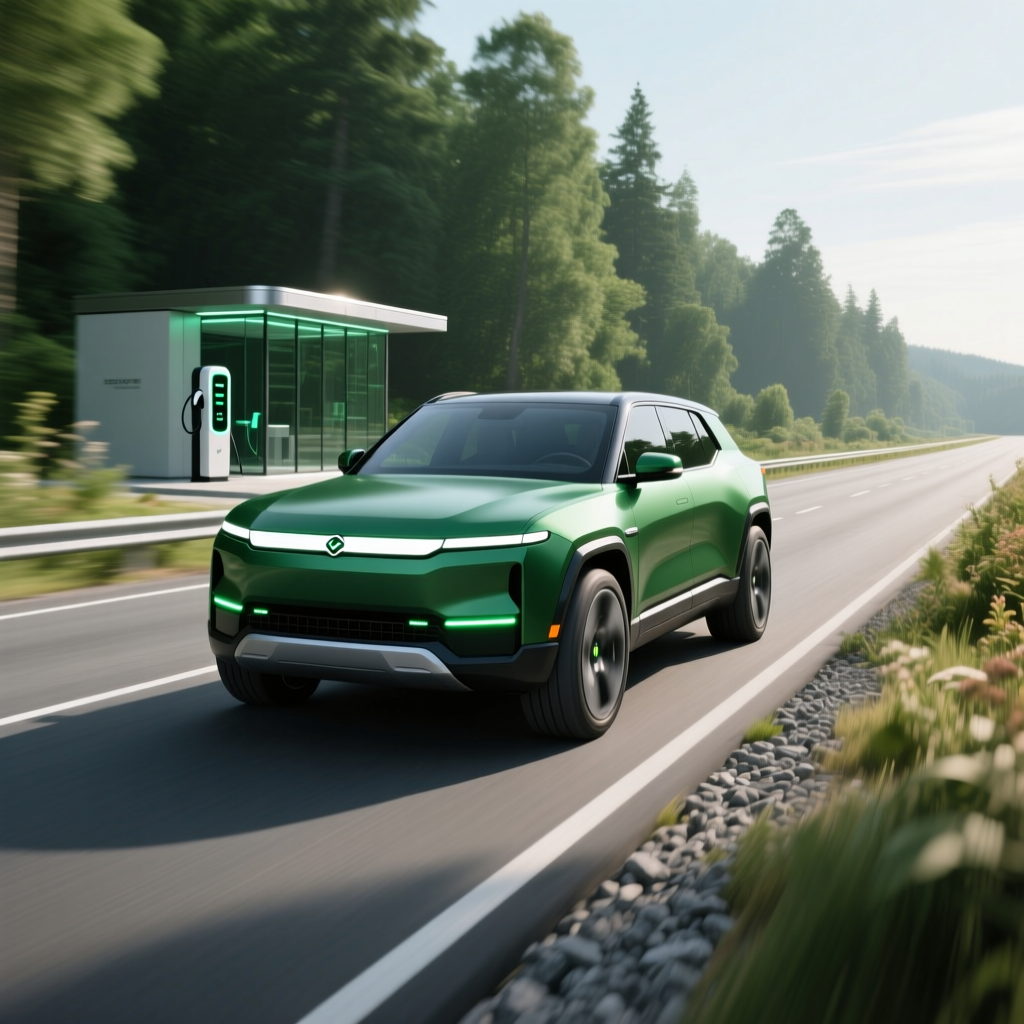
The electric vehicle market has no shortage of capable SUVs, but few blend rugged, go-anywhere utility with premium family hauling quite like the Rivian R1S. While the dual-motor configurations offer impressive performance and value, the Tri-Motor setup equipped with the Max Battery pack represents the absolute pinnacle of the brand’s engineering. Boasting over 850 horsepower, adaptive air suspension, and genuine rock-crawling credentials, the R1S Tri-Motor asks a compelling question: Can a three-row electric family hauler truly replace a traditional body-on-frame off-roader without compromising on daily comfort?
In this comprehensive review, we put the Rivian R1S Tri-Motor Adventure SUV through its paces. From evaluating its real-world range and charging speeds to testing its off-road prowess and analyzing long-term ownership costs, we cover everything you need to know before adding this electric titan to your driveway. For more options in this segment, be sure to check out our roundup of the best electric SUVs currently on the market.
Vehicle Overview: The Pinnacle of Electric Adventure
The Rivian R1S is the three-row SUV sibling to the R1T pickup truck, sharing the same innovative skateboard platform. The Tri-Motor configuration utilizes one motor on the front axle and two motors on the rear axle. This setup not only provides a massive surge in power—generating 850 horsepower and 1,103 lb-ft of torque—but also enables sophisticated torque vectoring across the rear wheels.
Unlike traditional internal combustion off-roaders that rely on complex mechanical locking differentials, the R1S uses software-defined torque distribution to route power exactly where it is needed in milliseconds. Paired with the available Max Battery pack (149 kWh), the Tri-Motor R1S is designed for enthusiasts who demand supercar-level acceleration on the pavement and trail-rated capability in the wilderness. It is a vehicle that refuses to compromise, aiming to be the ultimate daily driver, family hauler, and overlanding rig all rolled into one.
Real-World Range and Efficiency
Range anxiety is the primary concern for any prospective EV buyer, especially those planning to take their vehicles far off the beaten path. The R1S Tri-Motor is typically paired with Rivian’s Max Battery pack, a massive 149 kWh lithium-ion battery. According to EPA ratings, the R1S Tri-Motor with standard All-Season tires achieves an estimated 321 miles of range. If you opt for the more aggressive All-Terrain tires, that number drops slightly due to increased rolling resistance.
However, independent real-world testing often tells a more nuanced story. On a standardized 70-mph highway loop, the R1S Tri-Motor typically delivers between 275 and 290 miles of range, depending on ambient temperatures and wind conditions. The boxy, utilitarian design of the R1S creates a larger frontal area and more aerodynamic drag than sleeker crossover competitors, which naturally impacts high-speed efficiency.
When taking the vehicle off-road, energy consumption increases dramatically. Low-speed rock crawling and steep inclines drain the battery faster than highway cruising. Fortunately, Rivian’s onboard navigation and battery management system are highly accurate, dynamically adjusting your estimated range based on elevation changes, weather, and driving style. For families planning remote camping trips, understanding these real-world variables is crucial for route planning.
Charging Speed and Infrastructure
A large battery is only as good as the speed at which it can be replenished. The 149 kWh Max Battery pack in the R1S Tri-Motor supports peak DC fast-charging rates of up to 220 kW. Under optimal conditions at a high-output charger, the R1S can add roughly 140 miles of range in just 15 minutes, and charge from 10% to 80% in approximately 35 to 40 minutes.
Rivian has also made significant strides in charging infrastructure compatibility. Newer builds of the R1S come equipped with the native NACS (North American Charging Standard) port, granting seamless access to Tesla’s expansive Supercharger network. Owners of earlier CCS-equipped models can utilize an official adapter to access the same network, vastly expanding the viability of the R1S for cross-country family road trips. For a deeper dive on optimizing your home setup, read our home charging setup guide.
Additionally, Rivian continues to expand its proprietary Adventure Network, featuring high-speed chargers strategically placed near national parks, trailheads, and popular outdoor destinations. This targeted infrastructure build-out ensures that the “Adventure” in the R1S’s name is more than just a marketing moniker.
Interior Comfort, Cargo, and Technology
Stepping inside the R1S reveals a cabin that balances minimalist modern design with rugged durability. The interior features premium vegan leather, real wood accents, and highly durable, easy-to-clean surfaces designed to withstand muddy boots and sticky fingers. The front seats are heavily bolstered, heated, and ventilated, providing excellent support on long overland journeys.
As a family hauler, the R1S offers three rows of seating. The first and second rows are exceptionally spacious, offering ample legroom and headroom. The third row, while best suited for children or shorter adults on long trips, is a valuable asset for large families. Behind the third row, cargo space is somewhat limited at roughly 10 cubic feet, but folding the rear seats flat opens up over 100 cubic feet of cavernous storage. Unlike the R1T truck, the R1S does not have a gear tunnel, but it does feature a sizable front trunk (frunk) that is perfect for storing charging cables, groceries, or muddy gear.
Technology is anchored by a crisp 15.6-inch center touchscreen and a 12.3-inch digital driver display. Rivian’s native operating system is intuitive, beautifully rendered, and controls everything from navigation to the vehicle’s complex drive modes. While the lack of native Apple CarPlay and Android Auto is a sticking point for some, the integrated software is robust, featuring built-in streaming apps, detailed topographical off-road maps, and over-the-air (OTA) updates that continuously add new features. Optional extras like the Slide-Out Camp Kitchen transform the rear cargo area into a fully functional outdoor cooking station, cementing its status as an overlander’s dream.
Driving Dynamics and Off-Road Prowess
On paved roads, the R1S Tri-Motor defies its 7,000-pound curb weight. The dual-motor rear setup allows for incredible torque vectoring, pushing the SUV from 0 to 60 mph in a blistering 2.9 seconds. The adaptive air suspension and hydraulic roll control system keep the body remarkably flat through corners, eliminating the need for traditional mechanical anti-roll bars. The steering is precise, and the regenerative braking system offers true one-pedal driving, making daily commutes effortless.
Where the R1S truly separates itself from competitors like the Tesla Model X is off the pavement. Engaging All-Terrain or Rock Crawl mode raises the air suspension to its maximum height, providing an astonishing 14.9 inches of ground clearance. The approach, departure, and breakover angles are competitive with dedicated off-roaders like the Jeep Wrangler Rubicon.
The Tri-Motor’s software-defined differentials can simulate locking diffs by braking slipping wheels and sending torque to the wheels with grip. Furthermore, the R1S boasts a water fording depth of over 36 inches, allowing you to cross deep streams with confidence. The underbody is protected by a heavy-duty titanium and steel shield, ensuring the battery pack remains safe from jagged rocks. Whether you are navigating snowy mountain passes or crawling over boulders in the desert, the R1S Tri-Motor delivers a level of capability that is virtually unmatched in the luxury EV segment.
Ownership Costs, Warranty, and Safety
Purchasing a premium electric SUV is a significant financial commitment. The R1S Tri-Motor with the Max Battery sits at the top of the lineup, commanding a luxury-tier price tag. However, prospective owners must look beyond the initial MSRP. Electricity costs significantly less per mile than premium gasoline, and the R1S requires virtually no routine powertrain maintenance—no oil changes, no spark plugs, and no transmission fluid replacements.
Rivian backs the R1S with a comprehensive warranty, including a 5-year/60,000-mile bumper-to-bumper warranty and an 8-year/175,000-mile warranty on the battery and drive components. Independent safety testing from the IIHS and NHTSA has yielded top marks for the R1S, thanks to its rigid skateboard architecture and advanced driver-assistance systems (ADAS).
The primary ownership cost to watch is tire wear. The immense weight and instant torque of the Tri-Motor setup can chew through tires faster than a traditional SUV. Budgeting for premium all-terrain or highway tire replacements every 25,000 to 35,000 miles is a necessary reality of owning a high-performance electric heavy-duty vehicle.
Pros and Cons
Pros:
- Supercar-level acceleration combined with genuine rock-crawling capability.
- Massive Max Battery pack provides excellent real-world range for an off-road SUV.
- Innovative air suspension and hydraulic roll control deliver a magic-carpet ride on-road.
- Premium, durable interior with family-friendly features and optional Camp Kitchen.
- Access to the Tesla Supercharger network via NACS or adapter.
Cons:
- High initial purchase price and premium insurance rates.
- Third-row seating is tight for adults on long journeys.
- Cargo space behind the third row is limited compared to extended-length SUVs.
- Lack of native Apple CarPlay and Android Auto integration.
- Heavy weight leads to accelerated tire wear.
Key Specifications Comparison Table
| Feature | Rivian R1S Tri-Motor (Max) | Rivian R1S Dual-Motor (Large) | Tesla Model X (Plaid) |
|---|---|---|---|
| Powertrain | Tri-Motor AWD | Dual-Motor AWD | Tri-Motor AWD |
| Horsepower | 850 hp | 533 hp | 1,020 hp |
| 0-60 MPH | 2.9 seconds | 4.5 seconds | 2.5 seconds |
| EPA Est. Range | ~321 miles | ~321 miles | ~326 miles |
| Ground Clearance | 14.9 inches | 14.9 inches | 9.0 inches |
| Towing Capacity | 7,700 lbs | 7,700 lbs | 5,000 lbs |
| Off-Road Focus | High (Locking diffs, fording) | High | Low |
Frequently Asked Questions
How does the Rivian R1S Tri-Motor handle towing?
The Rivian R1S is rated to tow up to 7,700 pounds, making it highly capable of pulling a mid-sized travel trailer, a boat, or a horse trailer. The Tri-Motor configuration provides immense low-end torque, which is ideal for getting heavy loads moving from a standstill or climbing steep grades. However, as with all electric vehicles, towing significantly impacts range. Expect your real-world range to drop by 40% to 50% when towing at highway speeds. Rivian’s software includes a dedicated Towing Mode that adjusts suspension height, throttle response, and regenerative braking to stabilize the trailer and maximize efficiency.
Is the Rivian R1S good for large families?
Yes, the R1S is an excellent choice for families, though it comes with a few caveats. The first two rows are incredibly spacious and feature multiple USB-C ports, cupholders, and easy-to-clean vegan leather surfaces. The second row offers excellent LATCH system access for child safety seats. The third row is best suited for children or teenagers; adults will find it cramped on trips longer than an hour. If your family regularly requires full-size adult seating in the third row along with maximum cargo space, you might want to look at extended-length traditional SUVs, but for most families of four to six, the R1S is a luxurious and safe fit.
What is the maintenance schedule for the R1S?
One of the greatest benefits of the R1S Tri-Motor is the lack of traditional powertrain maintenance. There are no oil changes, timing belts, or spark plugs to worry about. Rivian recommends a basic inspection every 12 months or 12,000 miles, which includes checking the brake fluid, cabin air filters, and windshield washer fluid. Because the regenerative braking system handles the majority of daily stopping, the physical brake pads and rotors last significantly longer than those on gas-powered vehicles. Your primary maintenance expense will be tire rotations and eventual tire replacements, which occur more frequently due to the vehicle’s weight and torque.
Can the R1S Tri-Motor use Tesla Superchargers?
Absolutely. Rivian has transitioned to the NACS (North American Charging Standard) port for its newer vehicles, allowing native, plug-and-play access to Tesla’s vast Supercharger network. If you are purchasing an older model equipped with a CCS port, Rivian provides an official NACS adapter that unlocks the Supercharger network. The vehicle’s native navigation system seamlessly integrates Supercharger locations into your route planning, automatically preconditioning the battery for optimal charging speeds upon arrival.
How does the air suspension hold up off-road?
Rivian’s adaptive air suspension is heavily reinforced and specifically engineered for rugged use. In off-road modes, the system automatically adjusts to maintain ride height and articulation, even when wheels are lifted off the ground. The air struts are protected by heavy-duty skid plates, and the system features built-in redundancy to prevent a total failure if a single air line is compromised. While early production models saw some software-related calibration issues, continuous over-the-air updates and hardware refinements have made the current iteration of the air suspension highly reliable for demanding trails, snow, and sand.