Quick Verdict: Is a 2026 Rivian R1S Lease Right for You?
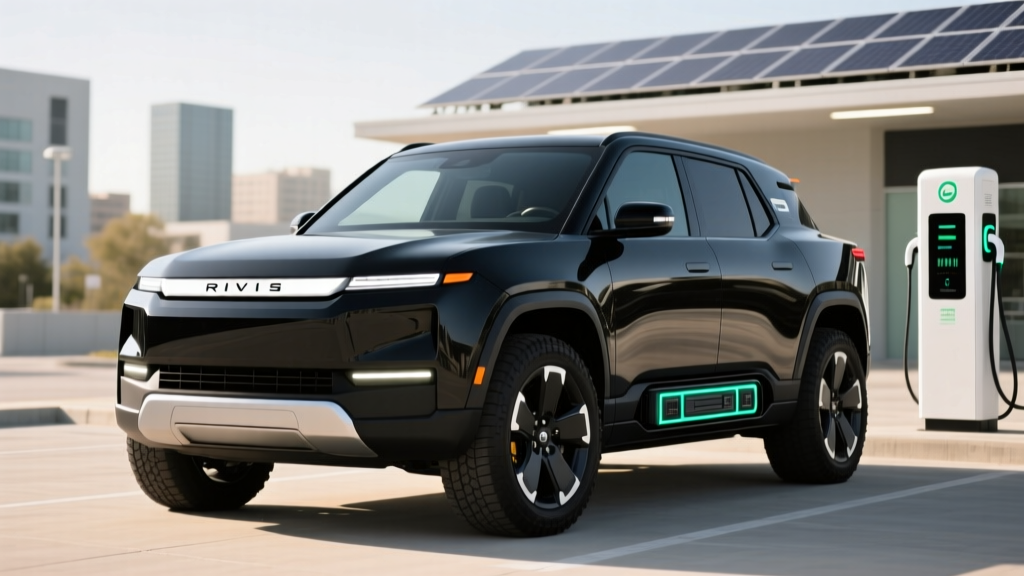
The 2026 Rivian R1S remains one of the most capable electric SUVs on the market, blending three-row family practicality with genuine off-road chops and a tech-forward cabin. For buyers exploring a Rivian SUV lease, the R1S presents a compelling proposition: you get access to Rivian's continuously improving software stack and next-gen battery options without locking into long-term depreciation risk on a six-figure vehicle. However, lease economics on the R1S are nuanced — the vehicle's MSRP places it above the federal tax credit's vehicle price cap for SUVs, and Rivian's leasing structure routes through a third-party lessor, which affects how incentives flow to the lessee.
This review breaks down the 2026 R1S across every metric that matters to an EV buyer: real-world range, charging speeds, battery chemistry, total cost, and whether leasing or buying makes more financial sense in the current incentive landscape.
2026 Rivian R1S Specifications at a Glance
| Spec | Dual-Motor (Standard) | Dual-Motor (Max Pack) | Tri-Motor |
|---|---|---|---|
| EPA Range | 270 mi | 410 mi | 390 mi |
| Battery (usable) | ~92 kWh (NMC) | ~141 kWh (NMC) | ~141 kWh (NMC) |
| Horsepower | 533 hp | 533 hp | 850 hp |
| 0-60 mph | 4.5 sec | 4.5 sec | 2.9 sec |
| Max DC Charge Rate | 200 kW | 220 kW | 220 kW |
| 10-80% DC Time | ~30 min | ~42 min | ~42 min |
| Level 2 Rate | 11.5 kW (~30 mi/hr) | 11.5 kW (~30 mi/hr) | 11.5 kW (~30 mi/hr) |
| MPGe (combined) | 73 MPGe | 69 MPGe | 65 MPGe |
| Drivetrain | AWD (dual-motor) | AWD (dual-motor) | AWD (tri-motor) |
| Towing Capacity | 7,700 lbs | 7,700 lbs | 7,700 lbs |
| Base MSRP | $79,900 | $94,900 | $104,900 |
Sources: EPA fueleconomy.gov, Rivian official specs.
Range & Efficiency: EPA Numbers vs. Real-World Reality
EPA Estimated: 270 mi (Standard) / 410 mi (Max Pack) / 390 mi (Tri-Motor)
Real-World Highway (70 mph, mild weather): ~230 mi / ~350 mi / ~330 mi
Cold Weather (below 30°F, mixed driving): Expect 20-30% reduction — ~190-215 mi / ~290-325 mi / ~275-310 mi
While Towing (5,000+ lbs trailer): Range roughly halves to ~135-200 mi depending on pack
The R1S Max Pack's 410-mile EPA rating is genuinely impressive for a three-row SUV, placing it among the longest-range EVs available in 2026. However, the R1S is a large, heavy vehicle (curb weight exceeds 6,800 lbs for the Max Pack), and physics dictates that real-world efficiency takes a hit at sustained highway speeds and in cold temperatures.
In our experience and consistent with third-party testing, highway driving at 70-75 mph reduces range by roughly 12-15% compared to the EPA combined cycle. Cold weather compounds this: the R1S uses a heat pump for cabin heating (a welcome inclusion), but battery chemistry inherently slows in low temperatures, and energy used for battery thermal management further cuts into your available miles.
Efficiency figures hover around 46-51 kWh/100 miles depending on configuration — meaning the R1S consumes more energy per mile than lighter crossovers like the Hyundai Ioniq 5 or Tesla Model Y. That's the trade-off for three rows, 7,700-lb towing, and genuine off-road capability.
Charging Speed: DC Fast Charging and Home Level 2
| Charging Level | Power / Rate | Miles Added per Hour | Notes |
|---|---|---|---|
| Level 1 (120V household) | ~1.4 kW | ~3-4 mi/hr | Emergency/trickle only |
| Level 2 (240V home, 48A) | 11.5 kW | ~25-30 mi/hr | Full overnight charge in 10-14 hrs |
| DC Fast Charge (Standard) | Peak 200 kW | ~140 mi in 20 min | 10-80% in ~30 min |
| DC Fast Charge (Max/Tri) | Peak 220 kW | ~150 mi in 20 min | 10-80% in ~42 min (larger battery) |
The R1S charges via the NACS (Tesla-style) connector as of the 2025 model year refresh, giving it native access to Tesla's Supercharger network — a major practical advantage over CCS-equipped rivals that require adapters. Rivian owners can also use Electrify America, EVgo, and other networks with the appropriate adapter.
A critical nuance on DC fast charging: the published peak kW rate (200 or 220 kW) is not sustained across the entire session. The R1S, like all EVs, follows a charging curve that tapers significantly above 80% State of Charge to protect battery longevity. The 10-80% time of 30 minutes (Standard) or 42 minutes (Max/Tri-Motor) reflects this taper. If you're road-tripping and charging from 20-80%, expect roughly 20-25 minutes at a 250+ kW capable station.
For home charging, a 48-amp Level 2 wall connector on a 60-amp circuit delivers the full 11.5 kW. With the Standard pack, that's a 0-100% charge in roughly 10 hours. The Max Pack takes closer to 14 hours — plan your overnight charging accordingly, or set departure-time preconditioning in the Rivian app.
Lease Pricing, Tax Credits, and Total Cost
This is where a Rivian SUV lease gets complex. Let's break down the numbers.
| Trim / Config | Base MSRP | As-Tested (typical options) | Federal §30D Credit Eligible? |
|---|---|---|---|
| Dual-Motor Standard | $79,900 | $83,000-$88,000 | No (exceeds $80,000 SUV cap) |
| Dual-Motor Max Pack | $94,900 | $98,000-$105,000 | No |
| Tri-Motor | $104,900 | $110,000-$120,000 | No |
The §30D federal tax credit problem: Under current IRS rules, new clean vehicle credits cap at $80,000 MSRP for SUVs, vans, and pickups. Every 2026 R1S configuration starts at or above $79,900, and once destination charges and even minimal options push the MSRP above $80,000, the credit phases out entirely. The base Dual-Motor Standard at exactly $79,900 may qualify before destination fees, but buyers should verify with a tax professional.
The lease loophole: Under IRC §45W, the commercial clean vehicle credit allows the lessor (the leasing company) to claim a $7,500 credit regardless of MSRP caps, income limits, or battery sourcing rules. Many lessors pass this savings to the lessee as a capitalized cost reduction (lowering your monthly payment). However, Rivian uses a third-party leasing partner, and whether this credit is passed through varies by lease structure and state. Always confirm with the dealer and lessor before signing.
Estimated lease payment (2026): Based on current market data, a 2026 R1S Dual-Motor Standard with $7,500 lease cash applied typically leases for approximately $1,100-$1,300/month on a 36-month term with $5,000-$7,500 due at signing. The Max Pack and Tri-Motor push payments to $1,400-$1,800/month depending on terms and down payment.
Battery, Powertrain, and Warranty Coverage
All 2026 R1S configurations use NMC (nickel manganese cobalt) lithium-ion battery cells. NMC offers higher energy density than LFP chemistry, which is why the Max Pack achieves 410 miles in a physically manageable pack size. The trade-off: NMC batteries benefit from avoiding routine 100% charges — Rivian recommends daily charging to 85-90% and reserving 100% for road trips.
Warranty coverage:
- Battery & Drive Units: 8 years / 175,000 miles (whichever comes first), covering defects and capacity loss below a specified threshold
- Limited Vehicle Warranty: 5 years / 60,000 miles bumper-to-bumper
- Roadside Assistance: 5 years / 60,000 miles
The 175,000-mile battery warranty is notably generous compared to the industry-standard 100,000 miles offered by most competitors. For a lease (typically 36-48 months and 30,000-48,000 miles), battery degradation is essentially a non-concern — you'll return the vehicle well before meaningful capacity loss occurs.
Interior, Tech, and Daily Livability
The R1S seats up to seven passengers across three rows. Cargo volume measures approximately 10.6 cu ft behind the third row, 46.7 cu ft with the third row folded, and 88.2 cu ft with both rear rows down. A front trunk (frunk) adds 11.1 cu ft of secure, weatherproof storage — a practical advantage over ICE SUVs.
Second-row legroom is generous at 38.5 inches, and the third row accommodates adults on shorter trips (32.7 inches of legroom). The flat floor (no transmission tunnel) makes the cabin feel more spacious than its exterior footprint suggests.
Standout tech features:
- Rivian Driver+: Level 2 SAE driver-assist with lane centering and adaptive cruise on mapped highways. Requires hands-on-wheel supervision — this is not autonomous driving.
- 15.6-inch center touchscreen with embedded navigation, OTA updates, and integrated trip planning that accounts for terrain, weather, and charging stops.
- Camp Kitchen option (available accessory): a slide-out electric kitchen from the gear tunnel — unique to Rivian and a hit with overlanders.
- Over-the-air updates: Rivian regularly pushes software improvements covering range optimization, new features, and UI refinements.
- Four-zone air suspension: adjustable ride height from 6.7 to 14.4 inches of ground clearance, with automatic lowering at highway speeds for efficiency.
Notable drawbacks:
- No native Apple CarPlay or Android Auto — Rivian uses its proprietary infotainment system. While well-designed, some buyers expect smartphone mirroring at this price point.
- Third-row access requires folding/tumbling the second row, which is less convenient than a sliding bench.
- Service center network is still expanding; some owners in rural areas face long wait times for body repair or complex diagnostics.
- Insurance premiums run 15-25% higher than comparable ICE SUVs, reflecting repair costs and parts availability.
How the R1S Stacks Up Against Competitors
| Category | Rivian R1S (Dual-Motor Max) | Tesla Model X (Long Range) | Kia EV9 (GT-Line AWD) |
|---|---|---|---|
| EPA Range | 410 mi | 335 mi | 270 mi |
| Base MSRP | $94,900 | $81,630 | $73,900 |
| 0-60 mph | 4.5 sec | 3.8 sec | 4.9 sec |
| Third Row | Yes (adults, short trips) | Yes (tight) | Yes (adults, adequate) |
| Towing | 7,700 lbs | 5,000 lbs | 5,000 lbs |
| Off-Road Capability | Excellent | Limited | Moderate |
| §30D Credit Eligible | No (MSRP cap) | No (MSRP cap) | Partial (trim dependent) |
- You need genuine off-road capability and 7,700-lb towing
- Max Pack range (410 mi) is a priority for road trips
- You value build quality, unique design, and overlanding features
- You want native NACS/Supercharger access without adapters
- Budget is under $75,000 (consider the Kia EV9 or Hyundai Ioniq 9)
- You want the fastest 0-60 in the segment (Tesla Model X Plaid)
- Apple CarPlay is a must-have
- You need a dense urban service-center network (Tesla still leads)
Who Should Lease the 2026 Rivian R1S?
A Rivian SUV lease makes the most sense for:
- Active families who need three rows, cargo space, and the ability to tow a boat or camper on weekends.
- Tech-forward buyers who want OTA-improving software and are comfortable with proprietary infotainment.
- Lease-oriented buyers who want to avoid long-term depreciation risk on a six-figure EV and plan to upgrade in 3-4 years.
- Overlanders and outdoor enthusiasts who value the air suspension, ground clearance, and gear tunnel accessories.
It's less ideal for buyers seeking the lowest monthly payment (the EV9 undercuts significantly), those who need Apple CarPlay, or anyone in a region without a nearby Rivian service center.
Frequently Asked Questions
Does the 2026 Rivian R1S qualify for the $7,500 federal EV tax credit?
Most likely not under §30D purchase rules — the SUV MSRP cap is $80,000, and nearly every R1S exceeds this once options and destination are added. However, leasing may unlock the §45W commercial credit, which has no MSRP or income caps. The lessor claims the credit and may pass savings to you as a capitalized cost reduction. Confirm with your dealer and tax professional before signing, as IRS rules are specific and subject to change.
What is the real-world range of the Rivian R1S on a road trip?
Expect roughly 340-355 highway miles from the Max Pack in mild weather at 70 mph, and around 220-235 miles from the Standard pack. Cold weather (below 30°F) knocks off an additional 20-30%. Towing a trailer cuts range roughly in half. Plan charging stops conservatively — arriving at 10-15% SoC is far safer than running the battery to near-zero in rural areas.
How fast does the R1S charge at home and on the road?
At home on a 48-amp Level 2 charger, the R1S adds about 25-30 miles of range per hour, fully charging the Standard pack overnight (10 hours) and the Max Pack in about 14 hours. On DC fast chargers, the Standard pack peaks at 200 kW (10-80% in ~30 min) while the Max and Tri-Motor packs peak at 220 kW (10-80% in ~42 min). NACS compatibility means native Tesla Supercharger access.
Is leasing the R1S better than buying in 2026?
Leasing offers two advantages: (1) potential access to the $7,500 commercial credit via the lessor regardless of MSRP/income caps, and (2) protection against depreciation on a rapidly evolving EV segment. The downside: you build no equity, face mileage penalties (typically $0.20-$0.30/mile over the limit), and must return or buy out the vehicle at lease end. If you drive under 12,000 miles/year and upgrade every 3-4 years, leasing is often the smarter play at this price point.
What are the biggest pros and cons of the R1S?
- Class-leading 410-mi Max Pack range
- 7,700-lb towing + genuine off-road ability
- Spacious 3-row cabin with frunk
- 175,000-mi battery warranty
- Native NACS / Supercharger access
- Regular OTA improvements
- $79,900+ MSRP blocks §30D purchase credit
- No Apple CarPlay / Android Auto
- Insurance costs 15-25% above ICE equivalents
- Service network still growing
- Max Pack 10-80% charge takes 42 min
- Third-row access less convenient than minivan
How does the R1S handle in winter and snow?
Exceptionally well. The dual- and tri-motor AWD systems provide precise torque vectoring to each wheel, and the air suspension raises the vehicle for deep snow clearance. The heat pump maintains cabin warmth efficiently. Expect 20-30% range reduction in sustained sub-30°F temperatures — precondition the battery while plugged in to minimize charging-speed loss in cold weather.