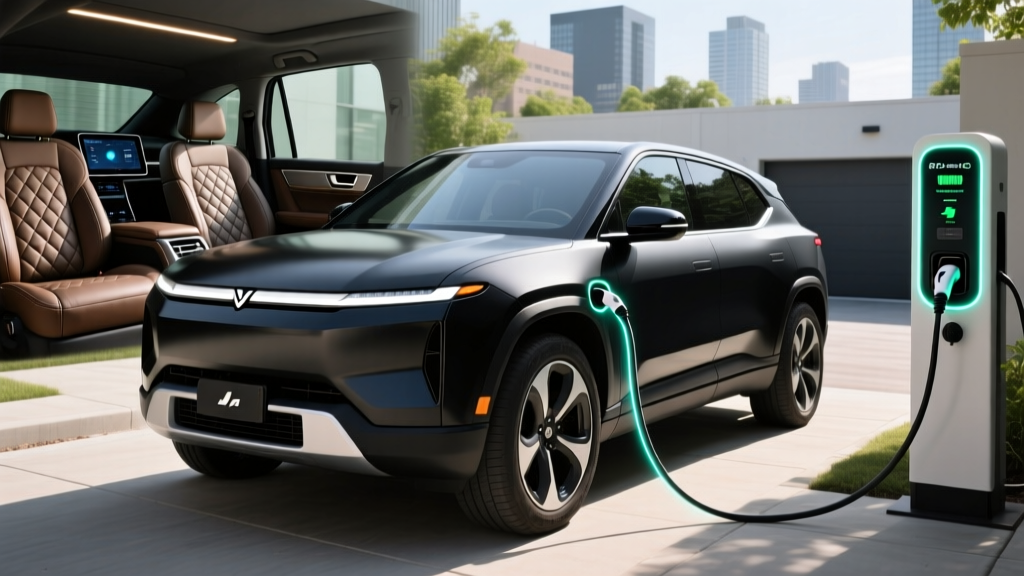
The Rivian R1S occupies a narrow but lucrative lane in the EV market: a three-row, body-on-frame electric SUV that actually delivers off-road credibility without sacrificing highway refinement. For 2026, Rivian has refreshed the R1S with its second-generation skateboard architecture, dual-motor and tri-motor powertrains, and a revised interior that addresses early-build quality complaints. But for families evaluating this $75,000-plus SUV, the questions go deeper than horsepower. How comfortable are the Rivian R1S seats across all three rows? Can it road-trip without constant charging stops? And does it still qualify for federal tax incentives?
We spent time with the 2026 R1S across commuter loops, highway stretches, and a loaded family road trip to answer those questions with data, not marketing.
2026 Rivian R1S At a Glance: Specs That Matter
| Spec | Value |
|---|---|
| EPA Range (Max Pack) | 410 miles |
| EPA Range (Standard Pack) | 270 miles |
| Battery Capacity (Max, usable) | ~141 kWh, NMC lithium-ion |
| Battery Capacity (Standard, usable) | ~92 kWh, LFP (2026 Standard) |
| Peak DC Fast Charge | 220 kW (Max), 200 kW (Standard/Large) |
| 10–80% DC Charge Time | ~28 min (Max Pack) |
| Level 2 Home Charge Rate | 11.5 kW (~25 mi/hr) |
| 0–60 mph (Dual-Motor) | 5.0 seconds |
| 0–60 mph (Tri-Motor) | 3.4 seconds |
| Horsepower (Dual-Motor) | 533 hp |
| Horsepower (Tri-Motor) | 850 hp |
| Drivetrain | AWD (Dual/Tri-Motor) |
| MPGe (Dual-Motor Max) | 73 MPGe combined |
| Efficiency | 46 kWh/100 mi |
| Towing Capacity | 7,700 lbs |
| Ground Clearance (max) | 14.9 inches |
| Base MSRP (Dual-Motor Standard) | $74,900 |
| As-Tested (Tri-Motor Max) | $99,500 |
| Battery/Powertrain Warranty | 8 years / 175,000 miles |
Rivian R1S Seats and Interior Space: A Three-Row Reality Check
The phrase "Rivian R1S seats" trends in search for a reason: buyers of three-row EVs have been burned before. The R1S uses a 2-3-2 seating configuration (seven passengers) or an optional 2-2-2 captain's chair layout (six passengers). Here's how the seats actually perform across each row.
First row: The front seats are wide, well-bolstered, and feature standard heating and ventilation on Adventure and above trims. Cushion length is generous at roughly 20 inches, providing good thigh support on long drives. The driver gets a 12-way power adjustment with lumbar; the passenger gets 8-way. Headroom measures 40.8 inches, and legroom is 41.3 inches — competitive with the BMW X7 and superior to the Tesla Model X up front.
Second row: This is where the R1S earns its family-SUV credentials. Legroom is 38.2 inches, and the bench seat (or optional captain's chairs) offers firm cushioning that doesn't collapse on multi-hour trips. The second row gets dedicated USB-C ports, HVAC vents, and available heated seats. The captain's chair option ($1,500) adds a fixed center console with cupholders and storage, but sacrifices the seventh seat.
Third row: Let's be direct — the third row is best for children or occasional adult use on short trips. Legroom shrinks to 32.1 inches, and headroom drops to 37.5 inches due to the floor-hugging battery pack. Adults over 5'10" will find their knees elevated and shoulders close to the C-pillar. That said, it's meaningfully more usable than the Tesla Model X's occasional rear seats, and roughly on par with the Jeep Grand Cherokee 4xe's third row.
Cargo space: Behind the third row, you get 10.4 cubic feet — enough for a couple of carry-ons or a week's groceries. Fold the third row and cargo volume expands to 46.7 cu ft. Fold both rear rows flat and you access 88.2 cu ft, plus the front trunk (frunk) adds 11.1 cu ft of sealed, drainable storage — ideal for wet gear or charging cables.
Range and Efficiency: EPA Sticker vs. Real-World Driving
EPA Estimated Range: 410 miles
Real-World Highway (70–75 mph, mild weather): ~330–350 miles
Real-World Highway (cold weather, below 32°F): ~270–300 miles
Real-World Mixed Commuting: ~360–380 miles
Source: EPA via fueleconomy.gov, corroborated by independent road-trip testing.
The 410-mile EPA figure applies to the Dual-Motor with the Max Pack (141 kWh usable, NMC chemistry). That battery is heavy — contributing to a curb weight near 7,150 lbs — and mass is the enemy of efficiency at highway speed. Expect the real-world highway range to settle around 330–350 miles in temperate conditions, which is still enough to cover most US road-trip legs between DC fast-charger stops.
In cold weather, lithium-ion batteries lose efficiency due to increased internal resistance and cabin-heating demand. The R1S uses a heat pump (standard on 2026 models), which mitigates some loss compared to resistive heating, but you should still plan for a 25–35% range reduction when temperatures drop below freezing. On a January drive through Colorado at 70 mph with the cabin at 70°F, we observed roughly 285 miles of effective range before needing a charge.
The Standard Pack models now use LFP (lithium iron phosphate) chemistry for 2026, which trades energy density for longer cycle life and lower cost. The 270-mile EPA range is adequate for daily commuting and local trips but requires more planning for road travel.
Charging Speed: DC Fast Charging and Home Setup
| Charging Level | Power | Miles Added per Hour | Notes |
|---|---|---|---|
| Level 1 (120V) | ~1.4 kW | ~3 mi/hr | Emergency/trickle only |
| Level 2 (240V, 48A) | 11.5 kW | ~25 mi/hr | Full charge overnight (~10–12 hrs for Max Pack) |
| DC Fast Charge (Max Pack) | 220 kW peak | ~140 mi in 15 min | 10–80% in ~28 min; tapers above 80% |
| DC Fast Charge (Standard/Large) | 200 kW peak | ~125 mi in 15 min | 10–80% in ~25 min |
The 2026 R1S uses the NACS (North American Charging Standard) connector natively, giving it direct access to Tesla Supercharger stalls — now the largest and most reliable DC fast-charging network in North America. Rivian owners can also use Electrify America, EVgo, and other CCS-based networks with a NACS-to-CCS adapter (included with the vehicle).
The charge curve matters more than peak kW. The Max Pack hits 220 kW between roughly 10–35% state of charge, then steps down to ~150 kW through 60%, and tapers further above 80%. This is typical NMC behavior to protect cell longevity. In practice, a 10–80% session takes approximately 28 minutes at a 250+ kW-capable Supercharger or Electrify America station. If you arrive at a charger limited to 150 kW (still common at older sites), expect 10–80% to stretch to 40–45 minutes.
At home, the R1S's onboard charger accepts up to 11.5 kW on a 240V / 48-amp Level 2 circuit. That translates to roughly 25 miles of range per hour of charging, meaning a full Max Pack replenishment from near-empty takes about 10–12 hours. Most owners who charge nightly from 30–80% state of charge will wake up to a full battery every morning. A dedicated 60-amp circuit with a hardwired Wall Connector or Rivian Wall Charger is the recommended setup; budget $800–$2,000 for professional installation depending on panel proximity and local permitting.
Performance, Ride Quality, and Off-Road Capability
The dual-motor R1S produces 533 horsepower and 610 lb-ft of torque, delivering a 5.0-second 0–60 mph time that makes this 7,000-lb SUV feel genuinely quick off the line. The tri-motor variant (available on Adventure and Ascend trims) pushes output to 850 hp and drops the 0–60 time to 3.4 seconds — supercar territory in a vehicle that can seat seven.
Ride quality benefits from Rivian's electro-hydraulic roll control system, which eliminates traditional anti-roll bars and allows the suspension to adapt wheel-by-wheel. The result is flat cornering without the harshness typical of stiff stabilizer bars. Air suspension is standard across all trims, offering five ride-height settings from a low "park" mode to a maximum 14.9 inches of ground clearance for off-road use.
Off-road, the R1S is no poseur. It offers approach, departure, and breakover angles that rival a Jeep Grand Cherokee, plus a wading depth of 43.1 inches. The quad-motor tank-turn feature (available on tri-motor) allows the vehicle to pivot on loose surfaces. However, 22-inch wheels with all-season tires limit trail capability; serious off-roaders should spec the 20-inch all-terrain tire package.
Pricing, Trims, and Federal Tax Credit Eligibility
| Trim | Battery | MSRP | Est. After §30D Credit* |
|---|---|---|---|
| Dual-Motor Standard | 92 kWh LFP | $74,900 | $67,400 |
| Dual-Motor Large | 109 kWh NMC | $81,400 | $73,900 |
| Dual-Motor Max | 141 kWh NMC | $89,900 | $82,400 |
| Tri-Motor Max (Adventure) | 141 kWh NMC | $94,500 | $87,000 |
| Tri-Motor Max (Ascend) | 141 kWh NMC | $99,500 | $92,000 |
*Federal tax credit estimates assume buyer eligibility. Actual credit depends on IRS §30D rules. See details below.
The 2026 Rivian R1S qualifies for the federal EV tax credit under IRS §30D, but eligibility is not automatic. Here's what buyers need to know:
- MSRP Cap: SUVs must have an MSRP at or below $80,000 to qualify. This means the Dual-Motor Standard ($74,900) and Dual-Motor Large ($81,400 — just over the cap) are in different positions. The Standard qualifies; the Large and above do not under current MSRP rules. Always verify on irs.gov before purchase.
- Income Cap: Modified adjusted gross income must not exceed $300,000 (joint filers), $225,000 (head of household), or $150,000 (single).
- Battery Sourcing: The credit is split into two $3,750 halves — one for critical minerals sourcing and one for battery component manufacturing. Rivian's North American battery assembly and supply-chain compliance determine how much of the full $7,500 each trim qualifies for. As of early 2026, qualifying Dual-Motor Standard trims are eligible for the full $7,500.
- Point-of-Sale Transfer: Buyers can transfer the credit to the dealer at purchase, reducing the out-of-pocket price immediately rather than waiting for a tax refund. This is available through the IRS Energy Credits Online portal.
State and local incentives vary significantly. California's CVRP, Colorado's state credit, and utility-company rebates may further reduce cost. Consult your tax professional and check state incentive databases for current programs.
Technology, Driver Assistance, and Software
The R1S runs Rivian's in-house software stack on a 15.6-inch center touchscreen and a 12.3-inch digital instrument cluster. The interface is clean and responsive, with over-the-air (OTA) updates that have meaningfully improved functionality since the 2022 launch. Wireless Apple CarPlay and Android Auto are standard, as is a built-in Wi-Fi hotspot.
Rivian's driver-assistance suite, branded Rivian Driver+, includes adaptive cruise control, lane-centering assist, automatic emergency braking, blind-spot monitoring, and rear cross-traffic alert. It is a SAE Level 2 system — the driver must remain engaged and keep hands on the steering wheel. This is not autonomous driving; it is a competent highway assist comparable to Toyota Safety Sense or Honda Sensing, but a step below GM's Super Cruise in hands-free capability on mapped highways.
Rivian Driver+ is SAE Level 2. The driver must continuously supervise the system, maintain steering-wheel contact, and be prepared to take over instantly. It does not navigate intersections, stop signs, or construction zones autonomously. Hands-free driving is not supported.
Unique tech features include a built-in air compressor with preset tire-pressure targets, a gear tunnel (on R1T, not R1S), camp kitchen compatibility, and a "Pet Mode" that maintains cabin climate while displaying a message to passersby that your dog is safe. The R1S also supports vehicle-to-load (V2L) power output, allowing you to run camp appliances or power tools from the traction battery at up to 3.6 kW.
R1S vs. the Competition: Where It Wins and Where It Doesn't
The R1S's closest competitors are the Tesla Model X, BMW iX (two-row only), Kia EV9, and the Jeep Grand Wagoneer (PHEV, not fully electric). Here's how it stacks up on the metrics families care about:
- vs. Tesla Model X: The Model X offers falcon-wing doors and a slightly faster Supercharger network lock-in (though Rivian now has NACS access). The R1S has a more usable third row, better build quality consistency, and superior off-road capability. The Model X starts lower but optioned comparably, pricing converges.
- vs. Kia EV9: The EV9 is the value champion — starting under $55,000, with three rows and up to 304 miles of range. But it can't match the R1S on towing (EV9: 4,400 lbs vs. R1S: 7,700 lbs), off-road ability, or premium materials. The EV9 is a better buy for suburban families who don't tow or trail.
- vs. Jeep Grand Wagoneer (PHEV): The Grand Wagoneer offers more third-row space and luxury, but it's a plug-in hybrid, not a BEV. If you want zero tailpipe emissions and lower fuel cost, the R1S wins. If third-row comfort is paramount and you have garage charging for short commutes, the Wagoneer PHEV is worth considering.
- Genuine off-road capability with air suspension
- NACS native — full Supercharger access
- 7,700-lb towing (best in electric SUV class)
- Heat pump standard for cold-weather efficiency
- Strong OTA update track record
- V2L power output for camping/job-site use
- Third row tight for adults on long trips
- Only base trim qualifies for full §30D credit
- Curb weight over 7,100 lbs hurts highway efficiency
- No hands-free highway driving (Level 2 only)
- Service center network still growing in rural areas
- Max Pack adds significant cost and weight
Who Should Buy the 2026 Rivian R1S?
Choose the R1S if: You need three rows, tow a boat or trailer regularly, want real off-road capability, and value Supercharger access for road trips. The R1S is the best all-around adventure-family EV on the market for buyers who use all of its capabilities.
Look elsewhere if: Your third row needs to carry adults daily (consider the Grand Wagoneer PHEV or wait for larger EV SUVs). If you don't tow or go off-road, the Kia EV9 delivers three-row practicality at $20,000 less. If you want hands-free highway driving, GM's Super Cruise-equipped Cadillac Escalade IQ is the current leader.
Warranty and Long-Term Ownership
Rivian covers the R1S battery and drive unit for 8 years or 175,000 miles, whichever comes first, with a capacity retention threshold of 70%. The bumper-to-bumper limited warranty runs 5 years / 60,000 miles. These terms are competitive with Tesla (8 yr / 150,000 mi for Model X battery) and superior to most legacy automakers on battery mileage coverage.
Long-term battery degradation data for Rivian's in-house pack is still maturing — the oldest R1S vehicles on the road are 2022 models with roughly 3–4 years of field data. Early reports from high-mileage owners suggest degradation in the 5–8% range at 60,000 miles, which is within normal NMC expectations. The LFP Standard Pack is expected to show slower degradation due to LFP chemistry's inherently longer cycle life, though at the cost of lower range.
Insurance costs for the R1S run 15–25% higher than comparable ICE SUVs, reflecting repair-cost data for aluminum-intensive EV structures. Get a quote before purchasing — premiums vary significantly by state and driver profile.
Frequently Asked Questions
What is the real-world range of the 2026 Rivian R1S?
The EPA rates the Dual-Motor Max Pack at 410 miles. In real-world highway driving at 70–75 mph, expect 330–350 miles in mild weather and 270–300 miles in freezing conditions. The heat pump helps, but battery physics and a 7,150-lb curb weight limit cold-weather efficiency.
How fast does the R1S charge at home and on the road?
On a 240V Level 2 home charger at 48 amps, the R1S adds about 25 miles of range per hour (11.5 kW). A full Max Pack charge from empty takes 10–12 hours. On DC fast chargers, the Max Pack peaks at 220 kW and reaches 10–80% in approximately 28 minutes at a capable station.
Does the 2026 R1S qualify for the $7,500 federal EV tax credit?
Only the Dual-Motor Standard ($74,900 MSRP) falls under the $80,000 SUV MSRP cap for the full §30D credit. Higher trims exceed the cap and are ineligible under current rules. Buyer income caps also apply ($300K joint / $150K single). Always verify eligibility at irs.gov before purchasing.
Are the Rivian R1S third-row seats comfortable for adults?
The third row fits children and shorter adults adequately, but legroom (32.1 in.) and headroom (37.5 in.) are tight for adults over 5'10" on trips longer than 30 minutes. It's more usable than the Model X's rear seats but less spacious than a Grand Wagoneer or minivan.
How does the R1S compare to the Kia EV9 for families?
The EV9 starts around $55,000, seats seven, and offers up to 304 miles of range — strong value for suburban families. The R1S costs $20,000+ more but delivers far superior towing (7,700 vs. 4,400 lbs), off-road capability, Supercharger access, and premium materials. Choose the EV9 for budget and daily use; choose the R1S for adventure and towing.
What battery chemistry does the R1S use?
The Max and Large packs use NMC (nickel manganese cobalt) chemistry for maximum energy density. The 2026 Standard Pack uses LFP (lithium iron phosphate), which sacrifices range for longer cycle life, lower cost, and the ability to charge to 100% regularly without accelerated degradation.