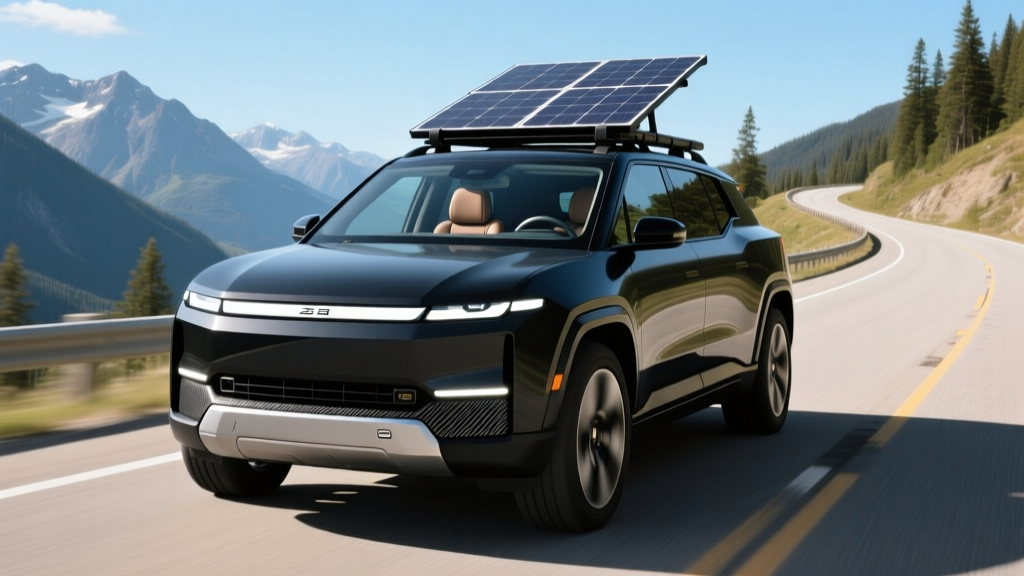
The Rivian R1S occupies a rare space in the electric-vehicle market: a three-row, body-on-frame SUV that can tow 7,700 pounds, handle legitimate off-road trails, and still deliver a 0-60 mph time that embarrasses sports sedans. But for families shopping this segment, performance takes a back seat to one question — how safe is it? This review digs into the 2026 Rivian R1S safety ratings, then layers in the real-world range, charging, pricing, and ownership data you need before signing a purchase agreement.
2026 Rivian R1S Safety Ratings: IIHS and NHTSA Scores
The R1S shares its skateboard platform with the R1T pickup, and Rivian has engineered both around a low center of gravity and a massive front crumple zone made possible by the absence of an engine block. For the 2026 model year, the R1S continues to build on strong crash-test performance from prior years.
The Insurance Institute for Highway Safety (IIHS) has evaluated the R1S across its full battery of tests. Key results to watch:
- Small overlap front (driver & passenger): Good
- Moderate overlap front: Good
- Side impact: Good
- Roof strength: Good — the low-slung battery pack reduces rollover risk substantially compared to body-on-frame ICE SUVs
- Headlights: Acceptable to Good depending on trim and headlight hardware
- Front crash prevention (vehicle-to-vehicle): Superior
On the National Highway Traffic Safety Administration (NHTSA) side, the R1S has earned strong marks in frontal and side crash tests. The vehicle's 8-airbag system includes front, side, curtain, and knee airbags. Buyers should check the latest NHTSA 5-star safety ratings page for the specific model year, as NHTSA periodically updates its test protocols and not every trim configuration is tested identically.
Range, Battery, and Efficiency: What the EPA Says vs. Reality
For 2026, the Rivian R1S is available with Rivian's in-house-developed battery packs, moving away from the Samsung SDI cells used in early production. The lineup includes Standard, Large, and Max pack options, with the Large Pack being the volume seller.
| Spec | Dual-Motor Large Pack | Tri-Motor Max Pack |
|---|---|---|
| EPA Range | ~352 miles | ~410 miles |
| Battery Capacity (usable) | ~109 kWh (NMC) | ~141 kWh (NMC) |
| MPGe (combined) | ~69 MPGe | ~65 MPGe |
| Efficiency | ~48 kWh/100 mi | ~51 kWh/100 mi |
The R1S uses NMC (nickel manganese cobalt) chemistry across all packs, prioritizing energy density over the cycle-life advantage of LFP. For a large SUV that needs maximum range per pound, this is the correct engineering choice — but it means you should avoid routinely charging to 100% for daily use. Set your daily charge limit to 80–90% and save 100% for road trips.
Charging Speed: DC Fast Charging and Home Level 2
Charging a 109+ kWh battery is a time investment, and the R1S's charging architecture matters enormously for road-trip viability. For 2026, Rivian has equipped the R1S with native NACS (North American Charging Standard), granting access to the Tesla Supercharger network alongside Electrify America, EVgo, and other networks.
| Charging Level | Power | Speed | Notes |
|---|---|---|---|
| Level 1 (120V) | ~1.4 kW | ~3 mi/hr | Emergency/trickle only on this battery size |
| Level 2 (240V home) | 11.5 kW (48A) | ~25 mi/hr | Full charge in ~10 hrs (Large Pack) |
| DC Fast Charge | Peak ~220 kW | 10–80% in ~30 min | Charge curve tapers significantly above 80% |
A critical detail many spec sheets gloss over: the charge curve. The R1S peaks near 220 kW at low states of charge (10–30%), then progressively tapers. From 80–100%, charging speed drops dramatically — sometimes below 30 kW. On a road trip, the mathematically optimal strategy is to charge from 10–80% and then drive on, rather than waiting for a full top-off. A 10–80% session takes roughly 30 minutes at a V3 Supercharger or equivalent 250+ kW station.
At home, the onboard 11.5 kW charger is robust. A NEMA 14-50 outlet on a 50-amp circuit delivers about 32 amps (7.7 kW), adding roughly 17 miles per hour. For the full 11.5 kW rate, you need a hardwired Wall Connector or equivalent EVSE on a 60-amp circuit. Given the R1S's large battery, we strongly recommend hardwired Level 2 — a 14-50 plug simply can't fill a 141 kWh Max Pack overnight with range to spare if you drained it significantly.
Performance, Drivetrain, and Towing
The 2026 R1S is offered in Dual-Motor and Tri-Motor configurations. Both use Rivian's in-house electric drive units.
| Configuration | Horsepower | Torque | 0-60 mph | Drivetrain |
|---|---|---|---|---|
| Dual-Motor AWD | 533 hp | 610 lb-ft | ~4.5 sec | AWD (dual motor) |
| Tri-Motor AWD | 850 hp | 1,100+ lb-ft | ~2.9 sec | AWD (tri motor) |
Max towing capacity is 7,700 pounds when properly equipped. Keep in mind that towing a heavy trailer will slash range by 30–50%, depending on speed, terrain, and trailer aerodynamics. If you plan to tow a 5,000+ lb camper on a road trip, plan charging stops at roughly 150–180 mile intervals rather than the 300+ you'd see unladen.
Off-road, the R1S features an adaptive air suspension with up to 14.9 inches of ground clearance, a wading depth of over 3 feet, and dedicated off-road drive modes. The quad-motor configuration (available on select trims) enables true torque vectoring at each wheel, which is a meaningful traction advantage over open-differential systems.
Pricing, Trims, and Federal Tax Credit Eligibility
The R1S is a premium SUV, and pricing reflects that. Here's where the 2026 lineup lands before options:
| Trim / Config | Base MSRP | Est. Federal Credit | Effective Price |
|---|---|---|---|
| Dual-Motor Standard Pack | ~$79,900 | Up to $7,500* | ~$72,400 |
| Dual-Motor Large Pack | ~$87,000 | Up to $7,500* | ~$79,500 |
| Tri-Motor Max Pack | ~$105,000 | Up to $7,500* | ~$97,500 |
*Federal tax credit eligibility under IRS §30D is not automatic. The R1S qualifies as an SUV under the $80,000 MSRP cap, but several conditions apply:
- MSRP cap: Vehicle base MSRP + options must not exceed $80,000 (SUV classification). Higher trims with options may exceed this cap — verify the final window sticker.
- Buyer income cap: Modified AGI must not exceed $300,000 (joint), $225,000 (head of household), or $150,000 (single).
- Battery sourcing: Critical minerals and battery component requirements phase in annually. Confirm current-year compliance on the IRS qualified vehicles list before purchasing.
- Point-of-sale transfer: Eligible buyers can transfer the credit to the dealer at purchase, reducing the out-of-pocket price immediately rather than waiting for tax filing.
Options and packages can push even a Dual-Motor Large Pack above the $80,000 cap. Always confirm the final MSRP on the window sticker — not the starting price on the configurator — before assuming credit eligibility. Consult a tax professional for your specific situation.
Interior, Cargo, and Technology
The R1S seats up to seven passengers across three rows. Cargo volume is competitive for the segment:
- Behind third row: ~10.4 cu ft
- Behind second row (third row folded): ~46.7 cu ft
- Behind first row (all rear seats folded): ~88.2 cu ft
- Front trunk (frunk): ~11.1 cu ft — a significant advantage over ICE SUVs
Second-row legroom is approximately 38.6 inches, while third-row legroom sits at ~30.4 inches — adequate for children or shorter adults on trips under an hour, but tight for long-haul adult passengers. If third-row comfort is a priority, cross-shop the extended-wheelbase versions of competing SUVs.
The infotainment system runs on a 15.6-inch center touchscreen with a clean, responsive interface. Wireless Apple CarPlay and Android Auto are not supported — Rivian uses its own native navigation and app ecosystem, which is well-designed but means you're locked into their platform. The driver display is a 12.3-inch digital cluster, and a 6.8-inch rear touchscreen lets second-row passengers control climate and media.
Rivian's Driver+ system includes highway assist (lane centering + adaptive cruise), automatic emergency braking, blind-spot monitoring, rear cross-traffic alert, and a 360-degree camera system. Over-the-air updates continue to refine these features and add new capabilities post-purchase.
Warranty and Ownership Costs
Rivian provides the following warranty coverage for the 2026 R1S:
- Battery pack: 8 years / 175,000 miles (whichever comes first), with a capacity retention threshold of 70%
- Powertrain (drive units): 8 years / 175,000 miles
- Vehicle (bumper-to-bumper): 5 years / 60,000 miles
The 175,000-mile battery warranty is among the most generous in the industry, beating the standard 100,000-mile coverage offered by most competitors. The 70% capacity retention threshold is standard — if your battery drops below 70% of original capacity within the warranty period, Rivian will repair or replace it.
Insurance costs for the R1S tend to run 15–25% higher than comparable ICE SUVs, reflecting the vehicle's high repair costs, advanced materials, and premium price. Get quotes from your insurer before committing.
Pros
- Class-leading off-road capability for an EV SUV
- Tri-Motor performance (2.9s 0-60) is absurd for a 3-row family hauler
- 175,000-mile battery warranty exceeds most competitors
- Native NACS = full Supercharger network access
- Generous frunk adds practical cargo space
- Strong IIHS safety ratings across crash-test categories
Cons
- High starting price — most trims near or above $80K MSRP cap
- No Apple CarPlay / Android Auto — proprietary infotainment only
- Third-row legroom tight for adults on longer drives
- Towing slashes range by 30–50%
- Insurance premiums above segment average
- Service center network still expanding in rural areas
Who Should Buy the Rivian R1S?
Choose the R1S if: You need a genuine three-row electric SUV with real off-road chops, you tow occasionally, you have access to home Level 2 charging, and you value performance alongside utility. Adventure-oriented families who ski, camp, or hit trails will find few EV alternatives that match this combination.
Look elsewhere if: Your budget is strictly under $70K, you don't need three rows, you rely on Apple CarPlay, or you live in an area without a nearby Rivian service center. If you primarily commute and rarely leave pavement, a lighter, more efficient EV like the Kia EV9 or Hyundai Ioniq 9 may offer better value and efficiency.
Frequently Asked Questions
What is the real-world range of the Rivian R1S?
The EPA rates the Dual-Motor Large Pack at approximately 352 miles. In real-world highway driving at 70-75 mph, expect 280–310 miles. Cold weather (below 30°F) can reduce that to 240–260 miles. The Tri-Motor Max Pack's 410-mile EPA rating delivers roughly 330–360 real-world highway miles in moderate temperatures.
How fast does the R1S charge at home and on the road?
At home on a hardwired 60-amp Level 2 charger, the R1S charges at up to 11.5 kW, adding roughly 25 miles per hour. On a DC fast charger, it peaks around 220 kW and charges from 10–80% in approximately 30 minutes. Above 80%, the charge curve tapers significantly, so plan road-trip stops around 10–80% sessions for optimal time efficiency.
Does the 2026 Rivian R1S qualify for the $7,500 federal tax credit?
It can, but eligibility depends on your specific configuration and financial situation. The R1S is classified as an SUV, so the MSRP cap is $80,000. Higher trims or heavily optioned builds may exceed this. You must also meet income caps ($300K joint / $150K single), and the vehicle's battery must meet current-year critical mineral and component sourcing requirements per IRS §30D rules. Always verify on the IRS qualified vehicle list and consult a tax professional.
Is the Rivian R1S safe for families?
Yes. The R1S has earned Good ratings in major IIHS crash-test categories and benefits from a low center of gravity that reduces rollover risk. It includes 8 airbags, standard automatic emergency braking, blind-spot monitoring, and available highway driving assist. It is a strong choice for family safety among three-row SUVs.
How does the R1S compare to the Tesla Model X and Kia EV9?
The R1S offers more off-road capability and towing capacity than the Model X, with a more traditional SUV design. The Model X has falcon-wing doors, slightly more third-row room, and access to the Supercharger network (which the R1S now also has via NACS). The Kia EV9 is significantly less expensive (starting ~$55K) and qualifies more easily for the tax credit, but it can't match the R1S on performance, off-road ability, or towing. Your choice depends on whether you prioritize adventure capability (R1S), tech and brand cachet (Model X), or value (EV9).
What is the Rivian R1S battery warranty?
Rivian covers the R1S battery pack for 8 years or 175,000 miles, whichever comes first, guaranteeing at least 70% capacity retention. This is one of the longest battery warranties in the EV industry.