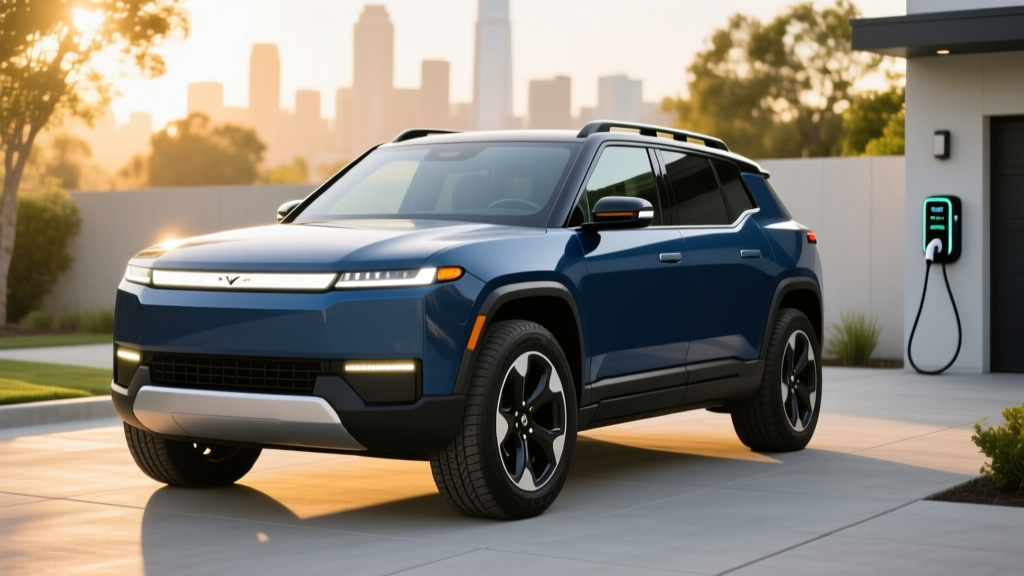
If you've spent any time in an EV forum, you've seen the question: Is the Rivian R1S actually reliable? It's fair. Rivian is still a young automaker, and the R1S — a three-row, body-on-frame electric SUV — was one of its first production vehicles. But by the 2026 model year, the R1S has matured significantly. Rivian rolled out its second-generation platform with a new electrical architecture, in-house drive units, and software refinements that address many of the early-build gremlins reported by 2022–2023 owners.
This review puts the 2026 Rivian R1S under the microscope — not just for reliability data, but for the specs that actually determine whether you'll enjoy living with one: real-world range, charging speed, ownership economics, and how it stacks up against the Tesla Model X and other three-row EV SUVs.
2026 Rivian R1S at a Glance: Key Specs
| Spec | Value |
|---|---|
| EPA Range | 270 mi (Standard) / 352 mi (Large) / 410 mi (Max) |
| Battery Capacity (usable) | 92 kWh (Standard, LFP) / 109 kWh (Large, NMC) / 141 kWh (Max, NMC) |
| Drivetrain | Dual-Motor AWD (standard); Quad-Motor AWD (optional) |
| Horsepower | 533 hp (Dual) / 1,025 hp (Quad) |
| 0–60 mph | 4.5 sec (Dual) / 3.0 sec (Quad) |
| Max DC Fast Charge | 200 kW (Standard) / 220 kW (Large/Max) |
| 10–80% DC Time | ~27 min (Standard) / ~21 min (Large) / ~30 min (Max) |
| Level 2 Home Charging | 11.5 kW (~30 mi/hr) |
| MPGe (Combined) | 73 MPGe (Dual-Motor Large) |
| Towing Capacity | 7,700 lbs |
| Base MSRP | $79,900 (Dual-Motor Standard) |
| Battery/Powertrain Warranty | 8 years / 100,000 miles |
Real-World Range: What the EPA Number Doesn't Tell You
The 2026 R1S offers three battery packs, and the EPA range varies dramatically depending on which one you choose. The headline number — 410 miles on the Max Pack — is genuinely impressive for a 6,000+ pound SUV. But as with every EV, the sticker is a best-case scenario.
EPA Estimate: 270 mi (Standard) / 352 mi (Large) / 410 mi (Max)
Highway (70 mph, moderate temps): Expect ~230 mi / ~300 mi / ~340 mi respectively
Cold Weather (below 32°F): Deduct 20–30% — the Max Pack drops to ~285–325 mi
Towing (5,000+ lb trailer): Range roughly halves to ~135–200 mi depending on pack
The R1S's boxy shape and weight work against it at highway speeds, where aerodynamic drag dominates. In EPA testing, the Dual-Motor Large Pack achieves 73 MPGe combined (roughly 46 kWh/100 mi), but sustained 75-mph driving will consume closer to 50–55 kWh/100 mi. If your commute is mostly suburban stop-and-go, you'll actually beat the EPA combined figure thanks to regenerative braking.
Cold weather hits the R1S harder than some competitors because of its large cabin volume to heat. Rivian does include a heat pump (standard on all 2026 models), which mitigates winter range loss compared to resistive heating — but expect a meaningful 20–30% reduction when temperatures drop below freezing. Preconditioning the battery while plugged in is essential to preserve range and enable peak charging speeds in cold weather.
Charging Speed: DC Fast Charging and Home Setup
Rivian upgraded the 2026 R1S to accept up to 220 kW on DC fast chargers (Large and Max packs), a meaningful improvement over the ~190 kW peak of the first-generation platform. The Standard Pack with its LFP chemistry peaks at around 200 kW. Here's how that translates to actual charging time:
| Charging Level | Power | Speed / Time |
|---|---|---|
| Level 1 (120V household) | ~1.4 kW | ~3–4 mi/hr (overnight top-up only) |
| Level 2 (240V home, 48A) | 11.5 kW | ~30 mi/hr (full charge in 8–12 hrs) |
| DC Fast (Standard Pack) | Peak 200 kW | 10–80% in ~27 min |
| DC Fast (Large Pack) | Peak 220 kW | 10–80% in ~21 min |
| DC Fast (Max Pack) | Peak 220 kW | 10–80% in ~30 min (larger battery) |
A critical nuance: peak kW is not sustained kW. The R1S will hit 220 kW only in a narrow state-of-charge window (roughly 15–35% SoC on the Large Pack). Above 60%, the charge curve tapers significantly, and above 80%, it slows to under 50 kW to protect battery health. This is normal for all lithium-ion EVs, but it means a 10–90% session takes considerably longer than the 10–80% figure suggests.
The R1S ships with the NACS (Tesla-style) connector as standard for 2026, giving you direct access to Tesla Supercharger stations — currently the most reliable and widespread DC fast-charging network in the U.S. Rivian's own Adventure Network is also expanding along popular outdoor-recreation corridors.
For home charging, you'll want a 48-amp Level 2 wall connector on a 60-amp dedicated circuit. Expect a professional installation to cost $800–$2,000 depending on your electrical panel's proximity to the garage and whether a panel upgrade (to 200A service) is needed. At 11.5 kW, the R1S recovers roughly 30 miles of range per hour — enough to fully replenish even the Max Pack overnight.
Reliability Track Record: What Owners Report
Rivian doesn't have the multi-decade track record of Toyota or Honda, and that's the honest starting point. However, the 2026 R1S benefits from several generational improvements:
- In-house drive units: Rivian replaced the earlier Bosch-supplied motors with its own design, reducing complexity and part-count.
- New electrical architecture: Fewer ECUs (electronic control units) and simplified wiring harnesses mean fewer potential failure points.
- Software maturity: Most early-build complaints (phantom drain, sensor calibration errors, infotainment glitches) have been resolved through over-the-air updates and hardware revisions.
- LFP option: The Standard Pack's lithium iron phosphate battery has a longer cycle life and is less prone to degradation than NMC — Rivian expects it to retain well over 90% capacity after 150,000 miles.
That said, owner surveys from sources like Consumer Reports have historically placed Rivian in the middle-to-lower tier for predicted reliability, largely driven by early-build issues. The 2026 model year is too new for long-term data, but the trajectory is positive. Common complaints on 2022–2024 models included wind noise from door seals, 12V battery failures (a problem shared across the EV industry), and occasional suspension-related noises from the complex air-suspension system.
The air suspension — standard on most trims — is both a blessing and a potential reliability concern. It provides excellent ride quality and adjustable ground clearance (from 6.4 to 14.9 inches), but air struts are wear items that typically need replacement between 80,000–120,000 miles on any vehicle. Budget accordingly if you plan to keep the R1S long-term past the warranty period.
Pricing, Trims, and Federal Tax Credit Eligibility
The 2026 R1S lineup starts at $79,900 for the Dual-Motor Standard battery and climbs to over $110,000 for a fully optioned Quad-Motor Max Pack. Here's how the trims break down:
| Trim / Configuration | MSRP | Federal §30D Credit Eligible? |
|---|---|---|
| Dual-Motor Standard (LFP) | $79,900 | No — MSRP exceeds $80,000 SUV cap by destination |
| Dual-Motor Large (NMC) | $87,900 | No — exceeds $80,000 SUV cap |
| Dual-Motor Max (NMC) | $96,900 | No — exceeds $80,000 SUV cap |
| Quad-Motor Large (NMC) | $99,900 | No — exceeds $80,000 SUV cap |
This is a genuine drawback versus the Tesla Model X (which also doesn't qualify due to its own pricing) and more affordable three-row options like the Kia EV9, which does land under the cap on select trims and can receive the full $7,500 credit — bringing its effective price well below the R1S.
Interior Space, Tech, and Daily Livability
The R1S seats up to seven passengers (2+3+2 layout) or six with optional second-row captain's chairs. Cargo volume is generous:
- Behind third row: 20.0 cu ft
- Behind second row (third row folded): 57.0 cu ft
- Maximum (all rear seats folded): 104.7 cu ft
- Front trunk (frunk): 11.0 cu ft — lockable, drainable, ideal for muddy gear
Second-row legroom is 38.4 inches — adequate for adults on shorter trips. The third row is best suited for children or occasional use, with 30.5 inches of legroom. If regular seven-passenger hauling is a priority, the Tesla Model X offers slightly more third-row space, and the Kia EV9 is competitive at a lower price point.
On the tech front, the R1S runs Rivian's proprietary infotainment system on a 15.6-inch center touchscreen. It's responsive and well-designed, with native integration for route planning that factors in charging stops and battery preconditioning. Wireless Apple CarPlay and Android Auto are standard. The 12.3-inch digital driver display and available head-up display round out the cockpit.
Driver assistance comes via Rivian's Driver+ system, which includes adaptive cruise control, lane-centering, and automatic lane changes on divided highways. This is an SAE Level 2 system — you must keep your hands on the wheel and eyes on the road at all times. It's competent but doesn't match the hands-free capability of GM's Super Cruise or Ford's BlueCruise on mapped highways.
Pros and Cons: The Honest Verdict
- Class-leading 410-mile Max Pack range
- Genuine off-road capability (14.9" ground clearance, wading to 36")
- 7,700-lb towing capacity
- NACS connector = Supercharger access
- Massive frunk + flexible cargo
- Strong build quality on 2026 models
- LFP battery option for longevity
- No federal tax credit eligibility (MSRP cap)
- Third row is tight for adults
- Air suspension is a long-term wear item
- High starting price vs. Kia EV9
- Limited service center footprint in some regions
- Driver+ is competent but not hands-free
- Efficiency suffers at highway speed
Who Should Buy the Rivian R1S?
Look elsewhere if: You need a regularly usable third row for adults (check the Model X or EV9), you want hands-free highway driving (GM Super Cruise), you're counting on the $7,500 tax credit to make the math work (Kia EV9), or you don't have reliable home charging access.
The R1S occupies a unique niche: it's the EV that serious outdoor enthusiasts and adventure-oriented families have been waiting for. No other electric SUV matches its combination of range, off-road chops, towing capacity, and cargo flexibility. If that's your use case, the reliability improvements in the 2026 model year make it a far more confident purchase than the early-build vehicles.
Frequently Asked Questions
What is the real-world range of the Rivian R1S?
The EPA rates the 2026 R1S at 270 mi (Standard), 352 mi (Large), or 410 mi (Max). In real-world highway driving at 70 mph, expect roughly 230, 300, and 340 miles respectively. Cold weather below freezing reduces range by an additional 20–30%. Towing cuts range roughly in half.
How fast does the R1S charge at home and on the road?
At home on a 240V Level 2 charger (48A), the R1S charges at 11.5 kW, adding about 30 miles of range per hour — a full overnight charge. On DC fast chargers, the Large Pack peaks at 220 kW and reaches 10–80% in approximately 21 minutes. The Standard Pack peaks at 200 kW with a 10–80% time of about 27 minutes.
Does the 2026 Rivian R1S qualify for the $7,500 federal EV tax credit?
No. Under current IRS §30D rules, SUVs must have an MSRP at or below $80,000. The R1S starts at $79,900 before destination charges, which pushes it over the cap. No 2026 R1S trim currently qualifies. Always verify current rules at IRS.gov, as regulations can change.
Is the Rivian R1S worth buying over the Tesla Model X or Kia EV9?
It depends on your priorities. The R1S beats both on off-road capability, ground clearance, and adventure features (frunk, wading depth, camp mode). The Model X offers more third-row space, faster acceleration, and a more mature Supercharger-integrated experience. The Kia EV9 costs $25,000+ less, qualifies for the federal tax credit on eligible trims, and offers competitive range — but can't tow as much or handle trails. For adventure families, the R1S is the strongest choice. For budget-conscious three-row buyers, the EV9 is hard to beat.
What is the battery warranty on the Rivian R1S?
Rivian covers the R1S battery pack and powertrain for 8 years or 100,000 miles, whichever comes first. The warranty guarantees the battery will retain a minimum percentage of its original capacity (typically 70%) during that period. The rest of the vehicle carries a 5-year/60,000-mile bumper-to-bumper warranty.
How reliable is the R1S compared to other EVs?
The 2026 R1S represents Rivian's second-generation platform with significant improvements in electrical architecture, drive units, and software. Early-build models (2022–2023) had more reported issues, including 12V battery failures and suspension noise. Current reliability is trending positively, but Rivian still lacks the long-term track record of legacy automakers. The LFP battery option on the Standard Pack offers excellent long-term degradation characteristics. The air suspension system is a potential high-cost wear item outside the warranty period.