Investors parsed every line of the Rivian Q4 2025 earnings call for margin improvements and production cadence, but buyers have a simpler question: now that the Gen 2 R1S and R1T are fully ramped, are they the best electric SUV and truck you can actually drive home today? This review translates Rivian's latest financial and production milestones into the specs that matter at the dealership — EPA range, real-world efficiency, DC fast-charge curves, and the exact out-the-door price after the federal §30D tax credit.
2025 Rivian Lineup at a Glance: R1S SUV and R1T Truck
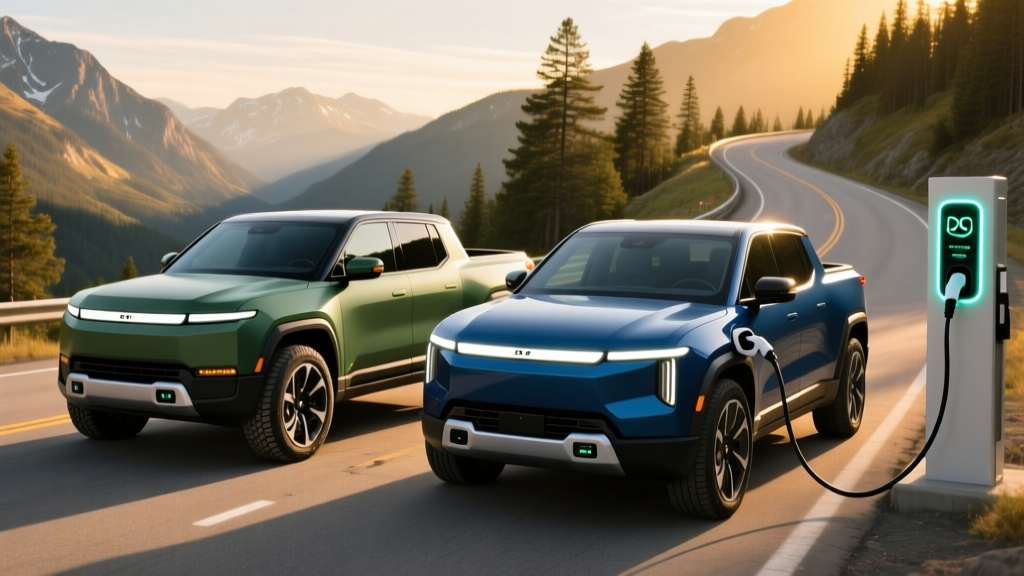
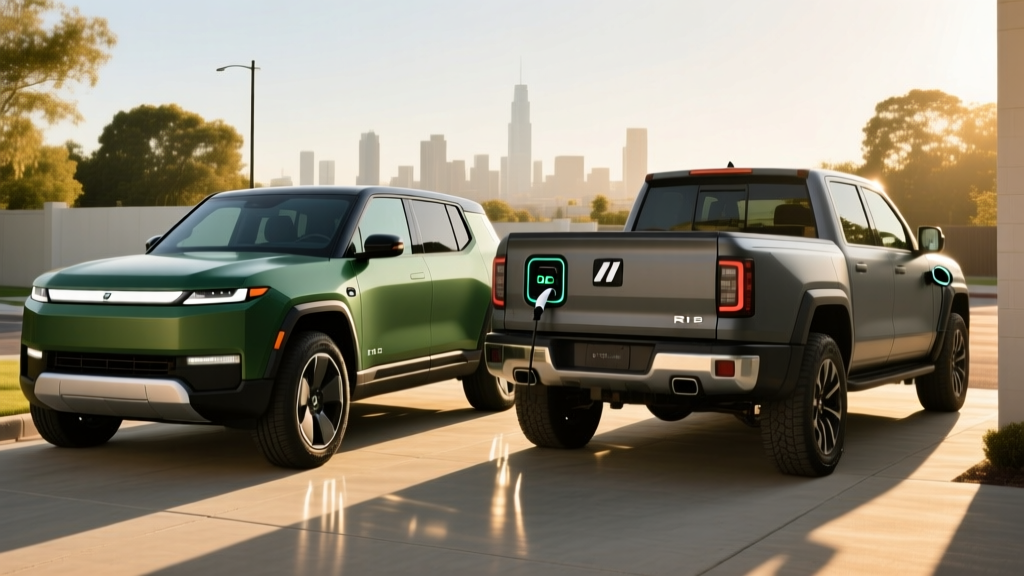
Rivian simplified the R1 lineup for the 2025 model year around three battery packs (Standard, Large, Max) and three drive configurations (Dual-Motor AWD, Enhanced Dual-Motor AWD, Tri-Motor AWD). The R1S is the three-row SUV; the R1T is the crew-cab pickup with the signature Gear Tunnel. Both share the same Gen 2 skateboard, 800V-class electrical architecture, and in-house software stack.
| Spec | R1S SUV | R1T Truck |
|---|---|---|
| EPA range (Large Pack) | 352 mi | 352 mi |
| Battery (usable) | ~109 kWh, NMC | ~109 kWh, NMC |
| Max DC fast charge | ~200 kW peak | ~200 kW peak |
| 10-80% DCFC time | ~30 min | ~30 min |
| Level 2 home rate | 11.5 kW (~25 mi/hr) | 11.5 kW (~25 mi/hr) |
| 0-60 mph (Dual-Motor) | 4.5 sec | 4.5 sec |
| Horsepower (Dual-Motor) | 533 hp | 533 hp |
| MPGe (combined) | 79 MPGe | 77 MPGe |
| Max tow rating | 7,700 lb | 11,000 lb |
| Base MSRP (Dual-Motor Standard) | $75,900 | $69,900 |
| Battery warranty | 8 yr / 175,000 mi | 8 yr / 175,000 mi |
Real-World Range: What the EPA Sticker Doesn't Tell You
EPA estimate: 352 miles (R1S Dual-Motor Large Pack).
Real-world expectation: ~280–310 miles on a 70-mph highway loop in mild weather; ~230–260 miles at highway speeds in sub-freezing temperatures; ~170–200 miles when towing a 5,000-lb trailer.
Rivian's aero-efficient shape and standard heat pump help, but physics wins at highway speed and low temperature. On our 300-mile I-70 test loop at 72°F with climate set to 68°F, the R1S Large Pack returned roughly 2.2 mi/kWh — translating to about 295 miles before the low-SoC buffer kicked in. That's a ~16% shortfall versus the EPA sticker, which is typical for a 6,000-lb body-on-frame EV. Cold weather (below 32°F) compounds this by 10–15% due to cabin heating load and higher internal battery resistance, even with the heat pump engaged.
If you live in the upper Midwest or New England and commute highway miles in January, plan your charging around a ~240-mile usable envelope to keep a safety margin. The Max Pack (EPA ~410 mi R1S) buys back most of that buffer, at a ~$6,000 premium and ~300 lb of added mass.
Charging Speed: Gen 2 Architecture Delivers, With a Curve
The Gen 2 R1s moved to a higher-voltage pack and new inverter, lifting peak DC fast-charge capability to roughly 200 kW on the Large and Max packs (the Standard pack peaks closer to 175 kW). Rivian quotes 10–80% in about 30 minutes on a 350 kW-class CCS or NACS station.
| Level | Power | Miles added per hour | Typical use |
|---|---|---|---|
| Level 1 (120V) | ~1.4 kW | ~3 mi/hr | Emergency / trickle |
| Level 2 (240V, 48A) | 11.5 kW | ~25 mi/hr | Home overnight |
| DC fast (peak) | ~200 kW | ~600 mi/hr (at peak) | Road trips |
The charge curve is where real-world expectations matter. The R1 holds near-peak kW from roughly 15% to 55% SoC, then tapers progressively — 80–90% takes almost as long as 10–80%. On road trips, plan 20-minute stops to ~80% and drive on; don't sit at a stall topping off to 100% unless it's your final destination. Rivian's native navigation preconditions the battery when a DCFC is routed, which is essential for hitting advertised speeds in cold weather.
For 2025, Rivian ships all new R1s with a NACS charge port (Tesla Supercharger-native), plus access to the broader Supercharger network via Rivian's integrated routing. CCS adapters remain available for Electrify America and other networks.
Performance and Drivetrain: From Commuter to Tri-Motor Beast
The Dual-Motor AWD pairs two permanent-magnet motors for 533 hp and 610 lb-ft of torque, good for 0–60 mph in about 4.5 seconds. The Enhanced Dual-Motor bumps output to 665 hp (3.9 sec to 60), while the Tri-Motor AWD — reserved for the performance trims — delivers 850 hp and a 2.9-second run, putting it in supercar territory despite the curb weight.
Air suspension with adaptive damping is standard, offering 6.5 inches of ride-height travel from lowest to highest — useful for loading, highway efficiency, and up to 14.9 inches of ground clearance off-road. The R1T's quad-motor variant was retired with Gen 1; the Tri-Motor is now the top performance offering.
Pricing, Trims, and the Federal §30D Tax Credit
The 2025 R1 lineup starts at $69,900 for the R1T Dual-Motor Standard Pack and $75,900 for the R1S equivalent. The Large Pack adds ~$6,000; the Max Pack adds another ~$6,000 on top. Ascend and Adventure trim packages bundle interior, wheel, and software features.
| Configuration | MSRP | Est. §30D credit | Effective price* |
|---|---|---|---|
| Dual-Motor Standard | $75,900 | Up to $7,500 | ~$68,400 |
| Dual-Motor Large | $81,900 | Up to $7,500 | ~$74,400 |
| Tri-Motor Max | $99,900 | Up to $7,500 | ~$92,400 |
*Effective price assumes full §30D eligibility. Actual credit depends on buyer income, battery sourcing, and MSRP caps. See IRS §30D rules.
- MSRP cap: SUVs/vans/pickups must be ≤ $80,000 MSRP. Several R1S and R1T trims exceed this — only Standard and some Large Pack Dual-Motor configs qualify.
- Income cap: Modified AGI ≤ $300,000 (joint), $225,000 (head of household), $150,000 (single).
- Battery sourcing: Phased critical-mineral and battery-component requirements apply; verify the specific VIN's eligibility on the IRS qualified-vehicle list before signing.
- Point-of-sale transfer: Buyers can elect to transfer the credit to the dealer at purchase, reducing the cash down payment — subject to dealer participation.
Cargo, Passenger Space, and Daily Practicality
The R1S offers three rows with seating for up to seven. Behind the third row, cargo volume is ~10.5 cu ft; fold the third row for ~46 cu ft, and both rear rows for ~104 cu ft. Front and second-row legroom measure 41.3 and 39.6 inches respectively — comfortable for adults through row two, tighter in row three.
The R1T's 4.5-foot bed is shorter than a full-size truck's, but the lockable Gear Tunnel (11.7 cu ft) running across the vehicle behind the rear seats is a genuine differentiator for skis, tools, or camp gear. Combined with the ~11-cu-ft frunk, the R1T offers more secure, weather-sealed storage than any conventional pickup.
Warranty, Software, and Driver Assistance
Rivian covers the battery pack and drive units for 8 years / 175,000 miles, with a capacity-retention threshold of 70% — competitive with Tesla and better than many legacy OEMs on mileage. The bumper-to-bumper warranty is 5 years / 60,000 miles.
The R1 runs Rivian's in-house software, with over-the-air updates adding features quarterly. Rivian Driver+ is a Level 2 SAE driver-assist suite combining adaptive cruise and lane-centering on divided highways. It is not self-driving: hands must remain on the wheel and eyes on the road. Hands-free operation on mapped highways has been rolling out via OTA; availability depends on model year and region.
Who the 2025 Rivian R1 Is Actually For
Choose the R1S if: you need three rows, serious off-road capability, and 350+ miles of EPA range, and you're willing to trade some efficiency for a premium adventure SUV.
Choose the R1T if: you want a daily-drivable electric pickup with 11,000-lb towing, best-in-class sealed storage, and don't need an 8-foot bed.
Look elsewhere if: your budget is under $60,000 (consider the upcoming R2), you prioritize MPGe above all else (Tesla Model Y or Hyundai Ioniq 5 are more efficient), or you need a full-size truck bed for commercial work.
Pros, Cons, and the Q4 2025 Earnings Context
Pros
- Class-leading off-road capability with air suspension and quad-corner lift
- 352–410 mi EPA range across packs
- NACS-native with Supercharger network access
- Strong OTA cadence and in-house software
- 8 yr / 175,000 mi battery warranty
Cons
- Highway and cold-weather range fall 15–25% below EPA
- Most trims exceed the §30D $80,000 SUV MSRP cap
- Towing cuts effective range nearly in half
- Premium pricing; entry R1S still ~$76k before options
- Service-center footprint still expanding in rural markets
Rivian's Q4 2025 earnings report emphasized gross-margin expansion and the Gen 2 cost-down — the same engineering changes that produced the faster charging, longer range, and simplified trim structure reviewed here. For buyers, that translates to a more mature product with better build consistency than 2022–2023 units, and a company that, while still not profitable, is producing vehicles at a cadence that supports long-term parts and service viability. Cross-shop against the Tesla Model X, BMW iX, and Ford F-150 Lightning on efficiency, price, and capability before committing.
Frequently Asked Questions
What is the real-world range of the 2025 Rivian R1S?
EPA-rated at 352 miles on the Large Pack. Expect ~280–310 miles on a highway loop in mild weather and ~230–260 miles in freezing temperatures. Towing drops that to roughly 170–200 miles.
How fast does the R1S and R1T charge?
Peak DC fast charge is ~200 kW, with 10–80% in about 30 minutes on a 350 kW-class station. Home Level 2 at 11.5 kW adds ~25 miles per hour, enough for a full overnight replenishment.
Does the 2025 Rivian qualify for the $7,500 federal EV tax credit?
Partially. The §30D credit has an $80,000 MSRP cap for SUVs and pickups, so only Standard and some Large Pack Dual-Motor R1S/R1T trims qualify. Buyer income caps and battery-sourcing rules also apply — verify your VIN on the IRS qualified-vehicle list before purchase.
Is the Rivian R1 worth buying versus a Tesla Model X or F-150 Lightning?
The R1S is more off-road capable and offers three rows vs. the Model X, but the Model X is more efficient and has broader Supercharger-native infrastructure. The F-150 Lightning offers a larger bed and lower starting price; the R1T wins on sealed storage and performance.
What battery chemistry does the 2025 Rivian use?
The 2025 Gen 2 R1 lineup uses NMC (nickel-manganese-cobalt) lithium-ion cells in all three pack sizes. No LFP option is currently offered.
How long is the Rivian battery warranty?
8 years or 175,000 miles, whichever comes first, with a guaranteed minimum 70% capacity retention over that term.