Rivian's 2026 Lineup: Scaling Production, Refining the Platform
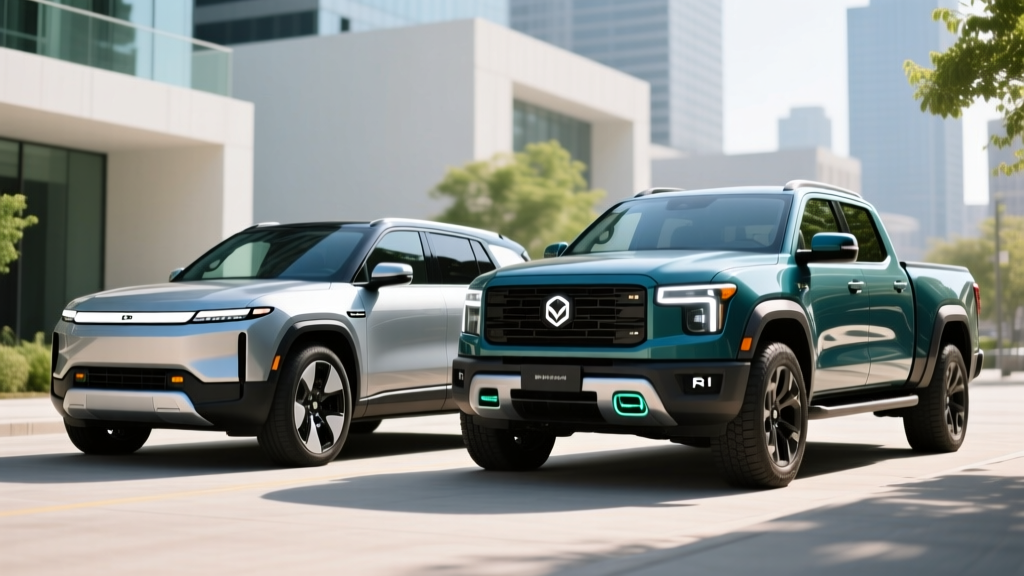
Rivian enters 2026 at a pivotal inflection point. The second-generation R1S SUV and R1T pickup — comprehensively redesigned for the 2025 model year with a new electrical architecture, updated battery chemistries, and tri-motor powertrains — are now rolling off the Normal, Illinois assembly line at a pace that finally matches demand. For buyers and investors tracking Rivian production numbers, the story in 2026 is one of maturation: the company delivered roughly 57,000 vehicles in 2024, and with the addition of the smaller R2 crossover (slated for the new Georgia plant in 2028 and Normal production in late 2026), Rivian's manufacturing footprint is expanding rapidly.
But production volume only matters if the product delivers. We've spent time with the 2026 R1S and R1T Dual-Motor and Tri-Motor variants to evaluate whether Rivian's flagship vehicles justify their premium positioning against the Tesla Model X, Ford F-150 Lightning, Lucid Gravity, and Chevrolet Silverado EV. Here's everything you need to know — exact specs, real-world range, charging curves, and tax-credit math included.
2026 Rivian R1S and R1T: Core Specifications at a Glance
| Spec | R1S Dual-Motor (Standard) | R1S Tri-Motor | R1T Dual-Motor (Standard) | R1T Tri-Motor |
|---|---|---|---|---|
| EPA Range | 270 mi | 420 mi (Max Pack) | 270 mi | 420 mi (Max Pack) |
| Battery (usable) | ~92 kWh (LFP) | ~149 kWh (NMC) | ~92 kWh (LFP) | ~149 kWh (NMC) |
| Horsepower | 533 hp | 850 hp | 533 hp | 850 hp |
| 0–60 mph | 4.5 sec | 2.9 sec | 4.5 sec | 3.0 sec |
| Drivetrain | AWD (dual-motor) | AWD (tri-motor) | AWD (dual-motor) | AWD (tri-motor) |
| Max DC Fast Charge | 200 kW | 220 kW | 200 kW | 220 kW |
| 10–80% DC Time | ~25 min | ~30 min | ~25 min | ~30 min |
| Level 2 Home Charging | 11.5 kW (~31 mi/hr) | 11.5 kW (~31 mi/hr) | 11.5 kW (~31 mi/hr) | 11.5 kW (~31 mi/hr) |
| Towing Capacity | 7,700 lb | 7,700 lb | 11,000 lb | 11,000 lb |
| Base MSRP | $71,700 | $99,700 | $69,900 | $97,900 |
| Battery/Powertrain Warranty | 8 yr / 175,000 mi | 8 yr / 175,000 mi | 8 yr / 175,000 mi | 8 yr / 175,000 mi |
Range, Efficiency, and the Real-World Reality Check
Rivian offers three battery configurations for 2026: the Standard Pack (LFP chemistry, ~92 kWh usable), the Large Pack (NMC, ~116 kWh), and the Max Pack (NMC, ~149 kWh). The headline number is the 420-mile EPA rating on the R1S and R1T Max Pack — a figure that places Rivian at the top of the electric truck and three-row SUV segment.
EPA Sticker: Up to 420 miles (Max Pack, R1S Dual-Motor)
Highway (70–75 mph, moderate temps): Expect ~330–360 miles. The R1's boxy aerodynamics and 6,000+ lb curb weight exact a toll at sustained speed.
Cold Weather (below 32°F): Plan for 20–30% reduction. A 420-mile Max Pack may deliver 290–335 miles in freezing conditions, even with the heat pump and battery preconditioning active.
Towing: Pulling a 5,000-lb trailer cuts range roughly in half — expect 180–210 miles on the Max Pack.
Efficiency varies significantly by configuration. The R1S Dual-Motor Standard Pack returns approximately 69 MPGe combined (per fueleconomy.gov), translating to roughly 48 kWh/100 mi. The Max Pack variants, despite their larger batteries, see efficiency drop to around 60–63 MPGe due to the substantial weight increase — the Max Pack adds roughly 500 lb over the Standard.
The LFP chemistry in the Standard Pack deserves special attention. LFP (lithium iron phosphate) trades energy density for longevity and thermal stability. Rivian recommends charging LFP packs to 100% regularly — unlike NMC, which benefits from an 80% daily ceiling. For daily commuters with home charging, the Standard Pack's ~270-mile range and LFP durability make it a pragmatic, lower-cost entry point.
Charging Speed: DC Fast Charging and Home Setup
Rivian's second-generation platform supports CCS1 (via the NACS adapter included with new vehicles) and native NACS on vehicles built after mid-2025. The charging architecture represents a meaningful step up from the first-generation R1's 200 kW ceiling, though it still trails the Hyundai Ioniq 5's 350 kW peak and the Lucid Air's 300+ kW capability.
| Charging Level | Power / Rate | Miles Added per Hour | Notes |
|---|---|---|---|
| Level 1 (120V, 12A) | ~1.4 kW | ~3–4 mi/hr | Emergency/trickle only |
| Level 2 (240V, 48A) | 11.5 kW | ~31 mi/hr | Full charge overnight (~9–13 hrs depending on pack) |
| DC Fast (Standard/Large Pack) | Peak 200 kW | ~250 mi in 30 min | 10–80% in ~25 min; tapers sharply above 85% |
| DC Fast (Max Pack) | Peak 220 kW | ~280 mi in 30 min | 10–80% in ~30 min; larger battery sustains peak longer |
A critical nuance for road-trippers: peak charge rate is not sustained rate. The R1 Tri-Motor Max Pack hits 220 kW briefly between 10–30% state of charge, then steps down progressively. By 60% SoC, you're typically seeing 130–150 kW; by 80%, it drops to ~60 kW. This charge-curve taper means the 10–80% time of roughly 30 minutes is realistic, but charging from 80–100% on DC fast charging can add another 35–45 minutes. Plan your stops accordingly, and use Rivian's built-in route planner, which preconditioning the battery ahead of arrival at a charger.
At home, the 11.5 kW onboard charger is competitive. A full Level 2 installation on a 60-amp circuit (requiring a 48-amp continuous charger) will replenish the Standard Pack in about 9 hours and the Max Pack in roughly 14 hours. Most owners will wake up to a full battery every morning with a standard overnight charge window.
Production Numbers, Delivery Timelines, and What They Mean for Buyers
Tracking Rivian production numbers is essential context for anyone considering a purchase. Here's where things stand entering 2026:
- 2024 total deliveries: ~57,000 vehicles (R1S + R1T + EDV commercial vans)
- 2025 estimated production: ~65,000–70,000 vehicles, driven by second-gen R1 ramp-up
- 2026 outlook: Rivian has guided toward 80,000+ units, with R2 production expected to begin at the Normal facility in late 2026 ahead of the Georgia plant opening
- Current wait times (early 2026): R1 Dual-Motor Standard configurations: 4–8 weeks. Tri-Motor and Max Pack builds: 8–14 weeks, varying by color and option selection
For buyers, the production ramp has two practical implications. First, delivery timelines have shortened considerably compared to the 6–12 month waits of 2022–2023. Second, Rivian's increasing volume has improved service center capacity and parts availability — a genuine pain point for early adopters that the company has addressed with expanded mobile service and new facilities in key metro areas.
Pricing, Trims, and Federal Tax Credit Eligibility
The 2026 Rivian lineup spans a wide price band depending on battery, motor configuration, and options. Here's the current pricing structure and how the federal EV tax credit factors in:
| Configuration | Base MSRP | As-Tested (Typical Options) | §30D Credit Eligibility | Effective Price (with credit) |
|---|---|---|---|---|
| R1T Dual-Motor Standard | $69,900 | $74,000–$78,000 | Eligible (up to $7,500) | ~$62,400–$70,500 |
| R1S Dual-Motor Standard | $71,700 | $76,000–$82,000 | Eligible (up to $7,500) | ~$64,200–$74,500 |
| R1T Dual-Motor Large | $77,900 | $82,000–$88,000 | Eligible (up to $7,500) | ~$70,400–$80,500 |
| R1T Tri-Motor Max | $97,900 | $102,000–$110,000 | Eligible (up to $7,500) | ~$90,400–$102,500 |
| R1S Tri-Motor Max | $99,700 | $104,000–$115,000 | Eligible (up to $7,500) | ~$92,200–$107,500 |
- MSRP Cap: Vans, SUVs, and pickup trucks must have an MSRP at or below $80,000. The R1T qualifies as a pickup; the R1S qualifies as an SUV. Tri-Motor Max configurations exceeding $80,000 MSRP are not eligible.
- Buyer Income Cap: Modified AGI must not exceed $300,000 (married filing jointly), $225,000 (head of household), or $150,000 (single).
- Battery Sourcing: Critical minerals and battery component requirements tighten annually. Rivian's LFP Standard Pack sources from supply chains that may not fully meet 2026 critical-mineral thresholds — confirm eligibility at the point of sale.
- Point-of-Sale Transfer: The credit can be applied as a down-payment reduction at the dealer, subject to eligibility verification.
Key takeaway: The Dual-Motor Standard and Large Pack configurations under the $80,000 MSRP cap offer the best path to the full $7,500 credit. Tri-Motor Max builds blow past the cap and forfeit the credit entirely, making the effective price gap between Large and Max packs even steeper.
Performance, Interior Space, and Daily Ownership
The performance gap between Rivian's Dual-Motor and Tri-Motor configurations is enormous. The Dual-Motor's 533 hp and 4.5-second 0–60 time are genuinely quick for a 6,000-lb vehicle — it'll merge onto highways and overtake with zero drama. The Tri-Motor's 850 hp and sub-3-second sprint borders on absurd for a vehicle with a truck bed or third-row seating. In practice, the Dual-Motor is the rational choice; the Tri-Motor is an emotional one.
Cargo and passenger space:
- R1S (3-row SUV): 11.5 cu ft behind the third row, 46.7 cu ft behind the second row, 104.7 cu ft total with both rear rows folded. Third-row legroom is 30.4 inches — adequate for children, tight for adults on long trips.
- R1T (crew-cab pickup): 4.5-foot bed (54 inches), plus the signature Gear Tunnel (11.7 cu ft of lockable, pass-through storage behind the cab). The bed is shorter than a full-size truck's, but the Gear Tunnel is a genuinely innovative space that competitors don't offer.
- Frunk: Both R1S and R1T offer an 11-cu-ft front trunk, large enough for charging cables, a weekend bag, or groceries.
Tech and driver assists: Rivian runs a proprietary infotainment system on a 15.6-inch landscape display with an integrated 12.3-inch instrument cluster. The system is responsive and visually polished, though it lacks Apple CarPlay and Android Auto — a deliberate choice by Rivian that remains divisive. Wireless phone charging, a 6,000-watt Camp Kitchen option (R1T), and over-the-air updates are standard.
Rivian's Highway Assist is a Level 2 driver-assistance system (SAE classification) combining adaptive cruise control and lane centering. It performs competently on well-marked interstates but requires continuous driver supervision — this is not a hands-off or "self-driving" system. There is no hands-free mode comparable to GM's Super Cruise or Ford's BlueCruise.
Rivian Highway Assist is an SAE Level 2 system. The driver must keep hands on the wheel and eyes on the road at all times. It does not handle construction zones, unmapped routes, or complex merges autonomously. It is a convenience feature, not an autonomous driving system.
How the Rivian R1S and R1T Stack Up Against Competitors
At these price points, the R1S and R1T compete in distinct but overlapping segments. Here's how they compare to the most relevant alternatives:
- vs. Tesla Model X: The Model X offers more range (up to 335 mi EPA), faster Supercharger access, and a more mature driver-assist system. But the R1S provides superior off-road capability, a more conventional SUV design, and significantly better build quality consistency.
- vs. Ford F-150 Lightning: The Lightning is cheaper (starting ~$55,000) and has a larger bed. The R1T counters with the Gear Tunnel, better performance, more refined ride quality, and a more premium interior. The Lightning wins on value; the R1T wins on capability-per-dollar at the premium end.
- vs. Chevrolet Silverado EV: The Silverado EV (4WT and RST trims) offers a massive 400+ mile range and a larger bed, but its interior and infotainment feel a generation behind Rivian's. The R1T is the more polished daily driver.
- vs. Lucid Gravity (SUV): The Gravity offers 440+ miles of range and luxury sedan refinement in a three-row package, but it lacks any serious off-road pretension and starts at a higher price. Different missions entirely.
Pros, Cons, and the Final Verdict
- Class-leading 420-mile Max Pack range
- Excellent build quality and thoughtful design details (Gear Tunnel, Camp Kitchen)
- Strong off-road capability with air suspension and quad-motor torque vectoring
- 8-year/175,000-mile battery warranty exceeds industry standard
- LFP Standard Pack offers affordable entry with 100% daily charging
- OTA updates continuously add features and refine performance
- Tri-Motor Max configurations exceed $80K MSRP cap — no federal tax credit
- No Apple CarPlay or Android Auto
- Highway Assist lags behind Super Cruise and BlueCruise in hands-free capability
- Max Pack charging times are long due to 149 kWh battery and 220 kW peak
- Third-row space in the R1S is tight for adults
- R1T bed is shorter than full-size truck competitors (4.5 ft vs. 5.5–6.5 ft)
Choose the R1S if: You need a three-row electric SUV with genuine off-road capability, value premium build quality, and can accept the third-row space limitation. The Dual-Motor Large Pack at ~$77,900 (eligible for the $7,500 credit) is the sweet spot.
Choose the R1T if: You want an electric pickup that excels as a daily driver first and a truck second. The Gear Tunnel is a standout feature for outdoor enthusiasts. The Dual-Motor Standard at $69,900 with the tax credit drops the effective price to ~$62,400 — a compelling entry.
Look elsewhere if: You need a full-size truck bed for work (Silverado EV or Lightning), you prioritize hands-free highway driving (GM Super Cruise vehicles), or you need the absolute longest range in an SUV (Lucid Gravity).
Frequently Asked Questions
What is the real-world range of the 2026 Rivian R1S and R1T?
The EPA rates the Max Pack at 420 miles, but real-world highway driving at 70–75 mph yields approximately 330–360 miles. In freezing temperatures, expect a further 20–30% reduction. The Standard Pack's 270-mile EPA rating translates to roughly 210–230 miles on the highway in moderate conditions. If you regularly drive in cold climates or take long highway trips, the Large or Max Pack is strongly recommended.
How fast does the Rivian R1 charge at home and on the road?
At home on a Level 2 (240V, 48A) charger, the R1 adds about 31 miles of range per hour — a full overnight charge for any pack size. On DC fast chargers, the Standard and Large Packs peak at 200 kW (10–80% in ~25 minutes), while the Max Pack peaks at 220 kW (10–80% in ~30 minutes). Charging slows significantly above 80% SoC due to battery protection protocols.
How much does the 2026 Rivian cost after the federal tax credit?
Dual-Motor Standard configurations starting under $80,000 MSRP can qualify for the full $7,500 §30D credit, bringing the R1T to an effective ~$62,400 and the R1S to ~$64,200. However, eligibility depends on buyer income (under $300K joint AGI), battery sourcing compliance, and MSRP staying at or below $80,000. Tri-Motor Max configurations exceed the MSRP cap and do not qualify. Always verify current eligibility at IRS.gov before purchasing.
Does the Rivian R1 qualify for the federal EV tax credit in 2026?
Yes — but only certain configurations. The Dual-Motor Standard and Large Pack variants with MSRPs at or below $80,000 qualify, provided the buyer meets income requirements and the battery meets critical-mineral and component sourcing rules for the 2026 tax year. The §30D credit can be transferred to the dealer at the point of sale as a purchase-price reduction. Consult a tax professional for your specific situation.
Is the Rivian R1 worth buying over the Ford F-150 Lightning or Tesla Model X?
It depends on your priorities. The R1T offers a more refined, performance-oriented experience than the F-150 Lightning, with the unique Gear Tunnel and superior off-road capability — but at a higher price. The R1S competes with the Model X on range and tech but wins on build quality, off-road chops, and conventional SUV styling. If budget is the primary concern, the Lightning and Model Y are harder to beat. If you want a premium adventure vehicle, the Rivian is the segment leader.
What are Rivian's production numbers and delivery wait times in 2026?
Rivian produced approximately 57,000 vehicles in 2024 and guided toward 65,000–70,000 for 2025. For 2026, the company targets 80,000+ units, supported by the R2 production launch later in the year. Current delivery wait times for the R1 range from 4–8 weeks (Dual-Motor Standard) to 8–14 weeks (Tri-Motor Max), a significant improvement from the multi-month waits of prior years.