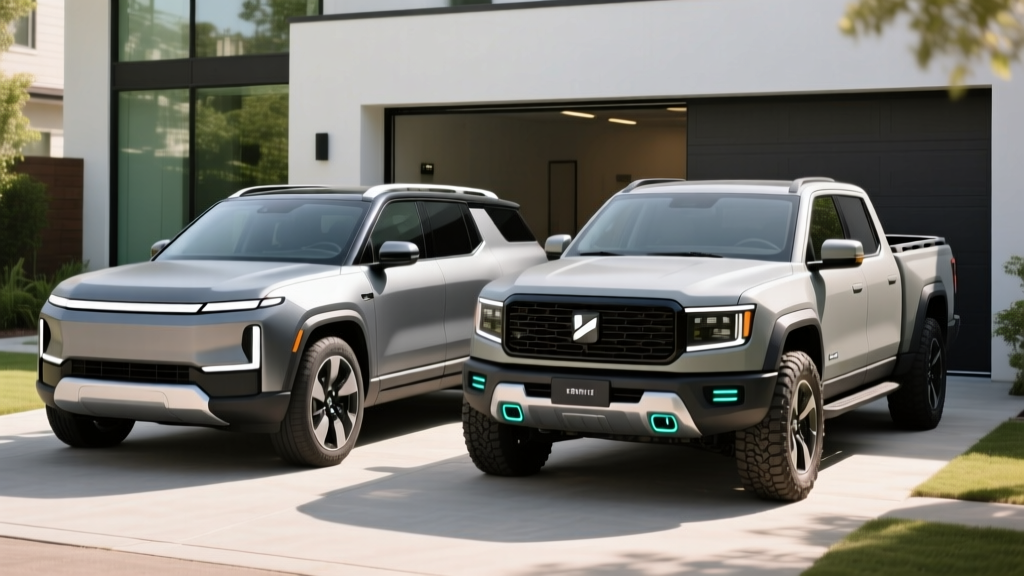
If you've just taken delivery of a Rivian R1S SUV or R1T truck—or you're standing in a touchless car wash line wondering how to roll through—the gear selector workflow isn't immediately obvious. Unlike a traditional column shifter or floor lever, Rivian uses a right-side steering-column stalk paired with a touchscreen gear confirmation. Below, we walk through exactly how to put a Rivian in neutral, when you'll need to, and then deliver the full 2026 spec-and-ownership review buyers actually need.
How to Put a Rivian in Neutral: Step-by-Step
Rivian's gear selector lives on the right side of the steering column. Here's the exact procedure for the current-generation R1S and R1T (Gen 2, model years 2025–2026):
- Come to a complete stop. Neutral cannot be engaged while the vehicle is moving.
- Press the brake pedal firmly and keep it depressed throughout the shift.
- Push the right-side gear stalk upward toward the top position. The center touchscreen will display an "N" indicator confirming Neutral.
- Release the brake. The vehicle will now roll freely—essential for car washes, flatbed towing, or push-starting.
To shift out of Neutral and back into Drive, press the brake and push the stalk downward. For Park, press the button on the end of the stalk. Reverse requires pushing the stalk upward past the Neutral detent (the same direction, but held slightly longer or pushed further depending on model year firmware).
2026 Rivian R1S & R1T: Complete Spec Table
| Spec | R1S Dual-Motor (Standard Battery) | R1S Dual-Motor (Max Battery) | R1T Quad-Motor (Max Battery) |
|---|---|---|---|
| EPA Range | 270 mi | 410 mi | 328 mi |
| Battery Capacity (usable) | 92 kWh (LFP) | 141 kWh (NMC) | 141 kWh (NMC) |
| Horsepower | 533 hp | 533 hp | 1,025 hp |
| 0–60 mph | 4.5 sec | 4.5 sec | 3.0 sec |
| Drivetrain | AWD (dual-motor) | AWD (dual-motor) | AWD (quad-motor) |
| Max DC Fast Charge | 200 kW | 220 kW | 220 kW |
| 10–80% DCFC Time | ~28 min | ~42 min | ~42 min |
| Level 2 Home Charging | 11.5 kW (~25 mi/hr) | 11.5 kW (~25 mi/hr) | 11.5 kW (~25 mi/hr) |
| MPGe (combined) | 73 MPGe | 70 MPGe | 66 MPGe |
| Towing Capacity | 7,700 lb | 7,700 lb | 11,000 lb (R1T) |
| Cargo (R1S behind 3rd row / R1T bed) | 10.4 cu ft / 90.4 cu ft max | 10.4 cu ft / 90.4 cu ft max | 54 cu ft bed + 11 cu ft frunk |
| Base MSRP | $75,900 | $89,900 | $99,900 |
| Federal §30D Tax Credit | Not eligible (MSRP cap) | Not eligible (MSRP cap) | Not eligible (MSRP cap) |
| Battery/Powertrain Warranty | 8 yr / 175,000 mi | 8 yr / 175,000 mi | 8 yr / 175,000 mi |
Sources: fueleconomy.gov, Rivian official specs. EPA figures are estimates; actual range varies with conditions.
Real-World Range: What the EPA Sticker Doesn't Tell You
EPA sticker: 410 miles. Expect ~340–360 miles on mixed highway driving at 70 mph. In freezing temperatures (below 32°F), plan for 270–300 miles due to cabin heating demand and increased battery resistance. The R1T Quad-Motor's 328 EPA miles drops to roughly 260–280 miles on a cold highway run.
Rivian's boxy aerodynamics (the R1S has a drag coefficient around 0.30) hurt highway efficiency more than city driving, where regenerative braking recovers energy. If your commute is mostly stop-and-go urban miles, you'll actually exceed the EPA combined figure. Road-trippers should plan charging stops around 250-mile intervals in winter and 320-mile intervals in mild weather to maintain a comfort buffer.
The Standard Battery pack uses LFP (lithium iron phosphate) chemistry, which sacrifices some energy density for longer cycle life and the ability to charge to 100% daily without degradation concerns. The Max Battery uses NMC (nickel manganese cobalt), which packs more energy but benefits from an 80% daily charge limit for longevity—only charge to 100% before long trips.
Charging Speed: DC Fast, Level 2, and the Charge Curve Reality
| Charging Level | Power | Miles Added per Hour | Notes |
|---|---|---|---|
| Level 1 (120V outlet) | ~1.4 kW | ~3 mi/hr | Emergency/trickle only |
| Level 2 (240V, 48A home charger) | 11.5 kW | ~25 mi/hr | Full overnight charge in 8–12 hrs |
| DC Fast Charge (Max Battery) | Peak 220 kW | ~140 mi in 15 min (10–30%) | Tapers above 60% SoC |
| DC Fast Charge (Standard LFP) | Peak 200 kW | ~120 mi in 15 min | LFP holds peak longer, tapers after 80% |
The 220 kW peak rate on the Max Battery only sustains between roughly 10% and 40% state of charge. After 60%, the curve drops to ~120 kW, and above 80% it slows to under 50 kW to protect the NMC cells. This is why the 10–80% time is ~42 minutes, not the ~20 minutes the peak rate might imply. The LFP Standard Battery actually holds its peak charge rate longer (up to ~55% SoC), making its real-world charging experience feel brisker for partial charges.
Home charging setup: Rivian's Wall Charger delivers 11.5 kW on a 60-amp dedicated circuit (48A continuous). Budget $800–$1,500 for a licensed electrician to install a NEMA 14-60 outlet or hardwire the charger, plus potential panel upgrade costs of $1,500–$3,000 if your home has a 100-amp service panel. A full overnight charge on Level 2 adds roughly 200–250 miles in 8 hours—enough for nearly any daily need.
Pricing, Trims, and Tax Credit Reality for 2026
Here's where buyer expectations often collide with IRS rules. The IRS §30D federal tax credit caps at $7,500 for new EVs—but only if the vehicle's MSRP falls under $80,000 for SUVs/pickups/vans and the buyer's adjusted gross income is below $150,000 (single) or $300,000 (joint). Additionally, battery components and critical minerals must meet domestic-sourcing thresholds that tighten annually.
| Trim | Base MSRP | As-Tested (typical config) | §30D Eligible? |
|---|---|---|---|
| R1S Dual-Motor Standard | $75,900 | $79,500 | Possible (MSRP under $80K cap; check sourcing & income) |
| R1S Dual-Motor Max | $89,900 | $94,000+ | No (exceeds $80K MSRP cap) |
| R1T Dual-Motor Standard | $69,900 | $74,500 | Possible (MSRP under $80K cap; check sourcing & income) |
| R1T Quad-Motor Max | $99,900 | $105,000+ | No (exceeds $80K MSRP cap) |
Key takeaway: Only the Dual-Motor Standard Battery configurations have a realistic shot at the $7,500 credit—and even then, you must verify Rivian's current battery-sourcing compliance on the fueleconomy.gov credit lookup and confirm your income falls within IRS limits. The credit can now be transferred at the point of sale, reducing your purchase price directly rather than waiting for a tax refund. Consult a tax professional before relying on credit eligibility.
Performance, Tech, and Daily Ownership
The Dual-Motor R1S and R1T deliver 533 horsepower and a 4.5-second 0–60 time—quick enough to merge confidently and overtake without drama. The Quad-Motor variant's 1,025 hp and 3.0-second sprint is supercar territory in a 7,000-pound vehicle, but it comes at the cost of efficiency (66 MPGe combined vs. 73 for the Dual-Motor).
Standout tech features:
- 15.6-inch center touchscreen with native navigation, Spotify, and over-the-air updates
- Rivian's Driver+ system (SAE Level 2) with hands-on-wheel highway assist and automatic lane changes—competent but requires driver attention at all times
- Camp Kitchen accessory (R1T) with slide-out induction cooktop and dishware
- Powered tonneau cover and Gear Tunnel (R1T) for secure, weatherproof storage
- Four-zone air suspension with up to 14.9 inches of ground clearance for off-road use
- Vehicle-to-load (V2L) capability: power tools, camp equipment, or a tailgate from the bed outlets
Notable drawbacks:
- Third-row space in the R1S is tight for adults (28.5 inches of legroom) — best for children or short trips
- No Apple CarPlay or Android Auto — Rivian uses a proprietary infotainment system
- Service center network is still expanding; rural owners may face 100+ mile drives for warranty work
- Insurance premiums run 15–25% higher than comparable ICE SUVs due to repair costs and parts pricing
- Charging port is on the driver-side front fender, which can make some public charger cable stretches awkward
- Class-leading off-road capability with air suspension and quad-motor torque vectoring
- Best-in-class battery warranty (8 yr / 175,000 mi)
- Over-the-air updates continuously add features
- Gear Tunnel and frunk give R1T unmatched storage
- LFP Standard Battery option allows daily 100% charging
- High MSRP — most trims exceed the $80K tax credit cap
- No phone projection (CarPlay/Android Auto)
- Real-world highway range drops 15–20% below EPA
- Third row is child-only in the R1S
- Service infrastructure still maturing outside metro areas
Who Should Buy a Rivian (And Who Shouldn't)
Best for: Active families who tow boats or trailers (up to 11,000 lb on the R1T), outdoor enthusiasts who need off-road clearance and gear storage, and early-adopter buyers who value OTA feature updates. The R1T is genuinely one of the most capable vehicles ever built for the adventure-use-case triangle of range, towing, and trail capability.
Look elsewhere if: You need a budget-friendly commuter (the base price is steep), you rely on CarPlay for navigation, you live far from a Rivian service center, or your daily driving rarely exceeds 40 miles (a PHEV or smaller EV would save thousands). Buyers who need adult-friendly third rows should cross-shop the Kia EV9 or Tesla Model X.
Frequently Asked Questions
How do I put my Rivian in neutral for a car wash?
Stop completely, hold the brake, and push the right-side gear stalk upward. The touchscreen will show "N." Disable auto-hold in driving settings for conveyor-style washes so the vehicle rolls freely. Keep your foot near the brake.
Can I flat-tow a Rivian behind an RV?
Rivian does not currently support recreational flat towing (all four wheels down) for the R1S or R1T. Use a flatbed trailer instead. Shift into Neutral using the stalk procedure above to winch or roll the vehicle onto the trailer, then shift to Park and engage the parking brake once secured.
What's the real-world range on a road trip?
For the R1S Max Battery (410 EPA), expect 340–360 miles at 70 mph in mild weather and 270–300 miles in freezing conditions. The Dual-Motor Standard (270 EPA) delivers roughly 220–240 highway miles. Plan charging stops accordingly, and precondition the battery by entering a DC fast-charger destination in the nav system 15–20 minutes before arrival.
Does the Rivian R1S or R1T qualify for the $7,500 federal tax credit?
Only the Dual-Motor Standard Battery trims (MSRP under $80,000) are potentially eligible. Max Battery and Quad-Motor trims exceed the IRS MSRP cap and are ineligible regardless of buyer income. Even on eligible trims, you must meet income thresholds ($150K single / $300K joint AGI) and Rivian must meet battery-sourcing requirements. Always verify on fueleconomy.gov and consult a tax professional.
How long does the Rivian battery last, and what does replacement cost?
Rivian warranties the battery for 8 years or 175,000 miles, whichever comes first, against defects and capacity loss below 70%. Real-world degradation data from early 2022–2023 owners suggests roughly 5–8% loss over the first 60,000 miles for NMC packs. Full battery replacement out of warranty is estimated at $15,000–$22,000 depending on pack size, though this figure is expected to decline as battery costs fall.
Is Rivian's Driver+ system self-driving?
No. Driver+ is an SAE Level 2 driver-assistance system, meaning it can control steering and speed on divided highways but requires the driver to remain fully attentive with hands on or near the wheel. It does not handle construction zones, unmapped roads, or complex urban intersections. You are the driver at all times.
How does Rivian compare to the Tesla Model X or Ford F-150 Lightning?
The Model X offers more third-row space, access to the Supercharger network (though Rivian now has NACS adapter access), and a lower starting price—but less off-road capability and no truck variant. The F-150 Lightning is significantly cheaper (starting ~$55,000) and eligible for the tax credit, but trails the R1T in range, performance, and premium features. Rivian occupies the premium-adventure niche with no direct rival that matches its combination of off-road clearance, towing, and tech-forward design.