The Quick Verdict on Rivian Lease Specials
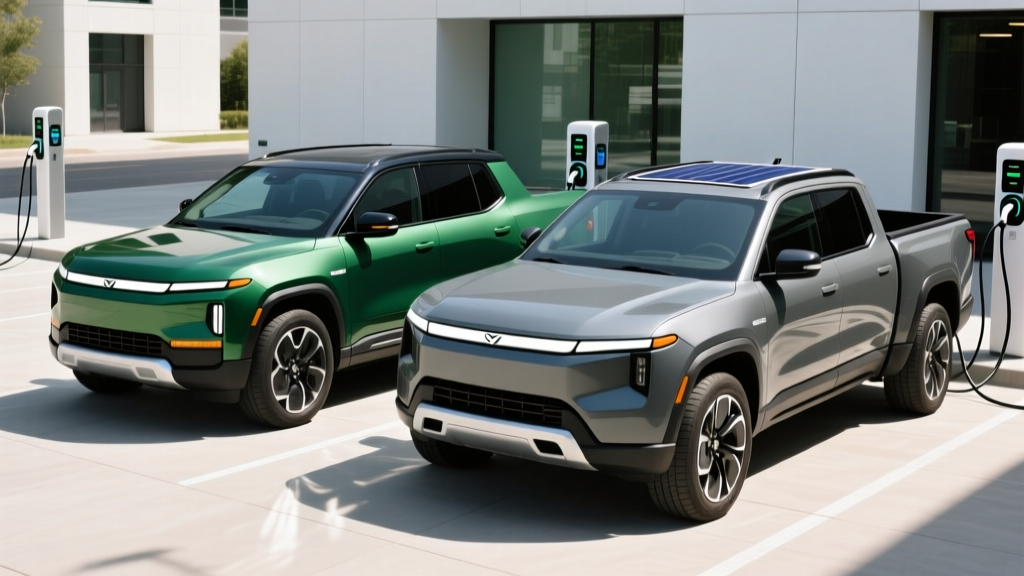
If you've been searching for a Rivian lease special, you've likely noticed that Rivian doesn't advertise traditional lease deals the way legacy automakers do. Instead, Rivian periodically offers promotional lease rates through its captive finance arm, Rivian Automotive Leasing, often tied to specific model-year clearance events or new trim launches. For 2026, the most compelling lease opportunities center on the refreshed R1S (three-row SUV) and R1T (pickup truck) built on the second-generation platform with the company's proprietary Gen 2 drive units.
Leasing a Rivian can be strategically smart: it lets you sidestep the worst depreciation curves that hit luxury EVs in years two through four, locks in the latest battery tech, and — critically — allows the leasing company to capture the §30D federal tax credit and pass savings through as a capitalized cost reduction. But before you sign, you need to understand exactly what you're getting in terms of real-world range, charging infrastructure, and long-term ownership economics.
Real-World Range: What the EPA Sticker Doesn't Tell You
- EPA Estimated Range: 270 miles
- Real-World Highway (70 mph, mild weather): ~235–250 miles
- Real-World Cold Weather (below 30°F): ~195–220 miles
- EPA Estimated Range: 352 miles
- Real-World Highway: ~300–320 miles
- Real-World Cold Weather: ~250–280 miles
Rivian's EPA numbers for the 2026 model year reflect the updated Gen 2 powertrain efficiency gains. The Standard pack uses a ~92 kWh usable lithium iron phosphate (LFP) battery, while the Large pack uses a ~128 kWh usable NMC (nickel manganese cobalt) pack. LFP chemistry in the Standard pack means slower degradation over time but lower energy density — hence the range gap.
On a 300-mile road trip from Denver to Grand Junction in January, expect the Large-pack R1S to require one DC fast-charge stop. In summer conditions with moderate elevation changes, you'll likely arrive with 30–50 miles of buffer. The R1T pickup, due to its less aerodynamic profile, loses roughly 5–8% range versus the R1S at highway speeds.
Charging Speed: DC Fast, Level 2, and the Curve Reality
Charging speed is where Rivian's second-generation architecture delivers measurable improvement over the 2022–2024 models. Here's the full breakdown:
| Charging Level | Max Rate | Delivery (R1S Large Pack) | Notes |
|---|---|---|---|
| Level 1 (120V) | 1.4 kW | ~3–4 miles/hour | Emergency/trickle only |
| Level 2 (240V, 48A) | 11.5 kW | ~28–32 miles/hour | Full charge in ~11–13 hours (Large pack) |
| Level 2 (240V, 32A) | 7.7 kW | ~19–22 miles/hour | Common with Rivian Wall Connector at lower amperage |
| DC Fast Charge | 200 kW peak | 10–80% in ~28 minutes (Large) | Peak sustained ~180 kW through 40% SoC, tapers sharply above 85% |
The 200 kW peak is a welcome upgrade from the original 190 kW, but the charge curve matters more than the headline number. Rivian's thermal management system holds strong through the mid-range (20–60% SoC), but you'll see the rate drop to roughly 80–100 kW past 80% state of charge. On a Rivian R1S Large pack, a 10–80% session at a Tesla Supercharger (NACS-equipped 2026 models) or Electrify America station delivers approximately 250 miles of range in 28 minutes under ideal battery preconditioning conditions.
For home charging, Rivian's Wall Connector delivers up to 11.5 kW on a 60-amp dedicated circuit. Most overnight sessions (10 hours) will replenish 280+ miles — enough for all but the most extreme daily commutes. Budget $800–$1,500 for professional installation of a NEMA 14-60 outlet or hardwired connection, depending on your panel capacity and run distance.
Performance, Efficiency, and Daily Drivability
| Spec | R1S Dual-Motor (Standard) | R1S Dual-Motor (Large) | R1T Dual-Motor (Large) |
|---|---|---|---|
| 0–60 mph | 5.0 sec | 4.5 sec | 4.5 sec |
| Horsepower | 533 hp | 533 hp | 533 hp |
| Torque | 610 lb-ft | 610 lb-ft | 610 lb-ft |
| Drivetrain | AWD (dual-motor) | AWD (dual-motor) | AWD (dual-motor) |
| MPGe (combined) | 73 MPGe | 70 MPGe | 68 MPGe |
| Efficiency | 46 kWh/100mi | 48 kWh/100mi | 50 kWh/100mi |
| Towing Capacity | 7,700 lbs | 7,700 lbs | 11,000 lbs |
The dual-motor setup provides standard all-wheel drive with torque vectoring. The available Quad-Motor configuration (one motor per wheel) pushes output to 1,025 hp and a 0–60 time of approximately 3.0 seconds, but it commands a significant premium and reduces range to roughly 316 miles (R1S Large). For most lease shoppers, the Dual-Motor Large pack represents the best value-to-capability ratio.
Efficiency-wise, these are heavy vehicles — the R1S tips the scales at roughly 6,800 lbs. You'll see 2.0–2.5 kWh per mile in mixed driving, which translates to roughly $0.08–$0.14 per mile on residential electricity (national average $0.17/kWh). That's about half the per-mile fuel cost of a comparably sized gas SUV at $3.50/gallon.
Pricing, Lease Structure, and Tax Credit Strategy
| Trim / Config | Base MSRP (2026) | Est. Monthly Lease (36-mo, 10k mi/yr) |
|---|---|---|
| R1S Dual-Motor Standard | $75,900 | $850–$950/mo |
| R1S Dual-Motor Large | $83,400 | $950–$1,100/mo |
| R1T Dual-Motor Standard | $69,900 | $780–$880/mo |
| R1T Dual-Motor Large | $77,400 | $880–$1,020/mo |
Rivian lease specials, when available, typically manifest as subsidized money factors (the lease equivalent of an interest rate) or loyalty/conquest cash applied to the capitalized cost. As of early 2026, Rivian has offered promotional money factors around 0.00125 (equivalent to ~3.0% APR) on select in-stock configurations — a meaningful discount from standard rates hovering near 0.00250.
Here's where leasing gets strategically interesting for the federal tax credit. Under current IRS §30D rules, the $7,500 clean vehicle credit requires:
- Vehicle MSRP under $80,000 for SUVs/pickups (R1S qualifies on Standard and some Large trims; R1T Standard qualifies)
- Buyer AGI under $300,000 (joint) / $150,000 (single)
- Battery critical minerals and component sourcing from FTA-partner countries
When you lease rather than buy, the lessor (Rivian's finance arm) is technically the "buyer" and claims the credit. Most captive lessors pass this through as a cap cost reduction — effectively lowering your monthly payment by roughly $200–$210/month over a 36-month term. This also means lease customers bypass the MSRP and income caps, since the commercial clean vehicle credit (§45W) applies to the lessor instead. Confirm with your Rivian advisor exactly how the credit is applied before signing.
Interior, Cargo, and Technology
The R1S seats up to seven across three rows, though the third row is best suited for children or short trips (28.5 inches of legroom). Behind the third row, you get 10.4 cubic feet of cargo space; fold the third row and it opens to 46.7 cu ft; fold both rear rows for a maximum of 91.2 cu ft. The R1T offers a 4.5-foot bed with a unique Gear Tunnel (11 cu ft of lockable, pass-through storage) that's ideal for skis, fishing rods, or camping gear.
On the technology front, Rivian runs its proprietary infotainment stack on a 15.6-inch center display and a 12.3-inch digital instrument cluster. Wireless Apple CarPlay and Android Auto are standard. The vehicle's software receives regular OTA updates that have meaningfully improved navigation routing, charge planning, and driver-assist calibration over time.
Rivian's driver-assist suite includes Highway Assist (adaptive cruise + lane centering), which operates as a SAE Level 2 system — meaning you must keep hands on or near the wheel and eyes on the road at all times. It is not autonomous driving. Highway Assist performs competently on well-marked interstates but can struggle with construction zones and faded lane markings.
Battery Warranty, Degradation, and Long-Term Outlook
Rivian provides an 8-year / 175,000-mile warranty on the battery pack and drive units, guaranteeing at least 70% capacity retention over that period. This is competitive with the industry standard, though some rivals offer 8-year/100,000-mile coverage with an 80% retention floor.
For lease customers, battery degradation is largely a non-issue — you'll return the vehicle before meaningful capacity loss occurs. Real-world data from early 2022–2024 Rivian owners suggests approximately 4–6% degradation over the first 50,000 miles for NMC packs, with LFP packs showing even slower decline. Rivian's thermal management system (liquid-cooled and heated) helps mitigate calendar and cycle degradation across climates.
Pros, Cons, and Who Should Lease a Rivian
Pros
- Class-leading adventure capability (ground clearance, wading, off-road modes)
- Strong DC fast charging with practical 10–80% times
- LFP option on Standard pack offers exceptional cycle life
- Lease structure can bypass §30D income/MSRP caps
- Excellent build quality on Gen 2 vehicles
- Gear Tunnel (R1T) is genuinely innovative storage
Cons
- High base price — even Standard trims push $70K+
- Third-row space in R1S is tight for adults
- Efficiency trails unibody EV crossovers (heavy, boxy design)
- No Apple CarPlay-native integration (uses projection)
- Service center network still expanding in rural regions
- Highway Assist is adequate, not class-leading among L2 systems
Who This EV Suits Best
Lease a Rivian R1S if: You need three rows, prioritize outdoor capability (skiing, camping, towing a small trailer), and want a luxury EV without long-term depreciation risk. The Large-pack lease with tax credit pass-through offers the strongest value proposition.
Lease a Rivian R1T if: You want a daily-drivable pickup with genuine off-road chops, value the Gear Tunnel for gear-heavy hobbies, and don't need maximum bed length (the 4.5-foot bed is shorter than most full-size trucks).
Look elsewhere if: You prioritize maximum efficiency (a Hyundai Ioniq 5 or Tesla Model Y delivers more miles per kWh), need a true seven-adult SUV (check the Kia EV9), or live far from a Rivian service center.
Frequently Asked Questions
What is the real-world range of a leased 2026 Rivian?
Expect 235–250 highway miles from the Standard pack and 300–320 from the Large pack in mild weather. Cold temperatures (below 30°F) reduce range by 15–25%. Towing cuts range by 30–50% depending on trailer weight and aerodynamics.
How fast does a Rivian charge at home and on the road?
At home on a Level 2 (240V, 48A) charger, you'll add roughly 28–32 miles per hour, fully replenishing overnight. On DC fast chargers, the Large pack peaks at 200 kW and charges 10–80% in approximately 28 minutes. The Standard pack charges slightly faster due to its smaller capacity.
How much does a Rivian cost after tax credits on a lease?
When the $7,500 federal credit is passed through as a cap cost reduction, expect monthly payments to drop by roughly $200–$210 over a 36-month lease. A Dual-Motor Standard R1T that might lease at $880/month without the credit could drop to approximately $670–$680/month. Exact figures depend on trim, options, money factor, and residual value.
Does a Rivian lease qualify for the federal EV tax credit?
Yes — but indirectly. In a lease, the lessor claims the credit (under §45W commercial vehicle rules) and typically passes savings to you as a lower cap cost. This means lease customers often aren't subject to the same MSRP caps ($80K for SUVs/trucks) or buyer income limits ($300K joint) that apply to purchase buyers under §30D. Always confirm credit pass-through with your Rivian advisor before signing.
Is leasing a Rivian better than buying one?
Leasing makes sense if you want to avoid EV depreciation (luxury EVs can lose 40–55% of value in three years), prefer always having the latest software and battery tech, and want to access the tax credit without income/MSRP restrictions. Buying makes sense if you drive low annual miles, plan to keep the vehicle 7+ years, or want to customize it (wraps, aftermarket wheels, etc.).
What are the biggest drawbacks of leasing a Rivian?
Mileage penalties (typically $0.25–$0.30/mile over the limit), wear-and-tear charges at return, no equity buildup, and the inability to modify the vehicle. If you regularly drive over 12,000 miles per year or tend to keep vehicles long-term, purchasing or financing may be more economical.