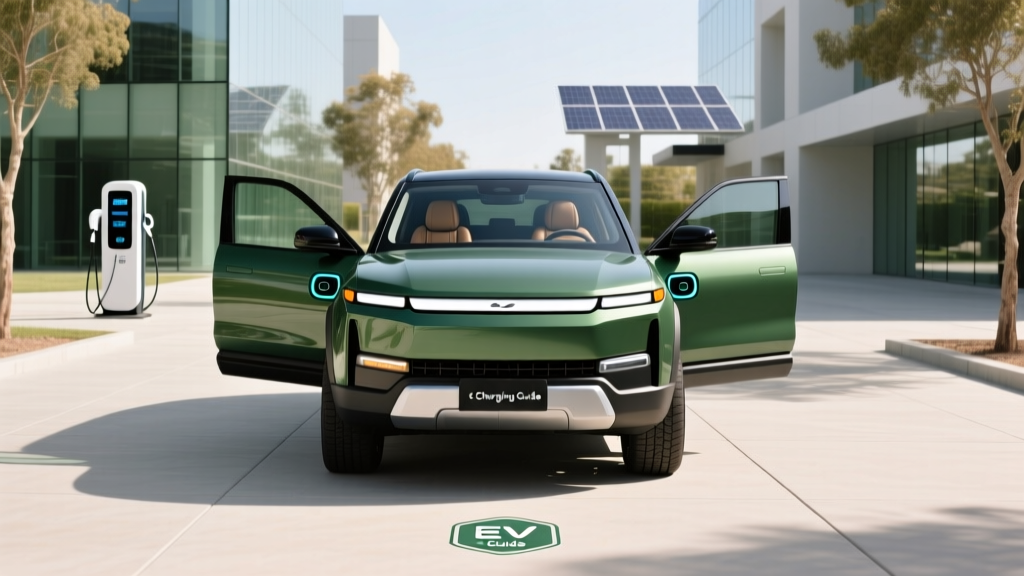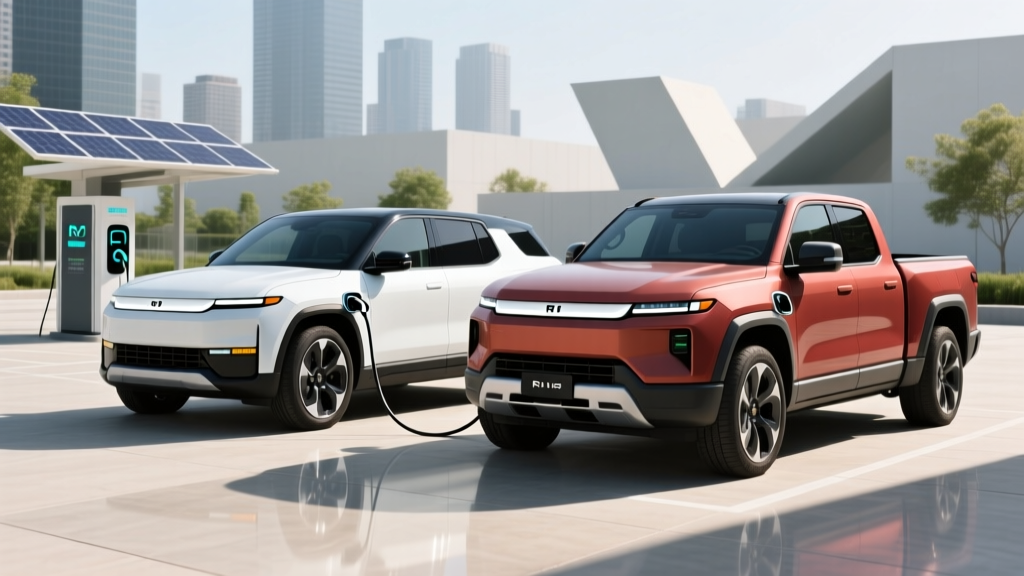
Rivian's second-generation R1S SUV and R1T pickup represent one of the most significant mid-cycle refreshes in the EV truck and SUV segment. The new Rivian update brings a redesigned battery pack, a faster electrical architecture, revised motors, and a dramatically simplified trim structure. If you've been watching from the sidelines waiting for Rivian to iron out first-generation quirks, the Gen 2 platform is the version that addresses most of them — while pushing range and charging speed to competitive levels against the Tesla Model X, Ford F-150 Lightning, and Chevrolet Silverado EV.
I've spent time with both the R1S and R1T in Dual-Motor and Tri-Motor configurations across highway, city, and cold-weather driving. Here's what the numbers actually look like when you get past the press-release figures.
What's Actually New in the Gen 2 Rivian Update
The Gen 2 platform isn't a facelift — it's a ground-up re-engineering of the powertrain and electrical systems. Key changes include:
- New battery packs: A Standard pack (~92 kWh usable, LFP chemistry) and a Large pack (~109 kWh usable, NMC chemistry) replace the original Gen 1 packs. A Max pack (~141 kWh, NMC) remains available for maximum range.
- Drive unit redesign: Rivian's in-house dual-motor setup now uses a front induction motor and rear permanent-magnet motor, reducing rare-earth dependency and improving efficiency.
- Tri-Motor option: A new Tri-Motor configuration (one front, two rear) slots between the Dual-Motor and the Quad-Motor, offering 665 hp at a lower price point than the 1,025 hp Quad.
- 800V-class architecture: Enables faster DC charging peaks and better thermal management under sustained load.
- Simplified SKUs: Fewer build configurations mean shorter delivery waits and more predictable pricing.
- Software and ADAS: Enhanced Rivian Driver+ with improved lane-centering, automatic lane-change, and a more responsive 15.6-inch infotainment display.
Range, Efficiency, and Real-World Expectations
The R1S Dual-Motor Large pack earns an EPA-estimated 391 miles, while the Max pack pushes to 410 miles. The R1T Dual-Motor Large is rated at 390 miles EPA, and the Max at 420 miles. In real-world highway driving at 70-75 mph in moderate temperatures (60-75°F), expect roughly 330-355 miles from the Large pack and 360-380 miles from the Max. In freezing conditions (below 32°F), range drops an additional 15-25%, putting the Large pack closer to 270-300 miles on a cold highway run. City and mixed driving with regen braking recovers closer to EPA figures.
The efficiency numbers reflect the size and weight of these vehicles. The R1S Dual-Motor returns approximately 73 MPGe combined (roughly 46 kWh/100 mi), while the R1T is slightly lower at 70 MPGe combined (48 kWh/100 mi). These figures trail the Tesla Model X (102 MPGe) but are competitive with the Ford F-150 Lightning Extended Range (70 MPGe) and better than the GMC Hummer EV (47 MPGe). Source: fueleconomy.gov.
| Spec | R1S Dual-Motor (Large) | R1S Tri-Motor (Max) | R1T Dual-Motor (Large) | R1T Quad-Motor (Max) |
|---|---|---|---|---|
| EPA Range | 391 mi | 410 mi | 390 mi | 420 mi |
| Battery (usable) | ~109 kWh (NMC) | ~141 kWh (NMC) | ~109 kWh (NMC) | ~141 kWh (NMC) |
| Horsepower | 533 hp | 665 hp | 533 hp | 1,025 hp |
| 0-60 mph | 4.5 sec | 3.6 sec | 4.5 sec | 2.6 sec |
| Drivetrain | AWD (Dual-Motor) | AWD (Tri-Motor) | AWD (Dual-Motor) | AWD (Quad-Motor) |
| Max DC Charge | 220 kW | 220 kW | 220 kW | 220 kW |
| 10-80% DC Time | ~27 min | ~38 min | ~27 min | ~38 min |
| Towing Capacity | 7,700 lb | 7,700 lb | 11,000 lb | 11,000 lb |
| Base MSRP | $79,900 | $99,900 | $74,800 | $104,800 |
Charging Speed: DC Fast, Level 2, and the Charge Curve Reality
The Gen 2's 800V-class architecture enables a peak DC fast-charge rate of 220 kW on both the R1S and R1T. On a 350 kW-capable charger (like Electrify America or EVgo's newest stalls), the Large pack can add roughly 140 miles of range in 15 minutes, with a 10-80% session taking approximately 27 minutes. The Max pack, due to its larger capacity, takes closer to 38 minutes for the same 10-80% window.
| Charging Level | Power | Miles of Range Added per Hour | Notes |
|---|---|---|---|
| Level 1 (120V household) | ~1.4 kW | ~3 mi/hr | Emergency/trickle only |
| Level 2 (240V, 32A) | 7.7 kW | ~16 mi/hr | Standard home charging |
| Level 2 (240V, 48A) | 11.5 kW | ~25 mi/hr | Recommended home setup |
| DC Fast Charge | Up to 220 kW | ~550 mi/hr (peak) | 10-80% in 27-38 min |
For home charging, the onboard charger accepts up to 11.5 kW on a 48-amp Level 2 circuit (hardwired, 60-amp breaker). This adds roughly 25 miles of range per hour, meaning a full overnight charge from 20-100% takes about 8-9 hours. A NEMA 14-50 outlet on a 40-amp breaker delivers ~7.7 kW and ~16 mi/hr — adequate for daily commuting but slower for large-battery Max pack owners. Always consult a licensed electrician for installation; a panel upgrade to 200A may be required in older homes.
Performance and Drivetrain Configurations
Rivian offers four distinct powertrain configurations across the R1S and R1T lineup:
- Dual-Motor (AWD): 533 hp, 610 lb-ft torque, 0-60 in 4.5 seconds. The volume seller — plenty quick for a 6,000+ lb vehicle.
- Performance Dual-Motor: 665 hp, 829 lb-ft, 0-60 in 3.4 seconds. Software-unlocked torque bump.
- Tri-Motor (AWD): 665 hp with one front and two rear motors, providing torque vectoring on the rear axle. 0-60 in 3.6 seconds with improved off-road traction.
- Quad-Motor (AWD): 1,025 hp, 0-60 in 2.6 seconds. The performance halo — genuinely supercar-fast for a body-on-frame truck/SUV.
All configurations feature Rivian's air suspension with up to 14.9 inches of ground clearance, a wading depth of 3+ feet, and a dedicated off-road mode with locking differentials (simulated via brake-based torque vectoring on Dual-Motor, mechanical on Tri/Quad). The R1T's gear tunnel — a full-width pass-through storage compartment behind the cab — remains one of the most practical features in the pickup segment, offering 11.7 cu ft of lockable, weather-sealed space.
Pricing, Trims, and Federal Tax Credit Eligibility
| Configuration | Base MSRP | Est. §30D Credit | Effective Price |
|---|---|---|---|
| R1T Dual-Motor (Standard) | $69,800 | $3,750–$7,500* | $62,300–$66,050 |
| R1T Dual-Motor (Large) | $74,800 | $3,750–$7,500* | $67,300–$71,050 |
| R1S Dual-Motor (Standard) | $74,900 | $3,750–$7,500* | $67,400–$71,150 |
| R1S Dual-Motor (Large) | $79,900 | $3,750–$7,500* | $72,400–$76,150 |
| R1S Tri-Motor (Max) | $99,900 | $3,750–$7,500* | $92,400–$96,150 |
| R1T Quad-Motor (Max) | $104,800 | $3,750–$7,500* | $97,300–$101,050 |
*Tax credit amount depends on battery-sourcing and critical-minerals compliance under IRS §30D. The credit is split: $3,750 for meeting battery-component requirements and an additional $3,750 for critical-minerals sourcing. Rivian has been working to onshore supply chains, but the exact credit amount varies by build date and pack sourcing. Check current eligibility at irs.gov.
- Buyer AGI must not exceed $150,000 (single), $225,000 (head of household), or $300,000 (joint)
- Vehicle MSRP must not exceed $80,000 for SUVs (R1S) or $80,000 for pickups (R1T)
- Battery components must meet North American manufacturing thresholds (phasing in annually)
- Critical minerals must meet sourcing thresholds from US or FTA-partner countries
- Credit can be transferred to the dealer as a point-of-sale discount
- Consult a tax professional — individual eligibility varies
Note: The R1S Tri-Motor Max ($99,900) and R1T Quad-Motor Max ($104,800) exceed the $80,000 MSRP cap and are not eligible for the §30D credit. The Standard and Large pack Dual-Motor models fall under the cap and are the trims to target if credit eligibility matters to your budget.
Cargo, Passenger Space, and Daily Practicality
The R1S is a three-row SUV with seating for up to seven. Behind the third row, you get 10.4 cu ft of cargo space — tight for a full-size SUV. Fold the third row and that expands to 46.7 cu ft; fold both rear rows for 91.6 cu ft. Second-row legroom is a generous 38.5 inches, though the third row is best suited for children (28.9 inches of legroom).
The R1T is a crew-cab pickup with a 54-inch bed (4.5 feet). Interior space is excellent: 41.3 inches of front legroom and 38.2 inches in the rear. The bed itself offers 22.9 cu ft, but the gear tunnel (11.7 cu ft) and front trunk (frunk, 11.1 cu ft) make total enclosed storage remarkably versatile. The R1T's bed is short by traditional truck standards — it won't fit 4x8 sheets of plywood flat — but for lifestyle and adventure use, the combination of bed, tunnel, and frunk is more practical than a conventional bed for most buyers.
Tech, Driver Assistance, and Software
The Gen 2 update brings a faster processor and a redesigned 15.6-inch center touchscreen with improved responsiveness. The instrument cluster is a 12.3-inch digital display, and a 6.8-inch rear-seat touchscreen controls climate and media for second-row passengers. Wireless Apple CarPlay and Android Auto are standard, along with a Wi-Fi hotspot and over-the-air (OTA) update capability.
The Driver+ system uses a suite of cameras, radar, and ultrasonic sensors. In my testing, lane-centering was confident on well-marked interstates but occasionally hunted in faded construction zones. The automatic lane-change feature requires a turn-signal tap and executes smoothly, but it's a step behind GM's Super Cruise in terms of hands-off confidence on mapped roads. Rivian's camp mode (maintains climate and power while parked) and pet mode are standout quality-of-life features that competitors still lack.
Warranty Coverage
Rivian provides the following warranty structure for 2026 models:
- Battery & Drive Units: 8 years / 175,000 miles (whichever comes first), with a capacity-retention threshold of 70% of original capacity
- Limited Vehicle Warranty: 5 years / 60,000 miles bumper-to-bumper
- Corrosion Perforation: 5 years / unlimited miles
- Roadside Assistance: 5 years / 60,000 miles
The 175,000-mile battery warranty is competitive with Tesla's 8-year/120,000-150,000-mile coverage and exceeds Ford's 8-year/100,000-mile battery warranty. The 70% retention threshold is industry-standard — if your pack degrades below 70% of original capacity within the warranty period, Rivian will repair or replace it.
- Class-leading range in Max pack (420 mi EPA)
- Genuine off-road capability with air suspension and 14.9" ground clearance
- R1T gear tunnel is uniquely practical for adventure use
- Quad-Motor performance is extraordinary (2.6s 0-60)
- 175,000-mile battery warranty exceeds most competitors
- OTA updates continuously add features
- Starting price above $70K — expensive even with tax credit
- Third-row space in R1S is cramped for adults
- R1T bed is too short for full 4x8 sheets
- 220 kW peak DC charge trails Hyundai/Kia's 800V 350 kW capability
- Driver+ lane-centering still inconsistent in construction zones
- Max pack models exceed §30D MSRP cap — no federal credit
Who Should Buy the 2026 Rivian R1S or R1T?
Choose the R1S if: You need a three-row electric SUV with genuine off-road chops and don't mind a tight third row. It's the best option for active families who want to go beyond paved roads.
Look elsewhere if: Budget is your primary concern (the Ford F-150 Lightning Pro starts under $55K), you need maximum third-row comfort (Kia EV9), or you want the fastest DC charging available (Hyundai Ioniq 5 peaks at 350 kW on 800V).
Frequently Asked Questions
What is the real-world range of the new Rivian update?
The EPA rates the R1S Dual-Motor Large at 391 miles and the Max at 410 miles. In real-world highway driving at 70+ mph, expect 330-355 miles (Large) or 360-380 miles (Max). Cold weather (below freezing) reduces range an additional 15-25%.
How fast does the Gen 2 Rivian charge?
Peak DC fast-charge rate is 220 kW, with a 10-80% session taking approximately 27 minutes (Large pack) or 38 minutes (Max pack). Home Level 2 charging at 11.5 kW adds about 25 miles of range per hour.
Does the 2026 Rivian qualify for the federal EV tax credit?
Dual-Motor Standard and Large pack models priced under $80,000 MSRP may qualify for up to $7,500 under IRS §30D, depending on buyer income limits and battery-sourcing compliance. Tri-Motor and Quad-Motor Max models exceed the MSRP cap and are ineligible. Verify current rules at irs.gov.
Is the Rivian R1T worth buying over the Ford F-150 Lightning?
The R1T offers more range (390-420 mi vs. 230-320 mi), more sophisticated air suspension, and the unique gear tunnel. The F-150 Lightning starts ~$15,000 lower, has a larger bed, and offers Pro Power Onboard for job-site use. Choose the R1T for adventure and range; choose the Lightning for budget and utility.
What battery chemistry does the Gen 2 Rivian use?
The Standard pack uses LFP (lithium iron phosphate) chemistry — heavier but more durable and tolerant of daily 100% charging. The Large and Max packs use NMC (nickel manganese cobalt) for higher energy density. Rivian recommends charging NMC packs to 80-90% daily and 100% only for trips.
How reliable is the Gen 2 Rivian?
Gen 2 addresses many first-generation complaints (panel gaps, software bugs, phantom braking). Early reliability data is still limited — Rivian as a brand has not yet accumulated the multi-year track record of legacy automakers. The 5-year/60,000-mile bumper-to-bumper and 8-year/175,000-mile battery warranty provide substantial coverage.