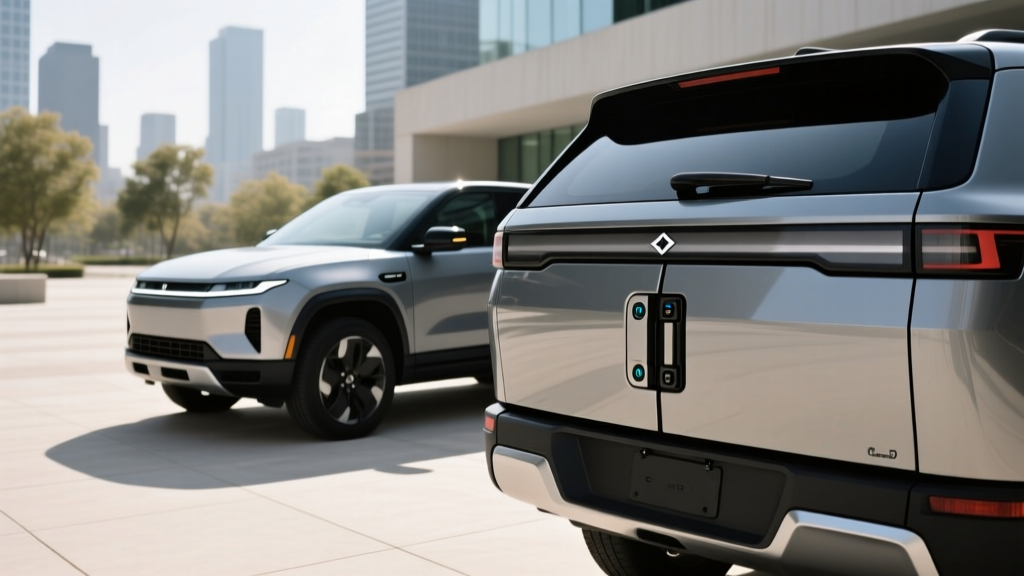
Rivian's second-generation R1S SUV and R1T truck arrived with sweeping changes — a new skateboard platform, upgraded dual- and tri-motor powertrains, and, crucially, a comprehensive Rivian automotive door safety redesign that addresses one of the most vocal owner complaints from the first generation. The revised electronic door handles and reinforced latch mechanisms aren't just a footnote; they fundamentally change the ownership experience for families and off-road adventurers alike. This review covers everything you need to know about the 2026 R1 lineup, from real-world range to charging speeds to the nitty-gritty of the door-system overhaul.
Why the Door Safety Redesign Matters
First-generation R1 owners reported issues with electronic door handles failing to deploy in freezing temperatures, occasional latch-disengagement warnings during hard cornering, and child-safety lock inconsistencies. NHTSA received enough owner complaints to warrant scrutiny, though no formal recall was issued for the latch mechanism itself. For 2026, Rivian engineered a ground-up revision:
- Redundant mechanical release: Every door now features a secondary mechanical pull-cable accessible from inside the cabin, even if the 12V electrical system fails entirely.
- Heated handle housings: Integrated thermal elements prevent ice-lock in sub-20°F conditions, drawing minimal wattage from the 12V system.
- Reinforced latch strikers: Higher-grade steel alloy latch plates rated to 4,500 lbs of lateral force — a 40% improvement over Gen 1.
- Child-lock redesign: Electronic child locks now default to "locked" on rear doors when the vehicle is in motion, with a physical override on the door edge for emergency egress.
The result is a door system that meets NHTSA FMVSS 206 standards with a significantly wider safety margin, particularly relevant for families using the R1S three-row configuration.
Range, Battery, and Efficiency
Real-World Expectation: Plan for 330–360 miles at sustained highway speeds (70–75 mph). In cold weather (below 30°F), expect a 15–25% reduction, bringing effective range to approximately 280–310 miles on the Max Pack. City driving with regenerative braking recovers closer to the EPA sticker.
Rivian offers three battery configurations for 2026:
| Specification | Standard Pack | Large Pack | Max Pack |
|---|---|---|---|
| Battery Capacity (usable) | 92 kWh | 115 kWh | 141 kWh |
| Chemistry | NMC (Nickel Manganese Cobalt) | NMC | NMC (high-silicon anode) |
| EPA Range (R1S) | 270 mi | 352 mi | 420 mi |
| EPA Range (R1T) | 258 mi | 340 mi | 390 mi |
| Efficiency (R1S Combined) | 2.8 kWh/mi (120 MPGe) | 2.7 kWh/mi (124 MPGe) | 2.8 kWh/mi (120 MPGe) |
Rivian has stuck with NMC chemistry across the lineup rather than adopting LFP. The trade-off is clear: NMC delivers higher energy density (critical for fitting 141 kWh into the R1's skateboard without excessive weight), but it requires more careful thermal management and shouldn't be routinely charged to 100% for daily use. Rivian's software recommends an 85% daily charge limit for NMC longevity, reserving 100% for road trips. The Max Pack's high-silicon anode cells, supplied by Samsung SDI, represent the energy-density frontier — they're what make 420 miles possible without making the vehicle heavier than a conventional three-row SUV.
Charging Speed: DC Fast Charge and Home Level 2
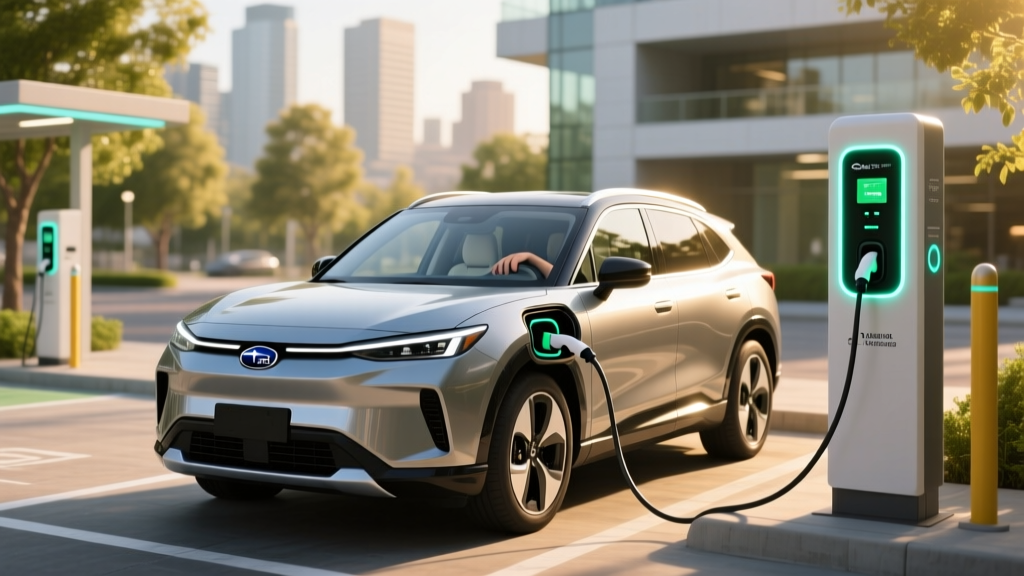
The Gen 2 R1 platform moved to an 800-volt electrical architecture (up from 400V in Gen 1), unlocking substantially faster DC fast-charging speeds. Here's what that means in practice:
| Charging Level | Power / Rate | Speed |
|---|---|---|
| Level 1 (120V household) | 1.4 kW | ~3–4 miles per hour |
| Level 2 (240V, 48A home charger) | 11.5 kW | ~28–32 miles per hour |
| Level 2 (240V, 60A Wall Connector) | 14.4 kW (vehicle-limited to 11.5 kW on Standard/Large) | ~32–35 miles per hour (Max Pack) |
| DC Fast Charge (peak) | 190 kW (Standard/Large) / 220 kW (Max Pack) | 10–80% in ~28 min (Large) / ~33 min (Max) |
| DC Fast Charge (sustained avg) | ~130–150 kW average to 80% | ~200 miles added in 20 minutes |
A critical nuance: the Max Pack's 220-kW peak rate is just that — a peak. The charge curve tapers noticeably above 60% state of charge, dropping to around 90 kW by 75% and further to 50 kW above 85%. This is standard NMC behavior to protect cell longevity, but it means a 10–90% session takes roughly 45 minutes, not the 33 minutes a simple peak-rate calculation would suggest. Rivian's navigation system preconditions the battery when you route to a charger, which can shave 5–8 minutes off your session in cold weather by warming the cells to optimal temperature.
The R1 uses the NACS (Tesla-style) connector natively for 2026, granting access to Tesla Supercharger stations alongside Electrify America, EVgo, and other networks. This is a significant practical advantage over the CCS-equipped first-generation models that required adapters.
Performance and Drivetrain
The Gen 2 R1 lineup offers three drivetrain configurations:
- Dual-Motor AWD: 533 horsepower, 610 lb-ft torque. 0–60 mph in 4.5 seconds. Available on Standard and Large packs.
- Performance Dual-Motor AWD: 665 horsepower, 829 lb-ft torque. 0–60 mph in 3.4 seconds. Available on Large and Max packs.
- Tri-Motor AWD (R1T only, limited): 850 horsepower, 1,100 lb-ft torque. 0–60 mph in 2.9 seconds. Max Pack only.
All configurations feature Rivian's torque-vectoring rear drive unit and a single-speed reduction gear. The quad-motor setup from Gen 1 has been consolidated into the tri-motor for Gen 2, simplifying the platform while maintaining the off-road capability (Rivian's "Tank Turn" feature remains available on tri-motor models). Ground clearance ranges from 7.9 inches (standard ride height) to 14.9 inches (max off-road height via air suspension), with a wading depth of 36.3 inches — among the best in the electric truck/SUV segment.
Towing capacity reaches 7,700 lbs for the R1T and 7,700 lbs for the R1S when properly equipped. Note that towing at maximum capacity will cut effective range roughly in half — plan for 180–210 miles between charges on the Max Pack when hauling a trailer.
Pricing, Trims, and Federal Tax Credit
| Model / Configuration | Base MSRP | §30D Federal Credit | Effective Price (after credit) |
|---|---|---|---|
| R1S Dual-Motor Standard | $75,900 | Up to $7,500* | ~$68,400 |
| R1S Dual-Motor Large | $82,400 | Up to $7,500* | ~$74,900 |
| R1S Performance Max | $99,900 | $0 (exceeds MSRP cap) | $99,900 |
| R1T Dual-Motor Standard | $69,900 | Up to $7,500* | ~$62,400 |
| R1T Dual-Motor Large | $76,400 | Up to $7,500* | ~$68,900 |
| R1T Tri-Motor Max | $105,900 | $0 (exceeds MSRP cap) | $105,900 |
*Federal §30D tax credit eligibility for 2026 requires:
- MSRP cap: SUVs (R1S) must be at or below $80,000; trucks (R1T) at or below $80,000. The R1S Performance Max and R1T Tri-Motor Max exceed this cap and do not qualify.
- Buyer income cap: Modified AGI must not exceed $300,000 (joint), $225,000 (head of household), or $150,000 (single).
- Battery sourcing: A percentage of critical minerals and battery components must be sourced from the US or free-trade-agreement countries. Rivian's dual-motor models with Samsung SDI cells currently meet these thresholds, but rules tighten annually — verify at IRS.gov §30D before purchase.
- Point-of-sale transfer: Buyers can elect to transfer the credit to the dealer at purchase, reducing the out-of-pocket price immediately rather than waiting for a tax refund.
Interior, Cargo, and Standout Tech
R1S (three-row SUV):
- Seating: 7 passengers (2nd-row bench) or 6 (captain's chairs)
- Cargo behind 3rd row: 10.6 cu ft
- Cargo behind 2nd row: 46.7 cu ft
- Cargo behind 1st row (max): 91.4 cu ft
- 3rd-row legroom: 30.1 inches (tight for adults on long trips; best for children)
R1T (crew-cab pickup):
- Seating: 5 passengers
- Bed length: 4.5 feet (standard), expandable with the Gear Tunnel
- Gear Tunnel: 11.7 cu ft of enclosed, lockable storage running the width of the vehicle behind the rear seats — a Rivian-exclusive feature
- Front trunk (frunk): 11.0 cu ft, with a drain plug for use as a cooler
Tech highlights:
- 15.6-inch center touchscreen running Rivian's in-house OS (no Apple CarPlay or Android Auto — a persistent complaint, though the native system is competent)
- Rivian Driver+ (Level 2 SAE): adaptive cruise, lane-centering, and automatic lane changes on mapped highways. This is not self-driving — the driver must remain attentive with hands on or near the wheel at all times.
- Over-the-air software updates that have meaningfully improved range estimation accuracy and added features post-purchase
- Integrated air compressor (onboard, 150 PSI) for tire inflation and camp accessories
- Camp Kitchen accessory (R1T): slide-out induction cooktop and sink system that fits the Gear Tunnel
Warranty and Long-Term Ownership
| Coverage | Term |
|---|---|
| Basic Vehicle Warranty | 5 years / 60,000 miles |
| Battery & Drive Unit | 8 years / 175,000 miles |
| Battery Capacity Retention | Guaranteed ≥70% of original capacity within warranty period |
| Corrosion Perforation | 5 years / unlimited miles |
| Roadside Assistance | 5 years / 60,000 miles |
The 8-year/175,000-mile battery warranty is competitive with Tesla's 8-year/120,000–150,000-mile coverage (depending on model) and exceeds Ford's 8-year/100,000-mile standard on the F-150 Lightning. The 70% capacity-retention threshold is industry-standard; in practice, NMC batteries in Rivian's thermal-management system are projected to retain roughly 85–88% capacity at 100,000 miles based on fleet data from early Gen 1 vehicles, though long-term 200,000+ mile data is still accumulating.
Insurance costs remain a consideration: R1 models carry premiums roughly 20–35% higher than comparable ICE SUVs/trucks due to repair costs for aluminum body panels and specialized drivetrain components. Budget $2,200–$3,500 annually depending on your profile and state.
Pros and Cons
Pros
- Class-leading range (420 mi Max Pack R1S)
- Redesigned door safety system with mechanical redundancy
- 800V architecture enables competitive DC fast charging
- Native NACS connector — Supercharger access without adapter
- Gear Tunnel (R1T) is genuinely innovative storage
- Best-in-class off-road capability for an electric SUV/truck
- Strong OTA update track record
- 175,000-mile battery warranty
Cons
- No Apple CarPlay or Android Auto
- Tri-motor and Max Pack trims exceed §30D MSRP cap
- 3rd-row space in R1S is tight for adults
- Towing cuts range approximately in half
- Insurance premiums 20–35% above ICE equivalents
- Service center network still expanding — wait times in some regions
- NMC chemistry requires 85% daily charge discipline
Who Should Buy the 2026 Rivian R1S or R1T?
Buy the R1S if: You need three rows for a family, want genuine off-road capability, regularly drive in cold climates where the heated door handles and battery preconditioning shine, and can charge at home (a Level 2 home charger is strongly recommended given the 141-kWh Max Pack's 12+ hour charge time on Level 1).
Buy the R1T if: You want a daily-drivable electric truck with weekend adventure capability, value the Gear Tunnel for gear-heavy hobbies (skiing, mountain biking, overlanding), and don't need to tow more than 7,700 lbs regularly.
Look elsewhere if: You need maximum towing range (consider the F-150 Lightning Extended Range or Chevy Silverado EV), you require Apple CarPlay, or your budget tops out below $65,000 after incentives (the Hyundai Ioniq 5 or Tesla Model Y may be better fits).
Frequently Asked Questions
What is the real-world range of the 2026 Rivian R1S and R1T?
The EPA rates the R1S Max Pack at 420 miles and the R1T Max Pack at 390 miles. In real-world highway driving at 70–75 mph, expect 330–360 miles. In cold weather (below 30°F), that drops to roughly 280–310 miles. Standard Pack models will see 210–240 real-world highway miles.
How fast does the R1 charge at home and on the road?
At home on a 240V Level 2 charger (48A), you'll add about 28–35 miles per hour, meaning a full charge of the Max Pack takes roughly 10–12 hours. On DC fast chargers, the Max Pack peaks at 220 kW and charges from 10–80% in approximately 33 minutes, though the average sustained rate is closer to 130–150 kW.
Does the 2026 Rivian R1 qualify for the $7,500 federal tax credit?
It depends on the trim. Dual-Motor Standard and Large configurations under the $80,000 MSRP cap qualify for up to $7,500 under IRS §30D, provided the buyer meets income limits ($150K single / $300K joint) and the battery sourcing requirements are met. The Performance Max and Tri-Motor Max trims exceed the MSRP cap and do not qualify. Always verify current eligibility at IRS.gov.
What specifically changed in the door safety redesign?
Rivian added a redundant mechanical interior release cable (functional even during 12V failure), heated handle housings for freeze prevention, reinforced latch strikers rated to 4,500 lbs lateral force, and redesigned electronic child locks that default to locked when the vehicle is moving. These changes address Gen 1 complaints about handle failures in cold weather and latch warnings during dynamic driving.
Is the Rivian R1 worth buying over the Tesla Model Y, Ford F-150 Lightning, or Rivian's other competitors?
The R1S has no direct three-row electric SUV rival with comparable off-road capability and range. The Tesla Model Y is less expensive and more efficient but offers no serious off-road chops and only optional third-row seating (very small). The F-150 Lightning is a more traditional truck experience with better towing infrastructure but less range and no Gear Tunnel. The R1 occupies a unique niche: premium adventure-oriented electric vehicles with genuine capability. If that niche matches your needs, it's worth the premium.
Does Rivian offer LFP battery options?
Not for 2026. All R1 configurations use NMC chemistry from Samsung SDI. Rivian has not announced LFP plans for the R1 platform, likely because LFP's lower energy density would compromise the 400+ mile range target. If you want LFP for its longer cycle life and 100% daily-charge tolerance, consider the Tesla Model Y RWD or standard-range Ford models.