Yes, Rivian Is American — Here's What That Means for Buyers
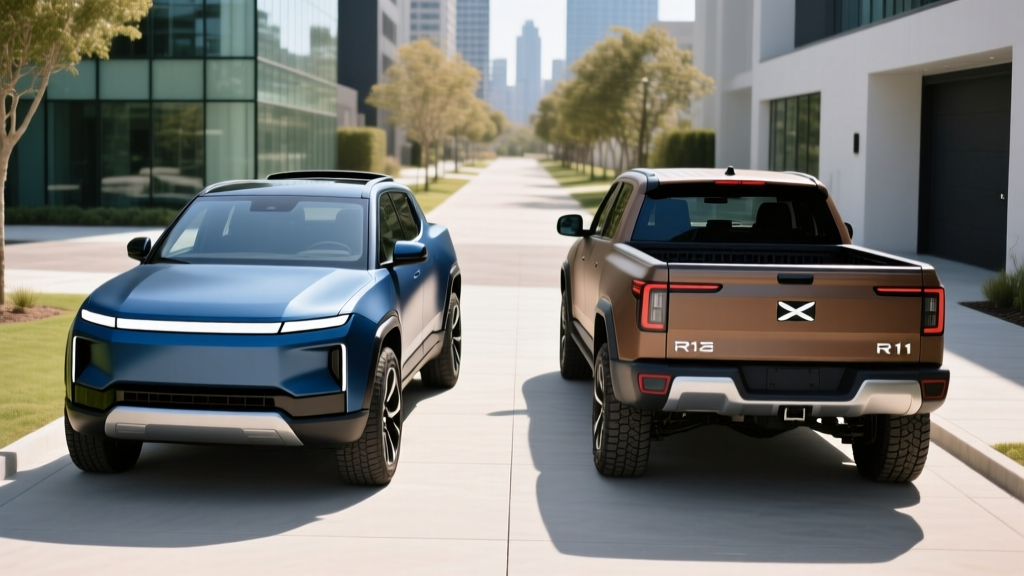
Short answer: yes. Rivian Automotive is headquartered in Irvine, California, and manufactures both the R1S SUV and R1T pickup at its own plant in Normal, Illinois. That facility — a former Mitsubishi factory Rivian acquired in 2017 — is where every R1S and R1T sold in the U.S. is assembled. For EV shoppers asking "is Rivian American," the answer affects more than national pride: it directly determines federal tax credit eligibility under IRS §30D, which requires North American final assembly.
But origin is only the beginning. The 2026 Rivian R1S and R1T are among the most capable electric vehicles on the market, competing directly with the Tesla Model X, Ford F-150 Lightning, and GMC Hummer EV. This review covers the real numbers — EPA range, charging curves, tax credit math, and ownership costs — so you can decide if either vehicle earns a spot in your driveway.
2026 Rivian R1S and R1T: Core Specifications at a Glance
| Spec | R1S Dual-Motor (Standard) | R1S Tri-Motor |
|---|---|---|
| EPA Range | ~330 miles (Max Pack) | ~330 miles (Max Pack) |
| Battery (usable) | ~92 kWh (Standard) / ~128 kWh (Max) | ~128 kWh (Max) |
| Chemistry | NMC (nickel manganese cobalt) | NMC |
| Horsepower | 533 hp (Dual-Motor) | 850 hp (Tri-Motor) |
| 0–60 mph | ~4.5 sec | ~2.9 sec |
| Drivetrain | AWD (dual-motor) | AWD (tri-motor) |
| Max DC Fast Charge | ~200 kW (peak) | ~220 kW (peak) |
| 10–80% DCFC Time | ~30 min (Max Pack) | ~28 min (Max Pack) |
| Level 2 Home Charging | 11.5 kW (~30 mi/hr) | 11.5 kW (~30 mi/hr) |
| MPGe (combined) | ~73 MPGe | ~70 MPGe |
| Towing Capacity | 7,700 lbs | 7,700 lbs |
| Cargo (R1S behind 3rd row) | ~10.4 cu ft (20.4 w/ 3rd folded) | ~10.4 cu ft |
| Cargo (R1T bed) | ~54 cu ft bed + 11 cu ft frunk + Gear Tunnel | |
| Base MSRP | ~$79,900 (Dual-Motor Standard) | ~$105,900 (Tri-Motor) |
| Battery Warranty | 8 years / 175,000 miles | |
Sources: EPA / fueleconomy.gov, Rivian R1S official specs, Rivian R1T official specs. Specs reflect latest available model-year data; verify at purchase.
Real-World Range: What the EPA Sticker Doesn't Tell You
EPA Estimated: ~330 miles (Max Pack, Dual-Motor, combined cycle)
Expect in practice:
- City/suburban driving (mild weather): 310–340 miles — regenerative braking helps recover energy in stop-and-go traffic.
- Highway at 70–75 mph: ~260–290 miles — aerodynamic drag dominates at sustained speed in a large SUV/truck.
- Cold weather (below 30°F): ~230–270 miles — battery chemistry slows, cabin heating draws significant power.
- Towing (5,000+ lb trailer): ~150–190 miles — expect range to roughly halve under heavy tow loads.
The R1S and R1T use NMC (nickel manganese cobalt) lithium-ion cells, which offer high energy density but are more temperature-sensitive than LFP chemistry. Rivian's thermal management system includes a heat pump and active liquid cooling/heating, which helps — but physics is physics. If you live in Minnesota or regularly drive 75 mph on I-70, plan for 250 miles of usable range and charge accordingly.
Rivian's navigation system includes route-based battery preconditioning, warming the pack as you approach a DC fast charger. This is essential for achieving peak charge rates and should always be enabled.
Charging Speed: DC Fast, Level 2, and What You'll Actually Experience
| Charging Level | Power | Miles Added per Hour | Typical Use Case |
|---|---|---|---|
| Level 1 (120V outlet) | ~1.4 kW | ~3–4 mi/hr | Emergency/trickle only |
| Level 2 (240V, 48A home) | 11.5 kW | ~28–30 mi/hr | Daily home charging (full overnight) |
| DC Fast (150 kW station) | 150 kW sustained | ~250+ mi/hr equivalent | Common public charger speed |
| DC Fast (200+ kW peak) | ~200–220 kW peak | ~350+ mi/hr equivalent | Electrify America / Tesla Supercharger (NACS adapter) |
Key charging-curve insight: The R1S/R1T peak charge rate of ~200–220 kW is achieved only between roughly 10–40% state of charge on a compatible station. Above 80%, the rate tapers significantly — often dropping below 50 kW. This is normal for NMC packs protecting longevity, but it means a 10–90% session takes considerably longer than 10–80%. Plan road-trip stops around the 10–80% window (~28–30 minutes) and skip topping off unless you need those last miles.
Rivian vehicles now ship with a NACS (North American Charging Standard) port or include an adapter, granting access to the Tesla Supercharger network — currently the most reliable DC fast-charging infrastructure in the U.S. You can also use Electrify America, EVgo, and ChargePoint stations with the appropriate connector.
Pricing, Trims, and Federal Tax Credit Eligibility
| Trim / Configuration | Base MSRP | §30D Credit Eligible? | Effective Price (if eligible) |
|---|---|---|---|
| R1S Dual-Motor (Standard Pack) | ~$79,900 | ✅ Yes (SUV MSRP cap: $80,000) | ~$72,400 |
| R1S Dual-Motor (Max Pack) | ~$89,900 | ❌ No — exceeds $80K SUV cap | $89,900 |
| R1S Tri-Motor | ~$105,900 | ❌ No — exceeds $80K SUV cap | $105,900 |
| R1T Dual-Motor (Standard Pack) | ~$73,000 | ✅ Yes (truck MSRP cap: $80,000) | ~$65,500 |
| R1T Dual-Motor (Max Pack) | ~$83,000 | ❌ No — exceeds $80K truck cap | $83,000 |
Critical §30D tax credit caveats (IRS rules, 2026):
- MSRP caps: SUVs must be ≤$80,000; trucks ≤$80,000. Only the base Dual-Motor Standard Pack configurations qualify.
- Buyer income limits: Modified AGI must not exceed $150,000 (single), $225,000 (head of household), or $300,000 (joint).
- Battery sourcing: The credit is split into two $3,750 halves — one for critical minerals sourcing, one for battery component manufacturing. Rivian's supply chain has been evolving; verify current-year eligibility on IRS.gov before purchase.
- Point-of-sale transfer: Eligible buyers can transfer the credit to the dealer for an immediate price reduction at purchase, rather than waiting to claim it on their tax return.
Because the Max Pack and Tri-Motor trims exceed the MSRP cap, buyers wanting maximum range or performance will pay full price. If the tax credit is a priority, the Standard Pack Dual-Motor is the trim to target.
Performance, Capability, and Daily Driving
The Dual-Motor R1S delivers 533 horsepower and a 0–60 mph time around 4.5 seconds — genuinely quick for a three-row SUV weighing over 6,800 pounds. The Tri-Motor variant, with 850 hp and a sub-3-second 0–60, enters supercar territory but at a steep price premium and slight range penalty from the extra motor's weight and drag.
Towing: Both the R1S and R1T are rated for 7,700 pounds — best-in-class for electric SUVs and competitive with the F-150 Lightning. However, towing at capacity cuts range roughly in half. If you tow frequently, the Max Pack's larger battery is worth the investment even without the tax credit.
Off-road: Rivian's quad-motor air suspension provides up to 14.9 inches of ground clearance, a wading depth of over 3 feet, and dedicated off-road drive modes. This isn't a crossover posing as an adventure vehicle — it's genuinely capable on trails, sand, and snow.
Cargo & passenger space:
- R1S: 10.4 cu ft behind the third row; 20.4 cu ft with the third row folded; ~71 cu ft with both rear rows flat. Legroom is generous in rows one and two, but the third row is best for children.
- R1T: 4.5-foot bed (~54 cu ft), 11 cu ft front trunk (frunk), and the signature Gear Tunnel — a lockable, pass-through storage compartment behind the cab, available as an optional Camp Kitchen.
Tech, Driver Assistance, and Software
Rivian's infotainment system runs on a custom 15.6-inch center touchscreen with an integrated navigation system, over-the-air (OTA) updates, and a built-in Wi-Fi hotspot. The software is clean and responsive, though it lacks Apple CarPlay and Android Auto — a deliberate choice by Rivian, and a dealbreaker for some buyers who prefer phone projection.
Driver assistance — Driver+ (SAE Level 2):
Rivian's Driver+ system is a Level 2 driver-assist feature. It combines adaptive cruise control and lane-centering on divided highways. You must keep your hands on the wheel (or respond to prompts) and remain fully engaged at all times. This is not autonomous driving. Only Level 4 services like Waymo operate without a human driver.
Driver+ works well on interstates and reduces fatigue on long trips, but it doesn't navigate on-ramps, handle city streets, or read traffic lights autonomously. It's competitive with Ford BlueCruise and GM Super Cruise in highway scenarios, though Tesla's Autopilot/FSD (Supervised) offers a broader feature set — with the same Level 2 caveat.
Pros and Cons: Honest Assessment
✅ Pros
- American-made in Illinois; qualifies for §30D credit on base trims
- Class-leading off-road capability and ground clearance
- 7,700-lb towing — best among electric SUVs
- Excellent build quality and thoughtful storage (Gear Tunnel, frunk)
- OTA updates continuously add features
- Access to Tesla Supercharger network via NACS
- 8-year / 175,000-mile battery warranty
❌ Cons
- Only base Dual-Motor Standard Pack qualifies for the federal credit
- No Apple CarPlay or Android Auto
- Real-world highway range drops to ~260–290 miles
- Towing cuts range roughly in half
- Charging tapers significantly above 80% SoC
- High starting price; well-equipped builds exceed $90K+
- Service center network still expanding in rural areas
Who Should Buy the Rivian R1S or R1T?
Decision Framework
- Choose the R1S if: You need a three-row family SUV with real off-road chops, tow a boat or camper on weekends, and want a vehicle assembled in the U.S. with available tax credits on the base trim.
- Choose the R1T if: You want a daily-drivable electric pickup with innovative storage (Gear Tunnel, frunk), tow under 7,700 lbs, and prefer truck versatility over SUV seating.
- Look elsewhere if: You prioritize maximum range per dollar (consider the Hyundai Ioniq 5 or Tesla Model Y), need Apple CarPlay, or want the cheapest possible entry into EV ownership.
Best for: Active families, outdoor enthusiasts, and truck buyers who tow moderately and have home Level 2 charging. The Rivian platform rewards owners who use its full capability envelope — not just commuters.
Less ideal for: Budget-conscious buyers, apartment dwellers without home charging access, or those who prioritize infotainment integration (CarPlay/Android Auto) over vehicle-native software.
Frequently Asked Questions
Is Rivian an American company?
Yes. Rivian is headquartered in Irvine, California, and all R1S and R1T vehicles are manufactured in Normal, Illinois. The company is publicly traded on NASDAQ (ticker: RIVN) and is considered a U.S.-domiciled automaker.
What is the real-world range of the Rivian R1S?
The EPA rates the Max Pack Dual-Motor R1S at approximately 330 miles combined. In real-world highway driving at 70–75 mph, expect 260–290 miles. In cold weather (below 30°F), plan for 230–270 miles. Towing a heavy trailer can reduce range to 150–190 miles.
How fast does the Rivian charge at home and on the road?
On a Level 2 home charger (240V, 48A), the R1S/R1T charges at 11.5 kW, adding roughly 28–30 miles of range per hour — a full overnight charge. On a DC fast charger, peak rates reach ~200–220 kW, achieving a 10–80% charge in approximately 28–30 minutes on the Max Pack. Charging slows significantly above 80%.
Does the Rivian R1S qualify for the $7,500 federal EV tax credit?
Only the base Dual-Motor Standard Pack configuration (MSRP ~$79,900) qualifies, because IRS §30D caps SUV eligibility at $80,000 MSRP. Max Pack and Tri-Motor trims exceed the cap. Buyers must also meet income limits ($150K single / $300K joint) and battery-sourcing requirements. Verify current eligibility at IRS.gov and consider the point-of-sale transfer option.
Is the Rivian worth buying over the Tesla Model X or Ford F-150 Lightning?
The R1S wins on off-road capability, build quality, and adventure-oriented design. The Tesla Model X offers more range, faster charging, and the Supercharger network natively, but at a higher price and with polarizing styling. The F-150 Lightning is more affordable and offers a traditional truck form factor, but the R1T's Gear Tunnel and independent suspension give it a refinement edge. Your choice depends on priorities: adventure capability (Rivian), range/charging (Tesla), or value/tradition (Ford).
What is Rivian's battery warranty?
Rivian covers the R1S and R1T battery pack and electric powertrain for 8 years or 175,000 miles, whichever comes first. This exceeds the federal minimum requirement of 8 years / 100,000 miles and is competitive with Tesla's coverage.
Does Rivian have Apple CarPlay or Android Auto?
No. Rivian uses its own proprietary infotainment system and does not support phone projection. The native system is well-designed with OTA updates, but if CarPlay is non-negotiable, this may be a dealbreaker.