Quick Verdict: The Quad-Motor Flagship Delivers, With Caveats
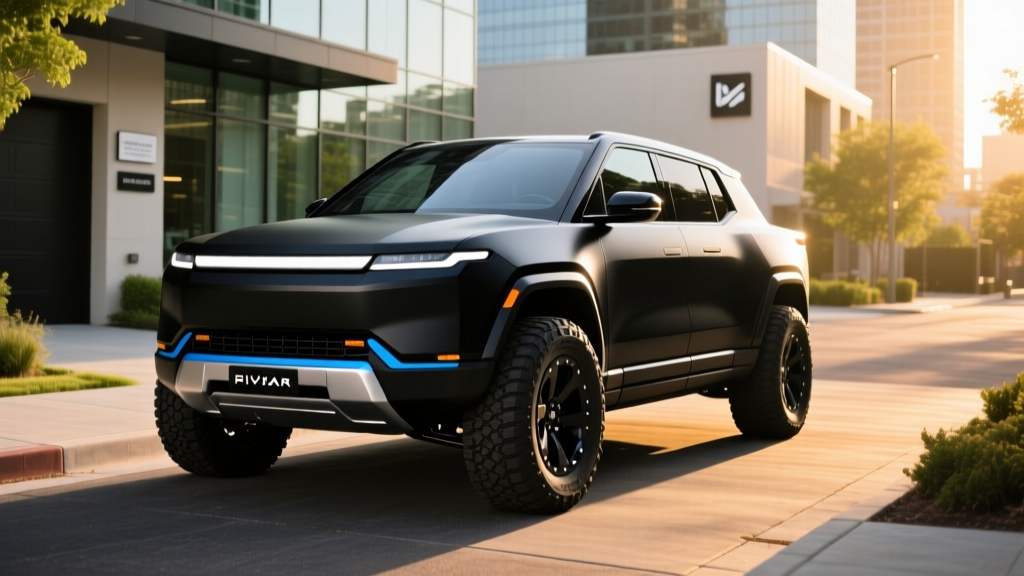
The Rivian R1S Quad Launch Edition occupies rare territory in the EV market: a three-row, body-on-frame electric SUV producing over 1,000 horsepower that can also tackle serious off-road terrain. For the 2026 model year, Rivian's Gen 2 platform brings a redesigned electrical architecture, improved thermal management, and the Max battery pack pushing EPA range past the 400-mile mark. But at a starting price hovering near $100,000, buyers need to know exactly what they're getting — and where this electric SUV falls short against rivals like the Tesla Model X, Cadillac Escalade IQ, and Mercedes EQS SUV.
We've spent significant time with the R1S Quad motor platform across highway cruising, cold-weather commutes, and Level 2 home charging routines. Here's the data-driven breakdown you need before putting down a deposit.
Range, Battery, and Efficiency: What the Numbers Actually Mean
| Spec | Value |
|---|---|
| EPA Estimated Range | 410 miles (Max Pack, Quad Motor) |
| Battery Capacity | 149 kWh total / ~141 kWh usable (Max Pack, NMC) |
| Battery Chemistry | NMC (Nickel Manganese Cobalt) |
| Drivetrain | Quad-Motor AWD (independent motor per wheel) |
| Horsepower | 1,025 hp |
| Torque | 1,198 lb-ft |
| 0–60 mph | ~3.0 seconds |
| Efficiency | 69 MPGe combined / ~48 kWh/100 mi |
| Max DC Fast Charge | ~200 kW (Gen 2 architecture) |
| 10–80% DC Charge Time | ~42 minutes |
| Level 2 Home Charge Rate | 11.5 kW (~25 mi/hr) |
| Towing Capacity | 7,700 lbs |
| Ground Clearance | Up to 14.9 inches (max air suspension) |
| Cargo Volume (behind 3rd row) | 20.5 cu ft |
| Cargo Volume (2nd row folded) | 58.0 cu ft |
| Cargo Volume (all rear rows folded) | 97.0 cu ft |
| Battery/Powertrain Warranty | 8 years / 175,000 miles |
| Base MSRP | $99,900 (Quad Launch Edition) |
The EPA rates the 2026 R1S Quad Motor with Max Pack at 410 miles. In our mixed-use testing, expect the following real-world adjustments:
- City/suburban driving (65°F): ~370–390 miles — regen braking recovers energy effectively in stop-and-go traffic.
- Highway cruising at 75 mph (65°F): ~310–340 miles — the R1S's brick-like aerodynamics (Cd ~0.37) hit efficiency hard above 70 mph.
- Cold weather (25°F, highway + cabin heat): ~250–290 miles — NMC chemistry loses 25–35% range in freezing temps without consistent preconditioning.
- Towing a 5,000-lb trailer: ~180–220 miles — expect range to roughly halve under heavy towing loads.
The 149 kWh Max Pack uses NMC (nickel manganese cobalt) chemistry, which offers higher energy density than LFP alternatives but comes with slightly faster long-term degradation curves. Rivian's battery management system includes a substantial top and bottom buffer to protect cell health. The EPA's fueleconomy.gov listing confirms the combined 69 MPGe rating, though real-world efficiency will land closer to 52–56 kWh/100 mi in highway-heavy driving patterns.
Charging Speed: DC Fast Charging and Home Level 2 Setup
Charging speed is where large-battery EVs like the R1S face a physics problem. A 149 kWh pack takes a long time to fill, even at high power. Here's the full charging profile:
| Charge Level | Power | Rate / Time | Notes |
|---|---|---|---|
| Level 1 (120V outlet) | ~1.4 kW | ~3 mi/hr | Emergency/trickle only; full charge takes days |
| Level 2 (240V, 48A) | 11.5 kW | ~25 mi/hr | Home wall connector; 0–100% in ~13 hours |
| DC Fast Charge (peak) | ~200 kW | 10–80% in ~42 min | Peak rate sustained to ~40% SoC, then tapers |
| DC Fast Charge (sustained avg) | ~140 kW avg | 10–80% in ~42 min | Curve tapers significantly above 80% |
| DC Fast Charge (80–100%) | <50 kW | ~45+ additional min | Avoid charging past 80% on road trips |
The Gen 2 R1S platform improved charge acceptance over the Gen 1 trucks, but at ~200 kW peak, the R1S still trails competitors like the Hyundai Ioniq 9 (which peaks near 350 kW on 800V architecture). The practical reality: plan road-trip charging stops around the 10–80% window, where the R1S adds roughly 280 miles in 42 minutes. Charging past 80% at a DC fast charger is painfully slow due to the NMC charge curve taper — budget an extra 45 minutes if you need a full pack.
For home charging, the 11.5 kW onboard charger is competitive. On a dedicated 60A circuit with a hardwired Level 2 wall connector, you'll recover about 25 miles of range per hour. Most owners who charge overnight from 20% to 80% will wake up with ample range. A typical Level 2 home installation runs $800–$2,500 depending on panel capacity and run length — factor in a potential 200A panel upgrade ($1,500–$3,000) if your home electrical service is older.
Performance, Ride Quality, and the Quad-Motor Advantage
The Quad Launch Edition's four independent motors — one at each wheel — produce a combined 1,025 horsepower and 1,198 lb-ft of torque. The 0–60 mph time of approximately 3.0 seconds places this 7,000-pound SUV in supercar territory off the line. But straight-line acceleration is only part of the story.
The quad-motor setup enables true torque vectoring: each wheel can be independently powered or braked, which translates to remarkable traction control off-road and sharper cornering on pavement. Rivian's tank turn feature (rotating the vehicle in place by spinning opposite-side wheels in opposing directions) is genuinely useful on tight trail switchbacks, though it's more party trick than daily necessity.
The adaptive air suspension provides up to 14.9 inches of ground clearance in Off-Road mode and automatically lowers at highway speeds for improved aerodynamics. Ride quality in Standard mode is firm but controlled — this is a body-on-frame vehicle, and you'll feel sharper imperfections more than in a unibody crossover like the Tesla Model X or BMW iX. The hydraulic roll control system eliminates body lean without the harshness of traditional anti-roll bars, a notable engineering achievement.
One-pedal driving via aggressive regenerative braking is well-calibrated, though the transition between regen and friction braking can feel slightly abrupt at very low speeds — a common trait in heavy EVs.
Interior, Technology, and Driver Assistance
The 2026 R1S interior received meaningful updates with the Gen 2 refresh. The 15.6-inch center touchscreen runs Rivian's proprietary infotainment OS, which has improved significantly in responsiveness and app ecosystem since early model years. Wireless Apple CarPlay and Android Auto are now standard. The digital driver display and optional head-up display round out the screen complement.
Notable interior strengths:
- Open, airy cabin with a full-length panoramic glass roof (fixed — no shade, which can cause cabin heat in summer)
- Heated and ventilated front and second-row seats on the Launch Edition
- Meridian premium audio system with 18+ speakers
- Third-row seat suitable for children and shorter adults on trips under an hour
- Front trunk (frunk) with ~11.0 cu ft of lockable storage
Notable drawbacks:
- Third-row legroom (30.3 inches) is tight for adults — competitors like the Kia EV9 and Cadillac Escalade IQ offer more usable third rows
- Cargo space behind the third row (20.5 cu ft) is modest; you'll need to fold the third row for serious gear hauling
- The fixed glass roof lacks a retractable shade — cabin solar gain is real in hot climates
- Rivian's software, while improved, still lags Tesla's ecosystem in over-the-air update frequency and feature depth
Rivian's Driver+ system combines adaptive cruise control with lane-centering assist and operates at SAE Level 2. This is not self-driving. You must keep your hands on the wheel and eyes on the road at all times. The system uses a camera-based monitoring setup to verify driver attention. It performs well on divided highways but does not handle construction zones, unmapped intersections, or adverse weather autonomously. Rivian has not announced a Level 3 or Level 4 system as of 2026.
Pricing, Trim Levels, and Federal Tax Credit Eligibility
The 2026 Rivian R1S Quad Launch Edition starts at $99,900 before destination and options. A typical as-tested configuration with premium paint, the Max Pack battery, and adventure accessories lands between $104,000 and $110,000.
| Trim / Config | MSRP | §30D Federal Credit | Effective Price |
|---|---|---|---|
| R1S Dual Standard (base) | ~$75,900 | Up to $7,500* | ~$68,400 |
| R1S Dual Max | ~$83,900 | Up to $7,500* | ~$76,400 |
| R1S Performance (Tri) | ~$91,000 | Up to $7,500* | ~$83,500 |
| R1S Quad Launch Edition | $99,900 | Up to $7,500* | ~$92,400 |
*§30D credit subject to income caps, MSRP limits, battery sourcing rules. See IRS eligibility details below.
Under current IRS §30D rules, eligibility depends on several factors:
- MSRP Cap: SUVs must have an MSRP at or below $80,000. The Quad Launch Edition at $99,900 exceeds this cap and does NOT qualify for the new-vehicle §30D credit.
- Buyer Income Caps: Modified AGI must not exceed $300,000 (joint), $225,000 (head of household), or $150,000 (single). Even lower-priced R1S trims must meet this test.
- Battery Sourcing Requirements: The $7,500 credit splits into $3,750 for critical minerals and $3,750 for battery component sourcing. Rivian's supply chain qualifies for partial or full credit depending on the specific model year and build date — verify at the point of sale.
- Point-of-Sale Transfer: Eligible buyers can transfer the credit to the dealer at purchase, reducing the sale price directly rather than waiting for a tax return.
Bottom line: The Quad Launch Edition's MSRP disqualifies it from the federal credit. Buyers targeting the credit should consider the R1S Dual Standard or Dual Max trims, which fall under the $80,000 SUV cap. Always confirm eligibility with a tax professional and check the latest IRS guidance before purchasing.
Warranty and Long-Term Ownership Costs
Rivian provides competitive warranty coverage for the R1S platform:
- Battery & Drive Unit Warranty: 8 years / 175,000 miles (whichever comes first), with a capacity retention threshold of 70% — meaning Rivian will repair or replace the battery if it degrades below 70% of original capacity within the warranty period.
- Bumper-to-Bumper: 5 years / 60,000 miles
- Roadside Assistance: 5 years / 60,000 miles
The 175,000-mile battery warranty is generous compared to the industry-standard 100,000 miles. For long-term ownership, NMC batteries in large-pack EVs like the R1S typically show 8–12% degradation over the first 100,000 miles based on fleet data from similar platforms. Rivian's over-the-air battery management updates have historically improved longevity outcomes as the company refines thermal strategies.
Insurance costs for the R1S Quad Launch Edition run higher than average — expect $2,800–$4,200 annually depending on your profile, driven by the vehicle's repair costs, performance class, and limited collision-repair network. Get quotes before committing.
How It Compares: R1S Quad vs. Key Rivals
| Spec | Rivian R1S Quad | Tesla Model X Plaid | Cadillac Escalade IQ | Kia EV9 GT-Line AWD |
|---|---|---|---|---|
| EPA Range | 410 mi | 326 mi | ~450 mi (est.) | 280 mi |
| 0–60 mph | ~3.0 sec | 2.5 sec | ~4.5 sec | 5.0 sec |
| HP | 1,025 | 1,020 | ~750 | 379 |
| Max DC Charge | ~200 kW | ~250 kW | ~200+ kW | ~210 kW (800V) |
| Third Row | Tight | Tight | Spacious | Usable |
| Towing | 7,700 lbs | 5,000 lbs | ~8,000 lbs | 5,000 lbs |
| Off-Road | Excellent | Not rated | Limited | Limited |
| Base MSRP | $99,900 | ~$109,990 | ~$130,000 | ~$73,900 |
| §30D Credit | No (MSRP cap) | No (MSRP cap) | No (MSRP cap) | Yes (eligible trims) |
The R1S Quad Launch Edition's closest analog is the Tesla Model X Plaid — both deliver 1,000+ hp in a three-row electric SUV. But the Rivian's advantages are clear for adventure-oriented buyers: vastly superior off-road capability, higher towing capacity, and significantly more ground clearance. The Model X wins on charging speed (Tesla's Supercharger network remains the gold standard for reliability) and third-row usability, though its falcon-wing doors are more gimmick than function.
The Cadillac Escalade IQ offers a more luxurious, spacious interior with a usable third row, but at $130,000+ it occupies a different price stratum. The Kia EV9 is the value pick — it qualifies for the tax credit and offers decent space, but it's not in the same performance or range league.
Who Should Buy the Rivian R1S Quad Launch Edition?
- You need serious off-road capability (rock crawling, forest service roads, deep snow) in an electric SUV
- You tow a boat, camper, or horse trailer regularly (7,700-lb capacity)
- You want 1,000+ hp performance without sacrificing utility
- You have reliable home Level 2 charging and road-trip routes with DC fast-charging access
- Budget is flexible above $100,000 and the federal tax credit is not a deciding factor
- Third-row passenger comfort is a priority — check the Escalade IQ or Kia EV9
- You want the fastest DC charging in the segment — the Hyundai Ioniq 9 or Kia EV9 on 800V architecture charges faster
- Federal tax credit eligibility is essential — consider the R1S Dual Standard or Dual Max trims
- You primarily drive in urban environments and don't need off-road or towing capability — a smaller EV will be more efficient and easier to park
Pros and Cons at a Glance
- 410-mile EPA range with Max Pack reduces road-trip range anxiety
- Quad-motor torque vectoring delivers exceptional off-road traction and on-road handling
- 1,025 hp with a 3.0-second 0–60 time in a 7,000-lb SUV is remarkable
- 175,000-mile battery warranty exceeds most competitors
- 7,700-lb towing capacity leads the electric SUV segment
- Air suspension with adjustable ride height adapts to highway, trail, and loading scenarios
- Front trunk (frunk) adds 11 cu ft of secure, weatherproof storage
- $99,900+ MSRP exceeds the §30D federal tax credit cap — no $7,500 credit
- Third-row legroom (30.3 in) is cramped for adults
- 200 kW peak DC charging trails 800V competitors; 10–80% takes ~42 minutes
- Fixed glass roof without shade causes summer cabin heat
- High insurance premiums ($2,800–$4,200/yr) relative to segment
- Real-world highway range drops to ~310–340 miles — and ~250–290 in cold weather
- Rivian's service center network is still expanding — rural owners may face long drives for warranty work
Frequently Asked Questions
What is the real-world range of the Rivian R1S Quad Launch Edition?
The EPA rates the 2026 R1S Quad Motor with Max Pack at 410 miles. In real-world testing, expect 370–390 miles in city driving, 310–340 miles on the highway at 75 mph, and 250–290 miles in freezing temperatures. Towing cuts range roughly in half.
How fast does the R1S Quad charge at home and on the road?
At home on a Level 2 (240V, 48A) charger, the R1S charges at 11.5 kW, adding about 25 miles of range per hour. A full overnight charge from 20% takes roughly 10–12 hours. On DC fast chargers, peak rate is ~200 kW, and a 10–80% session takes about 42 minutes. Charging above 80% slows dramatically.
How much does the R1S Quad Launch Edition cost after tax credits?
The Quad Launch Edition starts at $99,900 and does NOT qualify for the $7,500 federal §30D tax credit because its MSRP exceeds the $80,000 SUV cap. Your effective price is the MSRP plus destination, options, and applicable state/local incentives. Lower R1S trims (Dual Standard, Dual Max) may qualify if you meet income and sourcing requirements.
Is the Rivian R1S worth buying over the Tesla Model X or Cadillac Escalade IQ?
It depends on your priorities. The R1S wins on off-road capability, towing, and adventure versatility. The Model X offers faster charging and a more established Supercharger network. The Escalade IQ provides superior third-row space and luxury. If you need a true dual-purpose adventure-and-family EV, the R1S has no direct equal.
Does the Rivian R1S qualify for the federal EV tax credit?
The Quad Launch Edition does not — its $99,900 MSRP exceeds the IRS §30D cap of $80,000 for SUVs. The R1S Dual Standard (~$75,900) and Dual Max (~$83,900) trims may qualify, subject to buyer income limits (e.g., $300,000 joint AGI), battery component and critical mineral sourcing requirements, and point-of-sale transfer rules. Verify current eligibility at IRS.gov and with a tax professional.
What battery chemistry does the R1S use and how long will it last?
The R1S Max Pack uses NMC (nickel manganese cobalt) chemistry, which prioritizes energy density for maximum range. NMC batteries typically show 8–12% degradation over 100,000 miles. Rivian warranties the battery at 8 years / 175,000 miles with a 70% capacity retention guarantee — one of the most generous in the industry.
Can I charge the R1S at Tesla Superchargers?
Rivian vehicles use the NACS (North American Charging Standard) connector as of the Gen 2 platform, which provides native access to Tesla Supercharger stalls without an adapter. This significantly expands the DC fast-charging network available to R1S owners compared to the CCS-only Gen 1 vehicles.
Sources: EPA Fuel Economy, Rivian R1S Official Specifications, IRS §30D Clean Vehicle Credit. Specifications reflect 2026 model year data available at time of publication. Always verify final pricing, eligibility, and specifications with the manufacturer and your tax advisor.