Rivian R1S Dimensions: Why the R1S Length Matters for Garage Fit and Family Use
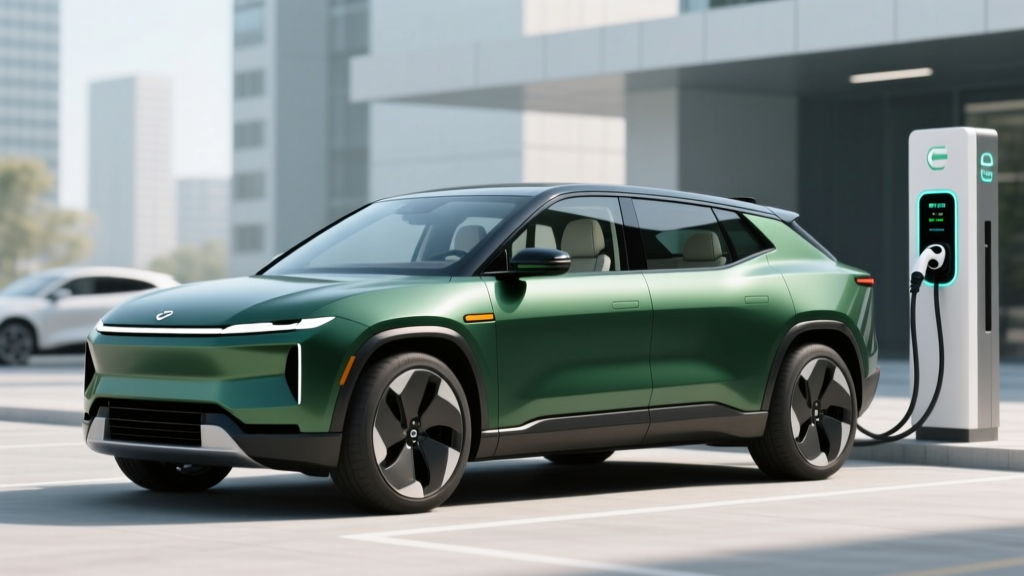
The Rivian R1S is a three-row electric SUV that balances serious off-road capability with daily-driver practicality. But for many buyers — especially those measuring garage bays, parking spaces, or comparing against the Tesla Model X, BMW iX, or Kia EV9 — the Rivian R1S length is the first spec they check. At 200.8 inches bumper to bumper, the R1S sits squarely in full-size SUV territory, shorter than a Cadillac Escalade IQ (~211 in) but noticeably longer than the two-row BMW iX (195.5 in). Understanding how that length translates to interior space, cargo volume, and maneuverability is essential before you sign a $75,000+ purchase order.
This review covers every ownership-critical number for the 2025–2026 Rivian R1S lineup: EPA range, battery chemistry, DC fast-charging curves, Level 2 home charging rates, real-world efficiency, federal tax credit eligibility under IRS §30D, and the trim-level pricing structure. We'll also address the practical questions every R1S shopper asks — from cold-weather range loss to whether the R1S actually fits in a standard two-car garage.
| Spec | Dual-Motor (Standard) | Tri-Motor | Quad-Motor |
|---|---|---|---|
| EPA Range (Max Pack) | 410 mi | 390 mi | 370 mi |
| Battery (Max Pack usable) | ~141 kWh (NMC) | ~141 kWh (NMC) | ~141 kWh (NMC) |
| Horsepower | 665 hp | 850 hp | 1,025 hp |
| 0–60 mph | 4.5 sec | 3.6 sec | 3.0 sec |
| Drivetrain | AWD (2 motors) | AWD (3 motors) | AWD (4 motors) |
| Max DC Fast Charge | ~220 kW peak | ~220 kW peak | ~220 kW peak |
| 10–80% DC Time | ~30 min | ~30 min | ~30 min |
| Vehicle Length | 200.8 in | ||
| Wheelbase | 121.1 in | ||
| Width (excl. mirrors) | 81.8 in | ||
| Height | 73.0 in (varies w/ air susp.) | ||
| Curb Weight | ~6,800 lb | ~7,100 lb | ~7,200 lb |
| Ground Clearance (max) | 14.9 in | ||
| Towing Capacity | 7,700 lb | ||
Real-World Range vs. EPA Sticker: What R1S Owners Actually See
Rivian's Max Pack with the Dual-Motor powertrain carries an EPA-estimated 410 miles of range — a class-leading figure for a three-row electric SUV. The Large Pack (Standard battery) delivers roughly 270–290 miles EPA depending on configuration, while the Tri-Motor and Quad-Motor variants trade 20–40 miles of range for substantially more power.
EPA 410 mi (Dual-Motor Max Pack). Expect ~320–350 mi on sustained highway driving at 70–75 mph, where aerodynamic drag on a 7,000-lb boxy SUV takes a heavy toll. In cold weather (below 30°F), plan for 20–30% range reduction, dropping effective range to roughly 280–330 mi even on mixed driving. City and suburban driving with regenerative braking recovers closer to the EPA figure. The Large Pack (270–290 mi EPA) realistically delivers 210–240 mi highway.
Rivian equips the R1S with a heat pump for cabin and battery thermal management, which mitigates some cold-weather losses compared to resistive-heating EVs. However, the R1S's flat, truck-like profile and ~6,800–7,200 lb curb weight mean highway efficiency suffers relative to sleeker crossovers. On the EPA cycle, the Dual-Motor Max Pack returns approximately 73 MPGe combined, or roughly 46 kWh per 100 miles. That's thirstier than a Tesla Model X (roughly 100 MPGe combined) but competitive with other body-on-frame electric SUVs.
For road trips, the Max Pack's 410-mile EPA rating means comfortable 250–280 mile legs between DC fast-charging stops at highway speeds — enough to stretch your legs and grab food while the battery replenishes. Owners who mostly drive suburban and city routes will see numbers much closer to the EPA sticker.
Charging Speed: DC Fast Charging, Home Level 2, and the Charge Curve
The R1S uses the CCS1 connector on earlier builds and has transitioned to the NACS (Tesla-style) connector on newer production, granting native access to the Tesla Supercharger network — the most reliable and extensive DC fast-charging infrastructure in North America. Rivian provides a CCS-to-NACS adapter for older vehicles.
| Charging Level | Power (kW) | Speed (miles of range/hr) | Notes |
|---|---|---|---|
| Level 1 (120V household) | ~1.4 kW | ~3–4 mi/hr | Emergency/trickle only |
| Level 2 (240V, 48A home) | 11.5 kW | ~25–28 mi/hr | Full charge overnight (~12–14 hrs Max Pack) |
| Level 2 (240V, 32A) | 7.7 kW | ~17–19 mi/hr | Common portable/public Level 2 |
| DC Fast Charge (peak) | ~220 kW | ~450+ mi/hr (at peak) | 10–80% in ~30 min; tapers sharply above 80% |
The R1S peaks at roughly 220 kW on DC fast chargers, though this rate is sustained only between approximately 10–40% state of charge (SoC). Above 50%, the charge curve tapers progressively, and above 80%, charging slows dramatically to protect the NMC battery cells. A 10–80% session takes approximately 30 minutes at a capable 250+ kW station. If you're charging from 80–100%, expect to add another 30–45 minutes — so plan road-trip stops around the 10–80% sweet spot.
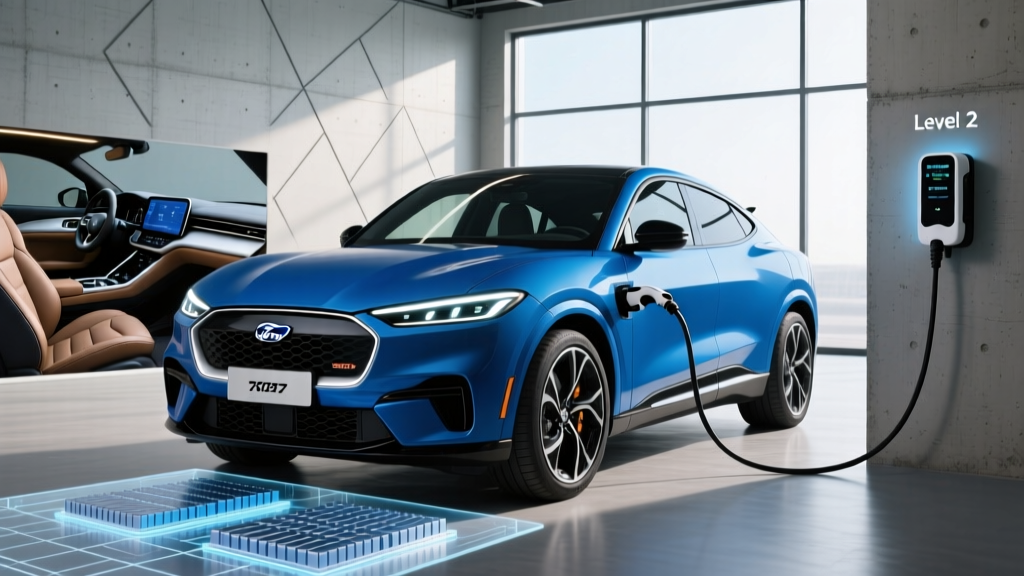
At home on a 48-amp Level 2 wall connector (the Rivian Wall Charger or a third-party unit like the ChargePoint Home Flex), the R1S accepts up to 11.5 kW, adding roughly 25–28 miles of range per hour. A full overnight charge from 20% to 90% takes about 10–12 hours — perfectly practical for daily use if you plug in each evening. Home charging installation typically costs $500–$2,000 depending on panel proximity and whether your electrical panel needs a 60-amp circuit upgrade. Always get a quote from a licensed electrician before purchasing equipment.
According to fueleconomy.gov, the R1S Dual-Motor Max Pack consumes roughly 46 kWh/100 mi. At the US average residential electricity rate of ~$0.17/kWh, that translates to approximately $0.078 per mile for home charging — dramatically cheaper than gasoline at $3.50/gal in a comparable 18-MPG gas SUV ($0.194/mi).
Interior Space, Cargo Volume, and How the R1S Length Translates to Room
The R1S's 200.8-inch overall length and generous 121.1-inch wheelbase create legitimate three-row seating for up to seven passengers (with a second-row bench) or six (with optional captain's chairs). Here's how the interior volume breaks down:
- Front headroom: ~41.1 in | Legroom: ~41.3 in
- Second-row headroom: ~39.6 in | Legroom: ~38.2 in
- Third-row headroom: ~37.5 in | Legroom: ~30.4 in
The third row is best suited for children or occasional adult use on short trips — the 30.4-inch legroom is tight for adults on longer drives. Compared to the Kia EV9 (32.0 in third-row legroom), the R1S gives up a bit of space, but its overall cargo versatility compensates.
Cargo volume:
- Behind third row: ~11.5 cu ft
- Behind second row (third row folded): ~46.7 cu ft
- Behind front seats (all rear rows folded): ~88.2 cu ft
- Front trunk (frunk): ~11.0 cu ft
The frunk is a genuine differentiator — 11 cubic feet of lockable, weather-sealed storage under the hood is ideal for charging cables, groceries, or gear you want separated from the cabin. Total maximum cargo space of ~88.2 cu ft trails the Tesla Model X (~92 cu ft) but beats the BMW iX and is competitive with the Kia EV9.
Pricing, Trim Levels, and Federal Tax Credit Eligibility
The Rivian R1S lineup has simplified for 2025–2026, with pricing that reflects its premium positioning. Here's where each configuration lands before incentives:
| Configuration | Base MSRP | §30D Credit Eligible? | Effective Price (if eligible) |
|---|---|---|---|
| Dual-Motor Standard Pack | ~$75,900 | Yes (SUV MSRP cap $80k) | ~$68,400 |
| Dual-Motor Max Pack | ~$85,900 | Partial — over $80k cap* | Varies* |
| Tri-Motor Max Pack | ~$94,500 | No — exceeds $80k SUV cap | ~$94,500 |
| Quad-Motor Max Pack | ~$99,900 | No — exceeds $80k SUV cap | ~$99,900 |
*The IRS classifies the R1S as an SUV, which has an $80,000 MSRP cap under §30D. Dual-Motor Standard Pack configurations below $80k may qualify for up to $7,500, subject to buyer income limits, battery component sourcing, and critical mineral requirements. Always verify current eligibility at IRS.gov and consult a tax professional. The point-of-sale transfer option allows dealers to apply the credit directly at purchase.
The key takeaway: only the base Dual-Motor Standard Pack configuration consistently qualifies for the full federal credit, and only if your modified adjusted gross income falls below $300,000 (married filing jointly), $225,000 (head of household), or $150,000 (single). The Max Pack and all Tri/Quad-Motor variants exceed the $80,000 SUV MSRP cap and do not qualify. State and local incentives may partially offset the cost — check your state's energy office or the AFDC state incentive database for details.
Performance, Drivetrain, and On-Road Dynamics
Even the "base" Dual-Motor R1S produces 665 horsepower and hits 60 mph in 4.5 seconds — genuinely quick for a 6,800-pound SUV. The Tri-Motor jumps to 850 hp (3.6 sec) and the Quad-Motor reaches an almost absurd 1,025 hp with a 3.0-second 0–60 time, rivaling sports cars while carrying seven people and a frunk full of gear.
All R1S variants feature standard all-wheel drive. The Quad-Motor uses individual motors at each wheel for torque vectoring, providing exceptional traction off-road and precise handling on pavement. Rivian's air suspension is standard across the lineup, offering adjustable ride height from a low-slung highway mode (improving efficiency) up to 14.9 inches of ground clearance for serious off-road trails. The system automatically adjusts based on speed and terrain, and you can manually select modes for snow, sand, rock crawling, or towing.
On-road ride quality is firm but controlled — the R1S feels planted and confident at highway speeds, with minimal body roll for its height. Steering is precise, though the sheer mass is noticeable during quick directional changes. Braking is strong, aided by aggressive regenerative braking that enables near one-pedal driving in its strongest setting.
Tech, Driver Assistance, and Standout Features
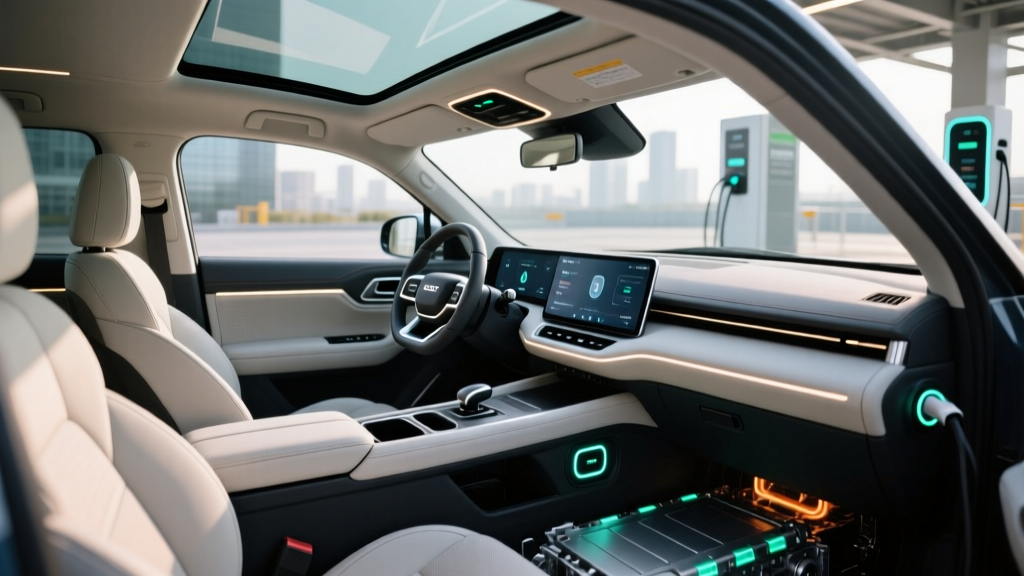
The R1S runs Rivian's proprietary software on a 15.6-inch center touchscreen and a 12.3-inch digital instrument cluster. The interface is clean and responsive, with over-the-air (OTA) updates that regularly add features and improve performance. Notable tech includes:
- Rivian Driver+: A Level 2 driver-assistance system with adaptive cruise control, lane centering, and automatic emergency braking. This is not self-driving — the driver must remain engaged and hands on the wheel at all times.
- Highway Assist: Hands-on lane-centering cruise, competitive with Toyota's TSS 3.0 but less sophisticated than GM's Super Cruise or Ford's BlueCruise (no hands-free capability yet).
- Camp Mode and Gear Guard: Unique features for outdoor use — Camp Mode maintains climate control while parked, and Gear Guard uses exterior cameras to monitor cargo in the bed or on roof racks, sending phone alerts if someone approaches.
- Phone-as-a-key: Bluetooth-based passive entry and start, plus a physical key card backup.
- V2L (Vehicle-to-Load): Built-in 120V and 240V outlets can power campsite equipment, tools, or provide emergency home backup (up to ~7 kW continuous with appropriate setup).
The R1S lacks Apple CarPlay and Android Auto — a deliberate choice by Rivian to control the software experience. For some buyers, this is a genuine drawback. The native navigation and media apps are functional, but the absence of phone projection is a dealbreaker for a segment of the market.
Warranty Coverage and Battery Longevity
Rivian backs the R1S with the following warranty structure:
- Battery & Drive Unit: 8 years / 175,000 miles (whichever comes first), covering defects and capacity degradation below 70% of original capacity
- Vehicle (bumper-to-bumper): 5 years / 60,000 miles
- Corrosion: 5 years / unlimited miles
- Roadside Assistance: 5 years / 60,000 miles
The battery uses NMC (nickel manganese cobalt) chemistry across all pack sizes, chosen for its high energy density — critical for fitting 141 kWh of usable capacity into the Max Pack. NMC cells degrade faster than LFP (lithium iron phosphate) when held at 100% SoC for extended periods, so Rivian recommends daily charging to 80–90% and reserving 100% charges for road trips. The 70% retention threshold over 8 years/175,000 miles is competitive with industry standards (Tesla, Hyundai, and VW use similar benchmarks).
Long-term battery replacement cost remains a concern for out-of-warranty ownership. Industry estimates for large NMC packs in the 140+ kWh range suggest $15,000–$25,000 for a full replacement if needed post-warranty — a significant potential expense, though most data suggests modern thermal management systems keep degradation well within acceptable limits over 150,000+ miles.
Pros
- Class-leading 410 mi EPA range (Max Pack Dual-Motor)
- Genuine off-road capability with 14.9 in ground clearance
- 7,700-lb towing capacity — best in electric SUV class
- Spacious frunk + versatile three-row cargo layout
- NACS connector provides native Supercharger access
- V2L capability for camping and emergency power
- Quad-Motor offers supercar-level acceleration in a family SUV
Cons
- Highway range falls well short of EPA (~320–350 mi real-world)
- Only base trim qualifies for §30D tax credit
- No Apple CarPlay or Android Auto
- Third-row legroom tight for adults (30.4 in)
- Premium pricing — $76K–$100K+ before incentives
- Heavy weight impacts efficiency (46 kWh/100 mi)
- Service center network still expanding in some regions
Who the Rivian R1S Is For — And Who Should Look Elsewhere
- You need three rows + serious off-road capability + EV powertrain
- You tow a trailer, boat, or camper (7,700-lb capacity)
- You value the frunk, V2L, and outdoor-lifestyle features
- You primarily charge at home and take road trips 3–6 times per year
- You want NACS/Supercharger access without an adapter hassle
- Maximum highway efficiency is your top priority (Tesla Model X is more efficient)
- You need adult-friendly third-row space for daily use (Kia EV9 offers more legroom)
- Budget is under $70K after incentives (the R1S Standard Pack barely qualifies)
- You rely on Apple CarPlay/Android Auto for your daily drive
- You live far from a Rivian service center and want dealer-network convenience
The R1S occupies a unique niche: it's the only electric SUV that combines genuine body-on-frame off-road capability, three-row seating, a massive battery, and competitive towing — all while accessing the Supercharger network. If that specific combination matches your lifestyle, nothing else on the market replicates it. If you're primarily a suburban commuter who occasionally needs a third row, the Kia EV9 or Tesla Model X may serve you more efficiently at lower cost.
Frequently Asked Questions
What is the exact Rivian R1S length and will it fit in a standard garage?
The Rivian R1S measures 200.8 inches (16.7 feet) long and 81.8 inches wide (excluding mirrors). A standard two-car garage door opening is typically 16 feet wide, and garage depth ranges from 20–24 feet. The R1S fits in most standard garages, but it's tight — measure your garage depth carefully, especially if you have a workbench or storage at the back. With mirrors folded, width is manageable; with mirrors extended, it's 96.5 inches.
What is the real-world range of the Rivian R1S?
The EPA-estimated 410 miles (Dual-Motor Max Pack) translates to roughly 320–350 miles in real-world highway driving at 70–75 mph, and approximately 280–330 miles in cold weather below 30°F. City and suburban driving with regenerative braking yields results closer to the EPA figure. The Standard Pack (270–290 mi EPA) realistically delivers 210–240 miles on the highway.
How fast does the R1S charge at home and on the road?
At home on a 48-amp Level 2 charger, the R1S charges at up to 11.5 kW, adding about 25–28 miles of range per hour — a full overnight charge from 20–90% takes roughly 10–12 hours. On DC fast chargers, it peaks at ~220 kW and charges from 10–80% in approximately 30 minutes, though the rate tapers significantly above 80% SoC.
Does the Rivian R1S qualify for the federal EV tax credit?
Only the Dual-Motor Standard Pack configuration (MSRP ~$75,900) consistently qualifies for up to $7,500 under IRS §30D, as the R1S is classified as an SUV with an $80,000 MSRP cap. Max Pack and Tri/Quad-Motor variants exceed this cap. Eligibility also depends on buyer income limits ($150K single / $300K joint), battery component sourcing, and critical mineral requirements. Verify current rules at IRS.gov.
Is the Rivian R1S worth buying vs. the Tesla Model X or Kia EV9?
The R1S wins on off-road capability, towing (7,700 lb vs. Model X's 5,000 lb), and outdoor-lifestyle features (V2L, Gear Guard, Camp Mode). The Tesla Model X wins on efficiency (~100 MPGe vs. 73 MPGe), Supercharger-native history, and Autopilot/FSD availability. The Kia EV9 wins on value (~$55K–$73K), adult-friendly third-row space, and CarPlay/Android Auto. Your use case determines the winner.
Does the R1S have Apple CarPlay or Android Auto?
No. Rivian uses a proprietary infotainment system and does not support phone projection. The native system handles navigation, media, and vehicle controls, but buyers who depend on CarPlay maps or Android Auto integration should test the Rivian system before committing.
What battery chemistry does the R1S use?
All R1S configurations use NMC (nickel manganese cobalt) lithium-ion cells, chosen for high energy density to maximize range in the Max Pack's 141 kWh usable capacity. NMC requires more careful state-of-charge management than LFP — Rivian recommends daily charging to 80–90% rather than 100%.