2026 Rivian R1S: The Electric Adventure SUV That Redefines Three-Row Capability
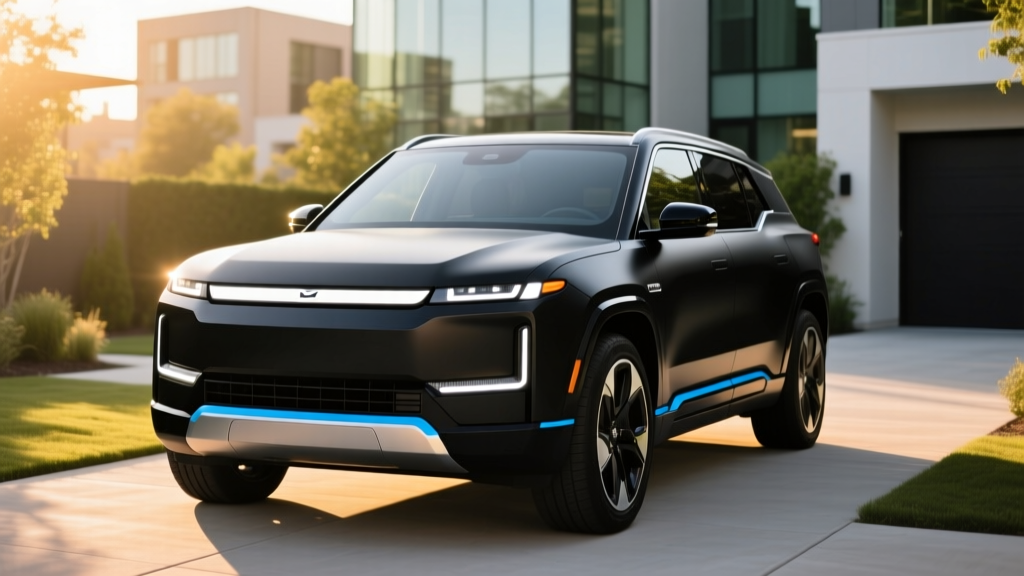
If you're researching a Rivian R1S lease, you're likely weighing three-row electric SUV options that can handle daily school runs, weekend camping trips, and the occasional 7,500-pound tow without compromise. The 2026 R1S enters its second generation with a complete Gen 2 platform overhaul — new motors, a redesigned battery pack, and the NACS charging port native — positioning it as one of the most capable family electric vehicles on the market. But capability comes at a price, and understanding real-world range, charging infrastructure, and federal tax credit eligibility is essential before signing any lease agreement.
Range, Battery, and Efficiency: What the EPA Numbers Actually Mean
The 2026 Rivian R1S offers three battery configurations across its trim lineup, each with distinct trade-offs in range, weight, and cost:
| Battery Pack | Usable Capacity | Chemistry | EPA Range | Availability |
|---|---|---|---|---|
| Standard | ~92 kWh | LFP (Prismatic) | 270 miles | Adventure, Ascend |
| Large | ~109 kWh | NMC (Cylindrical 4680) | 340 miles | Adventure, Ascend |
| Max | ~141 kWh | NMC (Cylindrical 4680) | 400 miles | Ascend only |
Efficiency varies by configuration. The Dual-Motor Large pack achieves approximately 73 MPGe combined (2.1 kWh/mile), while the heavier Quad-Motor and Max pack combinations drop to around 65 MPGe. For context, that's roughly 46-52 kWh per 100 miles — respectable for a 7,000-pound vehicle but meaningfully thirstier than a Tesla Model X (roughly 100 MPGe) or Hyundai Ioniq 9 (projected 85+ MPGe).
Charging Speed: DC Fast Charging and Home Level 2 Setup
Rivian's Gen 2 platform supports peak DC fast-charge rates up to 220 kW on Large and Max packs (Standard LFP peaks around 180 kW). However, peak rate is not sustained rate — the charging curve tapers significantly above 80% state of charge to protect battery longevity.
| Charging Method | Power/Rate | Time/Miles Added | Notes |
|---|---|---|---|
| DC Fast Charge (10-80%) | Up to 220 kW peak | ~25-30 minutes (Large/Max) | Preconditioning required; tapers above 80% |
| DC Fast Charge (10-80%) | Up to 180 kW peak | ~30-35 minutes (Standard LFP) | LFP charges more linearly |
| Level 2 Home (48A/11.5 kW) | 11.5 kW | ~25 miles/hour | Requires 60A circuit; full charge 10-14 hours |
| Level 2 Home (32A/7.7 kW) | 7.7 kW | ~17 miles/hour | Works on 40A circuit; slower but viable |
| Level 1 (120V) | ~1.4 kW | ~3 miles/hour | Emergency/trickle only |
The R1S uses the NACS (Tesla-style) connector natively on 2025+ models, granting access to Tesla Supercharger V3 and V4 stalls (150-350 kW) without an adapter. This is a significant advantage over CCS-equipped competitors still relying on adapter dongles for Supercharger access. Rivian's built-in navigation system automatically precondition the battery when a DC fast charger is set as your destination, optimizing charge speed upon arrival — a feature that can shave 5-10 minutes off your charging stop in cold weather.
For home charging, most R1S owners install a 48-amp Level 2 wall connector on a dedicated 60-amp circuit. Expect installation costs of $800-$2,500 depending on panel proximity and local permit requirements. If your electrical panel is at capacity (common in older homes with 100A service), a panel upgrade to 200A can add $1,500-$3,000 to the project.
Performance: Dual-Motor Efficiency vs. Quad-Motor Thrills
The 2026 R1S offers two drivetrain architectures:
- Dual-Motor AWD: 533 horsepower, 610 lb-ft torque, 0-60 mph in 4.5 seconds. This is the volume seller — fast enough for any real-world scenario, more efficient, and lighter on the front axle.
- Quad-Motor AWD: 1,025 horsepower, 1,100+ lb-ft torque, 0-60 mph in 2.9 seconds. Yes, a three-row SUV that outruns a Porsche 911 Turbo to 60. The trade-off: ~5% range reduction, higher tire wear, and a $10,000 premium.
Both configurations feature true torque vectoring (individual motors at each wheel on Quad, front/rear axle torque management on Dual), air suspension with 6.5 inches of adjustable ride height, and a maximum towing capacity of 7,700 pounds when properly equipped. The air suspension automatically lowers at highway speeds for aerodynamic efficiency and raises in Off-Road mode for 14.4 inches of ground clearance — genuine capability for forest service roads, snow, and boat launches.
Pricing, Trim Levels, and Federal Tax Credit Eligibility
The 2026 Rivian R1S lineup spans four trims, each with distinct equipment and battery options:
| Trim | Base MSRP | Key Features | §30D Credit Eligible? |
|---|---|---|---|
| Adventure (Dual-Motor, Standard) | $79,900 | Base luxury, 270-mi range | Likely — under $80K SUV cap |
| Adventure (Dual-Motor, Large) | $85,900 | 340-mi range, premium audio | No — exceeds $80K SUV cap |
| Ascend (Dual-Motor, Large) | $92,900 | Enhanced luxury, 340-mi range | No — exceeds $80K SUV cap |
| Ascend (Quad-Motor, Max) | $109,900 | 400-mi range, performance | No — exceeds $80K SUV cap |
- MSRP Cap: SUVs must sticker under $80,000. Only the base Adventure Dual-Motor Standard pack qualifies.
- Income Cap: Buyer AGI must not exceed $150K (single), $225K (head of household), or $300K (joint).
- Battery Sourcing: Critical minerals and battery components must meet escalating domestic/free-trade sourcing percentages. Rivian's supply chain has improved, but verify VIN eligibility on fueleconomy.gov before purchase.
Interior Space, Cargo, and Family Practicality
The R1S is a genuine three-row SUV with adult-usable space in all seating positions:
- Front row: 41.1 inches legroom, 40.2 inches headroom
- Second row: 38.2 inches legroom, 39.4 inches headroom (captain's chairs standard on Ascend)
- Third row: 32.3 inches legroom, 37.1 inches headroom — suitable for children or adults on short trips
- Cargo (behind 3rd row): 20.5 cubic feet
- Cargo (3rd row folded): 57.5 cubic feet
- Cargo (all rear rows folded): 104.7 cubic feet
- Front trunk (frunk): 11.2 cubic feet — lockable, weather-sealed, perfect for charging cables or muddy gear
The R1S also features a unique gear tunnel (on certain configurations) — a pass-through storage compartment behind the second row accessible from either side of the vehicle, ideal for long items like skis or fishing rods. Combined with the frunk and traditional cargo area, the R1S offers more secure, weather-protected storage than any competitor in the segment.
Technology, Driver Assistance, and Software
Rivian's in-house developed software stack powers a 15.6-inch center touchscreen, 12.3-inch driver display, and 6.8-inch rear passenger screen. Key tech highlights:
- Rivian Driver+ (Level 2 ADAS): Adaptive cruise control, lane centering, automatic lane change on highway (with turn signal activation). This is a hands-on, eyes-on system — not self-driving. It competes with Tesla Autopilot and Ford BlueCruise in capability but requires continuous driver supervision.
- Over-the-air updates: Rivian regularly ships feature updates, performance improvements, and UI refinements. Recent additions include enhanced camp mode (powers accessories while parked), pet mode (climate control with notification), and improved navigation routing with charging stops.
- Off-road modes: Dedicated software profiles for snow, sand, rock crawl, and all-terrain, adjusting suspension height, throttle response, and traction control.
- Towing integration: Built-in trailer light check, trailer sway mitigation, and range estimation that accounts for trailer aerodynamic drag.
Notable drawbacks: The R1S lacks Apple CarPlay and Android Auto — Rivian's native infotainment is capable but forces you into their ecosystem. Some owners report occasional software glitches (screen freezes, phantom notifications) that resolve with reboots but are frustrating. The panoramic glass roof, while beautiful, offers no physical shade — only electrochromic dimming, which reduces but doesn't eliminate heat gain in summer.
Warranty Coverage and Long-Term Ownership
Rivian provides competitive warranty coverage for the EV segment:
- Basic vehicle: 5 years / 60,000 miles
- Battery & powertrain: 8 years / 175,000 miles (retains 70%+ capacity)
- Corrosion: 12 years / unlimited miles
- Roadside assistance: 5 years / 60,000 miles
The 175,000-mile battery warranty is among the longest in the industry (Tesla offers 120K-150K miles depending on model). Rivian's battery management system is conservative — it maintains a larger buffer than competitors, which should translate to slower degradation over time. Early R1T and R1S owners (2022-2023 models) report minimal capacity loss at 30,000-50,000 miles, though long-term data beyond 100K miles is still limited.
Is a Rivian R1S Lease Right for You? Decision Framework
Choose the R1S if:
- You need genuine three-row seating with adult-usable third-row space
- You tow a boat, camper, or horse trailer (7,700-lb capacity)
- You want off-road capability without sacrificing on-road refinement
- You value unique storage solutions (frunk, gear tunnel) over brand prestige
- You have home Level 2 charging access and can accommodate a 60A circuit
Consider alternatives if:
- Your budget is under $75K (look at Hyundai Ioniq 9, Kia EV9)
- You prioritize maximum efficiency over capability (Tesla Model X is 30% more efficient)
- You need Apple CarPlay/Android Auto integration
- You drive more than 400 miles between charging stops regularly (Max pack helps but isn't infinite)
Frequently Asked Questions
What is the real-world range of the Rivian R1S?
The EPA rates the R1S Max pack at 400 miles, but real-world highway driving at 75 mph yields 320-350 miles. In winter conditions below freezing, expect 280-320 miles. The Standard LFP pack delivers 270 miles EPA, translating to 220-240 miles highway in moderate weather.
How fast does the R1S charge at home and on the road?
On a 48-amp Level 2 home charger, the R1S adds approximately 25 miles of range per hour, fully charging overnight in 10-14 hours depending on pack size. On DC fast chargers, the Large and Max packs peak at 220 kW, reaching 10-80% in 25-30 minutes with proper preconditioning. The Standard LFP pack peaks at 180 kW, taking 30-35 minutes for the same 10-80% session.
Does the Rivian R1S qualify for the $7,500 federal tax credit?
Only the base Adventure Dual-Motor with Standard battery pack (MSRP $79,900) qualifies, as it falls under the $80,000 SUV MSRP cap. You must also meet income requirements (under $150K single / $300K joint AGI) and the vehicle must pass battery sourcing requirements. Verify your specific VIN on fueleconomy.gov and consult a tax professional before finalizing your purchase or lease.
Is the R1S worth it compared to the Tesla Model X or Kia EV9?
The R1S excels in off-road capability, towing capacity, and unique storage solutions that neither competitor matches. The Model X is more efficient and has a more established Supercharger network (though R1S now has native NACS access). The Kia EV9 is $20K-$30K less expensive but offers less range, no frunk, and minimal off-road capability. If you need adventure capability with three rows, the R1S is unmatched. If you prioritize efficiency or budget, look elsewhere.
What are the biggest drawbacks of the R1S?
Key limitations include: no Apple CarPlay/Android Auto (Rivian's native system only), occasional software glitches requiring reboots, high starting price ($79,900+), limited federal tax credit eligibility (only base trim qualifies), and efficiency that trails lighter competitors. The electrochromic glass roof also lacks a physical shade, which some owners find inadequate in intense summer sun.
Can I lease the Rivian R1S and still get the tax credit?
Yes, but with a critical distinction: the §30D credit applies to the lessor (Rivian or the leasing bank), not directly to you. However, most lessors pass the credit value through as a capitalized cost reduction, lowering your monthly payment. Confirm with the dealer that the lease structure includes the credit benefit before signing. Some lessors may retain a portion of the credit as profit — negotiate this explicitly.