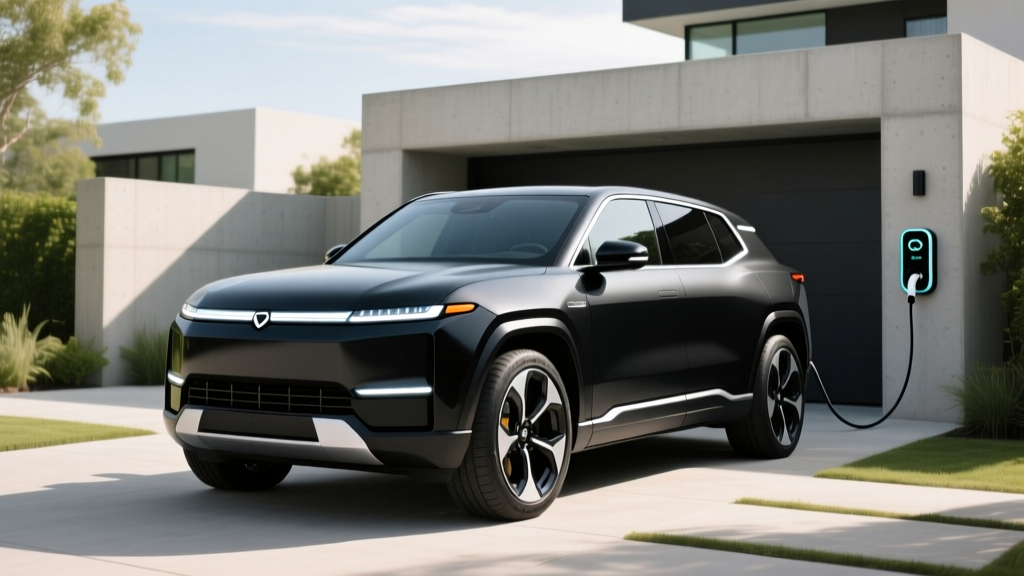
The Rivian R1S remains one of the most capable three-row electric SUVs on the market, blending genuine off-road chops with a luxury interior and over 400 miles of EPA-estimated range on the Max Pack. But with a starting price that hovers near $80,000, many buyers are turning to leasing as a way to access this premium EV without committing to long-term depreciation risk. In 2026, Rivian R1S lease deals offer a compelling path to ownership — especially when you factor in the federal EV tax credit, which can be passed through to the lessor and reflected in lower monthly payments.
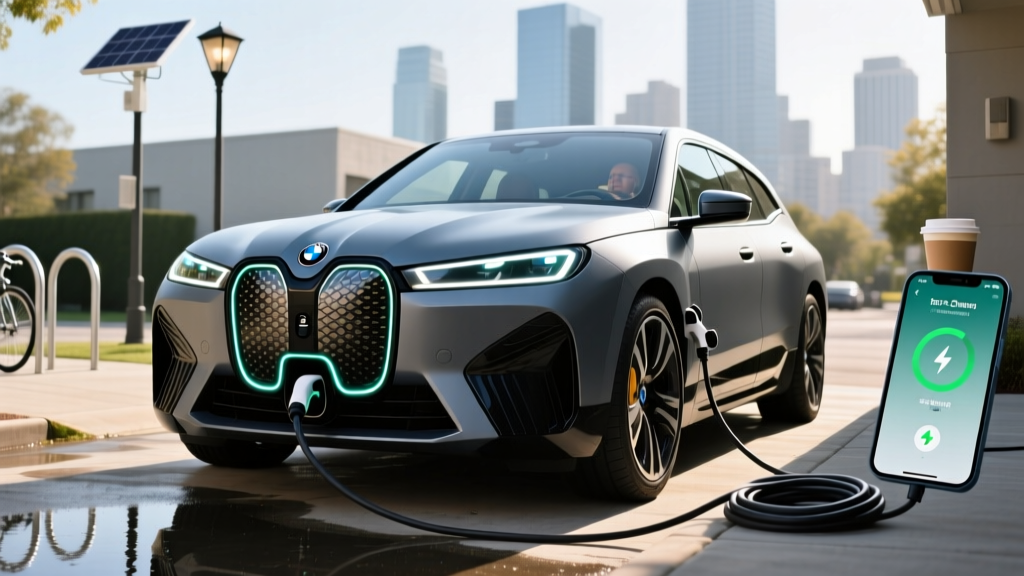
This guide breaks down everything you need to know before signing an R1S lease: real-world range, charging speeds, battery chemistry, tax credit mechanics, and how the R1S stacks up against the Tesla Model X and BMW iX.
2026 Rivian R1S: Quick Specs at a Glance
| Spec | Dual-Motor Standard | Dual-Motor Max Pack |
|---|---|---|
| EPA Range | 291 miles | 410 miles |
| Battery Capacity (usable) | ~106 kWh (NMC) | ~149 kWh (NMC) |
| Peak DC Fast Charge | 200 kW | 220 kW |
| 10–80% DC Charge Time | ~27 minutes | ~30 minutes |
| Level 2 Home Charge Rate | 11.5 kW (~30 mi/hr) | 11.5 kW (~25 mi/hr) |
| 0–60 mph | 4.5 seconds | 4.5 seconds |
| Horsepower | 533 hp | 533 hp |
| Drivetrain | AWD (dual-motor) | AWD (dual-motor) |
| MPGe (combined) | 69 MPGe | 65 MPGe |
| Efficiency | 49 kWh/100 mi | 52 kWh/100 mi |
| Base MSRP (2026) | $79,900 | $94,900 |
Sources: EPA Fueleconomy.gov, Rivian official specs.
Real-World Range: What the EPA Sticker Doesn't Tell You
The R1S's boxy SUV shape and 6,800+ pound curb weight work against efficiency at highway speeds. During warmer months and mixed city/highway driving, hitting the EPA numbers is realistic — especially if you use the vehicle's regenerative braking modes effectively. But if your typical commute involves sustained 75 mph Interstate driving in winter, plan conservatively.
Rivian's heat pump (standard on all 2026 R1S models) helps mitigate cold-weather losses compared to resistive heating systems, but physics still applies: a heavy vehicle pushing through cold, dense air will consume more kWh per mile. For buyers in northern climates, the Max Pack's extra buffer provides meaningful peace of mind on road trips.
Charging Speed: DC Fast Charging and Home Level 2
| Charging Level | Power / Rate | Miles Added per Hour | Notes |
|---|---|---|---|
| Level 1 (120V) | ~1.4 kW | ~3–4 mi/hr | Emergency/trickle only |
| Level 2 (240V, 48A) | 11.5 kW | ~25–30 mi/hr | Full charge in 10–14 hours |
| DC Fast Charge (Standard) | Peak 200 kW | ~140 mi in 20 min | Tapers above 80% SoC |
| DC Fast Charge (Max Pack) | Peak 220 kW | ~150 mi in 20 min | Tapers above 80% SoC |
The R1S uses the NACS (Tesla-style) charge port, giving it native access to Tesla's Supercharger network — the most reliable and extensive DC fast-charging network in the U.S. This is a major practical advantage over CCS-only vehicles that rely on Electrify America or EVgo, where uptime can be inconsistent.
Understanding the charge curve: The 200–220 kW peak applies only in a narrow state-of-charge window (roughly 10–40% SoC). As the battery fills, the charge rate tapers to protect cell health. A 10–80% session takes approximately 27–30 minutes at a 250+ kW capable Supercharger or equivalent station. Charging from 80–100% slows dramatically — plan to unplug at 80% on road trips unless you need the final miles.
For home charging, the R1S's onboard charger accepts up to 11.5 kW on a Level 2, 240V/48A circuit. A full overnight charge is realistic for most owners. Installation of a 240V/50A circuit (NEMA 14-50 or hardwired wall connector) typically costs $800–$2,500 depending on panel proximity and local permit fees. If your home's electrical panel is at or near capacity (common in older homes with 100A service), a panel upgrade to 200A can add $1,500–$3,500 to the project.
Pricing, Trims, and Rivian R1S Lease Deals
| Trim / Configuration | 2026 MSRP | Est. Monthly Lease (36 mo, 10K mi/yr) | Due at Signing |
|---|---|---|---|
| Dual-Motor Standard (Adventure) | $79,900 | $899–$1,049 | $5,000–$7,500 |
| Dual-Motor Max Pack (Adventure) | $94,900 | $1,099–$1,299 | $5,000–$7,500 |
| Dual-Motor Standard (Ascend) | $84,900 | $949–$1,099 | $5,000–$7,500 |
| Quad-Motor (Adventure) | $99,900 | $1,199–$1,399 | $5,000–$7,500 |
Lease payments vary significantly based on money factor (interest rate), residual value, and down payment. Rivian does not publish standard lease terms the way legacy automakers do through captive finance arms, so most R1S leases are arranged through third-party banks or credit unions. Expect a money factor equivalent to roughly 6–8% APR in the current rate environment.
The leasing advantage for tax credits: Under the IRS §30D clean vehicle credit rules, the $7,500 federal tax credit is subject to MSRP caps ($80,000 for SUVs), buyer income limits ($300,000 joint / $150,000 single), and battery component/critical mineral sourcing requirements. However, when you lease, the credit technically goes to the lessor (the financing entity) — and many lessors pass the savings through as a capitalized-cost reduction, effectively lowering your monthly payment. This "lease loophole" can make the credit accessible even if your income exceeds §30D limits or if battery-sourcing rules would otherwise disqualify a purchase. Confirm with your lessor that the credit is being applied to your deal.
For current §30D rules and eligibility details, consult the IRS Clean Vehicle Credits page.
Performance, Drivetrain, and On-Road Dynamics
The Dual-Motor R1S produces 533 horsepower and 610 lb-ft of torque, launching to 60 mph in 4.5 seconds — brisk for a three-row SUV that weighs over three tons. The available Quad-Motor variant bumps output to 850 hp and drops the 0–60 time to roughly 3.5 seconds, though it sacrifices some range (EPA-estimated around 350 miles with the Max battery).
Rivian's dual-motor AWD system uses independent motors on each axle with torque vectoring, giving the R1S genuine off-road capability without a traditional mechanical 4WD system. Ground clearance is adjustable from 7.9 to 14.9 inches via the air suspension, and the vehicle can wade through up to 43 inches of water. Approach, departure, and breakover angles are competitive with body-on-frame SUVs.
On pavement, the air suspension delivers a compliant ride that isolates occupants from road imperfections. Steering is precise if not particularly communicative. The R1S's biggest dynamic compromise is its mass: you feel the weight during hard cornering and braking, and tire wear tends to be higher than lighter EVs. Budget for tire replacement every 25,000–35,000 miles with all-season rubber.
Interior Space, Cargo, and Family Practicality
| Dimension | Measurement |
|---|---|
| Seating Capacity | 7 passengers (3 rows) |
| Front Headroom | 41.1 inches |
| Front Legroom | 41.5 inches |
| Second-Row Legroom | 38.9 inches |
| Third-Row Legroom | 30.4 inches |
| Cargo (behind 3rd row) | 10.4 cu ft |
| Cargo (behind 2nd row) | 46.7 cu ft |
| Cargo (behind 1st row) | 83.5 cu ft |
| Frunk (front trunk) | 11.0 cu ft |
| Towing Capacity | 7,700 lbs |
The R1S's third row is best suited for children or occasional adult use on short trips — 30.4 inches of legroom is tight for anyone over 5'6". With all three rows in use, the 10.4 cu ft of rear cargo is enough for a couple of soft duffel bags or groceries, but not much more. Fold the third row and the 46.7 cu ft space becomes genuinely useful for family gear.
The 11 cu ft frunk is a highlight: it's large enough for a full charging cable kit, a medium cooler, or gym bags, and it's sealed and drainable — perfect for muddy gear after a trail run. The R1S's total enclosed storage (frunk + rear combined) exceeds most competing three-row SUVs.
Technology, Driver Assistance, and Software
The R1S runs Rivian's proprietary software stack on a 15.6-inch center touchscreen with a clean, responsive interface. Wireless Apple CarPlay and Android Auto are not available — Rivian uses its own integrated navigation, media, and phone-mirroring system. This will frustrate some buyers who prefer their phone's ecosystem, but Rivian's native system is well-executed with over-the-air updates that regularly add features.
Rivian's Driver+ suite is a Level 2 driver-assistance system (per SAE classification), combining adaptive cruise control with lane centering on divided highways. It is not a self-driving system — the driver must remain attentive and keep hands on the wheel at all times. In practice, Driver+ is competent for highway cruising but does not offer hands-free operation like GM's Super Cruise or Ford's BlueCruise. Rivian has been developing an enhanced hands-free highway assist feature, but check current availability for the 2026 model year.
Other notable tech features include:
- Vehicle-to-load (V2L): Power accessories, campsite equipment, or even provide limited home backup through the R1S's battery.
- Camp Mode: Maintains cabin climate and powers outlets overnight — useful for car camping.
- Phone-as-key: Unlock and start via Bluetooth on your smartphone.
- Gear tunnel (available with certain configurations): A pass-through storage compartment accessible from both sides of the vehicle.
Warranty Coverage and Battery Longevity
| Coverage | Term |
|---|---|
| Basic Vehicle Warranty | 5 years / 60,000 miles |
| Battery & Powertrain | 8 years / 175,000 miles |
| Battery Capacity Retention | ≥70% over 8 yr / 175,000 mi |
Rivian's battery warranty guarantees that the high-voltage pack will retain at least 70% of its original capacity over 8 years or 175,000 miles, whichever comes first. The R1S uses NMC (nickel-manganese-cobalt) chemistry in both Standard and Max packs, which offers higher energy density than LFP but is more sensitive to sustained high states of charge. Best practice: set daily charge limits to 80–85% and reserve 100% charges for road trips.
For leasing, the 8-year battery warranty typically extends well beyond a 36- or 48-month lease term, so battery degradation is unlikely to affect you directly. If you plan to purchase at lease-end, the remaining warranty coverage transfers with the vehicle.
Rivian R1S vs. Key Competitors
| Spec | Rivian R1S (Dual-Motor Max) | Tesla Model X (Long Range) | BMW iX xDrive50 |
|---|---|---|---|
| EPA Range | 410 mi | 335 mi | 324 mi |
| Seating | 7-passenger | 5–7 passenger | 5-passenger |
| 0–60 mph | 4.5 sec | 3.8 sec | 4.4 sec |
| Peak DC Charge | 220 kW | 250 kW | 200 kW |
| Starting MSRP | $94,900 | $79,990 | $87,250 |
| Towing | 7,700 lbs | 5,000 lbs | 3,500 lbs |
| Off-Road Capability | Excellent | Limited | Limited |
The R1S's key differentiator is its combination of three-row seating, genuine off-road capability, and best-in-class range (with the Max Pack). The Model X offers quicker acceleration and access to the Supercharger network (which the R1S now shares via NACS), but its build quality remains inconsistent and the interior feels dated for the price. The BMW iX is a superb luxury two-row SUV, but it lacks a third row and serious ground clearance.
- Choose the R1S if: You need three rows, want off-road capability, tow more than 5,000 lbs, or prioritize maximum range.
- Choose the Model X if: You prioritize acceleration, falcon-wing doors, and Tesla's software ecosystem.
- Choose the BMW iX if: You only need two rows and want a traditional luxury interior with superior ride refinement.
Pros and Cons of the Rivian R1S
- Class-leading 410-mile range (Max Pack)
- Genuine off-road capability with air suspension
- NACS port — native Supercharger access
- 7-passenger seating with usable frunk
- 7,700-lb towing capacity
- Strong OTA software updates
- V2L capability for camping and backup power
- High starting price ($79,900+)
- Third row is cramped for adults
- No Apple CarPlay or Android Auto
- Heavy weight accelerates tire wear
- Driver+ is competent but not hands-free
- Service center network still expanding
- Efficiency drops significantly at highway speeds
Frequently Asked Questions
Does the Rivian R1S qualify for the $7,500 federal EV tax credit?
Possibly, but it depends on several factors. Under IRS §30D, the R1S qualifies as an SUV for the $80,000 MSRP cap — meaning only the base Dual-Motor Standard Adventure trim (at $79,900) clears the price threshold. Higher trims and the Max Pack exceed $80,000 and are ineligible for purchase credits. However, buyer income must not exceed $300,000 (joint) or $150,000 (single), and the vehicle must meet battery component and critical mineral sourcing requirements that change annually. When leasing, the lessor claims the credit and may pass savings to you as a cap-cost reduction — this can bypass the MSRP and income caps. Always verify current eligibility at IRS.gov and confirm with your tax professional.
What is the real-world range of the Rivian R1S?
The EPA rates the Dual-Motor Standard at 291 miles and the Max Pack at 410 miles. In real-world highway driving at 70+ mph, expect roughly 250–270 miles (Standard) and 340–370 miles (Max). Cold weather reduces these figures by 15–25%. Mixed city/highway driving in moderate temperatures is where you'll come closest to the EPA numbers.
How fast does the R1S charge at home and on the road?
At home on a Level 2, 240V/48A circuit, the R1S charges at up to 11.5 kW, adding roughly 25–30 miles of range per hour. A full charge takes 10–14 hours depending on pack size. On DC fast chargers, the Standard Pack peaks at 200 kW and the Max Pack at 220 kW, achieving a 10–80% charge in approximately 27–30 minutes. Charging above 80% slows significantly due to the battery management system tapering current to protect cell health.
Is it better to buy or lease the Rivian R1S?
Leasing makes sense if you want lower monthly payments, plan to upgrade in 3–4 years, or want to access the federal tax credit through the lessor regardless of MSRP or income caps. Buying makes sense if you drive high annual miles (leases typically cap at 10,000–15,000 mi/yr), plan to keep the vehicle long-term, or want to build equity. Given the rapid pace of EV technology and the R1S's high starting price, leasing reduces your exposure to depreciation risk.
How much does it cost to charge the R1S at home?
At the U.S. average residential electricity rate of approximately $0.16/kWh, fully charging the Standard Pack (~106 kWh usable) costs about $17, and the Max Pack (~149 kWh) costs about $24. That translates to roughly $0.05–$0.06 per mile — significantly less than gasoline at $3.50/gallon for a comparable SUV getting 20 MPG ($0.175/mile). Public DC fast charging is more expensive, typically $0.30–$0.50/kWh depending on the network and location.
What are the biggest drawbacks of the Rivian R1S?
The most common owner complaints center on the cramped third row, lack of Apple CarPlay/Android Auto, and the sparse (though growing) Rivian service center network. The R1S's weight also drives faster tire wear than lighter EVs, and its highway efficiency drops noticeably above 70 mph due to aerodynamic drag. These are trade-offs inherent to a large, boxy, off-road-capable SUV — if any are deal-breakers, consider the Tesla Model X or BMW iX.