Quick Verdict: Is an R1S Lease the Smart Move in 2026?
The Rivian R1S remains one of the most capable three-row electric SUVs on the market, but with a starting MSRP hovering near $80,000 for the 2026 model year, many buyers are turning to leasing as a way to get behind the wheel without absorbing the full depreciation hit. R1S lease deals can be compelling — but only if you understand how the federal tax credit flows through the lease, what the real-world range looks like on your daily route, and how the R1S stacks up against the Tesla Model X, BMW iX, and upcoming competitors.
This profile breaks down every number that matters: EPA range versus real-world highway and cold-weather performance, the Gen 2 battery's charging curve, the actual monthly cost after incentives, and whether leasing or buying makes more financial sense for your situation.
Range, Battery, and Efficiency: What the EPA Number Doesn't Tell You
The 2026 Rivian R1S Dual-Motor with the Max Pack (149 kWh usable, NMC chemistry) carries an EPA-estimated range of 410 miles. The Standard Pack (106 kWh usable, LFP chemistry on the Dual-Motor base) delivers an EPA-estimated 270 miles, while the Large Pack (129 kWh, NMC) sits at 352 miles.
EPA Estimate (Max Pack): 410 miles
Expect in mixed driving: 340–370 miles
Highway at 75+ mph: ~310–330 miles
Cold weather (below 30°F): ~280–310 miles (20–25% loss typical for NMC packs without consistent preconditioning)
The R1S is a 7,000-lb box-on-frame SUV pushing serious frontal area. Efficiency drops noticeably at sustained highway speeds. According to fueleconomy.gov, the Dual-Motor Max Pack achieves 73 MPGe combined (46 kWh/100mi). Plan your road-trip charging around 280-mile legs to maintain a comfort buffer.
| Spec | Dual-Motor Standard | Dual-Motor Large | Dual-Motor Max | Tri-Motor |
|---|---|---|---|---|
| Usable Battery (kWh) | 106 (LFP) | 129 (NMC) | 149 (NMC) | 149 (NMC) |
| EPA Range (mi) | 270 | 352 | 410 | 390 |
| Horsepower | 533 hp | 533 hp | 533 hp | 850 hp |
| 0-60 mph (sec) | 4.5 | 4.5 | 4.5 | 2.9 |
| Drivetrain | AWD | AWD | AWD | AWD (Tri) |
| Max DC Charge (kW) | 200 | 220 | 220 | 220 |
| 10–80% DC Time | ~28 min | ~21 min | ~27 min | ~27 min |
| Level 2 Rate (kW) | 11.5 | 11.5 | 19.2 | 19.2 |
| Base MSRP | $79,900 | $86,900 | $95,400 | $105,900 |
Charging Speed: DC Fast Charging and Home Setup
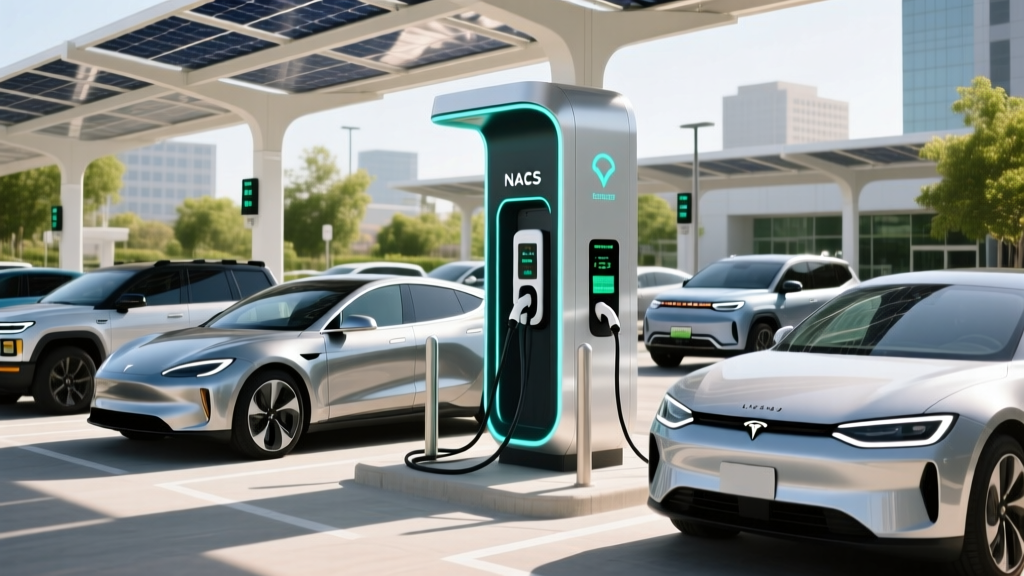
Rivian's Gen 2 platform supports peak DC fast-charging rates up to 220 kW on the Large and Max packs. The Standard LFP pack peaks at 200 kW. On a 350 kW Electrify America or Tesla Supercharger (via Rivian's NACS adapter, now standard on 2026 models), the Large Pack runs 10–80% in roughly 21 minutes, while the Max Pack — despite its higher capacity — takes about 27 minutes due to the larger battery absorbing energy over a longer curve.
| Charge Level | Power | Approx. Miles Added per Hour | Connector |
|---|---|---|---|
| Level 1 (120V) | 1.4 kW | ~3–4 mi/hr | NACS (J3400) |
| Level 2 (240V, 48A) | 11.5 kW | ~25–28 mi/hr | NACS / J1772 adapter |
| Level 2 (240V, 80A — Max/Quad) | 19.2 kW | ~42–46 mi/hr | NACS (hardwired) |
| DC Fast Charge | Up to 220 kW | ~550+ mi/hr (peak) | NACS / CCS adapter |
Charge curve reality: The R1S sustains peak kW only between roughly 15–45% SoC. Above 60%, the rate tapers progressively — expect ~120 kW at 70% and ~50 kW above 85%. This is standard for NMC packs with active thermal management but matters on road trips: plan to charge to 80% and move on rather than waiting for the final 20%.
At home, the Max Pack's 19.2 kW onboard charger is a standout — it can fully replenish the 149 kWh battery in under 8 hours on an appropriately rated Level 2 wall connector (requires a 100A circuit). Most other EVs cap at 11.5 kW, meaning overnight top-ups from a 20% deficit take noticeably longer. Budget $800–$1,500 for a quality Level 2 home install (equipment + licensed electrician), potentially more if your panel needs a 200A service upgrade.
Performance, Space, and Standout Technology
Even the base Dual-Motor R1S produces 533 horsepower and hits 60 mph in 4.5 seconds — quick for a three-row family hauler. The Tri-Motor variant, with 850 hp and a 2.9-second 0-60, enters supercar territory, though at a $105,900 starting price.
Interior dimensions remain generous: 11.5 cu ft of frunk space (one of the largest in the segment), 104.7 cu ft of total cargo volume with the second and third rows folded, and 43.5 inches of front legroom. The third row fits adults on short trips but is best suited for children on longer drives — a common compromise in the segment.
Tech highlights:
- 15.6-inch center touchscreen running Rivian's in-house OS with OTA updates
- Highway Assist (SAE Level 2) with lane centering, adaptive cruise, and automatic lane changes — requires driver supervision at all times
- Air suspension with 6.5 inches of adjustable ride height (up to 14.9 inches of ground clearance for off-road use)
- 7,700-lb towing capacity (with Max Pack) and integrated trailer brake controller
- Vehicle-to-load (V2L) capability via bed and cabin outlets
- Camp Kitchen and Gear Tunnel accessories (Adventure Network integration)
Notable drawbacks: The R1S's highway efficiency suffers from its truck-like aerodynamics. Third-row access is tighter than the Ford Expedition or Chevy Tahoe. Rivian's service center network, while expanding, still lags legacy OEMs in rural coverage. And at nearly 7,000 lbs, tire wear costs add up — expect replacement rubber every 25,000–35,000 miles.
R1S Lease Deals: Pricing, Monthly Cost, and Tax Credit Passthrough
Here's where the lease conversation gets nuanced. Under IRS §30D, the R1S is not eligible for the $7,500 federal tax credit when purchased outright — the SUV's MSRP exceeds the $80,000 cap for trucks/SUVs on most trims, and battery-sourcing requirements have tightened through 2026. However, leasing operates under a different section of the tax code (§45W, the commercial clean vehicle credit), which flows to the lessor (Rivian's financing arm). Many lessors pass this savings through as a capitalized-cost reduction, effectively lowering your monthly payment.
| Scenario | Dual-Motor Standard ($79,900 MSRP) | Dual-Motor Max ($95,400 MSRP) |
|---|---|---|
| Base MSRP | $79,900 | $95,400 |
| As-Tested (w/ options) | ~$84,500 | ~$101,000 |
| Purchase: §30D Credit | Not eligible (MSRP sourcing rules) | Not eligible |
| Lease: §45W Passthrough (est.) | –$7,500 cap cost reduction | –$7,500 cap cost reduction |
| Est. Monthly Lease (36 mo, $5k down) | ~$850–$950/mo | ~$1,050–$1,150/mo |
| Purchase: Est. Monthly Loan (72 mo, 6.5%) | ~$1,200/mo | ~$1,400/mo |
- ✗ MSRP must be ≤$80,000 for SUVs — R1S Standard barely qualifies at base, but options push it over
- ✗ Buyer AGI cap: $300k (joint), $225k (HOH), $150k (single)
- ✗ Battery critical-mineral and component sourcing must meet 2026 thresholds (Rivian's supply chain is evolving)
- ✓ Point-of-sale transfer available if eligible — but R1S rarely qualifies in practice
- ✓ Lease §45W passthrough is the realistic path to a $7,500 benefit — confirm with your Rivian advisor
Source: IRS.gov — Clean Vehicle Credits. Tax rules change; consult a tax professional.
The lease math favors those who: (1) drive under 12,000–15,000 miles per year (lease mileage caps apply), (2) want to upgrade every 3 years as battery and charging tech evolve, and (3) value the lower monthly outlay over long-term equity. If you drive heavily, plan to keep the vehicle 7+ years, or tow frequently (high-mileage towing accelerates battery wear concerns), purchasing may make more sense despite the higher monthly cost.
Warranty, Ownership Costs, and Long-Term Outlook
Rivian covers the R1S with a 5-year/60,000-mile bumper-to-bumper warranty and an 8-year/175,000-mile battery and powertrain warranty — one of the longest battery warranties in the segment. The battery warranty guarantees at least 70% capacity retention over the coverage period.
Insurance remains a cost factor: expect premiums 15–25% higher than a comparable gas SUV due to repair complexity and parts pricing. Rivian has been actively expanding its certified collision network, but rural owners may face longer repair timelines.
5-Year Estimated Cost of Ownership (Dual-Motor Large, 15k mi/yr):
- Electricity (home charging, $0.14/kWh avg): ~$5,800
- Insurance: ~$14,000–$17,000
- Maintenance (tire rotations, cabin filter, wipers): ~$1,800
- Tire replacement (2 sets): ~$2,400
- Depreciation (if purchasing): ~$35,000–$42,000
- Total (excl. depreciation for lease): ~$24,000–$27,000 over 5 years
Compared to a gas-powered BMW X7 or Mercedes GLS averaging 19 MPG, the R1S saves roughly $6,000–$8,000 in fuel costs over 5 years at current energy prices — but the higher insurance and purchase price partially offset those savings.
R1S vs. Key Competitors: How It Stacks Up
| Spec | Rivian R1S Dual-Motor Max | Tesla Model X LR | BMW iX xDrive50 |
|---|---|---|---|
| EPA Range | 410 mi | 335 mi | 324 mi |
| Battery (kWh) | 149 (NMC) | ~100 (NMC) | 111.5 (NMC) |
| Peak DC Charge | 220 kW | 250 kW | 200 kW |
| 0-60 mph | 4.5 sec | 3.8 sec | 4.4 sec |
| 3rd Row? | Yes (standard) | Yes (optional) | No |
| Towing | 7,700 lbs | 5,000 lbs | 3,500 lbs |
| Base MSRP | $95,400 | $81,630 | $87,250 |
| Off-Road Capability | Excellent | Limited | Moderate |
The R1S wins on range, towing, cargo versatility, and genuine off-road capability. The Model X counters with faster charging, a more established Supercharger network (though Rivian now has NACS access), and a lower starting price. The BMW iX is a luxury two-row crossover — different use case entirely, but competes on refinement and highway efficiency.
Choose the R1S if: You need three rows, tow a boat or camper, camp off-grid, want maximum range for road trips, and value OTA improvements over time.
Look elsewhere if: You prioritize lowest monthly cost (Model X or a PHEV like the Volvo EX90 may fit), you rarely use a third row (BMW iX or Genesis Electrified GV70 offer more refinement for two-row buyers), or you live in an area with limited Rivian service coverage.
Pros, Cons, and the Bottom Line
- Class-leading 410-mile EPA range (Max Pack)
- Genuine off-road capability with air suspension
- Massive frunk + gear tunnel + 104.7 cu ft cargo
- 7,700-lb towing capacity
- 19.2 kW Level 2 charging (fastest in class)
- 8-year/175,000-mile battery warranty
- Continuous OTA feature improvements
- Highway efficiency suffers (46 kWh/100mi)
- MSRP disqualifies most trims from §30D purchase credit
- Insurance premiums 15–25% above gas SUVs
- Service center network still growing
- Third row tight for adults on long trips
- Cold-weather range loss significant without preconditioning
- Heavy vehicle = accelerated tire wear
An R1S lease in 2026 makes the most sense for adventure-oriented families who want three rows, serious towing, and best-in-class range — and who prefer to swap vehicles every three years rather than ride out a decade of depreciation. The §45W lease credit passthrough is the key financial lever, potentially shaving $200+/month off your payment. Just go in with eyes open about real-world highway range, insurance costs, and the reality that this is a premium-priced vehicle that rewards owners who actually use its off-road and towing capabilities.
Frequently Asked Questions
What is the real-world range of the R1S?
The EPA rates the Max Pack at 410 miles, but expect 340–370 in mixed driving, 310–330 at sustained highway speeds, and 280–310 in freezing temperatures. The Large Pack delivers roughly 290–320 real-world miles.
How fast does the R1S charge at home and on the road?
On DC fast chargers, the Large and Max packs peak at 220 kW with a 10–80% time of 21–27 minutes. At home, the Max Pack's 19.2 kW onboard charger adds ~42 miles per hour on a hardwired 80A Level 2 circuit. The Standard and Large packs accept 11.5 kW (~25 mi/hr).
Does the R1S qualify for the federal EV tax credit?
For outright purchases, the R1S generally does not qualify for the §30D credit due to MSRP caps and evolving battery-sourcing requirements. However, leasing may allow the lessor to claim the §45W commercial credit and pass savings of up to $7,500 to you as a cap-cost reduction. Confirm current eligibility at IRS.gov and with your Rivian lease advisor.
Is leasing an R1S better than buying?
Leasing lowers your monthly payment by $200–$400 versus financing, lets you benefit from the §45W credit passthrough, and protects you from depreciation risk as battery tech evolves. Buying makes more sense if you drive over 15,000 miles annually, plan to keep the vehicle 7+ years, or tow frequently (high-stress use may concern lease-end lessees about wear charges).
How does the R1S compare to the Tesla Model X?
The R1S offers more range (410 vs 335 mi), better towing (7,700 vs 5,000 lbs), true off-road capability, and a standard third row. The Model X charges faster (250 kW), has a lower base price, and benefits from Tesla's mature Supercharger network — though Rivian now accesses Superchargers via its NACS port.
What's the biggest drawback of the R1S?
Highway efficiency is the R1S's Achilles heel. Its boxy shape and 7,000-lb weight push consumption to 46 kWh/100mi on the highway, meaning real-world road-trip range falls well short of the EPA sticker. Pair that with cold-weather losses, and winter road trips require more frequent charging stops than the EPA number suggests.