Quick Verdict: The R1S Is a Premium Electric SUV—But the Lease Math Matters
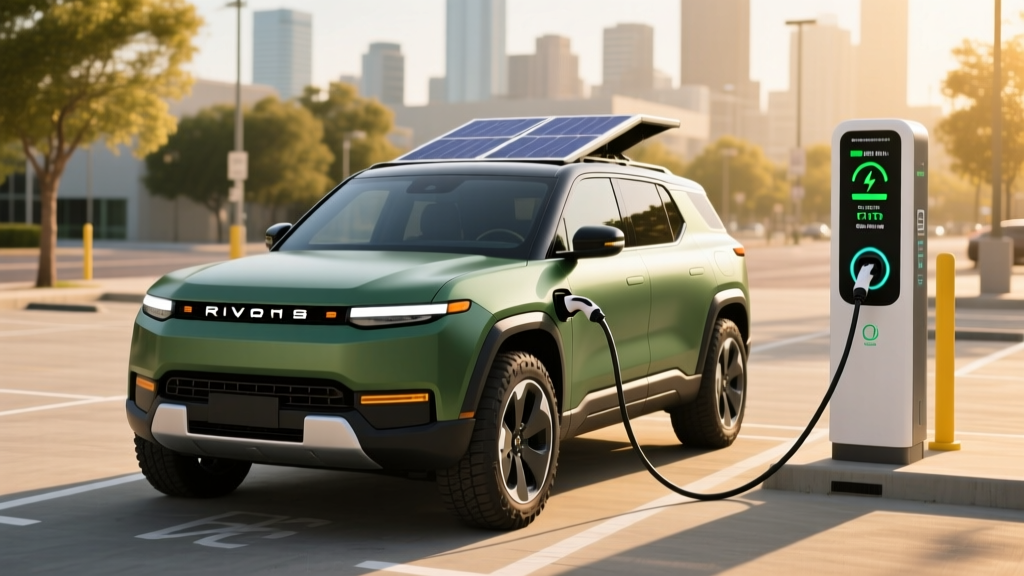
The 2026 Rivian R1S remains one of the few three-row electric SUVs that can genuinely tow, off-road, and carry seven passengers without feeling like a compromise. But with base MSRPs pushing well past $80,000, most buyers are exploring leasing as a way to cap depreciation risk and lock in a predictable monthly payment. The 2026 Rivian R1S lease cost varies dramatically depending on trim, battery pack, down payment, and whether you can capture the federal tax credit through a point-of-sale reduction. Here's a data-driven look at what you'll actually pay, drive, and charge.
2026 Rivian R1S: Full Spec Sheet
| Spec | Dual-Motor Standard | Dual-Motor Max | Tri-Motor Performance |
|---|---|---|---|
| EPA Range | 270 mi | 410 mi | 390 mi |
| Battery (usable) | ~92 kWh (LFP) | ~141 kWh (NMC) | ~141 kWh (NMC) |
| Horsepower | 533 hp | 533 hp | 850 hp |
| 0-60 mph | 4.5 sec | 4.5 sec | 2.9 sec |
| Max DC Fast Charge | 200 kW | 220 kW | 220 kW |
| 10-80% DC Time | ~27 min | ~35 min | ~35 min |
| Level 2 (11.5 kW) | ~17 mi/hr | ~25 mi/hr | ~25 mi/hr |
| MPGe (combined) | 69 MPGe | 65 MPGe | 63 MPGe |
| Towing Capacity | 7,700 lb | 7,700 lb | 7,700 lb |
| Base MSRP | $80,800 | $90,300 | $105,800 |
Source: Rivian official specs and EPA fueleconomy.gov. Tri-Motor specs reflect the 2025 model year carried forward; confirm with your dealer for late-cycle changes.
Real-World Range: What the EPA Sticker Doesn't Tell You
Dual-Motor Standard (270 mi EPA): Expect ~220-240 mi on highway road trips at 70-75 mph; ~180-200 mi in sub-freezing winter conditions.
Dual-Motor Max (410 mi EPA): Expect ~340-360 mi highway; ~280-310 mi in cold weather. The large NMC pack holds up better in temperature extremes thanks to active thermal management, but physics still wins at 20°F.
Tri-Motor Performance (390 mi EPA): Expect ~320-340 mi highway; aggressive driving and launch mode use will erode that further.
The R1S's boxy SUV profile and 6,800+ lb curb weight work against highway efficiency. On fueleconomy.gov, the Standard pack rates at roughly 48 kWh/100 mi combined, which is thirsty by EV standards. City driving with regenerative braking recovers more energy, so commuters with short trips will see range closer to the EPA sticker than road-trippers will.
Charging Speed: DC Fast and Home Level 2
| Charging Level | Power | Standard Pack (mi/hr) | Max Pack (mi/hr) |
|---|---|---|---|
| Level 1 (120V) | 1.4 kW | ~3 mi/hr | ~3 mi/hr |
| Level 2 (240V, 48A) | 11.5 kW | ~17 mi/hr | ~25 mi/hr |
| DC Fast (peak) | 200-220 kW | ~27 min (10-80%) | ~35 min (10-80%) |
Rivian uses the NACS connector natively on the 2026 R1S, giving you direct access to the Tesla Supercharger network (now open to non-Tesla EVs via NACS) plus Rivian's own Adventure Network at select locations. The Max pack's 141 kWh NMC battery charges at a peak of 220 kW but sustains that rate only through roughly 30-40% State of Charge before tapering. The 10-80% time of ~35 minutes is competitive with the BMW iX and Mercedes EQS SUV but trails the Hyundai Ioniq 9's faster architecture.
For home charging, Rivian recommends a 60A circuit with a 48A Wall Connector. A full overnight charge (8 hours at 11.5 kW) adds roughly 136 miles on the Standard pack or 200 miles on the Max—enough for virtually any daily commute. Plan for a Level 2 home installation cost of $800-$2,500 depending on panel capacity and run length; older homes may need a $2,000-$4,000 panel upgrade to support a 60A dedicated circuit.
2026 Rivian R1S Lease Cost: What You'll Actually Pay Monthly
Leasing an R1S in 2026 involves several variables: the capitalized cost (negotiated price), money factor (interest rate equivalent), residual value, lease term, and down payment. Here's a realistic breakdown based on current market data:
| Scenario | Dual-Motor Standard | Dual-Motor Max | Tri-Motor |
|---|---|---|---|
| Base MSRP | $80,800 | $90,300 | $105,800 |
| Est. Residual (36-mo, 36k mi) | ~52% ($42,016) | ~50% ($45,150) | ~48% ($50,784) |
| Monthly (36-mo, $5k down, 6% MF) | ~$1,180/mo | ~$1,380/mo | ~$1,650/mo |
| Monthly (36-mo, no down, 6% MF) | ~$1,320/mo | ~$1,520/mo | ~$1,800/mo |
Key lease variables: Money factors in 2026 are running higher than the zero-percent deals of 2021-2022. Rivian Financial Services typically sets residuals conservatively on the R1S, which pushes monthly payments above what a similarly priced BMW iX might lease for. Negotiating the cap cost down—even $3,000-$5,000—has an outsized effect on your monthly.
The "lease loophole" for the tax credit: Under IRS §30D rules, the $7,500 federal EV credit requires the buyer to meet income caps ($300k joint / $150k single), vehicle MSRP caps ($80,000 for SUVs), and battery critical-mineral sourcing requirements. However, under §45W (the commercial clean vehicle credit), a lessor can capture the $7,500 and pass it to the lessee as a cap-cost reduction—regardless of the lessee's income or the vehicle's MSRP. Many Rivian lessees use this structure to effectively reduce the R1S lease cost by $7,500, which shaves roughly $200-$210/month off a 36-month term. Always confirm with your dealer whether the lessor is passing through the credit; it's not automatic.
Tax Credit Eligibility: Direct Purchase vs. Lease
- MSRP cap: SUVs must be ≤$80,000 — only the base Dual-Motor Standard at $80,800 is borderline; options push it over
- Buyer income cap: AGI ≤$300,000 (joint) or ≤$150,000 (single)
- Battery sourcing: Critical minerals and battery components must meet phased-in domestic/free-trade sourcing thresholds for 2026
- Point-of-sale transfer: Eligible buyers can apply the $7,500 as an instant dealer discount at purchase
- Filing: IRS Form 8936 required; consult a tax professional
For a direct purchase, the R1S Dual-Motor Standard's $80,800 MSRP technically exceeds the $80,000 SUV cap, meaning most buyers will not qualify for §30D on a purchase. This makes leasing—where the §45W commercial credit bypasses MSRP and income caps—the more financially attractive path for most R1S buyers. Check current rules at IRS.gov, as sourcing requirements tighten annually.
Interior, Cargo, and Tech: Life Inside the R1S
The R1S seats up to seven across three rows. Second-row captain's chairs (standard on most trims) offer 38.9 inches of legroom, while the third row fits adults on short trips with 28.7 inches of legroom—tight for long hauls but competitive with the Kia EV9 and tighter than the Mercedes EQS SUV.
Cargo volume: 10.4 cu ft behind the third row, 46.7 cu ft with the third row folded, and 79.5 cu ft with both rear rows flat. The front trunk (frunk) adds 11.0 cu ft—useful for charging cables, groceries, or a soft cooler.
Tech highlights: Rivian's 15.6-inch center display runs a proprietary OS with embedded navigation, over-the-air updates, and a built-in camp mode that maintains cabin climate for overnight camping. The Driver+ system is a Level 2 SAE driver-assist suite with adaptive cruise, lane centering, and automatic lane changes on mapped highways. It is not self-driving—you must keep hands on the wheel and eyes on the road. The system is competent but not class-leading; GM's Super Cruise and Ford's BlueCruise offer more hands-off highway coverage.
Notable drawbacks: The R1S lacks Apple CarPlay and Android Auto—Rivian's native infotainment handles everything, which frustrates some buyers. Third-row access is tighter than the Kia EV9's. And at 6,800+ lbs, tire wear is aggressive; expect replacement costs of $1,800-$2,400 for a set of 275/55R21 all-seasons every 25,000-30,000 miles.
Pros and Cons at a Glance
- Genuine 7,700-lb towing + off-road capability rare in EV SUVs
- Max pack delivers 410 mi EPA—class-leading range
- NACS native: full Supercharger network access
- Over-the-air updates add features post-purchase
- Spacious frunk + versatile cargo with fold-flat rows
- Lease payments steep: $1,180-$1,800/mo typical
- No Apple CarPlay / Android Auto
- Highway efficiency is poor (48 kWh/100 mi) due to weight and aero
- Third-row legroom tight for adults on long trips
- §30D tax credit unlikely on direct purchase (MSRP over cap)
How the R1S Compares to Key Rivals
| Rivian R1S (Max) | Kia EV9 (GT-Line AWD) | BMW iX xDrive50 | |
|---|---|---|---|
| EPA Range | 410 mi | 270 mi | 324 mi |
| Base MSRP | $90,300 | $73,900 | $92,100 |
| 0-60 mph | 4.5 sec | 5.0 sec | 4.4 sec |
| Max DC Charge | 220 kW | 210 kW | 150 kW |
| 3-Row Seating | Yes (7) | Yes (6/7) | No (5 only) |
| Towing | 7,700 lb | 5,000 lb | 3,500 lb |
Choose the R1S if: You need genuine off-road capability, 7,700-lb towing, and maximum electric range for long road trips—and can absorb the premium lease cost.
Choose the Kia EV9 if: Budget is a priority, you want three rows at $20,000 less, and most trips stay within 200 miles.
Choose the BMW iX if: You prioritize luxury refinement, ride quality, and don't need a third row or serious towing.
Warranty and Long-Term Battery Outlook
Rivian covers the R1S battery and drive unit for 8 years / 175,000 miles with a capacity-retention threshold of 70%. The limited vehicle warranty is 5 years / 60,000 miles, which is competitive. Rivian uses NMC chemistry in the Max pack and LFP in the Standard pack. LFP offers longer cycle life and better tolerance for daily 100% charging but at lower energy density (hence the shorter range). NMC delivers more range per kWh but benefits from daily charging limited to 80-90% for longevity.
Real-world degradation data for Rivian's packs is still maturing—most 2022-2023 R1S vehicles are only 2-3 years into their life cycle. Early owner reports suggest 3-5% loss in the first year, which is within industry norms for liquid-cooled NMC packs.
Frequently Asked Questions
What is the real-world range of the 2026 Rivian R1S?
The Dual-Motor Max pack delivers 410 miles EPA but expect 340-360 miles on highway road trips and 280-310 miles in freezing temperatures. The Standard pack's 270 EPA miles drops to roughly 220-240 highway and 180-200 in winter.
How fast does the R1S charge at home and on the road?
On a Level 2 home charger (11.5 kW), the R1S gains 17-25 miles per hour depending on pack size—a full overnight charge covers most daily needs. On DC fast chargers, the Max pack peaks at 220 kW and reaches 10-80% in approximately 35 minutes, with the charge curve tapering significantly above 80%.
How much does the R1S cost after tax credits?
On a direct purchase, the R1S likely exceeds the §30D MSRP cap for SUVs ($80,000), disqualifying most buyers. Through a lease, the lessor can capture the $7,500 commercial credit (§45W) and pass it as a cap-cost reduction, effectively lowering the R1S lease cost by ~$200/month over 36 months. Confirm pass-through with your dealer.
Does the Rivian R1S qualify for the federal EV tax credit?
For direct purchase: likely not, because the MSRP exceeds the $80,000 SUV cap even on the base trim. For leasing: the lessor qualifies under §45W regardless of MSRP or buyer income, and most pass the $7,500 benefit to lessees. Always verify current rules at IRS.gov and with a tax professional.
Is the R1S worth leasing over buying?
For most buyers in 2026, leasing is the smarter financial play. You bypass the §30D MSRP/income restrictions via the §45W commercial credit, avoid long-term depreciation risk on a $90,000+ EV, and can upgrade when the next-generation platform arrives. The trade-off is no equity at lease-end and mileage restrictions (typically 10,000-15,000 mi/year).
Who is the Rivian R1S best suited for?
The R1S fits active families who tow boats or trailers, take road trips into areas with sparse charging (the Max pack's 410-mi range is a genuine safety net), and want off-road capability without a gas-powered SUV. It's less ideal for budget-conscious buyers, urban apartment dwellers without home charging, or those who need frequent adult-sized third-row seating.