Rivian R1S at a Glance: The Electric 3-Row SUV That Actually Fits Adults
The Rivian R1S occupies a rare position in the EV market: it's a genuine three-row electric SUV with legitimate off-road capability, competitive range, and enough cargo volume to handle a family road trip without a roof box. For 2026, the R1S continues with its dual-motor and quad-motor powertrains built on Rivian's Gen 2 platform, which brought meaningful weight reduction and efficiency gains over the original launch models.
But buyers searching for Rivian R1S interior dimensions usually have one question driving the research: will this thing actually fit my family, car seats, and gear? This review answers that with exact measurements, then covers the full ownership picture — range, charging, pricing, and how the R1S stacks up against the Tesla Model X, Kia EV9, and Hyundai Ioniq 9.
| Spec | Dual-Motor (Standard) | Dual-Motor (Max) | Quad-Motor |
|---|---|---|---|
| EPA Range | 270 mi | 352 mi | 321 mi |
| Battery (usable) | 92 kWh (LFP) | 128 kWh (NMC) | 128 kWh (NMC) |
| Horsepower | 533 hp | 533 hp | 835 hp |
| 0-60 mph | 4.5 sec | 4.5 sec | 3.0 sec |
| Max DC Fast Charge | 200 kW | 220 kW | 220 kW |
| 10-80% DC Time | ~30 min | ~28 min | ~28 min |
| Level 2 Rate | 11.5 kW (~30 mi/hr) | 11.5 kW (~30 mi/hr) | 11.5 kW (~30 mi/hr) |
| Drivetrain | AWD (dual-motor) | AWD (dual-motor) | AWD (quad-motor) |
| Towing Capacity | 7,700 lbs | 7,700 lbs | 7,700 lbs |
| Efficiency | 73 MPGe / 46 kWh/100mi | 79 MPGe / 42 kWh/100mi | 70 MPGe / 48 kWh/100mi |
| Base MSRP | $79,900 | $89,900 | $104,900 |
Rivian R1S Interior Dimensions: Passenger Space by Row
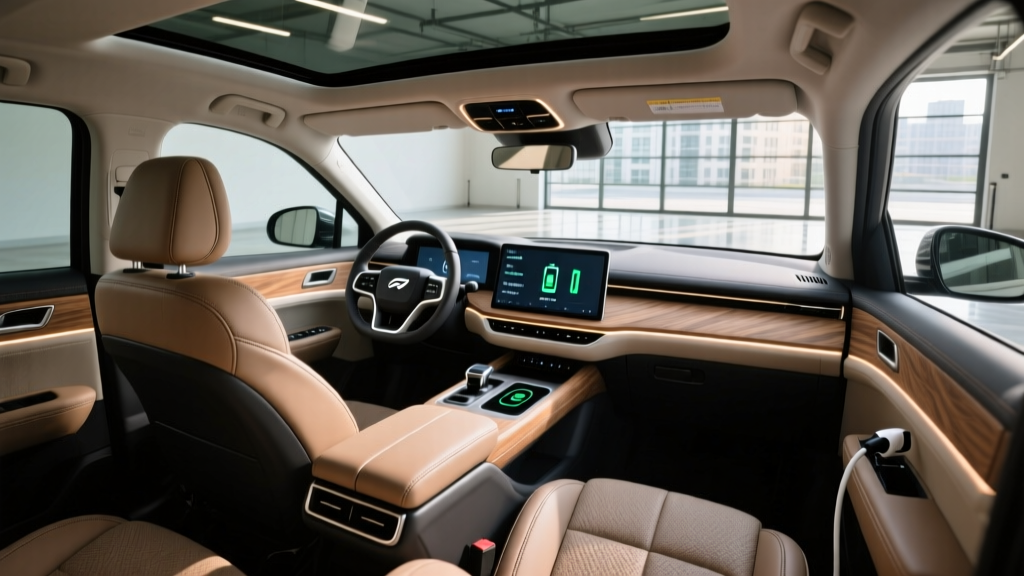
The R1S is built on a dedicated skateboard platform with a 121.1-inch wheelbase, which gives it generous interior volume relative to its exterior footprint. Here's what the cabin measurements actually look like, row by row:
| Measurement | 1st Row (Front) | 2nd Row | 3rd Row |
|---|---|---|---|
| Headroom | 40.8 in | 39.6 in | 37.0 in |
| Legroom | 41.3 in | 38.4 in | 30.4 in |
| Shoulder Room | 60.5 in | 59.0 in | 52.2 in |
| Hip Room | 57.2 in | 55.8 in | 47.0 in |
The front two rows are genuinely spacious — two adults in the second row will have ample legroom for long drives, and rear-facing child seats fit without pushing the front passenger into the dash. The third row is the compromise: 30.4 inches of legroom works for children or adults on short trips, but a six-foot adult will feel cramped beyond 30 minutes. This puts the R1S in the same ballpark as the Kia EV9 (32.0 in third-row legroom) but behind the Tesla Model X (which offers slightly more third-row space at the cost of cargo volume).
Rivian's second-row seats slide fore and aft by several inches, which lets you trade cargo space for legroom or vice versa — a practical feature for families toggling between passenger-heavy and gear-heavy trips.
Cargo Volume: Real-World Packing Capacity
Interior dimensions only matter if they translate to usable cargo space. The R1S delivers:
- Behind 3rd row: 11.6 cu ft — enough for two carry-on bags and a couple of backpacks, but tight for a week-long family trip
- Behind 2nd row (3rd row folded): 46.7 cu ft — a proper cargo area for strollers, coolers, and luggage for four
- Behind 1st row (all rear rows folded): 88.2 cu ft — near-minivan volume for large hauls
- Front trunk (frunk): 11.0 cu ft — lockable, drained, useful for charging cables, groceries, or muddy gear
The frunk is a significant practical advantage over the Model X, which has no front trunk. Combined, the R1S offers nearly 100 cubic feet of total enclosed storage. The load floor is relatively flat when rows are folded, though there's a slight step at the second-row fold point.
Range, Efficiency, and Real-World Expectations
EPA Range vs. Reality: The Dual-Motor Max Pack rates at 352 miles EPA, but plan for approximately 280-310 miles in mixed highway driving at 70+ mph. In cold weather (below 30°F), expect a further 15-25% reduction, bringing usable range to roughly 220-260 miles on winter road trips. The Standard Pack's 270-mile EPA figure drops to around 210-230 miles highway in moderate conditions.
Rivian offers three battery configurations for the R1S, and the chemistry choice matters:
- Standard Pack (92 kWh usable, LFP chemistry): Lithium iron phosphate cells are heavier but more durable — Rivian rates them for a longer cycle life, and you can charge to 100% daily without accelerated degradation. The trade-off is lower energy density, hence the shorter 270-mile range.
- Max Pack (128 kWh usable, NMC chemistry): Nickel-manganese-cobalt cells deliver higher energy density for the 352-mile range, but NMC benefits from an 80% daily charge limit for long-term health. Reserve 100% charges for road trips.
Efficiency varies by drivetrain. The Dual-Motor Max achieves 79 MPGe combined (42 kWh per 100 miles), which is competitive for a 6,800-pound SUV. The Quad-Motor drops to 70 MPGe due to the additional weight and mechanical complexity of four independent motors.
Charging Speed: DC Fast and Home Level 2
| Charging Level | Power / Rate | Speed | Notes |
|---|---|---|---|
| Level 1 (120V outlet) | 1.4 kW | ~3-4 mi/hr | Emergency/trickle only |
| Level 2 (240V, 48A) | 11.5 kW | ~30 mi/hr | Full charge overnight (~10 hrs for Max Pack) |
| DC Fast (peak) | 200-220 kW | 10-80% in ~28-30 min | Peak rate sustained to ~55% SoC, then tapers |
| NACS (Tesla Supercharger) | Up to 220 kW | Varies by station | Native NACS port on 2025+ models; adapter for older |
The R1S's charging curve is typical for a large-battery EV: it hits peak charge rate around 15-20% SoC, sustains it to roughly 55%, then progressively tapers. On a road trip, you'll add the most miles per minute by charging from 10% to 60% and moving on rather than waiting for 80%+. Rivian's navigation system preconditions the battery when you route to a charger, which is essential for hitting advertised charge speeds in cooler weather.
At home, the onboard 11.5 kW charger means a full overnight replenishment for the Standard Pack and a 10-12 hour session for the Max Pack. Most owners will rarely charge from 0% at home — plug in at 30%, wake up at 80%.
Performance and Drivetrain
Even the base Dual-Motor R1S produces 533 horsepower and hits 60 mph in 4.5 seconds — quick for any SUV, remarkable for one weighing nearly 7,000 pounds. The Quad-Motor variant, with an independent motor at each wheel, delivers 835 hp and a 3.0-second 0-60 time, along with torque vectoring that improves both on-road cornering and off-road traction.
All R1S models come with all-wheel drive. The Quad-Motor's individual wheel control enables tank turns (spinning in place by running left and right wheels in opposite directions), a feature that's more useful on tight trails than in parking lots. Air suspension is standard, offering adjustable ride height from 6.5 to 14.9 inches of ground clearance — the upper setting rivals dedicated off-road vehicles.
Pricing, Trims, and Federal Tax Credit Eligibility
The R1S is a premium vehicle, and its pricing reflects that. Here's where the 2026 lineup stands:
| Configuration | Base MSRP | As-Tested (Typical) | §30D Credit Eligible? |
|---|---|---|---|
| Dual-Motor Standard Pack | $79,900 | $83,000-$88,000 | No — exceeds $80,000 SUV cap |
| Dual-Motor Max Pack | $89,900 | $94,000-$102,000 | No — exceeds $80,000 SUV cap |
| Quad-Motor Max Pack | $104,900 | $110,000-$125,000 | No — exceeds $80,000 SUV cap |
Critical tax credit note: Under IRS §30D rules, the federal EV tax credit for new vehicles has an MSRP cap of $80,000 for SUVs, vans, and pickups. The R1S Dual-Motor Standard Pack starts at $79,900, which technically falls under the cap — however, adding any packages, destination fees, or options pushes it above $80,000, disqualifying it. In practice, most R1S configurations do not qualify for the $7,500 new-vehicle credit.
Buyers should also know that §30D has income caps ($300,000 joint / $150,000 single) and critical mineral and battery component sourcing requirements that further restrict eligibility. Consult the IRS clean vehicle credit page and a tax professional before assuming credit eligibility.
A well-equipped Dual-Motor Max Pack (the configuration most buyers choose) typically lands around $95,000-$100,000 after destination, paint, and the Adventure or Ascend package.
Technology, Driver Assistance, and Ownership Experience
The R1S runs Rivian's in-house software on a 15.6-inch center display and a 12.3-inch driver cluster. The interface is clean and responsive, with native route planning that integrates charging stops and battery preconditioning. Over-the-air updates have consistently added features since launch — Rivian's software cadence is among the better in the industry outside Tesla.
Driver assistance: Rivian's Driver+ system combines adaptive cruise control with lane centering on divided highways. This is a SAE Level 2 system — it requires the driver to remain attentive, keep hands on the wheel, and monitor the road at all times. It is not autonomous driving. Driver+ performs competently on highway stretches but doesn't match the hands-free confidence of GM's Super Cruise or Ford's BlueCruise on mapped roads.
Notable tech features:
- Gear tunnel (available as an accessory) — a pass-through storage compartment behind the second row
- Camp kitchen accessory that slides from the gear tunnel
- Vehicle-to-load (V2L) capability — power devices or a campsite from the R1S battery
- Rivian Waypoints — a community-sourced trail and campsite database built into the nav
- Phone-as-key with automatic approach unlock
Notable drawbacks:
- No Apple CarPlay or Android Auto — Rivian's native system only, which frustrates some buyers
- Third-row access requires a two-step fold-and-tumble that's less convenient than competitors
- Service center network is still expanding — rural owners may face long drives for warranty work
- Insurance costs run 15-25% higher than comparable ICE SUVs, per industry data
Rivian R1S vs. Key Competitors
How does the R1S measure up against the other three-row EV SUVs on the market?
| Spec | Rivian R1S (Dual-Motor Max) | Tesla Model X (Long Range) | Kia EV9 (GT-Line AWD) |
|---|---|---|---|
| EPA Range | 352 mi | 335 mi | 270 mi |
| 3rd Row Legroom | 30.4 in | 32.7 in | 32.0 in |
| Cargo (behind 3rd) | 11.6 cu ft | 13.8 cu ft | 20.2 cu ft |
| 0-60 mph | 4.5 sec | 3.8 sec | 5.0 sec |
| Towing | 7,700 lbs | 5,000 lbs | 5,000 lbs |
| Max DC Charge | 220 kW | 250 kW | 210 kW |
| Base MSRP | $89,900 | $84,990 | $73,900 |
| Off-Road Capability | Excellent (14.9 in clearance) | Limited | Moderate |
The R1S wins on towing capacity, off-road capability, and adventure-oriented features. The Model X offers more third-row space and access to the Supercharger network (though Rivian now has NACS access too). The EV9 is the value pick, undercutting both by $10,000+ while offering the most cargo space behind the third row.
Who Should Buy the Rivian R1S?
Choose the R1S if: You need three rows for occasional use, tow a boat or trailer regularly, want genuine off-road capability, and value build quality and adventure-oriented design over rock-bottom pricing.
Look elsewhere if: Third-row passengers are full-time (the EV9 or Model X offers more room), you need the lowest possible price (the EV9 starts $16,000 less), or you rely on Apple CarPlay for daily navigation.
The R1S is the right vehicle for active families who split time between school runs, highway road trips, and weekend trails. It's not the cheapest three-row EV, and it doesn't qualify for the federal new-vehicle credit in most configurations — but it offers a combination of capability, range, and build quality that no competitor fully matches in 2026.
Warranty Coverage
Rivian backs the R1S with:
- Battery & drivetrain: 8 years / 175,000 miles (whichever comes first), with a capacity retention threshold of 70% — if the battery drops below 70% of original capacity within the warranty period, Rivian will repair or replace it
- Vehicle limited warranty: 5 years / 60,000 miles bumper-to-bumper
- Roadside assistance: 5 years / 60,000 miles
The 175,000-mile battery warranty is notably generous — it exceeds the industry-standard 100,000 miles and provides meaningful peace of mind for a vehicle in this price range. See Rivian's warranty page for full terms.
Frequently Asked Questions
What is the real-world range of the Rivian R1S?
The Max Pack's 352-mile EPA rating translates to roughly 280-310 miles in real-world highway driving at 65-75 mph. In cold weather (sub-30°F), expect 220-260 miles. The Standard Pack's 270-mile EPA figure yields about 210-230 miles on the highway.
How fast does the R1S charge at home and on the road?
At home on a Level 2 (240V, 48A) charger, the R1S adds approximately 30 miles of range per hour at 11.5 kW. On DC fast chargers, it peaks at 200-220 kW and charges from 10-80% in roughly 28-30 minutes. Battery preconditioning via navigation routing is essential for hitting peak speeds.
Does the Rivian R1S qualify for the $7,500 federal EV tax credit?
Generally, no. The IRS §30D credit caps SUV MSRP at $80,000. The base Dual-Motor Standard Pack starts at $79,900, but adding destination fees or any options pushes it above the cap. Most R1S buyers will not qualify for the new-vehicle credit. Check current rules at IRS.gov and consult a tax professional.
Is the R1S worth buying over the Tesla Model X or Kia EV9?
If you prioritize towing (7,700 lbs vs. 5,000 for competitors), off-road capability, and adventure features, the R1S is the clear choice. If third-row space is your top priority, the Model X offers more room. If value matters most, the EV9 delivers three rows for $16,000 less.
What are the biggest pros and cons of the R1S?
Pros:
- Class-leading towing and off-road capability
- 352-mile max range is competitive
- LFP option for daily 100% charging
- Generous 175,000-mile battery warranty
- Frunk + gear tunnel = versatile storage
- Strong OTA update track record
Cons:
- No Apple CarPlay or Android Auto
- Third row is tight for adults on long trips
- Doesn't qualify for §30D credit in most configs
- Insurance costs above segment average
- Service network still expanding in rural areas
- High starting price ($79,900+)
Can the R1S use Tesla Superchargers?
Yes. Starting with 2025 model-year vehicles, Rivian ships with a native NACS charge port, providing direct access to Tesla's Supercharger network. Owners of earlier R1S models with CCS ports can use a Rivian-provided NACS adapter.