Quick Verdict: The R1S Is a Full-Size Electric SUV That Actually Fits Your Garage
If you've been searching for Rivian R1S height specifications before pulling the trigger on a three-row electric SUV, you're asking the right question. Garage clearance, parking-structure limits, and roof-rack accessibility all hinge on this single dimension — and the R1S's air suspension makes the answer more nuanced than a spec sheet suggests.
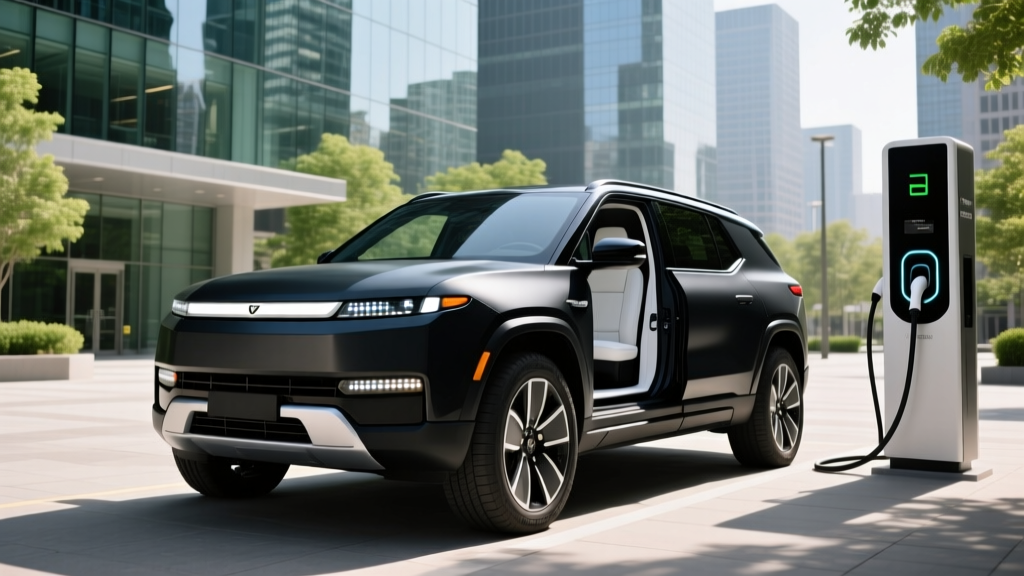
The 2026 Rivian R1S is a body-on-frame, three-row electric SUV built on Rivian's updated Gen 2 platform. It competes directly with the Tesla Model X, BMW iX (two-row), and the upcoming electric Escalade IQ, but occupies a unique niche: genuine off-road capability, a usable third row, and a towing rating most crossovers can't touch. Here's everything you need to know before configuring one.
Exterior Dimensions: Exactly How Tall Is the Rivian R1S?
The R1S's height is not a fixed number. Its standard air suspension adjusts ride height across several modes, which changes the vehicle's overall profile by several inches depending on your setting.
| Dimension | Measurement |
|---|---|
| Overall Height (Standard Ride) | 73.0 inches (1,854 mm) |
| Overall Height (Lowest Setting / Park Mode) | ~71.5 inches (1,816 mm) |
| Overall Height (Off-Road / Max Lift) | ~77.2 inches (1,961 mm) |
| Overall Length | 200.8 inches |
| Overall Width (mirrors folded) | 81.8 inches |
| Wheelbase | 121.1 inches |
| Ground Clearance (Standard) | 8.7 inches |
| Ground Clearance (Max Off-Road) | 14.9 inches |
| Curb Weight (Dual-Motor) | ~6,800 lbs |
| Curb Weight (Tri-Motor) | ~7,150 lbs |
Garage reality check: A standard US residential garage door opening is 84 inches (7 feet) tall. The R1S in Standard ride mode at 73.0 inches clears it with room to spare. However, if you add a roof box or crossbars with gear — which can add 12-18 inches — you'll need a taller door or must use the Low suspension setting to enter. Many owners program a "home" geofence that automatically drops the suspension when approaching their garage.
Range, Battery, and Real-World Efficiency
The 2026 R1S is offered with two primary battery packs across its Dual-Motor and Tri-Motor configurations. Rivian's Gen 2 architecture uses a structural battery pack with NMC (nickel manganese cobalt) chemistry for the larger pack, chosen for its energy density in a heavy, full-size SUV platform.
| Configuration | Battery (Usable kWh) | Chemistry | EPA Range | MPGe (Combined) |
|---|---|---|---|---|
| Dual-Motor Standard Pack | ~92 kWh | NMC | 270 miles | 73 MPGe |
| Dual-Motor Max Pack | ~128 kWh | NMC | 352 miles | 70 MPGe |
| Tri-Motor Max Pack | ~128 kWh | NMC | 321 miles | 65 MPGe |
The EPA sticker is a starting point, not a guarantee. Based on real-world driving data and owner reports:
- Highway (70-75 mph, mild weather): Expect ~290-310 miles on the Max Pack Dual-Motor — roughly 10-15% below EPA due to aerodynamic drag at sustained speed.
- City/suburban mixed driving: Closer to EPA or slightly above, thanks to regenerative braking recapturing energy.
- Cold weather (below 32°F): Range drops 20-30% without preconditioning. A Max Pack R1S may deliver 240-270 miles in freezing temps. The R1S includes a heat pump, which mitigates cabin-heating losses but doesn't eliminate cold-weather battery chemistry slowdown.
- Towing (5,000+ lb trailer): Cut EPA estimates roughly in half. Plan for 150-175 miles between charges when towing near the 7,700-lb max rating.
Efficiency is measured at roughly 46-49 kWh per 100 miles for the Dual-Motor Max Pack — typical for a 7,000-lb electric SUV but significantly thirstier than a sedan or compact crossover. Source: fueleconomy.gov.
Charging Speed: DC Fast Charge, Level 2, and Home Setup
Rivian's Gen 2 platform supports peak DC fast-charging rates above 200 kW, a significant improvement over the first-generation R1S. The larger Max Pack sustains higher charging power longer due to its greater thermal mass and improved cooling loops.
| Charging Level | Power | Speed / Time |
|---|---|---|
| Level 1 (120V household) | ~1.4 kW | ~3-4 miles per hour |
| Level 2 (240V, 48A home charger) | 11.5 kW | ~25 miles per hour; full charge in ~11-13 hours |
| Level 2 (240V, 32A portable) | 7.7 kW | ~17 miles per hour |
| DC Fast Charge (Max Pack peak) | ~220 kW peak | 10-80% in approximately 27 minutes |
| DC Fast Charge (Standard Pack peak) | ~200 kW peak | 10-80% in approximately 24 minutes |
Charging-curve reality: Peak kW is not sustained kW. The R1S Max Pack will hit ~220 kW at low state of charge (around 10-20% SoC) and taper progressively. From 50-80%, expect sustained rates closer to 120-150 kW. This is normal for NMC packs with large capacities and is managed by the battery thermal system. Plan road trips around 20-25 minute stops at 250+ kW stations for meaningful range additions.
Home charging note: Rivian's Wall Charger delivers up to 11.5 kW on a 60A circuit (48A continuous). A licensed electrician will typically charge $800-$2,000 for installation depending on panel proximity and whether a panel upgrade to 200A service is needed. Most Max Pack owners add 200+ miles overnight, which covers nearly all daily use.
Performance: Tri-Motor Power and Dual-Motor Efficiency
The 2026 R1S lineup offers a clear performance hierarchy. The Tri-Motor configuration — one motor on the front axle, two on the rear — is the performance flagship, while the Dual-Motor balances range and capability.
| Configuration | Horsepower | Torque (lb-ft) | 0-60 mph | Drivetrain | Top Speed |
|---|---|---|---|---|---|
| Dual-Motor | 533 hp | 610 | 4.5 sec | AWD | 125 mph |
| Tri-Motor | 850 hp | 1,103 | 2.9 sec | AWD | 130 mph |
The Tri-Motor's 2.9-second 0-60 time places it in supercar territory despite its 7,150-lb curb weight. Torque vectoring across the rear axle motors enables precise cornering and genuine off-road rock-crawling capability without traditional locking differentials. The Dual-Motor's 533 hp is more than adequate for daily driving and highway merging — this is not a vehicle that feels underpowered in any configuration.
Towing: The R1S is rated to tow up to 7,700 pounds when properly equipped, outclassing nearly every other electric SUV in its segment. This makes it viable for boat trailers, horse trailers, and mid-size travel trailers — though range while towing drops sharply, as noted above.
Interior, Cargo, and Passenger Space
The R1S seats up to seven passengers in a 2-3-2 configuration. Unlike many three-row SUVs where the third row is penalty-box territory, the R1S offers genuine adult usability in the back, helped by its tall roofline and boxy proportions.
| Measurement | Dimension |
|---|---|
| Headroom (1st row) | 41.1 inches |
| Headroom (2nd row) | 39.8 inches |
| Headroom (3rd row) | 37.5 inches |
| Legroom (1st row) | 41.3 inches |
| Legroom (2nd row) | 38.2 inches |
| Legroom (3rd row) | 30.4 inches |
| Cargo (behind 3rd row) | 10.6 cu ft |
| Cargo (3rd row folded) | 46.7 cu ft |
| Cargo (2nd & 3rd folded) | 88.2 cu ft |
| Front Trunk (Frunk) | 11.0 cu ft |
Practical note: The 10.6 cu ft behind the third row is tight for a week-long family road trip with all seats occupied. Most owners fold the third row for daily use (yielding 46.7 cu ft) and deploy it for passengers only when needed. The 11.0 cu ft frunk is among the largest in any EV and easily swallows charging cables, a gym bag, or groceries.
Pricing, Trims, and Federal Tax Credit Eligibility
The 2026 R1S is offered in several configurations. Pricing has been adjusted for the current model year with Gen 2 hardware standard across the lineup.
| Trim / Configuration | Base MSRP | Est. As-Tested (w/ common options) |
|---|---|---|
| Dual-Motor Standard Pack (Adventure) | $75,900 | $79,000-$83,000 |
| Dual-Motor Max Pack (Adventure) | $83,400 | $87,000-$93,000 |
| Tri-Motor Max Pack (Ascend) | $99,900 | $105,000-$115,000 |
The Rivian R1S faces specific challenges under the IRS §30D clean vehicle credit rules:
- MSRP cap: SUVs must be priced at or below $80,000 to qualify. This means the Dual-Motor Standard Pack at $75,900 base is eligible, but the Max Pack and Tri-Motor configurations exceed the cap and do not qualify for the federal credit.
- Buyer income cap: Modified adjusted gross income must not exceed $300,000 (joint), $225,000 (head of household), or $150,000 (individual).
- Battery sourcing: Critical minerals and battery component requirements phase in annually. Verify current-year compliance on the fueleconomy.gov tax credit lookup before purchasing, as sourcing rules can shift mid-year.
- Point-of-sale transfer: If eligible, you can transfer the credit to the dealer at purchase for an immediate price reduction rather than waiting for tax filing.
Bottom line: Only the base Dual-Motor Standard Pack R1S consistently falls under the $80,000 MSRP cap. Adding options can push it over. Confirm final MSRP with your Rivian advisor before assuming credit eligibility.
Tech, Driver Assistance, and Software
The R1S runs Rivian's in-house software stack on a 15.6-inch center touchscreen and a 12.3-inch digital instrument cluster. The system is responsive, receives regular over-the-air updates, and includes native navigation with integrated route planning that accounts for charging stops.
Driver assistance — Driver+: Rivian's Driver+ system provides highway lane-centering and adaptive cruise control. This is an SAE Level 2 driver-assist system. You must keep your hands on the wheel and eyes on the road at all times. It is not autonomous driving. The system performs competently on well-marked interstates but can struggle with faded lane lines, construction zones, and aggressive cut-ins. It does not currently offer hands-free operation on mapped highways like GM's Super Cruise or Ford's BlueCruise.
Standout tech features:
- Electric Camp Kitchen (optional): A slide-out kitchen system integrated into the driver-side cargo area, including an induction cooktop and sink.
- Powered tonneau cover and gear tunnel: The R1S offers a lockable, weather-sealed cargo area accessible from both sides.
- Rivian Waypoints: An integrated adventure-mapping feature with curated off-road and camping routes.
- Vehicle-to-load (V2L): The R1S can power external devices and appliances, useful for camping or emergency backup.
Notable drawbacks:
- Driver+ lags behind competitors in hands-free highway capability.
- No Apple CarPlay or Android Auto — Rivian uses its own native system exclusively. This is a dealbreaker for some buyers.
- Service center network is still expanding; some owners face long wait times for body repair or parts in less populated regions.
Warranty and Ownership Costs
| Coverage | Term |
|---|---|
| Limited Vehicle Warranty | 5 years / 60,000 miles |
| Battery & Drive Unit (Powertrain) | 8 years / 175,000 miles |
| Battery Capacity Retention | ≥70% of original capacity over 8 yr / 175,000 mi |
| Roadside Assistance | 5 years / 60,000 miles |
The 8-year/175,000-mile battery warranty is competitive and exceeds the federal minimum requirement of 8 years/100,000 miles. The 70% capacity retention threshold is standard for the industry. Real-world NMC degradation data from early Rivian owners suggests approximately 5-8% loss over the first 60,000 miles, with the curve flattening significantly afterward — consistent with other NMC-based EVs.
Insurance: Expect premiums 15-25% higher than a comparable gas SUV due to the R1S's repair costs and performance. Get quotes before purchasing.
Charging cost vs. gas: At the US average electricity rate of ~$0.16/kWh, charging a Max Pack from 10-80% at home costs roughly $14.50. An equivalent gas SUV getting 18 MPG at $3.50/gallon would cost ~$45 for the same distance. Public DC fast charging at $0.40-$0.50/kWh narrows the gap considerably.
Pros, Cons, and Who the R1S Is For
Pros
- Genuine off-road capability with 14.9" ground clearance and quad-motor torque vectoring (Tri-Motor)
- 7,700-lb towing capacity — best in electric SUV class
- Usable third row for adults on shorter trips
- Massive 11 cu ft frunk
- 352-mile EPA range on Max Pack eliminates range anxiety for most use cases
- Air suspension auto-levels and adjusts ride height for garage clearance
- Strong OTA update cadence with real feature additions
Cons
- Most configurations exceed $80K MSRP cap — no federal tax credit
- No Apple CarPlay or Android Auto
- Driver+ is competent but not class-leading among Level 2 systems
- Efficiency (46-49 kWh/100mi) means higher charging costs than smaller EVs
- Service center density still limited outside major metros
- Towing cuts range roughly in half — plan accordingly
- Premium pricing; well-optioned Tri-Motor exceeds $110K
Decision Framework: Who Should Buy the R1S?
- Choose the R1S if: You need three rows, tow a trailer regularly, want genuine off-road capability, and have access to home Level 2 charging. The Dual-Motor Max Pack is the sweet spot for range and value.
- Look elsewhere if: You want hands-free highway driving (consider the BMW iX with available Highway Assistant), need maximum federal tax credit eligibility (consider smaller, lower-MSRP EVs), or rely on Apple CarPlay for daily navigation.
- Consider the R1T pickup instead if: You don't need three rows and prefer a truck bed for gear and hauling.
Frequently Asked Questions
What is the exact height of the Rivian R1S?
In Standard ride mode, the 2026 R1S measures 73.0 inches tall. The air suspension can lower it to approximately 71.5 inches in Park/Low mode for garage entry, or raise it to around 77.2 inches in Off-Road mode. A standard 7-foot (84-inch) garage door accommodates the R1S in Standard and Low modes, but roof accessories may require Low mode.
What is the real-world range of the Rivian R1S?
The EPA rates the Dual-Motor Max Pack at 352 miles. Real-world highway driving at 70-75 mph typically yields 290-310 miles. Cold weather (below freezing) can reduce this to 240-270 miles. The Standard Pack's 270-mile EPA rating translates to roughly 225-240 miles highway in mild conditions.
How fast does the R1S charge at home and on the road?
On a 48A Level 2 home charger (11.5 kW), the R1S gains about 25 miles of range per hour, fully charging overnight in 11-13 hours. On a DC fast charger, the Max Pack peaks at ~220 kW and charges from 10-80% in approximately 27 minutes, with the charge rate tapering above 50% SoC.
Does the Rivian R1S qualify for the $7,500 federal EV tax credit?
Only the Dual-Motor Standard Pack at its $75,900 base MSRP falls under the $80,000 SUV cap for the §30D credit. The Max Pack and Tri-Motor configurations exceed the cap and are ineligible. Buyer income limits ($150K individual / $300K joint) and battery sourcing requirements also apply. Verify eligibility at fueleconomy.gov and consult a tax professional before relying on the credit.
Is the R1S worth buying over the Tesla Model X or BMW iX?
The R1S wins on towing (7,700 lbs vs. Model X's 5,000 lbs), off-road capability, and third-row usability. The Model X offers the Supercharger network advantage (though Rivian now has NACS access via adapter and upcoming native NACS ports) and more advanced Autopilot/FSD software. The BMW iX is a two-row luxury cruiser — not a direct competitor for families needing three rows. If you tow, go off-road, or need seven seats, the R1S is the strongest electric option in its class.
Does the R1S have Apple CarPlay?
No. Rivian uses its proprietary infotainment system exclusively. There is no Apple CarPlay or Android Auto support. The native system includes navigation, streaming, and phone integration, but buyers who depend on CarPlay for maps or messaging should test-drive the system before committing.