Rivian R1S Dual Standard: Quick Verdict
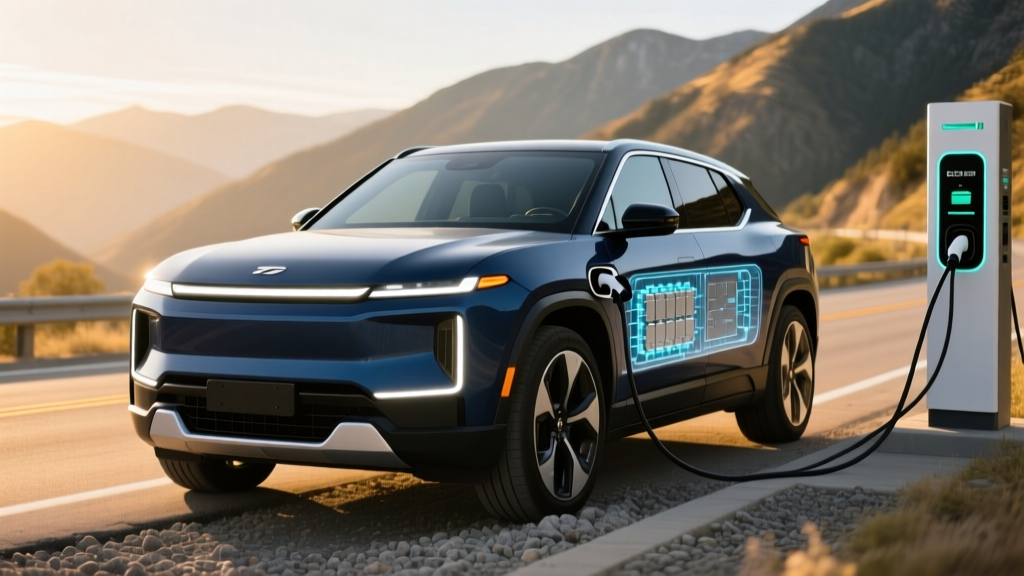
The 2026 Rivian R1S Dual Standard (now officially called the Dual-Motor Standard Pack) is a three-row electric SUV that pairs serious off-road capability with genuine daily-driver practicality. Built on Rivian's updated Gen 2 platform, the Dual Standard sacrifices roughly 60 miles of EPA range compared to the Large Pack to hit a lower entry price. For families who charge at home, rarely exceed 200 miles between stops, and need towing capacity, the Standard Pack is the sweet spot in the R1S lineup. Buyers chasing maximum road-trip range should step up to the Large or Max Pack.
Specs at a Glance
| Spec | 2026 R1S Dual Standard |
|---|---|
| EPA Range | ~270 miles (est. based on Gen 2 Dual-Motor) |
| Battery Capacity | 106 kWh usable, NMC chemistry |
| Drivetrain | Dual-Motor AWD |
| Horsepower | 533 hp |
| 0-60 mph | 4.5 seconds |
| Max DC Fast Charge | 220 kW (peak) |
| 10-80% DC Charge Time | ~30 minutes |
| Level 2 Home Charge Rate | 11.5 kW (~25 mi/hr) |
| EPA Efficiency | ~69 MPGe / 44 kWh/100mi |
| Towing Capacity | 7,700 lbs |
| Cargo (behind 3rd row) | 10.8 cu ft |
| Cargo (3rd row folded) | 46.7 cu ft |
| Cargo (all rows folded) | 88.2 cu ft |
| Front/2nd/3rd Legroom | 41.3 / 37.2 / 30.5 in |
| Battery Warranty | 8 years / 175,000 miles |
| Base MSRP (Dual Standard) | $79,900 (incl. destination) |
Real-World Range: What the EPA Number Doesn't Tell You
EPA Estimated: ~270 miles
Real-world expectation: Plan for 220-240 miles on sustained highway driving at 70-80 mph, and as low as 190-210 miles in sub-freezing winter conditions with cabin heat running. City/regenerative driving can push range closer to or slightly above the EPA sticker.
The EPA combined cycle blends city and highway driving in proportions that favor regenerative braking. On a flat Interstate run at 75 mph in 70°F weather, the R1S Dual Standard will realistically deliver around 230 miles before you want to stop at 10-15% state of charge. Cold weather compounds the loss: battery heating and resistive cabin heat (the R1S uses a heat pump, which helps) can cut range by 20-30% at 20°F. Towing a 5,000-lb trailer cuts range roughly in half.
If your daily commute is under 80 miles round-trip with home charging, the Standard Pack's real-world 220+ mile buffer is more than sufficient. For regular 300+ mile road trips, the Large Pack (est. ~330 mi EPA) is the better call.
Charging: DC Fast, Home Level 2, and the NACS Advantage
| Charging Level | Power | Speed | Notes |
|---|---|---|---|
| Level 1 (120V) | ~1.4 kW | ~3 mi/hr | Emergency/trickle only |
| Level 2 (240V, 48A) | 11.5 kW | ~25 mi/hr | Full charge in ~9-10 hours |
| DC Fast Charge | 220 kW peak | 10-80% in ~30 min | Tapers above 80%; sustained ~150 kW avg |
The R1S Gen 2 uses a NACS (Tesla-style) charge port natively, giving you direct access to Tesla Supercharger V3 and V4 stations via the Rivian charging network and partner networks. No adapter required. At Electrify America or other CCS stations, you'll need a NACS-to-CCS adapter (included with the vehicle).
Charging curve reality check: The 220 kW peak only sustains briefly between roughly 15-35% state of charge. From 35-80%, the rate tapers progressively. The 10-80% time of ~30 minutes reflects this curve, not a sustained 220 kW pull. Preconditioning the battery (automatic when you navigate to a charger in the infotainment system) is essential for hitting peak rates in cold weather.
At home on a 48-amp Level 2 wall connector, the R1S adds about 25 miles of range per hour. A full 0-100% charge takes roughly 9-10 hours — easily accomplished overnight. Rivian sells its own Wall Connector, and any J1772/NACS Level 2 EVSE rated for 48A will work.
Performance and Driving Dynamics
The Dual-Motor Standard Pack puts one AC induction motor on each axle for a combined 533 horsepower and full-time AWD. The 0-60 mph time of 4.5 seconds is genuinely quick for a 6,800-lb three-row SUV — faster than a Porsche Cayenne S. Rivian's torque vectoring and low center of gravity (battery pack under the floor) keep body roll controlled on twisty roads.
Off-road, the R1S is in a class of its own among electric SUVs: available air suspension provides up to 14.9 inches of ground clearance, and the quad-motor variants offer tank turns. The Dual-Motor doesn't get tank turns but still delivers impressive approach/departure angles and genuine trail-riding capability. The 7,700-lb towing capacity is best-in-class for an electric three-row SUV, though remember that towing slashes range dramatically.
Interior, Tech, and Driver Assistance
The R1S interior seats seven across three rows, though the third row (30.5 inches of legroom) is best suited for children or short trips. The second row offers a generous 37.2 inches. Cargo space behind the third row is tight at 10.8 cu ft — groceries and backpacks fit, but not much luggage. Fold the third row and you get a useful 46.7 cu ft; fold everything for 88.2 cu ft.
The 15.6-inch center touchscreen runs Rivian's in-house software, which is among the most intuitive in the EV space. Wireless Apple CarPlay and Android Auto are not supported — Rivian's native system handles navigation, media, and vehicle settings. A 12.3-inch digital instrument cluster and an available head-up display round out the tech.
Rivian's Driver+ system provides adaptive cruise control with lane centering on highways. This is an SAE Level 2 driver-assist system, meaning the driver must remain fully engaged with hands on the wheel and eyes on the road at all times. It is not autonomous driving.
Pricing, Tax Credits, and Ownership Cost
| Trim / Configuration | MSRP (incl. destination) |
|---|---|
| R1S Dual Standard (Dual-Motor, Standard Pack) | $79,900 |
| R1S Dual Large (Dual-Motor, Large Pack) | $84,900 |
| R1S Dual Max (Dual-Motor, Max Pack) | $89,900 |
| R1S Tri Max (Tri-Motor, Max Pack) | $99,900 |
| R1S Quad (Quad-Motor, Max Pack) | $104,900 |
Federal tax credit eligibility (§30D): The R1S qualifies for up to $7,500 under the IRS Clean Vehicle Credit, but eligibility depends on several conditions that change periodically:
- MSRP cap: SUVs must be under $80,000 MSRP. The Dual Standard at $79,900 clears this cap; higher trims do not qualify for the new-vehicle credit.
- Buyer income limits: AGI must not exceed $300,000 (joint), $225,000 (head of household), or $150,000 (individual) — per IRS §30D rules.
- Battery sourcing: Critical minerals and battery component requirements tighten annually. Check the current fueleconomy.gov eligibility list before purchasing, as sourcing rules may reduce the credit to $3,750 or eliminate it entirely depending on the model year and build date.
- Point-of-sale transfer: As of 2024, qualified buyers can transfer the credit to the dealer at purchase for an immediate price reduction, rather than waiting to claim it on their tax return.
Bottom line on price: A Dual Standard buyer who meets all income and sourcing requirements could pay as little as ~$72,400 after the full $7,500 credit. Verify current eligibility before committing — these rules shift with supply-chain changes.
Pros and Cons
Pros
- Best-in-class off-road capability for an electric SUV
- 7,700-lb towing capacity
- Native NACS port — direct Tesla Supercharger access
- 533 hp and 4.5s 0-60 in a three-row family hauler
- 175,000-mile battery warranty exceeds industry standard
- Excellent infotainment UX and build quality
Cons
- ~270-mile EPA range limits road-trip flexibility vs. Large/Max Pack
- Third-row legroom is tight (30.5 in)
- Cargo behind 3rd row is small (10.8 cu ft)
- No Apple CarPlay or Android Auto
- Insurance premiums run higher than ICE equivalents
- Only the base Standard trim qualifies for the $7,500 federal credit
How It Stacks Up Against Competitors
The R1S Dual Standard's closest rivals are the Kia EV9 (significantly cheaper at ~$55,000-$74,000, but less powerful and less off-road capable), the Tesla Model X (more range and Supercharger ubiquity, but aging interior and panel-gap concerns), and the BMW iX (only two rows, more luxury-focused, similar pricing). For buyers who need three rows, genuine off-road chops, and towing, the R1S occupies a unique niche. If budget is the priority and off-roading isn't on the agenda, the EV9 Long Range AWD delivers comparable passenger space at $15,000+ less.
Who Should Buy the R1S Dual Standard?
Choose the R1S Dual Standard if:
- You charge at home nightly and daily driving is under 150 miles
- You need three rows and towing but don't take frequent 300+ mile road trips
- Off-road capability or outdoor lifestyle matters to you
- You want NACS-native Supercharger access without an adapter
Choose the R1S Dual Large or Max Pack if:
- You regularly drive 250+ miles between charging stops
- You live in a cold climate where winter range loss is significant
- You tow frequently and need maximum range buffer
Look at the Kia EV9 if:
- Budget is your primary concern
- You don't need serious off-road or towing capability
Frequently Asked Questions
What is the real-world range of the R1S Dual Standard?
Expect roughly 220-240 miles on the highway in moderate temperatures, dropping to 190-210 miles in freezing weather. City driving with regenerative braking can push closer to the 270-mile EPA estimate.
How fast does the R1S Dual Standard charge?
On DC fast charging, it peaks at 220 kW and reaches 10-80% in about 30 minutes. At home on a 48-amp Level 2 charger (11.5 kW), it adds roughly 25 miles per hour, fully charging overnight in 9-10 hours.
Does the R1S Dual Standard qualify for the $7,500 federal tax credit?
It can, since its $79,900 MSRP falls under the $80,000 SUV cap. However, buyer income limits, battery critical-mineral sourcing rules, and component requirements all affect eligibility. Check fueleconomy.gov and consult a tax professional before relying on the credit.
Is the Rivian R1S worth buying over the Kia EV9 or Tesla Model X?
If you need off-road capability, towing, and premium build quality, the R1S is worth the premium. If you prioritize value and don't leave pavement, the EV9 is a strong alternative at a lower price. The Model X offers more range but is a generation older in interior quality.
What battery chemistry does the R1S use?
The Standard Pack uses NMC (nickel manganese cobalt) lithium-ion cells. NMC offers higher energy density than LFP, which is why Rivian can pack 106 kWh into the Standard pack footprint. The trade-off is that NMC benefits from keeping charge between 20-80% for daily use, unlike LFP which tolerates regular 100% charges.
What is the battery warranty on the R1S?
Rivian covers the battery and drive system for 8 years or 175,000 miles, whichever comes first. The warranty guarantees the battery will retain a minimum capacity threshold (typically 70% of original capacity) over that period. This exceeds the federal minimum requirement of 8 years/100,000 miles.
Can the R1S tow a travel trailer?
Yes, with a maximum towing capacity of 7,700 lbs, it can handle most mid-size travel trailers. However, towing reduces range by roughly 40-50%, so plan for 130-150 real-world miles between charges when towing near maximum capacity.