Quick Verdict: The R1S in Numbers
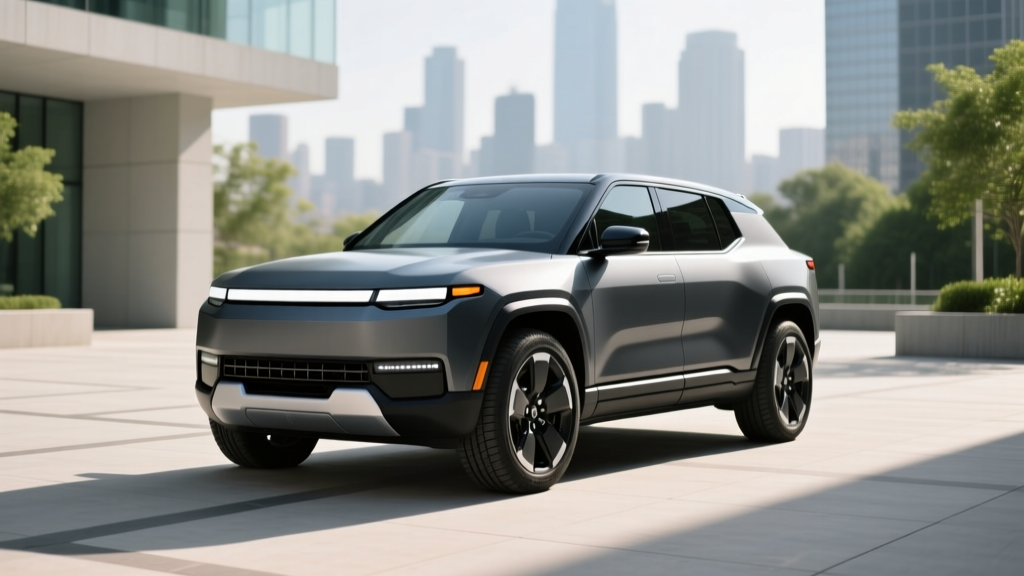
The Rivian R1S is a three-row electric SUV that threads a difficult needle: it's large enough to haul seven passengers and their gear, yet compact enough to navigate tight city streets and genuine off-road trails. For 2026, the R1S continues with Rivian's second-generation drive unit architecture, offering up to 410 miles of EPA-estimated range on the Max Pack, tri-motor performance that embarrasses sports cars, and a footprint that surprises buyers expecting Tahoe-like bulk. Below, we break down every critical dimension, spec, and ownership figure you need before configuring one.
| Spec | Dual-Motor (Standard) | Tri-Motor |
|---|---|---|
| EPA Range (Max Pack) | 410 mi | 390 mi |
| Battery (usable, Max Pack) | ~141 kWh, NMC | ~141 kWh, NMC |
| Horsepower | 665 hp | 850 hp |
| 0–60 mph | 4.5 sec | 2.9 sec |
| Drivetrain | AWD (dual-motor) | AWD (tri-motor) |
| Max DC Fast Charge | 220 kW (peak) | 220 kW (peak) |
| 10–80% DC Charge | ~36 min | ~36 min |
| Level 2 Home Charge | 11.5 kW (~25 mi/hr) | 11.5 kW (~25 mi/hr) |
| Towing Capacity | 7,700 lb | 7,700 lb |
| Base MSRP | $84,900 | $105,900 |
Exterior Dimensions: Smaller Than You Think
The keyword here is efficiency — not of electrons, but of space. The R1S rides on a 121.1-inch wheelbase, yet its overall length of 200.8 inches makes it roughly 15 inches shorter than a Chevrolet Tahoe. That's the difference between fitting in a standard garage and needing to measure twice. Width without mirrors is 81.8 inches (95.5 inches with mirrors deployed), and height ranges from 73.0 inches on the standard suspension to 77.3 inches when the air suspension raises to Off-Road mode.
Ground clearance is a standout: 7.9 inches in Standard mode, climbing to 14.4 inches in Off-Road mode — approaching Jeep Wrangler Rubicon territory. Approach, departure, and breakover angles (33.1°, 33.6°, and 24.4° respectively in Off-Road mode) mean the R1S can handle genuine trail duty, not just gravel driveways.
Curb weight sits between 6,800 and 7,150 pounds depending on pack and motor configuration. That's heavy, but the low center of gravity from the skateboard battery platform keeps body roll controlled on pavement.
Interior Dimensions and Cargo Capacity
The R1S seats up to seven across three rows. Front-row headroom measures 41.0 inches, with 41.3 inches of legroom — generous for drivers over six feet. Second-row headroom drops slightly to 39.7 inches with 38.2 inches of legroom, adequate for adults on longer trips. The third row is best reserved for children or short trips: 37.3 inches of headroom and 30.4 inches of legroom.
Cargo volume tells the real family-hauler story:
- Behind third row: 10.4 cu ft (tight — think two carry-ons)
- Third row folded: 46.7 cu ft
- All rear rows folded: 88.2 cu ft
- Front trunk (frunk): 11.0 cu ft — lockable, drainable, useful for groceries or muddy gear
The frunk adds genuine utility that ICE SUVs can't match, and the gear tunnel (a pass-through compartment between the rear wheels) offers an additional 11.0 cu ft of secure storage for long, flat items like skis or camping chairs.
Range, Efficiency, and Real-World Expectations
Real-World Expectation: Plan for 330–360 miles on highway road trips at 70–75 mph; 260–290 miles in sustained cold weather (below 32°F) or when towing. The Standard Pack (106 kWh usable, ~270 mi EPA) suits daily commuters who charge at home nightly.
Efficiency on the Dual-Motor Max Pack lands at roughly 73 MPGe combined (about 46 kWh/100 mi), per fueleconomy.gov. That's respectable for a 7,000-pound three-row SUV, though it trails lighter crossovers like the Hyundai Ioniq 5 or Tesla Model Y. The Tri-Motor sacrifices roughly 20 miles of range for its extra 185 horsepower — a trade most performance-oriented buyers will accept.
The R1S uses NMC (nickel manganese cobalt) lithium-ion chemistry across all packs. NMC offers higher energy density than LFP, which matters in a vehicle this size, but it also means Rivian recommends daily charging to 80–90% for longevity, reserving 100% for road trips. The battery management system includes active liquid thermal conditioning, preconditioning the pack when you navigate to a DC fast charger — essential for achieving advertised charge speeds.
Charging Speed: DC Fast and Home Level 2
| Level | Power | Miles Added per Hour | Notes |
|---|---|---|---|
| Level 1 (120V) | ~1.4 kW | ~3 mi/hr | Emergency/top-off only |
| Level 2 (240V, 48A) | 11.5 kW | ~25 mi/hr | Full overnight charge in 10–14 hr |
| DC Fast Charge | 220 kW (peak) | Up to 140 mi in 20 min | 10–80% in ~36 min; tapers above 80% |
Rivian's second-generation battery architecture supports a peak DC charge rate of 220 kW on CCS1 connectors (and NACS via adapter on newer builds). The charge curve is the critical detail: the R1S holds strong from 10% to roughly 55% SoC, then begins a gradual taper. By 80%, you're pulling closer to 80–100 kW. That 10–80% time of approximately 36 minutes assumes a capable 350 kW station like Electrify America or a Tesla Supercharger (via the included NACS adapter for 2025+ models) and proper pack preconditioning.
For home charging, Rivian's Wall Connector or any quality Level 2 unit (ChargePoint Home Flex, Emporia Level 2) on a 60-amp circuit delivers 11.5 kW / 48 amps. That's roughly 25 miles of range per hour of charging — enough to fully replenish the Max Pack overnight. Installation costs typically range from $800 to $2,500 depending on panel capacity and run length; budget for a potential $1,500–$3,000 panel upgrade if your home still has a 100-amp service.
Performance: Tri-Motor Absurdity and Dual-Motor Competence
The Dual-Motor R1S produces 665 horsepower and 829 lb-ft of torque, reaching 60 mph in 4.5 seconds. That's Porsche Cayenne territory from a three-row electric SUV. The Tri-Motor variant pushes to 850 horsepower and a 2.9-second 0–60 time — a number that feels surreal when you're launching a vehicle with a 7,700-pound tow rating and a third row.
Both configurations use Rivian's single-speed reduction gear with torque vectoring across axles. The quad-motor setup from the R1T is not offered on the R1S. Drive modes include All-Purpose, Sport, Snow, Off-Road, and Towing, each adjusting suspension height, throttle mapping, and traction behavior. The air suspension can lower 1.6 inches for highway efficiency (and easier loading) or rise 2.8 inches for trail clearance.
Pricing, Trims, and Federal Tax Credit Eligibility
The 2026 R1S lineup starts at $84,900 for the Dual-Motor Standard Pack (270 mi range). The Dual-Motor Large Pack (~330 mi) begins around $89,900, and the Max Pack (410 mi) pushes past $96,000. The Tri-Motor Max Pack tops the range at approximately $105,900 before destination and options. Adventure and Ascend trim packages add cosmetic and convenience features but don't alter powertrain specs.
Federal tax credit eligibility requires careful attention. Under IRS §30D rules, the R1S qualifies as an SUV (MSRP cap: $80,000). This means only the Dual-Motor Standard Pack at $84,900 exceeds the cap — wait, that's above $80,000. As of current rules, the R1S is classified as an SUV with an $80,000 MSRP ceiling, meaning no current R1S trim qualifies for the full $7,500 federal tax credit based on MSRP alone. However, Rivian has structured certain configurations and dealer incentives to navigate this; always verify current eligibility with your tax professional and check the latest fueleconomy.gov tax credit tool before purchase.
Additional §30D requirements include buyer income caps ($150,000 single / $300,000 joint modified AGI) and critical-mineral/battery-component sourcing thresholds that tighten annually. The point-of-sale transfer option lets you apply the credit as a down-payment reduction at the dealer — if eligible.
Warranty, Tech, and Ownership Considerations
Rivian covers the R1S battery and drive unit for 8 years or 175,000 miles (whichever comes first), with a capacity retention threshold of 70% over that period. The limited vehicle warranty is 5 years / 60,000 miles. These are competitive with Tesla and exceed most legacy automakers on battery coverage mileage.
On the tech front, the R1S runs Rivian's proprietary infotainment on a 15.6-inch center display with a 12.3-inch driver cluster. Wireless Apple CarPlay and Android Auto are not supported — Rivian insists on its native interface, which most reviewers find capable but occasionally frustrating for music and podcast management. The Rivian Driver+ system is a Level 2 SAE driver-assist (not self-driving), offering highway lane centering, adaptive cruise, and automatic lane changes on mapped roads. It requires continuous driver supervision — hands on or near the wheel, eyes on the road.
Over-the-air updates have meaningfully improved the R1S since launch, adding features like automatic turn signals, pet mode, and improved regenerative braking profiles. Rivian's service network remains smaller than Tesla's, though mobile service vans cover most metro areas and the company has expanded its Adventure Network of DC fast chargers along popular road-trip corridors.
Pros
- Genuine off-road capability (14.4" ground clearance, approach/departure angles)
- Up to 410 mi EPA range on Max Pack
- 7-passenger seating with usable frunk and gear tunnel
- 7,700-lb towing capacity
- Tri-Motor performance (2.9 sec 0–60) is class-leading
- Strong OTA update track record
Cons
- MSRP exceeds §30D tax credit cap for all trims
- Third-row legroom is tight for adults
- No wireless Apple CarPlay / Android Auto
- Service network still maturing outside major metros
- Heavy curb weight impacts efficiency vs lighter EV SUVs
- Real-world range drops significantly when towing
Who Should Buy the R1S?
The R1S is ideal for the active family that needs three rows but refuses to drive a minivan or a body-on-frame dinosaur. If your weekends involve ski trips, trailheads, or towing a camper under 7,500 pounds — and you have home Level 2 charging — the R1S is arguably the most capable vehicle in its class. It's less ideal for budget-conscious buyers (the tax credit gap hurts), urban apartment dwellers without charging access, or those who prioritize third-row adult comfort above all else (look at the Kia EV9 or a used Model X for that).
FAQ
What is the real-world range of the Rivian R1S?
The Max Pack's 410-mile EPA rating translates to roughly 330–360 miles on sustained highway driving at 70–75 mph, and 260–290 miles in cold weather (below 32°F) or when towing. The Standard Pack delivers about 220–240 real-world highway miles. Always precondition the battery and plan charging stops with a buffer.
How fast does the R1S charge at home and on the road?
On a Level 2 home charger (11.5 kW / 48A), expect about 25 miles of range per hour, fully charging the Max Pack in 12–14 hours. On a DC fast charger, the R1S peaks at 220 kW, reaching 10–80% in approximately 36 minutes with proper preconditioning — though charging slows considerably past 80%.
Does the Rivian R1S qualify for the federal EV tax credit?
Under current §30D rules, the R1S is classified as an SUV with an $80,000 MSRP cap. Since all 2026 R1S trims exceed $80,000, none qualify for the full $7,500 credit based on sticker price. Always verify current rules on IRS.gov and consult a tax professional, as classification and incentive structures can shift.
Is the R1S worth buying over the Tesla Model X or Kia EV9?
The R1S wins on off-road capability, build quality, and adventure-oriented features (gear tunnel, air suspension). The Model X offers more third-row space and access to the Supercharger network natively (though adapters close this gap). The Kia EV9 is significantly cheaper and tax-credit-eligible but offers less range and no serious off-road chops. Your priorities — budget, trail use, third-row frequency — determine the winner.
What are the R1S's biggest drawbacks?
The MSRP-tax-credit mismatch is the primary financial concern. Physically, the third row is tight for adults, the absence of wireless phone projection frustrates some users, and service infrastructure outside major metros can mean longer wait times for repairs. Towing also compresses range dramatically — plan for 50–60% of EPA range when pulling a loaded trailer.
What battery chemistry does the R1S use?
All R1S packs use NMC (nickel manganese cobalt) lithium-ion cells, chosen for their high energy density — critical in a heavy three-row SUV. NMC batteries benefit from daily charging limits of 80–90%, with 100% reserved for trips. The battery management system actively manages thermal conditioning to preserve long-term health.