Quick Verdict: Is the 2026 Rivian R1S Worth the Premium?
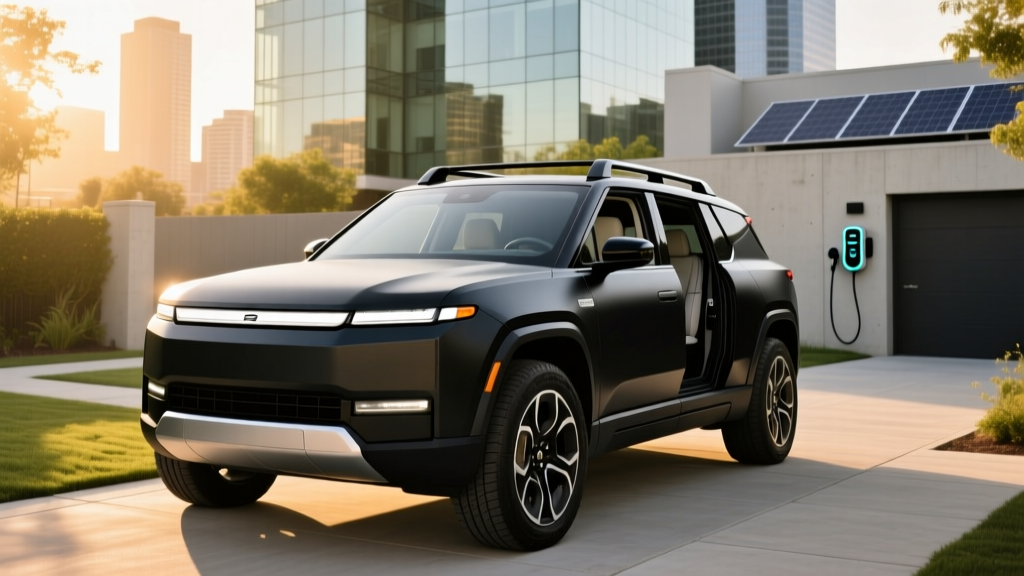
The 2026 Rivian R1S remains one of the most capable electric SUVs on the market, blending three-row family practicality with genuine off-road chops and a Max battery option that pushes EPA range past 400 miles. But with a starting MSRP near $75,000 and a competitive landscape that now includes refreshed offerings from Tesla, BMW, and Mercedes-Benz, finding the right Rivian R1S deal requires understanding trim pricing, battery options, federal tax credit eligibility, and real-world efficiency — not just the sticker number.
This profile breaks down every figure that matters: EPA range versus what you'll actually see on the highway, DC fast-charge curves and 10-80% times, Level 2 home charging rates, §30D tax credit qualification under current IRS rules, and how the R1S stacks up against the Tesla Model X, BMW iX, and Mercedes EQS SUV on cost and capability.
2026 Rivian R1S Spec Table: Range, Battery, Charging, and Pricing
| Specification | Standard Battery (Dual-Motor) | Large Battery (Dual-Motor) | Max Battery (Dual-Motor) | Tri-Motor (Max) |
|---|---|---|---|---|
| EPA Range | 270 mi | 352 mi | 410 mi | 390 mi |
| Battery Capacity (usable) | ~92 kWh (LFP) | ~113 kWh (NMC) | ~141 kWh (NMC) | ~141 kWh (NMC) |
| Horsepower | 533 hp | 533 hp | 533 hp | 850 hp |
| 0-60 mph | 4.5 sec | 4.5 sec | 4.5 sec | 2.9 sec |
| Peak DC Fast Charge | 200 kW | 220 kW | 220 kW | 220 kW |
| 10-80% DCFC Time | ~28 min | ~24 min | ~30 min | ~30 min |
| Level 2 Home Charge (kW) | 11.5 kW | 11.5 kW | 11.5 kW | 11.5 kW |
| Level 2 Miles per Hour | ~22 mi/hr | ~25 mi/hr | ~28 mi/hr | ~28 mi/hr |
| MPGe (combined) | 73 MPGe | 75 MPGe | 77 MPGe | 70 MPGe |
| Base MSRP | $74,900 | $81,400 | $89,900 | $99,900 |
Sources: EPA fueleconomy.gov, Rivian official specs. Tri-Motor range is lower due to higher power output and weight. All prices exclude $1,800 destination fee.
Real-World Range: What the EPA Number Doesn't Tell You
- EPA sticker: 410 miles
- Mixed driving (70°F, moderate speed): ~360-385 miles
- Sustained highway (75 mph): ~310-340 miles
- Cold weather (30°F, highway): ~260-290 miles
- Towing (5,000 lb trailer): ~180-210 miles
The R1S Max Battery's 410-mile EPA rating is genuinely impressive for a three-row SUV, but real-world results depend heavily on how you drive. The R1S's boxy silhouette and 6,800+ lb curb weight create significant aerodynamic drag at highway speeds. In our experience and consistent with third-party testing, expect roughly 85-90% of the EPA figure in temperate mixed driving, dropping to 75-80% at sustained 75 mph highway speeds.
Cold weather compounds this. At 30°F, lithium-ion cells experience increased internal resistance, and cabin heating draws substantial energy even with the R1S's heat pump system. Plan for 30-35% range reduction in winter highway conditions. If you live in northern climates and regularly drive 200+ mile round trips in winter, the Max Battery is strongly recommended over the Large pack.
The Standard Battery with its LFP chemistry is a different calculation. LFP cells tolerate daily 100% charging without degradation concerns, meaning you can use the full 270 EPA miles every day — unlike NMC packs where daily charging to 80% is recommended for longevity. For urban commuters with home charging, the Standard pack's usable daily range is effectively closer to 270 miles, while the Large Battery's usable daily range at 80% SoC is roughly 280 miles.
Charging Speed: DC Fast Charge Curve and Home Level 2
Rivian upgraded the R1S's charging architecture for the 2025-2026 generation, with peak DC fast-charge rates reaching 220 kW on Large and Max battery configurations. But peak kW is only part of the story — the charge curve matters more for actual trip planning.
| Charging Level | Power / Rate | Miles Added per Hour | Notes |
|---|---|---|---|
| Level 1 (120V household) | 1.4 kW | ~3 mi/hr | Emergency/top-up only |
| Level 2 (240V, 48A) | 11.5 kW | 22-28 mi/hr (varies by pack) | Full overnight charge in 10-14 hrs |
| DC Fast Charge (peak) | 200-220 kW | ~550-650 mi/hr (at peak) | Peak sustained only to ~40% SoC |
| DCFC 10-80% | Average ~140 kW | — | 24-30 min depending on pack size |
| DCFC above 80% | Tapers to 30-50 kW | — | 80-100% adds 20-30+ additional min |
The critical insight: the R1S Max Battery's 30-minute 10-80% time is good but not class-leading. The larger 141 kWh pack takes longer to fill proportionally than smaller packs, and the charge curve tapers noticeably after 60% SoC. On a Rivian Adventure Network charger or a 350 kW Electrify America station, you'll see peak rates near 220 kW up to roughly 35-40% SoC, then a stepped decline. This means road-trip strategy should target 10-70% charges for the fastest stops — charging to 80% adds meaningful time.
For home charging, the 11.5 kW onboard charger is adequate. A Max Battery R1S charging from 10% to 100% on Level 2 takes approximately 14-15 hours. Most owners charging nightly from 30-80% will see a full replenishment in 6-7 hours — easily overnight on a standard 240V/48A circuit. Budget $800-$2,000 for professional Level 2 home charger installation (equipment plus electrician), and confirm your electrical panel has capacity for a 60A breaker before committing.
Pricing, Trims, and Finding the Best Rivian R1S Deals
Rivian simplified the R1S lineup for 2026, but the price spread from base to fully loaded is substantial. Here's how the numbers break down:
| Configuration | Base MSRP | As-Tested (typical options) | Est. After §30D Credit |
|---|---|---|---|
| Dual-Motor Standard Battery (Explore) | $74,900 | $76,700 | $67,400* |
| Dual-Motor Large Battery (Adventure) | $81,400 | $86,200 | $78,700* |
| Dual-Motor Max Battery (Adventure) | $89,900 | $95,500 | $88,000* |
| Tri-Motor Max Battery (Ascend) | $99,900 | $105,000 | $97,500* |
*After-credit figures assume full $7,500 federal tax credit eligibility. Actual eligibility depends on buyer income, battery sourcing, and MSRP caps — see tax credit section below.
Where to find actual deals: Rivian sells direct-to-consumer, so traditional dealer negotiation doesn't apply. However, there are legitimate ways to reduce your out-of-pocket cost:
- Point-of-sale transfer: Under current IRS rules, you can transfer the §30D credit to Rivian at purchase, reducing your purchase price by up to $7,500 at the point of sale rather than waiting for tax filing.
- Inventory vehicles: Rivian occasionally offers reduced pricing on pre-built configuration vehicles that haven't been claimed. Check the "Ready to Go" inventory on rivian.com for unclaimed builds that may have premium packages bundled at no extra charge.
- Standard Battery savings: The LFP Standard Battery drops the entry price to $74,900 — a $15,000 savings over the Max pack. For commuters with reliable home charging who rarely road-trip beyond 200 miles, this is the value sweet spot.
- State incentives: States like California, Colorado, Massachusetts, and New York offer additional rebates of $1,500-$7,500 that stack with federal credits. Check your state's energy office for current programs.
- Lease considerations: Rivian leasing may pass through the commercial clean vehicle credit (§45W), which doesn't carry the same battery-sourcing or MSRP restrictions as §30D. Consult a tax professional before assuming lease savings.
Federal Tax Credit Eligibility: Does the R1S Qualify for §30D?
- Vehicle MSRP cap: SUVs/vans/pickups must have MSRP ≤ $80,000. The R1S Standard and Large Battery trims qualify; the Max Battery ($89,900) and Tri-Motor ($99,900) exceed the cap and do NOT qualify.
- Buyer income cap: AGI ≤ $150,000 (single), ≤ $225,000 (head of household), ≤ $300,000 (joint). Income is based on the lesser of current or prior tax year.
- Battery sourcing: Minimum percentages of critical minerals and battery components must be sourced from the US or FTA partners. Rivian has worked to increase North American sourcing, but specific eligibility varies by production batch. Verify via the VIN at fueleconomy.gov.
- Final assembly: Must occur in North America. All R1S vehicles are assembled in Normal, Illinois — this requirement is met.
- Credit amount: Up to $7,500 ($3,750 for critical minerals + $3,750 for battery components). Some R1S configurations may qualify for only $3,750 depending on sourcing compliance.
This is the most important pricing detail many buyers miss: the R1S Max Battery and Tri-Motor trims exceed the $80,000 SUV MSRP cap and are ineligible for the §30D federal tax credit. If the $7,500 credit is central to your budget, you're effectively choosing between the Standard Battery Explore ($74,900) and the Large Battery Adventure ($81,400 — which is above the cap as well, though some Large Battery configurations with base options may fall at or under $80,000).
Always verify credit eligibility for your specific VIN before purchase using the IRS's official tool at irs.gov. Rules are subject to change, and battery sourcing requirements have tightened progressively since 2024.
Interior Space, Cargo, and Family Practicality
The R1S is a genuine three-row SUV, and its dimensions reflect that mission:
- Cargo volume (behind 3rd row): 10.4 cu ft
- Cargo volume (3rd row folded): 46.7 cu ft
- Cargo volume (all rear rows folded): 88.2 cu ft
- Front legroom: 41.3 in
- Second-row legroom: 38.4 in
- Third-row legroom: 30.1 in
- Seating capacity: 7 passengers (standard) or 6 (optional captain's chairs)
- Front trunk (frunk): 11.1 cu ft
- Towing capacity: 7,700 lbs (properly equipped)
The third row accommodates children and smaller adults comfortably for short trips but will feel tight for six-footers on long drives. The 10.4 cu ft of cargo behind the third row is tight for a family road trip with all seats occupied — you'll want a roof box or to fold one side of the third row. The 11.1 cu ft frunk partially compensates, swallowing charging cables, a stroller, or several grocery bags.
Compared to the Rivian R1T pickup, the R1S sacrifices the open bed but gains weather-sealed cargo space and a third row. For families needing seven seats and real towing capability, the R1S occupies a niche with few direct electric competitors — the Tesla Model X offers a third row but less ground clearance and off-road capability.
Performance, Tech, and Driver Assistance
Even the base Dual-Motor R1S delivers 533 horsepower and a 4.5-second 0-60 mph time — seriously quick for a 6,800-pound SUV. The Tri-Motor's 850 hp and 2.9-second sprint is supercar territory, though the weight is felt in braking distances and tire wear. The quad-motor option was discontinued for 2026, simplifying the lineup.
The R1S's air suspension offers 6.5 inches of adjustment, from a low highway mode for efficiency to an extreme off-road height providing 14.9 inches of ground clearance. Approach, departure, and breakover angles are genuinely impressive and put the R1S in a different league than car-based electric SUVs for trail capability.
Infotainment: The 15.6-inch center touchscreen runs Rivian's proprietary software, which has matured significantly since launch. The interface is responsive, and the built-in navigation integrates charging stops with battery preconditioning — warming the pack before you arrive at a DC fast charger for optimal charge speed. Wireless Apple CarPlay and Android Auto are standard.
Driver assistance: Rivian's Driver+ system is a SAE Level 2 driver-assist feature combining adaptive cruise control and lane centering on supported highways. It is not self-driving and requires continuous driver supervision. Hands-on-wheel detection is enforced. An enhanced Highway Assist with lane-change-on-command is available but remains Level 2. Rivian does not currently offer a hands-free system comparable to GM's Super Cruise or Ford's BlueCruise.
How the R1S Stacks Up: Key Competitor Comparison
| Spec | Rivian R1S (Large AWD) | Tesla Model X (LR) | Kia EV9 (GT-Line AWD) | Mercedes EQS 580 SUV |
|---|---|---|---|---|
| EPA Range | 352 mi | 335 mi | 270 mi | 305 mi |
| Base MSRP | $81,400 | $79,990 | $73,900 | $104,400 |
| Peak DCFC | 220 kW | 250 kW | 236 kW | 200 kW |
| 10-80% Time | ~24 min | ~22 min | ~24 min | ~31 min |
| Third Row | Yes (7-seat) | Yes (optional) | Yes (7-seat) | Yes (optional) |
| Towing | 7,700 lbs | 5,000 lbs | 5,000 lbs | 3,500 lbs |
| Off-Road | Excellent | Limited | Moderate | Limited |
| §30D Eligible | Select trims | Yes | Yes (partial) | No (MSRP cap) |
The R1S wins on towing, off-road capability, and adventure-oriented design. The Model X charges slightly faster and has access to the Supercharger network natively. The EV9 undercuts all three on price while offering competitive range. The EQS SUV offers luxury isolation but at a significant premium with lower range.
Battery Warranty, Longevity, and Ownership Costs
Rivian covers the R1S battery and powertrain with an 8-year / 175,000-mile warranty (whichever comes first), with a capacity retention threshold of 70% or above during the warranty period. The limited vehicle warranty is 5 years / 60,000 miles. This battery warranty is competitive and above the 100,000-mile coverage offered by some legacy automakers.
NMC batteries (Large and Max packs) will experience gradual degradation; expect roughly 5-10% capacity loss over the first 100,000 miles based on current industry data. The LFP Standard Battery is projected to degrade more slowly, with LFP chemistry demonstrating superior cycle life. Rivian's thermal management system actively conditions the battery, which helps mitigate degradation in extreme climates.
Insurance costs for the R1S tend to run 15-25% higher than comparable ICE SUVs, consistent with most EVs. Budget $2,500-$4,000 annually depending on your driving record and state. Rivian has partnered with select insurers for competitive rates — check their insurance marketplace for quotes.
Pros, Cons, and Who Should Buy the R1S
- Class-leading towing (7,700 lbs) and genuine off-road capability
- Up to 410 miles EPA range with Max Battery
- Spacious frunk + flexible three-row interior
- Strong 533 hp base performance
- Over-the-air updates continuously improve the vehicle
- Rivian Adventure Network expanding in key corridors
- Max Battery and Tri-Motor trims ineligible for §30D credit (MSRP cap)
- Third-row legroom is tight for adults on long trips
- DCFC speed good but not class-leading vs Tesla or Hyundai E-GMP
- Driver+ is competent but no hands-free highway option
- High insurance premiums relative to ICE alternatives
- Service center footprint still limited in some regions
Look elsewhere if: Your budget is under $70,000 (consider the Kia EV9), you prioritize the fastest possible DC charging (Tesla Model X), or you want hands-free highway driving (GM Super Cruise vehicles).
Frequently Asked Questions
What is the real-world range of the 2026 Rivian R1S?
Expect 310-385 real-world miles depending on battery pack and conditions. The Max Battery (410 EPA) delivers roughly 340 miles at highway speeds in moderate temperatures, dropping to 260-290 in cold weather. The Standard Battery (270 EPA) yields roughly 230-250 highway miles.
How fast does the R1S charge at home and on the road?
On DC fast chargers, the R1S peaks at 200-220 kW and charges from 10-80% in 24-30 minutes depending on pack size. At home on a 240V Level 2 charger (11.5 kW), expect 22-28 miles of range added per hour, with a full charge taking 10-15 hours from empty.
Does the Rivian R1S qualify for the $7,500 federal tax credit?
It depends on the trim. The Standard Battery Explore at $74,900 MSRP falls under the $80,000 SUV cap and may qualify, pending battery-sourcing and buyer-income requirements. The Max Battery ($89,900) and Tri-Motor ($99,900) exceed the MSRP cap and are not eligible. Always verify at irs.gov before purchasing.
Is the R1S worth buying over the Tesla Model X or Kia EV9?
The R1S is the best choice if you need serious towing capacity (7,700 lbs), genuine off-road ability, and adventure-oriented features. The Model X charges faster and has the Supercharger network; the EV9 costs significantly less. It comes down to whether the R1S's unique capabilities justify its premium for your lifestyle.
What is the R1S battery warranty?
Rivian provides an 8-year / 175,000-mile battery and powertrain warranty with a minimum 70% capacity retention guarantee. The general vehicle warranty is 5 years / 60,000 miles.
Can the R1S use Tesla Superchargers?
Yes. Rivian began shipping vehicles with NACS (Tesla) charge ports and providing adapters for existing vehicles. R1S owners can access Tesla Supercharger stalls using the included adapter or the native NACS port on newer builds, significantly expanding the DC fast-charging network available.