Quick Verdict: Is the R1S Worth Its Premium Price?
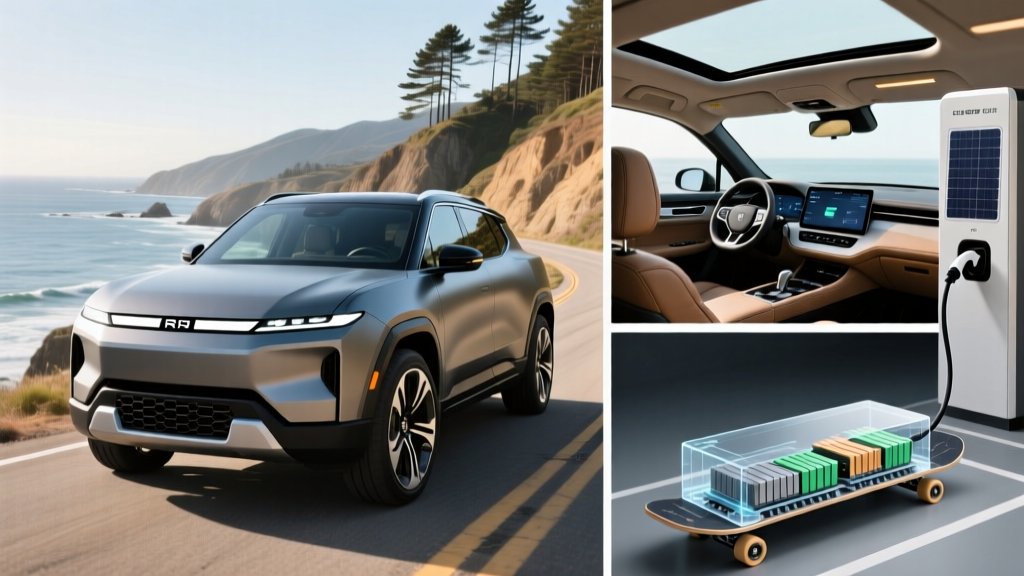
The 2026 Rivian R1S remains one of the most capable electric SUVs on the market, blending genuine off-road chops with a refined on-road demeanor that defies its 7,000-pound curb weight. But as buyers scrutinize every line item, one question keeps surfacing: what does the Rivian Autonomy Platform cost actually mean for your wallet, and does the tech justify the premium? This review breaks down every spec, real-world range figure, charging curve nuance, and ownership cost so you can decide whether the R1S earns a spot in your garage or if a competitor offers more value.
Range, Battery, and Real-World Efficiency
The 2026 R1S offers three battery configurations across its Dual-Motor, Tri-Motor, and Quad-Motor lineups. Rivian's Standard battery pack provides an EPA-estimated 270 miles, the Large pack pushes that to 352 miles (Dual-Motor), and the Max pack reaches an EPA-estimated 410 miles on the Dual-Motor Adventure trim. All packs use high-nickel NMC (nickel-manganese-cobalt) chemistry, prioritizing energy density over the lower-cost LFP alternative — a choice that makes sense for a heavy, performance-oriented SUV but means you'll want to avoid routinely charging to 100% for daily use.
EPA Estimate: Up to 410 miles (Dual-Motor Max pack)
Expect in practice: ~320–350 miles on mixed highway driving at 70–75 mph. In cold weather (below 30°F), plan for a 20–30% reduction, dropping effective range to roughly 250–290 miles on the Max pack. City driving with generous regenerative braking can match or slightly exceed EPA figures.
| Spec | Dual-Motor Standard | Dual-Motor Large | Dual-Motor Max | Tri-Motor | Quad-Motor |
|---|---|---|---|---|---|
| EPA Range | 270 mi | 352 mi | 410 mi | 320 mi (est.) | 290 mi (est.) |
| Battery (usable, kWh) | ~92 kWh | ~118 kWh | ~141 kWh | ~118 kWh | ~118 kWh |
| Chemistry | NMC | NMC | NMC | NMC | NMC |
| Horsepower | 533 hp | 533 hp | 533 hp | 850 hp | 1,025 hp |
| 0–60 mph | 4.5 sec | 4.5 sec | 4.5 sec | 2.9 sec | 2.5 sec |
| Drivetrain | AWD | AWD | AWD | AWD | AWD |
| MPGe (combined) | 73 MPGe | 70 MPGe | 69 MPGe | 65 MPGe (est.) | 62 MPGe (est.) |
| kWh/100 mi | 46 | 48 | 49 | 52 (est.) | 54 (est.) |
| Towing Capacity | 7,700 lbs | 7,700 lbs | 7,700 lbs | 7,700 lbs | 7,700 lbs |
Efficiency hovers around 69–73 MPGe combined depending on configuration, translating to roughly 46–54 kWh per 100 miles. For context, that's less efficient than a Tesla Model X (102 MPGe combined) but competitive with the GMC Hummer EV SUV. The R1S's boxy aerodynamics and substantial weight work against highway efficiency — expect consumption to climb noticeably above 75 mph.
Charging Speed: DC Fast, Level 2, and the Curve Reality
Rivian equips the R1S with NACS (North American Charging Standard) ports natively on 2025+ models, granting access to Tesla's Supercharger network alongside Electrify America, EVgo, and other CCS-equipped stations via the included adapter for older infrastructure.
| Charging Level | Power / Rate | Speed | Notes |
|---|---|---|---|
| Level 1 (120V) | ~1.4 kW | ~3–4 mi/hr | Emergency/trickle only |
| Level 2 (240V, 48A) | 11.5 kW | ~25–30 mi/hr | Full charge in ~12–14 hrs (Max pack) |
| DC Fast Charge (peak) | Up to 220 kW | 10–80% in ~30 min | Peak sustained only to ~40% SoC |
| DC Fast (sustained avg) | ~150–170 kW | ~180 mi in 30 min | Curve tapers significantly above 80% |
The critical detail most spec sheets omit: peak kW is not sustained kW. The R1S's NMC battery hits 220 kW at a low state of charge (around 10–15% SoC) on a capable 350 kW charger, but the charge curve tapers progressively. By 60% SoC, you're typically seeing 140–160 kW. Above 80%, charging slows dramatically to protect battery health — expect the final 20% to take as long as the first 60%. For road-trip planning, budget 30–35 minutes per stop to go from 10% to 80%, and precondition the battery using the R1S's built-in navigation routing to a charger for optimal charge speeds.
Performance and Driving Dynamics
The Dual-Motor R1S delivers 533 horsepower and a 4.5-second 0–60 mph time — quick for a three-row SUV that weighs over 7,000 pounds. The Tri-Motor variant jumps to 850 hp and a 2.9-second sprint, while the Quad-Motor tops the lineup at 1,025 hp and a supercar-rivaling 2.5-second run.
All configurations feature Rivian's dual-motor AWD system with torque vectoring, an adaptive air suspension that adjusts ride height by up to 6.5 inches, and a suite of drive modes ranging from Sport to Rock Crawl. The air suspension delivers a surprisingly compliant highway ride while maintaining composure on twisty roads — a balance few competitors manage. Ground clearance reaches 14.9 inches in Off-Road mode, exceeding most body-on-frame trucks.
One-pedal driving is well-calibrated with strong regenerative braking that can handle most daily deceleration. The hydraulic brake pedal feel is firmer than some EVs, which we consider a positive — it avoids the numb, blended-regen sensation common in the segment.
The Rivian Autonomy Platform: What It Costs and What You Get
This is where the keyword-driven question comes into focus. Rivian's advanced driver-assistance suite, branded under its Autonomy Platform umbrella, includes the standard Driver+ package (adaptive cruise control, lane centering, automatic emergency braking, blind-spot monitoring) at no extra charge on every R1S.
Rivian's Driver+ and any forthcoming enhanced Autonomy features are SAE Level 2 driver-assistance systems. The driver must remain fully engaged, hands on or near the wheel, and eyes on the road at all times. This is not self-driving. Only Level 4 services like Waymo operate without a human driver in defined areas.
For buyers asking specifically about Rivian autonomy platform cost, here's the breakdown as of the 2026 model year:
- Driver+ (standard): $0 — included on all trims. Provides highway lane centering, adaptive cruise, and intersection assist.
- Enhanced Autonomy (subscription-based): Rivian has signaled a premium tier with features like hands-free highway driving on mapped roads, automated lane changes, and enhanced parking assist. Pricing is expected in the range of $50–$75/month or approximately $1,000–$1,500/year, though final subscription tiers have not been formally published as of early 2026. Check Rivian's official site for the latest availability and pricing.
Compared to Tesla's FSD (Supervised) at $8,000 one-time or $99/month, and GM's Super Cruise at roughly $25/month after an initial trial, Rivian's approach sits in the middle — no massive upfront cost, but a recurring expense if you want the most advanced features. The trade-off is that Rivian's autonomy stack is newer and has fewer real-world miles logged than Tesla's or GM's systems. Expect iterative improvements via OTA updates, but don't expect Tesla-level feature breadth on day one.
Rivian's system cannot drive the vehicle autonomously. It will not navigate unmapped roads, handle construction zones reliably, or operate in severe weather without driver takeover. Keep your hands ready and your attention on traffic. Treat it as a fatigue-reducer on long highway stretches, not a replacement for driving.
Interior, Cargo, and Tech
The R1S seats up to seven passengers across three rows. Second-row captain's chairs (standard on Adventure, optional on other trims) reduce capacity to six but dramatically improve comfort and third-row access.
- Cargo behind 3rd row: 21.0 cu ft
- Cargo behind 2nd row (3rd row folded): 57.0 cu ft
- Max cargo (all rear rows folded): 104.7 cu ft
- Front trunk (frunk): 11.0 cu ft — sealed and drainable, useful for wet gear or groceries
- Front headroom: 41.2 in | Front legroom: 41.3 in
- Second-row legroom: 38.9 in
- Third-row legroom: 32.3 in (best for children or short trips)
The 15.6-inch center touchscreen runs Rivian's proprietary OS — clean, responsive, and free of the ad-laden interfaces creeping into some competitors. Wireless Apple CarPlay and Android Auto are standard. A 12.3-inch digital driver display and an available head-up display round out the instrument cluster. The panoramic glass roof floods the cabin with light but lacks a retractable shade, which can cause heat buildup in summer — an aftermarket tint or ceramic coating helps.
The R1S also includes a built-in camp kitchen accessory option (a slide-out tailgate kitchen with induction cooktop) and a gear tunnel on the R1T truck sibling. The SUV's tailgate features a powered liftgate with a flip-glass hatch for easy loading.
Pricing, Tax Credits, and Total Cost
| Trim | Base MSRP | As-Tested (typical) | §30D Credit Eligible? |
|---|---|---|---|
| Dual-Motor Standard | $75,900 | $79,000–$83,000 | Potentially — see rules below |
| Dual-Motor Large | $82,900 | $87,000–$95,000 | Potentially — see rules below |
| Dual-Motor Max | $92,900 | $98,000–$105,000 | Potentially — see rules below |
| Tri-Motor Performance | $104,900 | $110,000+ | Yes, under SUV MSRP cap |
| Quad-Motor | $114,900 | $120,000+ | Yes, under SUV MSRP cap |
Federal tax credit eligibility under IRS §30D is nuanced. SUVs face an $80,000 MSRP cap — meaning only the Dual-Motor Standard at its base price clears the threshold before options. Once you add packages, paint upgrades, or larger wheels, the as-tested MSRP can exceed $80,000, disqualifying the vehicle. The Tri-Motor and Quad-Motor trims have MSRPs well above the cap at first glance, but note that the IRS classifies vehicles by body type — confirm the R1S's classification and current MSRP cap applicability with a tax professional before relying on the credit.
- Income caps (2026): $150,000 single / $225,000 head of household / $300,000 married filing jointly (modified AGI)
- MSRP cap: $80,000 for SUVs, vans, pickups; $55,000 for sedans
- Battery sourcing: Minimum percentages of critical minerals and battery components must be sourced from the U.S. or free-trade-agreement countries — these thresholds increase annually. Check the latest DOE/FuelEconomy credit eligibility list for the specific R1S configuration.
- Point-of-sale transfer: You can transfer the credit to the dealer at purchase to reduce your out-of-pocket cost, rather than waiting to claim it on your tax return.
Even without the federal credit, the R1S's total cost of ownership can be competitive. Electricity at the national average of ~$0.16/kWh costs roughly $7.35 per 100 miles (Dual-Motor Large, 48 kWh/100 mi), versus approximately $14.50 per 100 miles for a comparable gas SUV at 20 MPG and $2.90/gallon. Over five years and 75,000 miles, that's roughly $5,360 in fuel savings. Factor in reduced maintenance (no oil changes, fewer brake replacements due to regen) and the gap narrows further against the purchase premium.
Warranty and Long-Term Ownership
Rivian covers the R1S with:
- Bumper-to-bumper: 5 years / 60,000 miles
- Battery and drive unit (powertrain): 8 years / 175,000 miles
- Battery capacity retention: Rivian warrants that the battery will retain at least 70% of its original capacity over the 8-year/175,000-mile warranty period
- Roadside assistance: 5 years / 60,000 miles
The 175,000-mile powertrain warranty is among the most generous in the EV space, exceeding Tesla's 8-year/120,000-mile (Model S/X) or 100,000-mile (Model 3/Y Long Range) coverage. For an NMC battery, expect approximately 10–15% degradation over the first 100,000 miles based on industry averages, with the curve flattening thereafter. Rivian's 70% retention threshold provides a reasonable safety net.
Insurance costs tend to run 15–25% higher than comparable gas SUVs, reflecting the R1S's repair complexity, aluminum-intensive construction, and high replacement parts costs. Get quotes before purchasing — some insurers now offer dedicated EV policies with bundled home-charger coverage.
R1S vs. Key Competitors: Which Should You Choose?
- Genuine off-road capability with 14.9" ground clearance
- Up to 410 miles EPA range (Max pack)
- 1,025 hp Quad-Motor is absurdly quick
- Class-leading 175,000-mile powertrain warranty
- NACS native port + Supercharger access
- Unique adventure features (camp kitchen, gear integration)
- OTA updates continually add features
- High starting price; most trims exceed §30D MSRP cap
- Efficiency lags Tesla and Hyundai/Kia rivals
- Third row tight for adults on long trips
- Autonomy Platform features still maturing vs. Tesla/GM
- No panoramic roof shade — cabin heat in summer
- Insurance premiums above segment average
- Service center network still expanding in rural areas
Who Is the 2026 Rivian R1S For?
The R1S is ideal for adventure-oriented families who need three rows, tow a camper or boat on weekends, and want to explore unpaved trails without a second vehicle. It's also a strong fit for tech-forward buyers who value OTA updates, a distinctive design, and the flexibility of NACS charging. If your priority is maximum efficiency, lowest price, or the most mature autonomous driving system, a Tesla Model X, Kia EV9, or GM Super Cruise-equipped vehicle may serve you better. But if you want an electric SUV that can genuinely do it all — school drop-off, 7,000-lb towing, and Moab trails — the R1S stands alone.
Frequently Asked Questions
What is the real-world range of the Rivian R1S?
The EPA rates the Dual-Motor Max pack at 410 miles, but expect roughly 320–350 miles in real-world highway driving at moderate speeds. Cold weather (below 30°F) can reduce range by 20–30%, bringing effective range to 250–290 miles. City driving with regenerative braking can match or exceed the EPA sticker.
How fast does the R1S charge at home and on the road?
At home on a 240V Level 2 charger (48A), the R1S adds about 25–30 miles per hour, reaching a full charge in 12–14 hours for the Max pack. On a DC fast charger, it peaks at 220 kW and charges from 10–80% in approximately 30 minutes, though sustained speeds average 150–170 kW due to the charge curve taper.
How much does the R1S cost after tax credits?
The base Dual-Motor Standard starts at $75,900 MSRP. If you qualify for the full $7,500 federal §30D credit (income, MSRP, and battery-sourcing rules all apply), the effective price drops to approximately $68,400. Most higher trims exceed the $80,000 SUV MSRP cap once options are added, potentially disqualifying them. Confirm eligibility with a tax professional and check fueleconomy.gov for the latest qualifying configurations.
Does the Rivian R1S qualify for the federal EV tax credit?
It can, but eligibility depends on your income (≤$150K single / $300K joint), the specific trim's MSRP staying under the $80,000 SUV cap, and the battery meeting current-year critical-mineral and component sourcing thresholds. The base Dual-Motor Standard is the most likely to qualify. Rules change annually — verify current eligibility on IRS.gov.
Is the R1S worth buying over a Tesla Model X or Kia EV9?
It depends on your priorities. The Model X wins on efficiency, charging infrastructure maturity, and price. The EV9 wins on affordability and family practicality. The R1S wins on off-road capability, towing, design distinctiveness, and adventure features. If you need a do-everything electric SUV with genuine trail capability, the R1S has no direct rival.
What does the Rivian Autonomy Platform cost?
The standard Driver+ suite (adaptive cruise, lane centering, AEB) is included at no extra cost on every R1S. An enhanced Autonomy tier with additional hands-free and parking features is expected to cost approximately $50–$75/month as a subscription, though final pricing and feature availability should be confirmed directly with Rivian as the platform rolls out.