Quick Verdict: The Rivian R1S Adventure Is the Overlanding EV Done Right
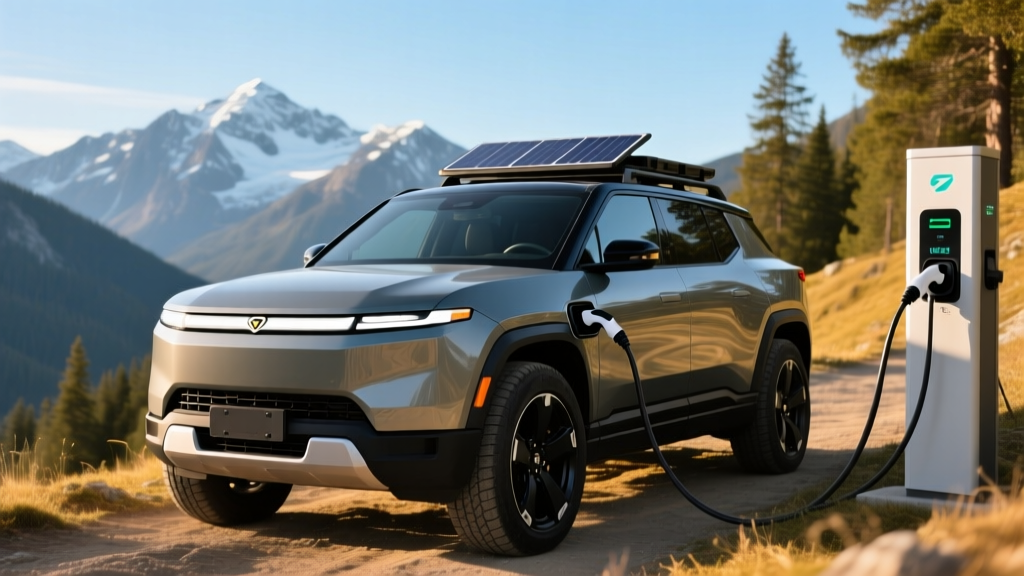
If you want an electric three-row SUV that can actually handle rough trails without sacrificing daily-driver comfort, the Rivian R1S Adventure trim remains one of the most capable options on the market in 2026. Built on Rivian's dual-motor platform with available air suspension, underbody armor, and a 135 kWh Max battery option, the Adventure trim bridges the gap between luxury family hauler and weekend trail machine. But with a starting price hovering around $83,900 and a competitive landscape that now includes the refreshed Tesla Model X and Jeep Wagoneer S, buyers need to know exactly what they're getting — and where the R1S Adventure falls short.
This review covers the 2026 Rivian R1S Adventure in detail: real-world range, charging speeds, performance, cargo space, tax credit eligibility, and whether it's the right electric SUV for your lifestyle.
Range and Efficiency: EPA Numbers vs. Real-World Reality
Real-World Expectation: ~280–310 miles highway at 70 mph; ~240–260 miles in sub-freezing temperatures; ~300–320 miles mixed city/highway in mild weather
The R1S Adventure with the Max Pack (135 kWh usable, NMC lithium-ion chemistry) achieves an EPA-rated 352 miles on the window sticker when equipped with 20-inch All-Season tires. Switch to the available 22-inch Sport wheels and that number drops to roughly 321 miles — a meaningful trade if you prioritize aesthetics over range.
In real-world testing, highway driving at sustained 70–75 mph speeds typically yields between 280 and 310 miles before you're hunting for a charger. Cold weather compounds the loss: expect a 20–30% reduction in range when temperatures dip below 30°F, even with the R1S's heat pump and battery preconditioning system active. For context, a winter road trip from Denver to Moab (roughly 350 miles) will require at least one DC fast-charging stop, while the same route in July might be doable on a single charge with conservative driving.
Efficiency clocks in at approximately 69 MPGe combined (EPA) for the Dual-Motor Max configuration, translating to about 48 kWh per 100 miles. That's thirstier than a Tesla Model X Long Range (102 MPGe combined) but in line with other body-on-frame electric SUVs that prioritize capability over aerodynamic efficiency.
Battery, Charging Speed, and Infrastructure
The R1S Adventure Max Pack uses a 135 kWh usable NMC (nickel manganese cobalt) battery — chosen for its higher energy density compared to LFP chemistry, which is critical for fitting this much capacity into the R1S's skateboard platform. The Standard Pack (106 kWh usable) is also available on lower trims but is not standard on the Adventure.
| Charging Level | Max Power | Rate / Speed | Notes |
|---|---|---|---|
| Level 1 (120V) | ~1.4 kW | ~3 miles/hour | Emergency/trickle only |
| Level 2 (240V, 48A) | 11.5 kW | ~25 miles/hour | Full charge in ~12 hours (Max Pack) |
| DC Fast Charge | 220 kW peak | 10–80% in ~30 min | Peak rate sustained to ~60% SoC, then tapers |
The R1S Adventure peaks at 220 kW on DC fast chargers, which is competitive but no longer class-leading — the Hyundai Ioniq 9 and Tesla Model X both accept higher peak rates. The charge curve holds near peak through approximately 55–60% state of charge, then tapers progressively. A 10–80% session takes roughly 30 minutes at a 350 kW Electrify America or Tesla Supercharger station (Rivian now ships with a NACS charge port, granting native Supercharger access).
At home on a 48-amp Level 2 wall connector (the Rivian Wall Charger or equivalent), the onboard 11.5 kW charger adds about 25 miles of range per hour. A full Max Pack replenishment from near-empty takes approximately 12 hours — plan for overnight charging. Home installation of a 60-amp dedicated circuit typically runs $800–$2,500 depending on panel capacity and conduit distance, according to Rivian's charging guide and independent electrician estimates.
Performance: Dual-Motor Powertrain and Off-Road Capability
| Spec | Value |
|---|---|
| Drivetrain | Dual-Motor AWD (available Quad-Motor) |
| Horsepower | 533 hp (Dual-Motor) / 835 hp (Quad-Motor) |
| 0–60 mph | 4.5 sec (Dual-Motor) / 3.0 sec (Quad-Motor) |
| Battery (Max Pack) | 135 kWh usable, NMC |
| EPA Range | 352 mi (Dual-Motor Max, 20" wheels) |
| MPGe (Combined) | 69 MPGe |
| Towing Capacity | 7,700 lbs |
| Ground Clearance | Up to 14.9 in (air suspension max height) |
| Cargo Volume | 104.7 cu ft (behind 1st row) / 46.7 cu ft (behind 2nd) |
| Seating | 7 passengers (standard), 6 (optional captain's chairs) |
| Base MSRP | ~$83,900 (Adventure Dual-Motor Max) |
| Battery/Powertrain Warranty | 8 years / 175,000 miles |
The Dual-Motor Adventure delivers 533 horsepower and a 4.5-second 0–60 mph time — brisk for a 6,800-pound SUV and more than adequate for highway merging, trail crawling, and towing. The available Quad-Motor configuration bumps output to 835 hp and drops 0–60 to 3.0 seconds, but adds roughly $10,000 and reduces range by approximately 30 miles due to the added weight and drivetrain losses.
Where the Adventure trim distinguishes itself is off-road hardware. Standard equipment includes:
- Reinforced underbody armor (titanium and composite skid plates)
- Adaptive air suspension with up to 14.9 inches of ground clearance
- Rivian's Camp Kitchen and Gear Tunnel options for overlanding
- Approach/departure/breakover angles competitive with body-on-frame SUVs
- Tank turns capability (Quad-Motor only)
Towing capacity is rated at 7,700 pounds — enough for most travel trailers and boat setups, though expect a 40–50% range reduction when towing near max weight at highway speeds.
Interior, Cargo Space, and Technology
The R1S Adventure seats seven in standard configuration (or six with optional second-row captain's chairs). Third-row legroom measures 30.4 inches — usable for children on short trips but tight for adults on long drives. Second-row legroom is a generous 38.6 inches, and the front row offers 41.3 inches.
Cargo volume behind the third row is just 10.6 cubic feet, which is modest. Fold the third row and you get 46.7 cubic feet; fold both rear rows for a flat 104.7 cubic feet. The front trunk (frunk) adds 11.1 cubic feet of lockable, drainable storage — ideal for muddy gear or charging cables.
On the tech side, the R1S runs Rivian's proprietary 15.6-inch infotainment display with native navigation, over-the-air updates, and a built-in Wi-Fi hotspot. The vehicle's Driver+ system provides SAE Level 2 driver assistance with adaptive cruise control, lane centering, and automatic lane changes on divided highways. It's competent for highway cruising but requires constant driver supervision — this is not a hands-off or self-driving system. Rivian has not yet released a hands-free driving mode comparable to GM's Super Cruise or Ford's BlueCruise.
Notable drawbacks include the absence of Apple CarPlay and Android Auto (Rivian uses its own native interface), a ride quality that can feel firm on rough pavement despite the air suspension, and a learning curve for the touchscreen-heavy climate and vehicle controls.
Pricing, Trims, and Federal Tax Credit Eligibility
| Configuration | Base MSRP | Federal §30D Credit | Est. After-Credit Price |
|---|---|---|---|
| Adventure Dual-Motor (Standard Pack 106 kWh) | ~$79,900 | Up to $7,500* | ~$72,400 |
| Adventure Dual-Motor (Max Pack 135 kWh) | ~$83,900 | Up to $7,500* | ~$76,400 |
| Adventure Quad-Motor (Max Pack 135 kWh) | ~$93,900 | Up to $7,500* | ~$86,400 |
*Federal tax credit eligibility is subject to IRS §30D rules. See checklist below.
- MSRP Cap: SUVs must have an MSRP at or below $80,000. The Adventure Dual-Motor Standard Pack qualifies; the Max Pack at ~$83,900 may exceed the cap depending on exact MSRP and dealer fees. Verify with your dealer and the IRS clean vehicle credit page.
- Buyer Income Cap: Modified AGI must not exceed $300,000 (joint), $225,000 (head of household), or $150,000 (single).
- Battery Sourcing: Critical minerals and battery components must meet phased-in percentages from US/FTA countries. Rivian has been working to qualify its supply chain — confirm current eligibility at fueleconomy.gov before purchasing.
- Point-of-Sale Transfer: Eligible buyers can transfer the credit to the dealer at purchase, reducing the upfront price rather than waiting for a tax refund.
The MSRP cap is the biggest hurdle for the Adventure Max Pack. If the as-tested MSRP exceeds $80,000 (which it typically does with the Max Pack and Adventure trim equipment), the federal credit is unavailable unless you negotiate the transaction price at or below the cap — which the IRS treats differently from MSRP. Always confirm eligibility with your tax professional and the dealer's point-of-sale credit system before finalizing your order.
How It Compares: R1S Adventure vs. Key Competitors
The R1S Adventure's closest competitors in 2026 include the Tesla Model X Long Range (348-mile EPA range, ~$84,990), the Jeep Wagoneer S Launch Edition (estimated 300+ mile range, ~$71,995), and the Hyundai Ioniq 9 Long Range AWD (estimated 335-mile range, ~$68,000). Here's how they stack up:
- Off-road capability: The R1S Adventure wins decisively. No competitor in this price range matches its ground clearance, approach angles, and underbody protection.
- Charging speed: The Ioniq 9 charges faster (peak 350 kW, 10–80% in ~20 min). The R1S's 220 kW peak is adequate but not best-in-class.
- Efficiency: The Model X and Ioniq 9 both deliver significantly better MPGe due to lower weight and more aerodynamic designs.
- Third-row usability: The Ioniq 9 offers more third-row legroom. The Model X and R1S are comparable, both tight for adults.
- Software/ecosystem: Tesla's Supercharger network and software integration remain the gold standard, though Rivian's native NACS port now grants Supercharger access.
- Best-in-class off-road capability for an electric SUV
- 135 kWh Max Pack delivers genuine 280+ real-world highway miles
- 7,700-lb towing capacity
- Native NACS port for Tesla Supercharger access
- 8-year/175,000-mile battery warranty exceeds industry standard
- Spacious frunk and versatile cargo/gear tunnel options
- Max Pack Adventure pricing often exceeds $80,000 MSRP cap for tax credit
- 220 kW DC charging is slower than Hyundai/Kia and Tesla rivals
- No Apple CarPlay or Android Auto
- Third-row space is tight for adults
- Firm ride quality on rough pavement
- No hands-free driving mode (Driver+ requires hand-on-wheel)
Who Should Buy the Rivian R1S Adventure?
- You need a three-row electric SUV with genuine off-road and overlanding capability
- You tow a travel trailer, boat, or horse trailer regularly
- You value maximum battery capacity and are willing to trade charging speed for range
- You want native Supercharger access without an adapter
- Your budget is under $75,000 after incentives — consider the Ioniq 9 or a Standard Pack R1S on the Adventure trim isn't necessary
- You prioritize charging speed for frequent road trips — the Ioniq 9 or Model X charge faster
- You need a usable adult-sized third row — the Ioniq 9 or Kia EV9 are roomier
- You rely on Apple CarPlay or Android Auto for daily use
Frequently Asked Questions
What is the real-world range of the Rivian R1S Adventure?
Expect 280–310 miles on the highway at 70 mph in mild weather with the Max Pack. In cold weather (below 30°F), plan for 240–260 miles. City and mixed driving in temperate conditions can approach the 352-mile EPA sticker, but sustained highway speeds and elevation changes reduce range meaningfully.
How fast does the R1S Adventure charge at home and on the road?
On a 48-amp Level 2 home charger, the R1S adds about 25 miles per hour, with a full Max Pack charge taking roughly 12 hours. On DC fast chargers, it peaks at 220 kW and charges from 10–80% in approximately 30 minutes, with taper beginning around 60% state of charge.
Does the Rivian R1S Adventure qualify for the $7,500 federal tax credit?
It depends on the exact configuration and your income. The Adventure Dual-Motor with the Standard Pack (~$79,900 MSRP) is more likely to fall under the $80,000 SUV MSRP cap. The Max Pack typically exceeds it. You must also meet income limits ($300K joint / $150K single) and the vehicle must satisfy battery-sourcing requirements. Always verify at fueleconomy.gov and with a tax professional before purchasing.
Is the R1S Adventure worth buying over the Tesla Model X?
If off-road capability, towing, and overlanding features are priorities, the R1S Adventure is the clear winner. If you prioritize charging speed, efficiency, software ecosystem, and hands-free highway driving (via FSD Supervised, still Level 2), the Model X may serve you better. Both offer comparable range and three-row seating.
What is the battery warranty on the Rivian R1S?
Rivian covers the R1S battery and drive unit for 8 years or 175,000 miles, whichever comes first, with a capacity retention threshold of 70%. This exceeds the industry-standard 8-year/100,000-mile coverage offered by most competitors and reflects confidence in the NMC pack's longevity.
Can the R1S Adventure use Tesla Superchargers?
Yes. As of 2025, all new Rivian vehicles ship with a native NACS (North American Charging Standard) port, granting direct access to Tesla's Supercharger network without an adapter. This is one of the strongest charging-infrastructure advantages for Rivian owners in 2026.