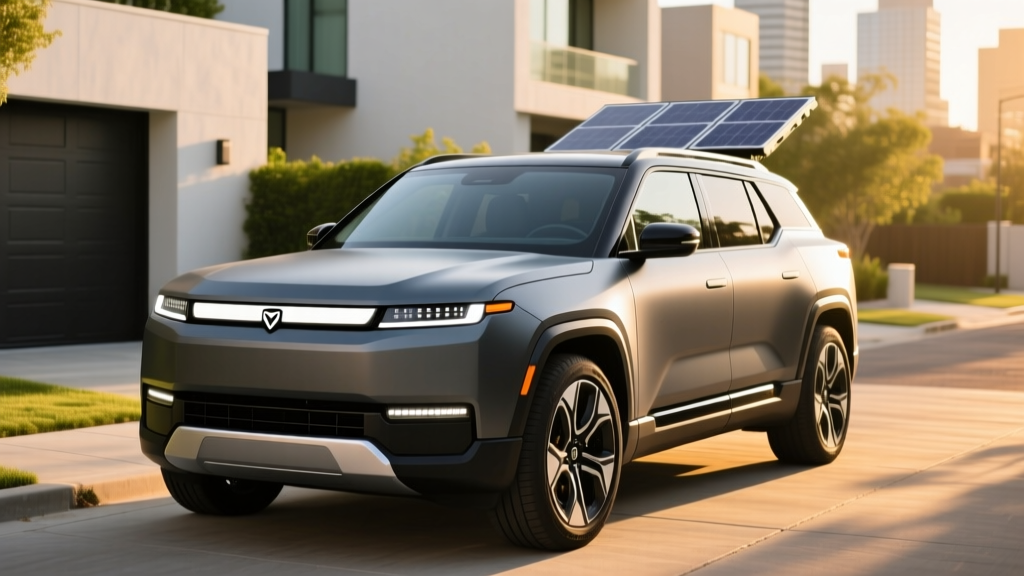
If you've been watching Rivian's pricing bounce around since the R1T and R1S launched, 2026 has brought a meaningful shift: the Dual-Motor Standard battery trims have pulled the entry price down, the lease-only $7,500 federal credit loophole remains active, and residual values have started to stabilize after a rough 2023–2024 depreciation cycle. For buyers who don't want to commit to a $75,000+ SUV or truck long-term, a lease is increasingly the smartest way to drive an R1 — provided you understand how the numbers actually stack up.
This profile breaks down the current 2026 Rivian R1S (three-row SUV) and R1T (crew-cab pickup) lineup through the lens of leasing: what you'll pay, what you'll drive, what the real-world range looks like, and whether the federal credit works in your favor.
2026 Rivian R1 Lineup at a Glance
Rivian simplified its powertrain structure for 2026 into three tiers: Dual-Motor (AWD), Dual-Motor Performance, and Tri-Motor (R1T only). Battery packs come in Standard (~92 kWh usable, LFP on base trims) and Max (~141 kWh usable, NMC). The Quad-Motor has been discontinued.
| Spec | R1S Dual-Motor Standard | R1S Dual-Motor Max | R1T Tri-Motor Max |
|---|---|---|---|
| Base MSRP | $69,900 | $84,500 | $99,900 |
| EPA Range | 270 mi | 410 mi | 420 mi |
| Battery (usable) | ~92 kWh (LFP) | ~141 kWh (NMC) | ~141 kWh (NMC) |
| Horsepower | 533 hp | 665 hp | 850 hp |
| 0–60 mph | 4.5 sec | 3.5 sec | 2.9 sec |
| Drivetrain | AWD (dual-motor) | AWD (dual-motor) | AWD (tri-motor) |
| Max DC Fast Charge | 200 kW | 220 kW | 220 kW |
| 10–80% DC Time | ~28 min | ~30 min | ~30 min |
| Level 2 Home Rate | 11.5 kW (~25 mi/hr) | 11.5 kW (~30 mi/hr) | 11.5 kW (~30 mi/hr) |
| Efficiency | 2.0 kWh/mi (50 MPGe) | 2.1 kWh/mi (48 MPGe) | 2.3 kWh/mi (44 MPGe) |
| Towing Capacity | 7,700 lb | 7,700 lb | 11,000 lb |
| Battery Warranty | 8 yr / 175,000 mi | 8 yr / 175,000 mi | 8 yr / 175,000 mi |
Source: Rivian official specs, fueleconomy.gov (EPA). Tri-Motor is R1T-exclusive.
Real-World Range: What the EPA Sticker Doesn't Tell You
R1S Max Pack (EPA 410 mi): Expect ~340–360 mi on mixed highway driving at 70 mph. In sub-freezing weather, plan for 280–310 mi.
R1S Standard Pack (EPA 270 mi): Real-world highway: ~220–240 mi. Cold weather: ~185–205 mi.
R1T Tri-Motor Max (EPA 420 mi): Highway: ~350–370 mi. Towing a 5,000 lb trailer: ~180–210 mi.
Rivian's large, boxy SUVs and trucks pay an efficiency penalty at highway speeds — the R1S and R1T consume roughly 2.0–2.3 kWh per mile, which is thirsty by EV standards. That means the Max Pack's huge 141 kWh battery is doing heavy lifting to deliver its range. Around town, where regenerative braking recaptures energy and speeds stay low, you'll often beat EPA estimates. On the interstate, you won't.
Cold weather compounds the issue. Rivian's heat pump helps, but a large battery in 20°F temps still loses 15–25% of usable capacity, and cabin heating on a three-row SUV demands substantial energy. If your commute involves sustained 75+ mph highway driving in winter, the Standard Pack's real-world range may dip below 200 miles — a critical consideration for lessees in northern states.
Charging Speed: Home and DC Fast Charging
Rivian uses the NACS (Tesla-style) connector natively on 2026 models, giving R1 owners direct access to Tesla Superchargers — a major practical advantage over the CCS-only era. Here's what charging looks like in practice:
| Charging Level | Power | R1S Standard (mi/hr) | R1S/R1T Max (mi/hr) |
|---|---|---|---|
| Level 1 (120V) | ~1.4 kW | ~3 mi/hr | ~3 mi/hr |
| Level 2 (240V, home) | 11.5 kW | ~25 mi/hr | ~30 mi/hr |
| DC Fast Charge | 200–220 kW peak | ~175 mi in 30 min | ~200 mi in 30 min |
A few nuances matter for lessees:
- Charge curve taper: The R1 sustains peak DC charge rates up to roughly 60% SoC, then tapers. A 10–80% session takes ~28–30 minutes; pushing to 90%+ adds another 20 minutes. Plan road-trip stops around 80%.
- Home charging math: Fully replenishing the Max Pack's 141 kWh battery at 11.5 kW takes about 12–13 hours. Most lessees who plug in nightly will never notice — but if you arrive home near-empty, you won't wake up to a full battery.
- Panel upgrade: The R1's onboard charger maxes at 11.5 kW (48A). A 60A circuit and a quality Level 2 EVSE (like a ChargePoint Home Flex or Rivian Wall Charger) are recommended. Budget $800–$2,000 for installation, potentially more if your panel needs a 200A service upgrade.
Lease Pricing and the $7,500 Federal Credit Advantage
Here's where leasing an R1 gets interesting. Under IRS §30D, the federal EV tax credit has strict rules: buyer income caps ($150K single / $300K joint), vehicle MSRP caps ($80,000 for SUVs and trucks), and battery-sourcing requirements that disqualify many vehicles. The R1S Dual-Motor Max at $84,500 exceeds the $80K MSRP cap, and the Tri-Motor R1T at $99,900 is far over it. Buying these trims means no federal credit.
However, a separate provision (§45W, the commercial clean vehicle credit) allows lessors to claim a $7,500 credit on any EV regardless of MSRP, income, or sourcing rules — and many leasing companies pass this savings to the lessee as a capitalized-cost reduction (a "lease cash" incentive). This is the single biggest reason to lease a high-trim R1 in 2026.
| Trim | MSRP | Est. Monthly (before credit) | Lease Credit Applied | Est. Monthly (after credit) |
|---|---|---|---|---|
| R1S Dual-Motor Standard | $69,900 | ~$890 | –$7,500 | ~$680 |
| R1S Dual-Motor Max | $84,500 | ~$1,080 | –$7,500 | ~$870 |
| R1T Tri-Motor Max | $99,900 | ~$1,310 | –$7,500 | ~$1,100 |
Estimates based on typical money factors and 55–60% residuals for 36-month leases. Actual payments vary by dealer, region, credit tier, and current incentive programs. Confirm IRS §30D and §45W rules with your tax professional.
Critical caveat: Not all R1 leases qualify. The credit flows through the lessor (the financing entity), and whether it's passed to you depends on the specific lease program. Rivian's own financing arm has historically passed the credit through; third-party lessors may or may not. Always confirm in writing before signing.
Tech, Interior, and Daily Livability
The R1S and R1T share Rivian's minimalist interior: a 15.6-inch center touchscreen running Rivian's in-house OS, a 12.3-inch driver display, and a clean, button-light dashboard. Standout features include:
- Rivian Driver+ (Level 2 ADAS): Hands-on-wheel highway assist with lane centering and adaptive cruise. Competent but not class-leading — it lacks the hands-free capability of GM's Super Cruise or Ford's BlueCruise on mapped highways.
- OTA updates: Rivian pushes regular over-the-air software updates that add features and refine driving dynamics. The 2025–2026 updates improved regenerative braking calibration and added a camp mode with climate control for overnight use.
- Gear Tunnel (R1T): A full-width, lockable pass-through storage compartment behind the rear seats — unique to the R1T and genuinely useful for long gear, camping equipment, or groceries.
- Camp Kitchen (optional): A slide-out kitchen system available for the R1T, integrating with the gear tunnel. Niche but well-executed.
Rivian Driver+ is a Level 2 system — the driver must remain fully engaged, with hands on the wheel, at all times. It is not self-driving. Autonomy at Level 4 (no driver required) is currently available only in geofenced robotaxi services like Waymo.
Cargo and passenger space: The R1S seats up to seven (optional third row) with 105.5 cu ft of max cargo volume (second and third rows folded). Legroom is 41.3 inches front, 38.2 inches second row, and a tight 30.1 inches in the third row — best suited for children. The R1T offers a 54-inch bed (4.5 ft) and the aforementioned gear tunnel, plus a front trunk (frunk) of 11 cu ft.
Pros, Cons, and Who Should Lease the R1
- Class-leading range on Max Pack (410–420 mi EPA)
- Native NACS / Supercharger access
- $7,500 lease credit bypasses MSRP & income caps
- Exceptional off-road capability with air suspension
- Strong OTA update track record
- 8-yr / 175,000-mi battery warranty exceeds industry norm
- Highway efficiency is poor (~2.0–2.3 kWh/mi)
- Standard Pack range (270 mi) feels short for the price
- Third-row R1S seat is cramped for adults
- Driver+ ADAS lags behind Super Cruise / BlueCruise
- Service center network still limited outside major metros
- Lease residual uncertainty — high mileage = steep end-of-lease risk
Best for: Adventure-oriented families who need genuine off-road and towing capability, want three rows (R1S) or a truck bed (R1T), and can charge at home. The Max Pack lease is ideal for road-trippers who need 350+ real-world highway miles. The Standard Pack suits suburban commuters with home charging and daily drives under 100 miles.
Think twice if: You primarily drive highway miles in cold climates on the Standard Pack (range will feel tight), you want hands-free highway driving (look at the Cadillac Escalade IQ or Ford F-150 Lightning with BlueCruise), or you lack reliable home charging access — public DC charging a 141 kWh battery gets expensive fast.
How the R1 Compares to Key Rivals
The R1S competes most directly with the Tesla Model X, BMW iX, and the upcoming three-row Kia EV9 GT-Line. The R1T occupies a near-unique position against the Ford F-150 Lightning and Chevrolet Silverado EV.
- vs. Tesla Model X: The R1S offers more rugged capability and a more premium interior, but the Model X charges faster (250 kW peak), has a more mature Supercharger-first ecosystem, and offers Autopilot/FSD (still Level 2, but more widely deployed). The Model X starts higher (~$80K) and also exceeds the purchase credit MSRP cap.
- vs. Ford F-150 Lightning: The R1T is quicker, more refined, and has longer range on Max Pack, but the Lightning is significantly cheaper (starting ~$55K) and qualifies for the purchase credit on lower trims. For pure work-truck duty, the Lightning wins on value; for lifestyle/adventure, the R1T wins on execution.
- vs. BMW iX: The iX is a luxury two-row SUV with superior highway efficiency and a more polished ADAS suite, but it can't match R1S cargo space, off-road capability, or seven-seat availability.
Frequently Asked Questions
Does the Rivian R1 qualify for the $7,500 federal EV tax credit?
For purchases: only the R1S Dual-Motor Standard ($69,900 MSRP) falls under the $80,000 SUV cap, and eligibility depends on buyer income limits ($150K single / $300K joint) and battery-sourcing compliance. For leases: the commercial credit (§45W) allows $7,500 on any R1 trim regardless of MSRP, income, or sourcing — but only if the lessor passes it through. Confirm with your leasing company.
What is the real-world range of the Rivian R1?
EPA estimates range from 270 miles (R1S Standard) to 420 miles (R1T Tri-Motor Max). In real-world highway driving at 70 mph, expect 220–240 mi on Standard and 340–370 mi on Max packs. Cold weather reduces these by 15–25%. Towing cuts range roughly in half.
How fast does the Rivian R1 charge at home and on the road?
At home on a Level 2 (240V, 48A) charger, the R1 adds 25–30 miles of range per hour. On DC fast chargers, it peaks at 200–220 kW and charges 10–80% in roughly 28–30 minutes. Charging slows significantly above 80% — plan road-trip stops accordingly.
Is it better to buy or lease a Rivian R1 in 2026?
Leasing is currently the stronger financial play for most buyers. The $7,500 commercial lease credit applies to all trims (bypassing MSRP and income caps), and leasing insulates you from the R1's historically steep depreciation. Buying makes sense only if you plan to keep the vehicle 7+ years, drive under 15,000 miles annually, and qualify for the purchase credit on the Standard trim.
What's the biggest risk of leasing a Rivian R1?
End-of-lease disposition. If you exceed your mileage allowance (typically 10K–15K mi/yr), Rivian's per-mile overage charges are steep (~$0.25–$0.30/mi). Additionally, if you damage the battery or wheels (both expensive to replace), you'll face charges at lease-end. Consider a lease-end protection plan or gap coverage.
What battery chemistry does the Rivian R1 use?
The Standard Pack uses LFP (lithium iron phosphate) chemistry — it's heavier and less energy-dense but offers longer cycle life, greater thermal stability, and can be charged to 100% daily without degradation concerns. The Max Pack uses NMC (nickel manganese cobalt), which delivers higher energy density for longer range but benefits from being kept between 20–80% for daily use.
For the latest Rivian R1 lease programs, check Rivian's official configurator and verify current IRS clean vehicle credit rules with a qualified tax professional before signing.